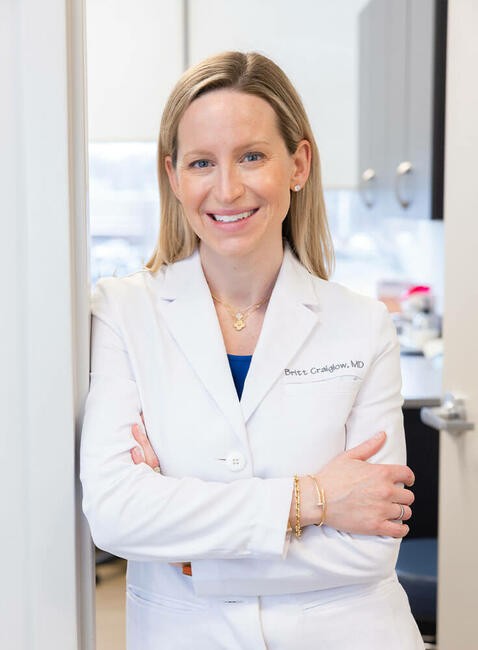
Nail involvement in alopecia areata may provide valuable clues about disease severity and prognosis. Dr Brittany Craiglow discusses why these clinical findings deserve greater attention.
Nail involvement in alopecia areata may provide valuable clues about disease severity and prognosis. Dr Brittany Craiglow discusses why these clinical findings deserve greater attention.
Oyetewa Boluwatito Asempa, MD, FAAD; Riya Gandhi, MA
Does alopecia areata always run in families? Learn what dermatologists know about genetics, risk factors, and why many patients have no family history.
Does alopecia areata always run in families? Learn what dermatologists know about genetics, risk factors, and why many patients have no family history.
Oyetewa Boluwatito Asempa, MD, FAAD; Riya Gandhi, MA
Is alopecia areata caused by vitamin or nutritional deficiencies? Dr Oyetewa Asempa explains how to distinguish autoimmune hair loss from deficiency-related shedding.
Is alopecia areata caused by vitamin or nutritional deficiencies? Dr Oyetewa Asempa explains how to distinguish autoimmune hair loss from deficiency-related shedding.
In a comparison of the mental health of patients with acne treated with isotretinoin vs oral antibiotics, which treatment group was found to experience more depressive symptoms and psychological distress?
In a comparison of the mental health of patients with acne treated with isotretinoin vs oral antibiotics, which treatment group was found to experience more depressive symptoms and psychological distress?
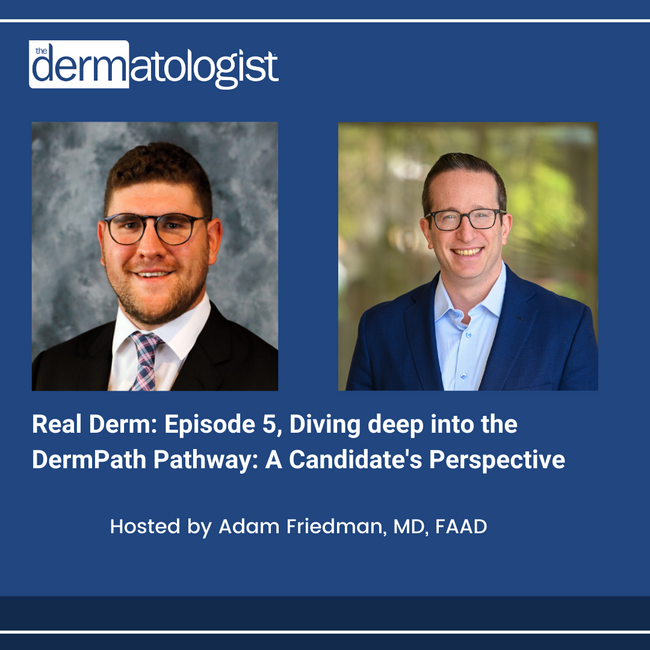
Climbing the mountain to get to dermatology residency is bone breaking enough, but what about the next apex, even more specialized training such as a Dermatopathology Fellowship?
Climbing the mountain to get to dermatology residency is bone breaking enough, but what about the next apex, even more specialized training such as a Dermatopathology Fellowship?
Christopher Barker, MD; Krupal Patel, MD, MSc, FRCSC, FACS; John Strasswimmer, MD, PhD, FAAD, FACMS; Deborah J.L. Wong, MD, PhD
The case-based discussion continues with an exploration of how high-risk features inform treatment decisions in clinical practice. The multidisciplinary panel discusses real-world application of C-POST eligibility criteria and the importance...
The case-based discussion continues with an exploration of how high-risk features inform treatment decisions in clinical practice. The multidisciplinary panel discusses real-world application of C-POST eligibility criteria and the importance...
What proportion of children aged 6 to 11 years with severe atopic dermatitis receiving dupilumab achieved a height increase of at least 5 percentile points after 4 months of treatment?
What proportion of children aged 6 to 11 years with severe atopic dermatitis receiving dupilumab achieved a height increase of at least 5 percentile points after 4 months of treatment?
Evaluate advanced clinical reasoning in targeted treatment selection, unexpected therapeutic responses, and the challenges of precision medicine in inflammatory dermatology.
Evaluate advanced clinical reasoning in targeted treatment selection, unexpected therapeutic responses, and the challenges of precision medicine in inflammatory dermatology.
Challenge your understanding of inflammatory feedback mechanisms, neuronal sensitization, and the complex cellular interactions involved in chronic dermatologic disease.
Challenge your understanding of inflammatory feedback mechanisms, neuronal sensitization, and the complex cellular interactions involved in chronic dermatologic disease.
Test your clinical understanding of inflammatory disease classification, overlapping immune pathways, and the evolving role of type 2 inflammation in dermatology.
Test your clinical understanding of inflammatory disease classification, overlapping immune pathways, and the evolving role of type 2 inflammation in dermatology.
Challenge your understanding of treatment sequencing, biologic failure, JAK inhibitor escalation, and future biomarker-driven approaches in inflammatory dermatology.
Challenge your understanding of treatment sequencing, biologic failure, JAK inhibitor escalation, and future biomarker-driven approaches in inflammatory dermatology.
Evaluate your clinical approach to selecting targeted therapies across multiple type 2 inflammatory skin diseases by integrating disease biology, symptom burden, and treatment sequencing.
Evaluate your clinical approach to selecting targeted therapies across multiple type 2 inflammatory skin diseases by integrating disease biology, symptom burden, and treatment sequencing.
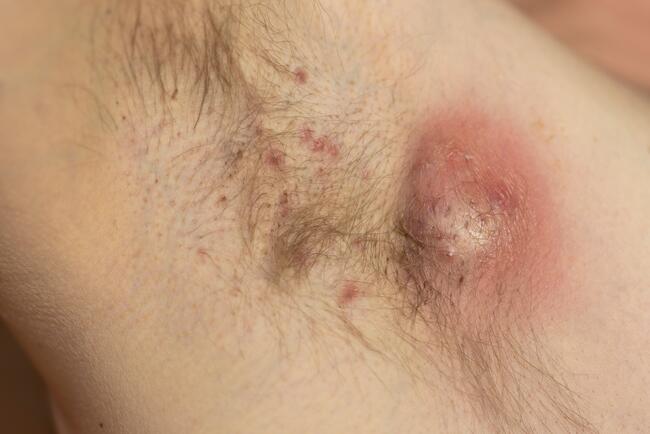
Which of the following best describes the week 12 efficacy findings for povorcitinib in the phase 3 STOP-HS1 and STOP-HS2 trials in patients with moderate-to-severe hidradenitis suppurativa?
Which of the following best describes the week 12 efficacy findings for povorcitinib in the phase 3 STOP-HS1 and STOP-HS2 trials in patients with moderate-to-severe hidradenitis suppurativa?
Evaluate your understanding of disease fluctuation, neuroimmune signaling, cytokine biology, and targeted therapeutic strategies in chronic spontaneous urticaria.
Evaluate your understanding of disease fluctuation, neuroimmune signaling, cytokine biology, and targeted therapeutic strategies in chronic spontaneous urticaria.
Test your understanding of cytokine signaling, mast cell biology, neuroimmune interactions, and the mechanisms that drive chronic spontaneous urticaria.
Test your understanding of cytokine signaling, mast cell biology, neuroimmune interactions, and the mechanisms that drive chronic spontaneous urticaria.