The Industry Dermatologist: Building a Career at the Intersection of Science, Innovation, and Patient Care
As therapeutic innovation continues to reshape dermatology, physicians are finding opportunities to contribute to patient care beyond traditional clinical and academic settings. Careers in the biotechnology and pharmaceutical industries allow dermatologists to apply their clinical expertise and scientific training to drug development, evidence generation, medical strategy, and leadership while helping address unmet needs across broader patient populations. Increasing numbers of residents, fellows, and academic physicians are exploring careers in these industries, yet many remain uncertain about what that path entails. Can physicians contribute to drug development while maintaining scientific integrity? Is industry compatible with academic scholarship? What does success look like outside of traditional clinical practice?
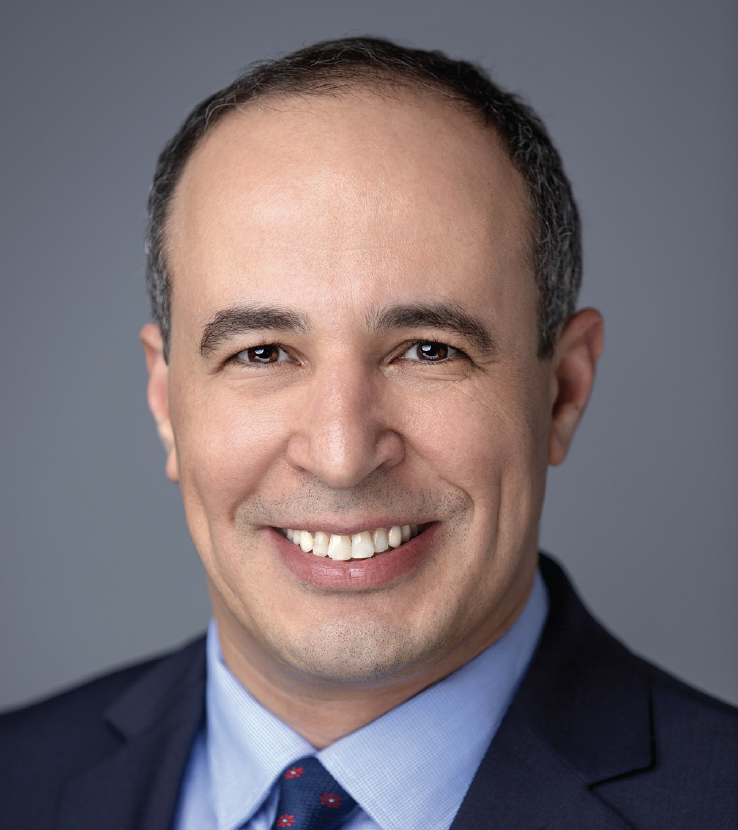
In this interview, dermatologist and physician-scientist Ayman Grada, MD, MHA, discusses what it means to be an industry dermatologist. Drawing on his experience across clinical medicine, academic research, and industry, Dr Grada explores available career paths, the evolving responsibilities of physician leaders, and the distinctive perspective dermatologists bring to therapeutic innovation. He also addresses scientific integrity, continued engagement with academia, and the skills needed to succeed in multidisciplinary organizations. For dermatologists considering an industry career, his perspective highlights how physicians can broaden their professional impact while maintaining their identity as clinicians and scientists and keeping patient needs at the forefront.
DEFINING THE INDUSTRY DERMATOLOGIST
The Dermatologist: The term industry dermatologist challenges many traditional assumptions. What does it mean to you and how does it differ from the way most physicians think about careers in biotechnology or pharmaceutical companies?
Dr Grada: I think the term is useful because it broadens the picture of what a dermatologist can do. To me, an industry dermatologist is a physician who can scale their impact from an individual patient in the exam room to much larger populations.
An industry dermatologist is still fundamentally a physicianscientist; what changes is the setting in which the clinical judgment and scientific expertise are applied. Instead of working only at the point of direct patient care, an industry dermatologist may help define the clinically important questions, identify the unmet needs and evidence gaps, shape development and medical strategy, and translate evidence into practice-informing insights. For me, the industry has never meant leaving medicine behind; it means applying the same clinical judgment and scientific rigor through a different platform. So, it has not changed my professional identity as a physician-scientist, it has just changed the platform where I can make the impact.
CAREER PATHS AND THE INDUSTRY PHYSICIAN ROLE
The Dermatologist: For dermatologists interested in biotechnology or pharmaceutical careers, what physician career paths are available and how do major roles differ?
Dr Grada: A useful way to understand physician careers in the industry is to ask where in the life cycle of a medicine do you want to contribute. Earlier in the life cycle of a medicine, physicians in discovery, translational medicine, and clinical pharmacology connect disease biology, drug targets, biomarkers, and early human evidence. Clinical development physicians shape the drug development strategy. They design and conduct clinical trials, select meaningful endpoints, interpret benefit and risk, and build the evidence package needed for regulatory approval. Safety and pharmacovigilance physicians focus on safety signals and benefit-risk assessment across the life cycle, while regulatory affairs physicians work at the interface between evidence and regulatory requirements. Medical affairs has a different center of gravity. Medical affairs physicians bring clinical practice and external scientific insights into strategy. They identify the unmet medical needs and evidence gaps and generate evidence to inform clinical practice.
There are other functions involved in evidence generation, including epidemiology and health economics and outcomes research, or HEOR, that physicians can participate in and lead as well. Also, physician careers in industry do not have to stop at traditional medical or scientific functions. With broader experience, some physicians move into portfolio or enterprise leadership and become chief medical officers or even CEOs. The bottom line is that there is not just 1 industry career for a physician; there is an ecosystem of careers across a medicine’s life cycle stages.
The Dermatologist: What does the day-to-day work of an industry physician look like? And how does it evolve as physicians move into senior leadership positions?
Dr Grada: The answer depends on the function and level of seniority. A clinical development physician, for example, may spend the day shaping a development strategy, designing a phase 3 study 22 October 2026 | The Dermatologist® | the-dermatologist.com protocol, discussing endpoints, reviewing emerging trial data, and assessing or making decisions about benefit and risk. A medical affairs physician may review materials intended for external use, shape medical strategy, identify evidence gaps and design, oversee phase 4 and real-world evidence studies, and engage external experts. The role also includes leading publication planning and supporting scientifically balanced medical education to translate new data into clinically useful context for clinicians and patients. A safety physician may assess safety signals and benefit-risk profiles, while a regulatory affairs physician focuses on the evidence and requirements needed for regulatory approval.
Across functions, the work is highly team-based and integrates clinical, scientific, regulatory, safety, epidemiologic, access, operational, and other perspectives. As industry physicians become more senior, their value comes less from subject matter expertise alone and more from identifying the right questions, setting strategy, integrating perspectives, making trade-offs, developing people, and helping teams execute and exercise sound decisions.
INDUSTRY AND ACADEMIC MEDICINE: A FALSE CHOICE?
The Dermatologist: A concern physicians may have is that entering industry means leaving academia behind. How can physicians remain meaningfully engaged in research, publishing, education, and professional societies?
Dr Grada: Industry, clinical practice, and academia operate differently, but your medical identity is not determined solely by where you work. For example, I have continued to be involved in academic research, scientific publishing, editorial responsibilities, peer-review work, education and training, and professional society leadership while building my industry career. Those activities are valuable because they keep you connected to how evidence is generated, challenged, and applied. Publishing forces rigor. Peer review exposes you to emerging science and competing interpretations. Professional societies keep you connected to the priorities of the specialty. Teaching pushes you to explain complex ideas clearly. However, there need to be appropriate boundaries, of course. Transparency and careful management of conflict of interest are also important. With those safeguards, I think academic engagement can strengthen rather than dilute one’s effectiveness as an industry physician.
WHAT DERMATOLOGISTS BRING TO THERAPEUTIC INNOVATION
The Dermatologist: What distinctive value can dermatologists bring to therapeutic development, medical strategy, and the broader biopharmaceutical organization?
Dr Grada: Dermatologists bring a clinically grounded understanding of skin disease that is difficult to reproduce without caring for patients. In dermatology, objective signs are only part of the story. Symptoms, such as itch, pain, and visible disease; anatomic location; treatment burden; patient preferences; comorbidities; and practical realities of topical and systemic therapies all influence what meaningful benefit looks like in practice.
We also know that statistical significance and clinical significance are not necessarily the same thing. A result can be statistically persuasive without necessarily representing a difference that a patient notices or that changes the dermatologist's decision. The clinical perspective that industry dermatologists bring is very valuable because it helps us ask practical questions: Does this endpoint reflect something meaningful to the patient? Does it matter to the patient? Is the treatment burden realistic? Which patients are most likely to benefit? How will clinicians interpret the data or how would they think about sequencing or switching therapies? What could affect treatment adherence and persistence? How is care being delivered? And can the strategy work in routine clinical practice?
Industry dermatologists can also bring external clinical insights back to the organization and translate complex data into a context that is useful to the specialty. They share a professional identity and clinical training with practicing dermatologists, creating a common clinical and scientific frame of reference for peer-topeer dialogue. Trust, however, is not automatic; it must be earned through scientific rigor, transparency, objectivity, and active listening. Within multidisciplinary teams, physicians complement rather than replace other disciplines by integrating scientific evidence, clinical judgment, and patient context. Their distinctive contribution is often to ask the question data alone cannot answer: Does this matter to the patient?
The Dermatologist: Beyond clinical and scientific expertise, what skills and capabilities distinguish physicians who are effective leaders in biopharma?
Dr Grada: Scientific credibility is foundational, but it is not enough for leadership. As physicians become more senior, success increasingly depends on judgment, prioritization, communication skills, strategic thinking, business acumen, and systems thinking. Also, adaptability and the ability to influence across disciplines. Much of biopharma operates through matrix organizations, so you often must create alignment among people who do not report to you. A scientific decision does not exist in isolation. Development, safety, regulation, access, reimbursement, evolving models of care delivery, organizational priorities, and real-world clinical adoptions are interconnected. Physician leaders need to understand those relationships well enough to identify what matters, make trade-offs, and communicate the rationale for a decision.
Health care is a complex, continuously evolving system whose stakeholders, institutions, and processes are interdependent. Effective physician leaders must understand these relationships and anticipate how changes in 1 part of the system may affect others.
Business acumen does not mean becoming a commercial expert. It means understanding the environment in which a scientific innovation must succeed. For example, developing new therapies requires sustained investment and the willingness to take risks. A viable business model is what allows companies to continue investing in research and development and pursue next-generation therapies. The leadership challenge is to understand that reality while keeping scientific integrity, patient benefit, access, and longterm credibility at the center of decision-making.
Eventually, leadership becomes less about demonstrating how much you personally know and more about creating clarity, setting directions, developing people, building alignment, and enabling teams to make good decisions. Expertise may earn you a seat at the table, but judgment, adaptability, influence, and leadership determine what you contribute once you are there.
SCIENTIFIC INTEGRITY IN A REGULATED ENVIRONMENT
The Dermatologist: Biopharma is a highly regulated environment, and physicians work at the intersection of science, medicine, business, and regulation. How do you think about scientific integrity and independent medical judgment when these perspectives do not always align?
Dr Grada: This is a very important question. Scientific integrity must be foundational. Physicians in biopharma work within a real business and regulatory environment, but the evidence still has to be interpreted on its own terms. A physician should be willing to ask difficult questions, acknowledge uncertainty, consider the totality of evidence, and distinguish what the data demonstrate from what we may hope they demonstrate. Credible scientific exchange should be a 2-way dialogue in which we listen as carefully as we communicate and in which limitations and conflicting information are not ignored. Colleagues and external experts need to know that when you offer a medical opinion, you are giving them your best assessment of the evidence rather than the most convenient answer. Collaboration may require trade-offs and working through different perspectives, but scientific judgment loses its value if people do not trust its independence. So, the bottom line here is that the physician's value is not to provide a convenient answer, but rather to provide the best medical interpretation of the evidence.
ADVICE FOR THE NEXT GENERATION
The Dermatologist: What advice would you give residents, fellows, or academic dermatologists who are considering a career in industry, and what clinical research and leadership experiences are most valuable in preparing for that transition?
Dr Grada: My advice is to build yourself into an excellent dermatologist and physician-scientist, rather than trying to optimize your early career specifically for the industry. Clinical experience matters because it gives you the firsthand understanding of patients, clinical decision-making, and practice realities. Learn to evaluate evidence critically and understand study designs and biostatistics. Participate in research, write, present, and, if possible, serve as a clinical trial investigator so you understand how evidence is generated. Then learn about the life cycle of a medicine and the different functions and roles in the industry. Talk with people in clinical development, medical affairs, safety, translational medicine, regulatory affairs, and other roles so you identify where your interests and strengths fit. During conferences, you can network with industry leaders and experts and learn about those career opportunities.
Colleagues sometimes ask whether it is better to join a small biotech, a mid-sized company, or a large biopharma organization. There is no single right choice. A small biotech can offer breadth, rapid learning, and exposure to multiple functions; a mid-sized company may provide opportunities to build functions and teams; and large biopharma can teach scale, specialization, and matrix leadership. Regardless of the setting, adaptability and learning agility are essential.
Be willing to learn beyond your immediate clinical field and develop skills that medical training does not emphasize. For example, in 2017, I attended a summer program on bounded rationality at the Max Planck Institute for Human Development in Berlin, Germany, to deepen my understanding of how humans make decisions under uncertainty when information, time, and resources are constrained. That experience reinforced for me that some of the most valuable learning comes from stretching into unfamiliar areas, particularly as your responsibilities become more strategic.
Finally, do not assume that seniority in clinical medicine or academia automatically translates into seniority in industry. Making that transition successfully requires curiosity, humility, and a willingness to keep learning.
THE FUTURE OF THE INDUSTRY DERMATOLOGIST
The Dermatologist: If you could leave dermatologists with 1 message about building an industry career while remaining a physician-scientist and keeping patients at the center of the work, what would it be?
Dr Grada: I would broaden our definition of what a physicianscientist career can look like. Being a physician-scientist is not defined only by an institution or job title; it is defined by how you approach problems: clinical grounding, scientific curiosity, rigor, a willingness to challenge assumptions, and a commitment to improving patient care.
Clinical practice and traditional academia are enormously important pathways, but industry can also be a legitimate setting in physicians advance medicine. Industry physicians can help ensure that unmet needs are translated into clinically meaningful questions, that those questions guide evidence generation, and that the resulting evidence informs better clinical decisions. The platform may evolve and your responsibilities may broaden, but the challenge is to preserve your clinical perspective, scientific independence, and capacity to keep learning. You do not have to choose between being an industry leader and a physician-scientist. The responsibility is to remain both.
The Dermatologist: Do you expect industry careers to become more visible or common among dermatologists as the therapeutic landscape continues to evolve?
Dr Grada: Yes. I expect industry careers to become more visible, better understood, and increasingly common within dermatology. The therapeutic landscape continues to expand across inflammatory skin diseases, hair disorders, and other conditions, with advances in biologics, small molecules, topical therapies, and novel mechanisms of action. That progress creates a growing need for physicians who can connect disease biology, clinical trial evidence, patient experience, and the realities of clinical practice.
At the same time, I would not frame industry as better than clinical practice or academia. These are complementary career paths. The specialty is stronger when dermatologists contribute across clinical care, academia, government, professional societies, and industry.
Conclusion
For dermatologists considering this path, industry can provide a platform for translating clinical insight into research priorities, evidence generation, and decisions that affect broader patient populations. Dr Grada’s experience illustrates that dermatologists can lead in biopharma while remaining grounded in clinical perspective, scientific independence, academic engagement, and a commitment to improving patient care.
Dr Grada Shares His Journey
The Dermatologist: What attracted you to the biopharma industry and how did your career evolve from clinical and academic dermatology into therapeutic innovation and medical leadership?
Dr Grada: My career evolved rather than following a predetermined plan. I was always interested not only in treating diseases, but also in therapeutics: How does a treatment work? Why does a treatment fall short? What questions remain unanswered? And how can evidence improve and shape clinical decision-making in real-world practice?
During my dermatology training at Boston University School of Medicine, Dr Barbara Gilchrest and Dr Vincent Falanga further shaped my interest in translational dermatology and therapeutic innovation. That training, together with my broader research and academic experience, gave me a strong foundation in generating, interpreting, and challenging evidence.
My industry journey has exposed me to different organizational settings. I started in a small biotech, where I wore multiple hats and quickly learned how the different functions within a regulated industry fit together. I then moved to a mid-sized pharmaceutical company, where I had the opportunity to help build a medical affairs function and team from the ground up. Later, in large biopharma, my role increasingly involved leading through a matrix organization and aligning multiple functions around complex scientific and strategic decisions.
I also had the opportunity to work on and launch both topical and advanced systemic medicines, which broadened my perspective on therapeutic innovation.
Each stage of my career required something different: breadth in small biotech, building functions and teams in a mid-sized company, and leading through a matrix at scale in large biopharma. The setting changed, but my mission remained the same: to use science and medicine to improve patients’ lives.
The Dermatologist: What misconceptions did you have about industry before you joined, and what surprised you once you were inside?
Dr Grada: Before joining industry, I underestimated both the scientific complexity and how indirect and long term much of the work can be. In clinical practice, you often make a decision and see its consequence in the patient in front of you. In industry, important decisions may unfold over months or years and usually require input from many disciplines. I was also struck by the amount of constructive scientific debate that happens internally. Good teams challenge assumptions, examine the evidence from different perspectives, and are willing to change course when the evidence requires it. This combination of long-horizon work, multidisciplinary collaboration, and scientific debate was probably the biggest surprise.
The Dermatologist: How has working across different areas of dermatology influenced the way you think about therapeutic innovation?
Dr Grada: Across my career, I have worked in disease areas ranging from chronic wounds, acne, and actinic keratosis to immunemediated inflammatory skin diseases, and with both topical and systemic medicines. Those experiences have reinforced for me that innovation must be evaluated in the context of the clinical problem. With topical therapies, formulation, application burden, local tolerability, and adherence can be decisive. With systemic therapies, considerations often include depth and speed of response, durability, the benefit-risk profile, monitoring requirements, and where the treatment fits within the care pathway. That breadth has taught me not to become overly attached to any 1 mechanism or treatment modality. Innovation should start with the unmet needs of patients and gaps in clinical practice, then determine which therapeutic approach is most appropriate and what evidence is needed to demonstrate meaningful benefit.