Building the Evidence for One Biologic in a Time of Regulatory Change: What's Next?
The 351 regulatory pathway demands a highly structured, data-intensive clinical trial process that ensures alignment with the FDA and payers before the first patient is enrolled. One company is working to build rigorous pre-market evidence and shares how they are laying the groundwork for stronger payer engagement and long-term clinical impact.
Key Takeaways
-
The 351 pathway provides clarity and rigor, requiring FDA-aligned protocols, extensive documentation, and traceable data—far exceeding typical post-market study standards and resulting in higher-quality evidence.
-
A major evidence initiative is underway, aiming to create the most comprehensive diabetic foot ulcer patient-journey analysis to date, enabling better understanding of baseline risks, treatment impact, and potential development of a clinically useful staging system.
-
Evidence generation won’t stop at approval, as real-world data, registries, and post-market studies will help fill knowledge gaps and support payer policy development—an essential step given that the product falls outside existing skin substitute reimbursement frameworks.
Transcript
Please note: This content is a direct transcript, capturing the authentic conversation without edits. Some language may reflect the flow of live discussion rather than polished text.
Nikolai Sopko, MD, PhD:
I think a benefit of going through the 351 pathway is there's a little bit less ambiguity about the data you have to collect and how to structure your trial. Before we launched any of our trials under this 351 pathway, we developed that protocol. We're submitting that to the FDA, we're having a very thorough discussion back and forth with the FDA, our statisticians, their statisticians. So we're really all in alignment before the first patient goes into the trial. And that is quite helpful. And then you're also trying to work with payers to help understand what do they want to see from a value perspective that makes it clear for them that this product's worth it. And so in that sense, it's kind of nice in the 351 pathway, you're doing a lot of that preparatory work to be allowed to really proceed in order to do so.
And that's been helpful. Challenging but helpful because obviously these trials run under the 351 pathway are quite different than a lot of the post-market studies that have been seen in the field. Just the amount of infrastructure that's required, the level of documentation is incredible. Some of these initial patient subject visits in the trial will take a dedicated research coordinator at a trial site in our Plus to complete all the documentation that's required for the trial. Because the way to think about it is that when we're going to be reporting our statistics from that trial, every little data point that we're going to talk about can be traced back. And the FDA does this, we hand 'em all the data, and even though we do our own analysis, they take all of our data and repeat our analysis using these massive data sets that we have to transfer over to them.
And they can literally track every little bit of data down to the case reporting form that's being filled out by that research coordinator, which then ties back to the physician's medical note. So it's a very intense process that post-market studies don't have to do. And because it does take so much time and resources, it's often not done. And you can sort of see a little bit of a difference between those post-market studies. And oftentimes these FDA registered studies, there's a great primer on the diabetic foot published in Diabetes in 2018. And they have a table sort of outlining these different classes of products, some of them that had either pre-market approval or even 510K approval that those de novo classifications that those trials were run under versus some of the post-market studies. And you see quite a bit of a difference of both the efficacy and standard of care rates between those two trials. And I think part of that goes into the more stringent selection process that goes into these 351 studies, then these post-market studies that tend to be a little bit easier and faster to run.
Ned Swanson, MD:
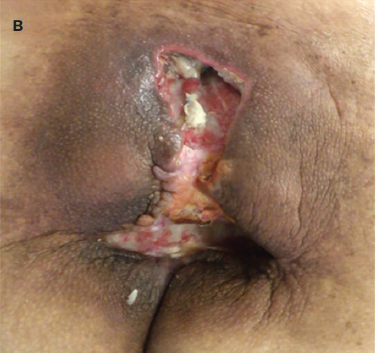
Another thing we're building and planning to do is if you actually look at the current market, there's actually no great landscape of what is the current status of diabetic foot ulcers. There's a million great publications looking at very narrow segments of a patient's journey, but there is nothing that ties them all together. So we think one of the biggest things the payers have been missing is that full lens and full scope of from the time a patient gets a foot ulcer through the end of their care, which can be years, what happens? What are the risk factors? What are the predictors of all of these treatments, and how do they even know what the baseline is to now start comparing and integrating trial data and other evidence into their decision making? So this is another big project, big task that we're undertaking. But without revealing all the details, we're going to put together the biggest comprehensive diabetic foot ulcer journey that's been done to date in order to really dictate and see what is really affecting the outcomes of these patients.
What treatments are actually working, and can we start to build this into more of a staging system for patients out of the gate? So when a patient walks in the door with a wound you haven't seen before, can you educate them and sort of give them a sense of what are the chances this wound's going to heal? What are the chances this is going to heal by a certain time point? And what are your risk factors if it doesn't heal? And this is sort of routine care in the oncology space with staging systems that have been developed over long periods of time that are constantly being updated. We don't see sort of a unified staging system for wound patients coming in. There's a lot of different grading systems that get used, but there are more tailored towards trials and evidence as opposed to actual routine practice.
So we think bringing that to the picture will also help put all the evidence that exists into context, including our own, that we're going to use to submit this BLA, and then we'll be able to see where all the gaps are too. So working with providers, payers, patients, our goal is to just continue to build the evidence. Even though as Nick said, we have all of this pre-market time with the trials required to submit the BLA to build the evidence that is as rigorous as it is. We also have an autologous product where every time a patient's getting treated, there's a lot of information that we need to gather in order to protect the chain of custody of the product. So we know it's the patient's product going back to them. And with all of that, we have a pretty big opportunity to build real world evidence outcomes, registries and post-market studies that fill in any gaps that providers or patients might have as this product gets rolled out.
So we think we're hitting with a lot of very, very rigorous high level evidence, and then we have a great opportunity to reset the field with a fully comprehensive journey of these patients and then continue to build the evidence to fill in any gaps that might exist. It's certainly going to be a lot of work, and it's not like if we get approved the next day, every payer's on board paying for it. Since we are outside of the skin substitute policies, we are going to have to build separate policies with every single payer that's going to take time, data, and effort. But we think we're going to be starting on a great footing, as Nik said, with what's required just to even submit the BLA.
Dr. Sopko is the Chief Operating Officer and Chief Scientific Officer for PolarityBio.
Dr. Swanson is the President and Chief Medical Officer for PolarityBio.
© 2025 HMP Global. All Rights Reserved.
All information regarding reimbursement, legislation, regulations, policy, and legal proceedings, is provided as a service to our audience. Commercially reasonable efforts have been made to ensure the accuracy of the information within this resource but HMP Global, their employees, their affiliates, contributors, commenters, and reviewers do not represent, guarantee, or warranty that any information provided within this resource is error-free. HMP Global, their employees, their affiliates, contributors, and reviewers disclaim all liability attributable to the use of any information, guidance, or advice contained in this resource. The responsibility for verifying information accuracy for individual use and in individual circumstances lies solely with the audience member. The information in this resource is also not a substitute for legal, medical, or business advice, and is for educational purposes only. Any views and opinions expressed are those of the author(s) and/or participants and do not necessarily reflect the views, policy, or position of Wounds or HMP Global, their employees, and affiliates.