EMS World Expo 2025 Opening Ceremony and Keynote: EMS at the Indy 500
Imagine your community has an influx of an extra 300,000 people one day each year. Picture that sometimes, it’s a hot day, with a blazing sun overhead—and they’re all outside. Some of them are having a good time and drinking; a few might be enjoying some other substances as well. And about 20,000 or so are dancing away at an EDM (that’s electronic dance music) concert, too.
Now add 33 drivers in cars traveling up to 230 miles per hour around a 2.5 mile oval track.
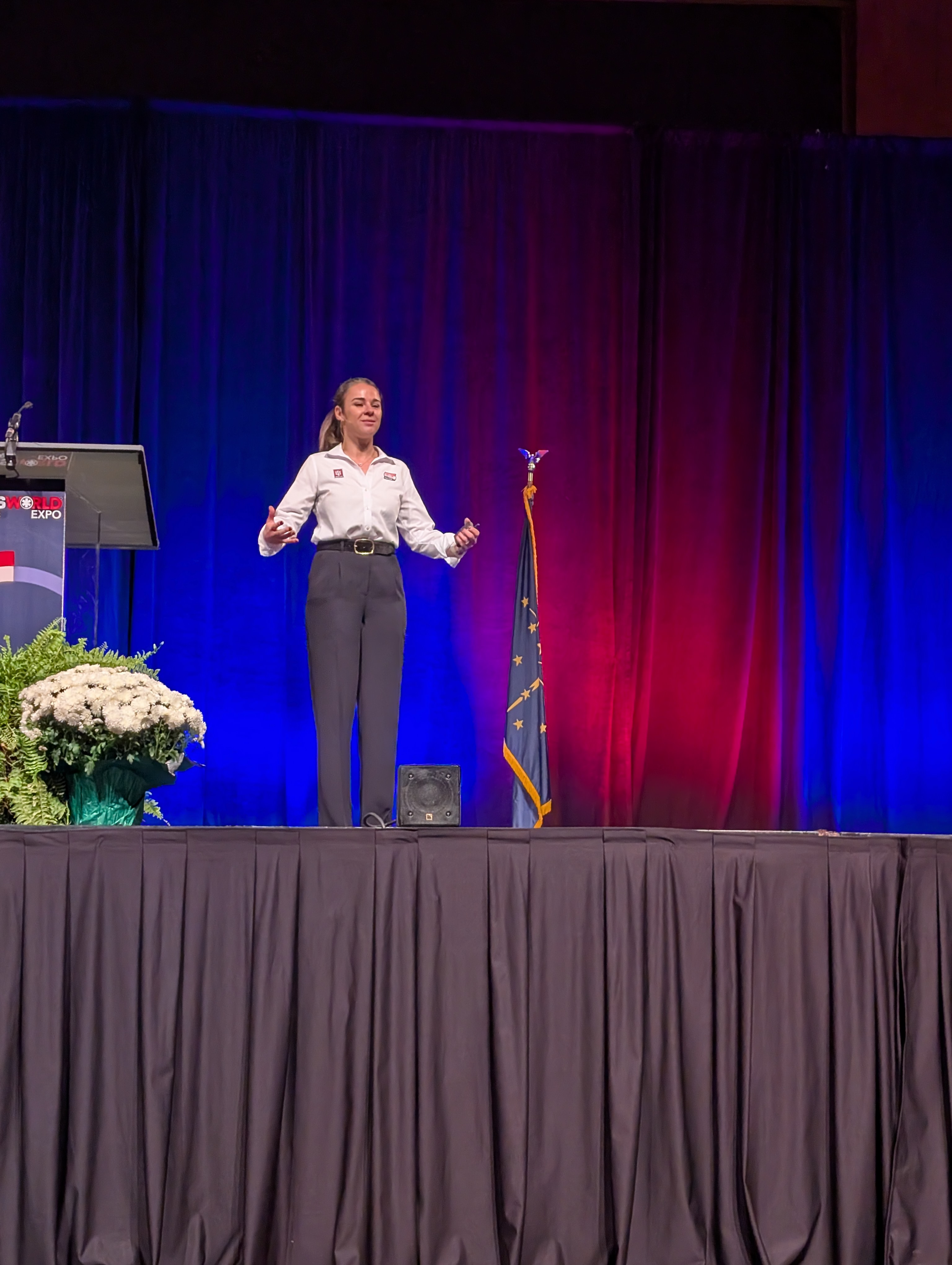
This is what Julia Vaizer, medical director for IndyCar and the Indianapolis Motor Speedway, described in her opening keynote at EMS World Expo 2025 in Indianapolis on Wednesday, Oct. 22. In her talk, titled "EMS in the Fast Lane: Emergency Response at the Speedway and Beyond," Vaizer detailed the intense planning and resources required to provide care at the annual Indianapolis 500, the historic race held in Indiana’s capital each May.
“Where do you even begin?” she said. “I know you're all thinking that, because that's what I was thinking as well.”
Her team starts with the data. They look at previous years and weather forecasts to estimate how many patients they expect to see—how many will be seen across the 560 acres inside the oval and in the grandstands, how many will walk into the first aid stations, how many will end up at the Infield Care Center. From there, they build out what resources they’ll need—a team of dozens and dozens of clinicians she referred to as a “small village.”
That Infield Care Center is basically an emergency room set up for the race inside one of the oldest buildings inside the track. The 18-bed facility has three sections: one for low acuity patients, one for high acuity, and one for drivers. They have the capability to do x-rays, give blood products, monitor patient vitals, and even intubate. Another smaller care center is on the other side of the infield, nearly a mile away, next to the Snake Pit, the EDM concert that starts the morning of the race. About 22 ambulances stage throughout the complex, including a few dedicated to any drivers who might be injured in a crash.
But the goal is to handle as much as possible without transport and appropriately treat and triage on the scene. The many first aid stations that provide BLS care, for example, have about 400 to 450 patient contacts, and only a dozen or so are even taken to the Infield Care Center, let alone a hospital.
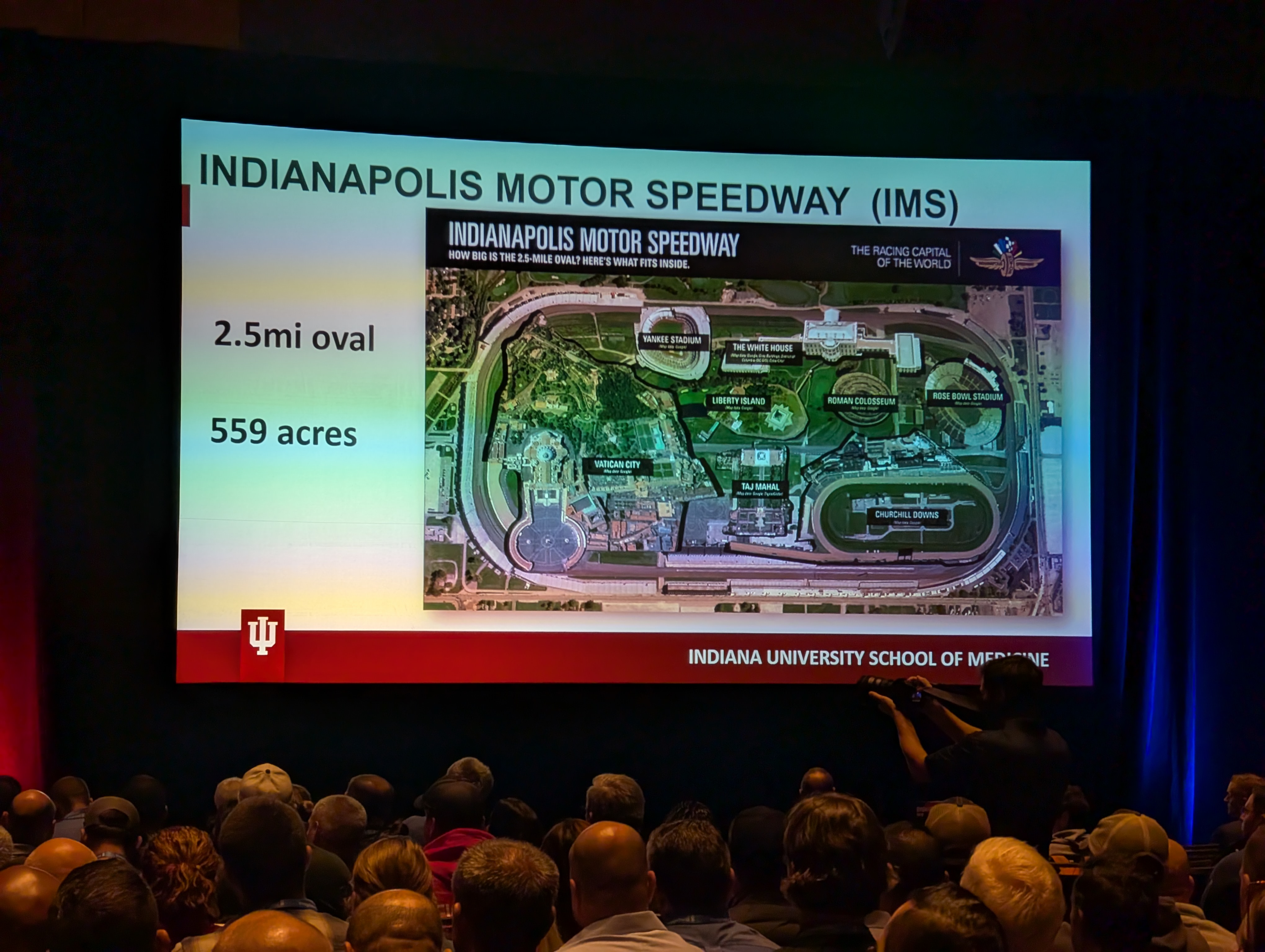
Another goal is to avoid taxing local resources, as Indianapolis and surrounding communities are busy enough with the day-to-day calls and an increase in activity outside of the Indianapolis Motor Speedway itself. Even 9-1-1 calls made from the speedway on race day are intercepted and routed to a temporary dispatch center established with the help of Global Medical Response. These 10 emergency telecommunicators take calls and help coordinate the response teams.
Responding to Crashes on the Track
In addition to the big picture medical response, Vaizer oversees the specialized teams who respond to incidents and injuries on the track itself. The safety teams each include a driver who serves as the crew leader, a lead paramedic, and two firefighters (who are EMTs or sometimes paramedics as well). On race day, four of these teams stage at various places along the track. Vaizer shared a video that showed how the teams follow some of the same procedures that emergency teams would while responding to any crash on roads across the country each day. They park in a way that blocks the scene, they ensure their own safety, and the paramedic goes immediately to assess whether the driver is okay or needs immediate resuscitation. They also will quickly determine if a physician is needed on the scene or if the driver can be safely taken to the care center for evaluation.
The video also showed debris flying from the car, another concern the medical teams deal with. In this case, the driver was okay and no bystanders were hurt, but that didn’t stop Vaizer and other IndyCar officials from reviewing the incident and the response.
“We're constantly analyzing every incident and improving to make sure that the cars are safe for the drivers, for the spectators,” she said, adding that they can’t predict every possible event, but they can try. “We're constantly improving.”
Preparing for the Worst
Vaizer concluded by discussing the coordination between dozens of agencies to prepare for the day, including plans for mass casualty incidents from many possible causes. No matter the size of the event, she said, people must know their role in the emergency action plan and can’t be flipping through it during an incident trying to figure out what to do.
“You have to have a really comprehensive emergency action plan,” she explained. “It has to be comprehensive but also comprehensible.”
In the case of the Indy 500, that means developing a plan along with local, state, and federal agencies and the organizations putting on the race and then testing that plan. Each year, they hold a large tabletop exercise prior to race day to ensure that they talk through the plan.
“We are given a threat, and we work together to respond to the threat” during the exercise, Vaizer said. “During that we get to know each other really well. And that's … what's most important.”
Vaizer, who said the keys to the entire event were relationships, cross-training, planning, and preparedness, concluded by saying it takes “a small village to come together” and keep everyone at the Indy 500 safe.
First Time in Indianapolis
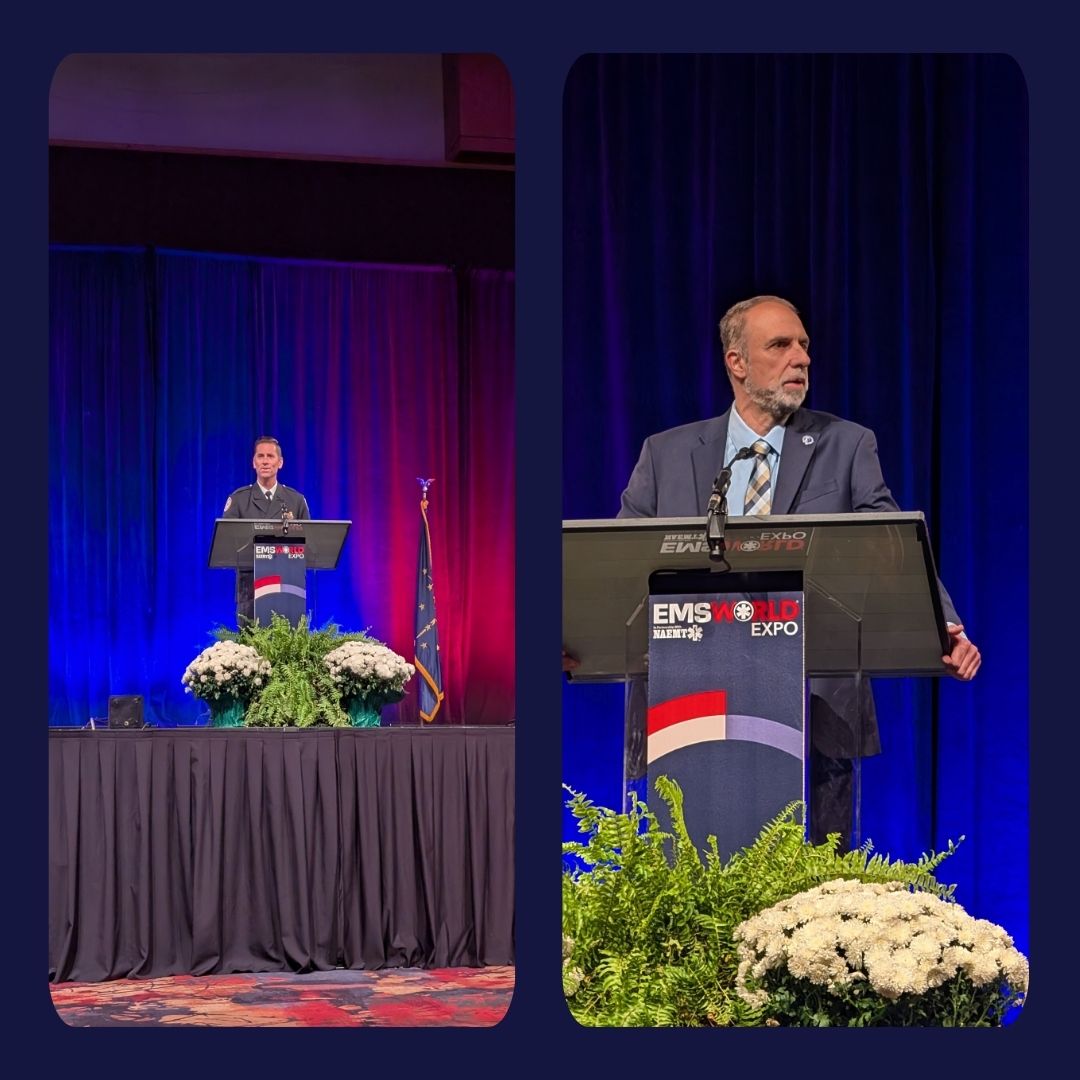
Prior to Vaizer’s keynote, the crowd of thousands of EMS clinicians from around the world was welcomed by Indianapolis EMS Chief Dan O’Donnell. “We know the sacrifices you make, the lives you touch, and the strength it takes to show up each and every day,” he said. “This week is about celebrating that commitment, learning from one another, and advancing the future of emergency medical services together.”
Indiana State WMS Director Kraig Kinney echoed O’Donnell’s sentiments, advising attendees to take advantage of the opportunities at the conference and to not only reconnect with friends, but to meet new colleagues. “You’ll find that we have way more in common in EMS than we can imagine.”
Joshua Hartman, a paramedic in New Jersey and New York City and the senior vice president of Cardiovascular / Emergency & Mobile Medicine Departments at HMP Global, which puts on the annual EMS World Expo, acknowledged the advances in EMS that continue to push the field forward, from delivering blood in the field to stroke diagnostic capabilities and more. But he also acknowledged, while noting the black band around his badge in honor of a friend and colleague who died by suicide, that the clinicians in the room continue to face many challenges.
“We're facing workforce shortages that stretch our crews too thin, too many of us are doing doubles just to keep the wheels turning while our health suffers; our funding models… still don't match the reality of the service that we provide,” Hartman said. “We are doing more, yet still fighting for the recognition, resources, compensation that our profession deserves. And mental health and resilience: they’re still constant battles. We've all carried home the weight of what we've seen, and it takes a toll.”
Awarding EMS Clinicians and Researchers
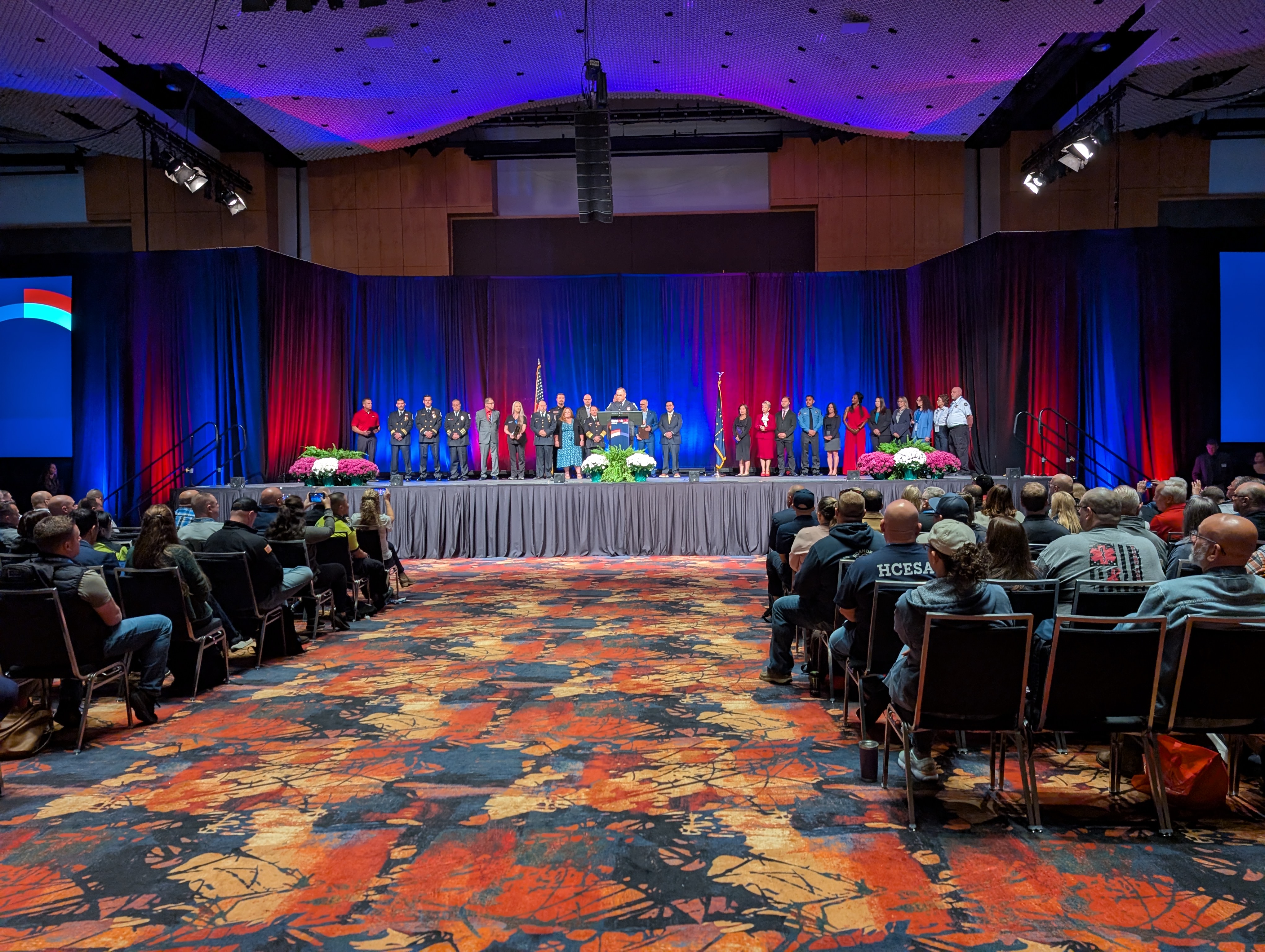
Several awards were also presented or announced, including the National EMS Awards of Excellence (winners can be found here). Notably, the Volunteer EMS Service of the Year Award went to Sun City Center Emergency Squad near Tampa, Florida, whose volunteers’ average age, Hartman noted, is around 73.
In addition, the Injury Prevention Alliance of Phoenix was honored with the Nicholas Rosecrans Award for the organization’s efforts to reduce teen driving injuries and fatalities; and two scientific abstracts were announced as winners of the best clinical and best educational research in the UCLA Prehospital Care Research Forum International Scientific Symposium, held each year as part of EMS World Expo.