Flat Stan First Aid Brings Practical CPR Education to Children in U.K.
Ten years ago, Simon Ferris observed there was a simple but powerful gap in CPR skills.

“Children weren’t being taught lifesaving skills early enough,” said Ferris, who is now director of Flat Stan First Aid Limited for children and SEF First Aid Assistance for adults based in Halifax, United Kingdom. “After seeing how many adults lacked confidence in emergencies—especially around CPR—it became clear that education needed to start young. If children grow up knowing what to do, we create a generation that is prepared, not panicked.”
Ferris started Flat Stan First Aid in 2016. Since then, 234,000 children have been introduced to first aid through the company’s programs. Training has taken place primarily in the United Kingdom, with international work delivered in Nigeria, Ghana, and Lebanon.
Charities, local authorities, and corporate sponsorships help fund Flat Stan First Aid. In the U.K., funding comes from the schools who participate in the training.
Why Teach Children
Although it may be assumed that when first aid is needed, it would be an adult’s responsibility to render it, there may be times an adult isn’t present or isn’t trained.
“Children can make a huge difference,” Ferris said. “In many emergencies, the first person on the scene is not a trained adult—it’s whoever is nearby.” Children can call emergency services, perform CPR when an adult collapses, help a choking sibling, place someone in the recovery position, alert others, and stay calm.
Ferris said that teaching first aid to children builds confidence to act in emergencies, and children share their experiences and knowledge with others; it’s also a step toward improving survival from cardiac arrest through education. Additionally, children learning first aid reduces fear and helplessness, creates lifelong helping behaviors and moral franchise, he said.
“Teaching children is so impactful. It builds confidence to act, reduces fear of ‘doing it wrong,’ and helps adults and children understand they can try to help. It encourages lifelong helping behavior and creates a ripple effect—children teach parents and siblings. It’s not just skill-building, it’s culture change.”
Ferris noted there are no liability issues for children performing CPR as Good Samaritan laws protect bystanders from civil liability when they provide reasonable, voluntary assistance to someone in an emergency.
The How of Teaching Children
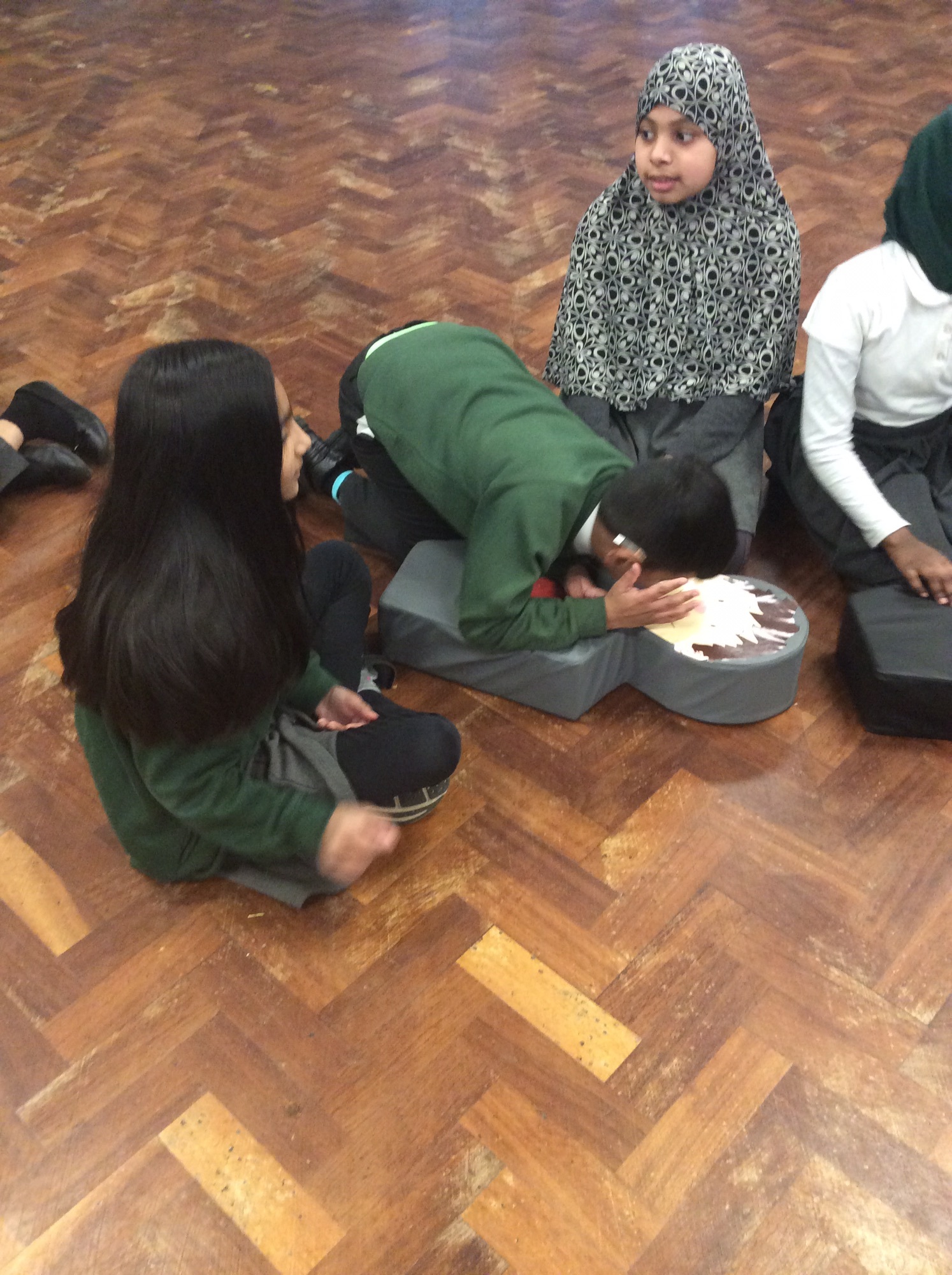
The name ‘Flat Stan’ was inspired by the idea of making first aid approachable and nonintimidating for children, Ferris noted.
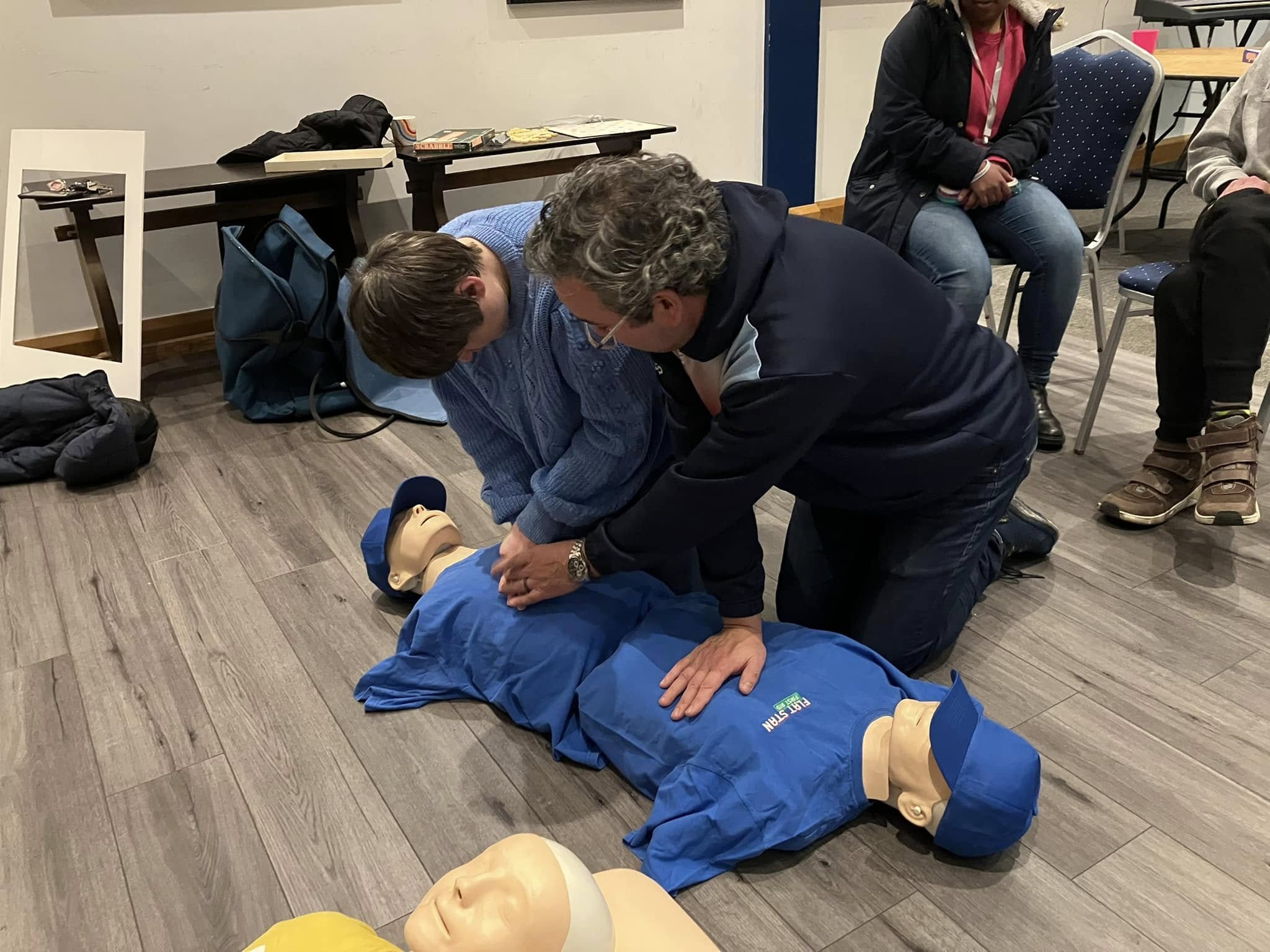
“I believed the mannequins should be child-friendly and less intimidating. The ones I developed are flat and my son is called Stan,” he said. “Having a relatable person, ‘Stan,’ removes fear from something that can otherwise feel overwhelming, helping children engage with serious topics in a fun and memorable way.”
Pointing out the evolving guidance around CPR and inclusivity, Ferris said that implementation of first aid in schools focuses on:
- Age-appropriate CPR training
- Greater use of practical, hands-on learning
- Inclusion of AED awareness
- Teaching adaptability such as helping someone in a wheelchair
“For children, this means simplified, confidence-building instruction that focuses on action over perfection,” Ferris said.
Flat Stan and Ferris have worked with the Resuscitation Council U.K. to make CPR education accessible to everyone. This includes teaching individuals with disabilities to perform CPR using adaptations, ensuring training includes scenarios where the casualty has a disability, and promoting accessibility in the chain of survival.
“The difference isn’t about lowering standards—it’s about broadening methods so more people can both give and receive lifesaving care,” Ferris said.
Ferris and his teams teach across a wide range of settings, including primary schools (ages 4-11), secondary schools (ages 11–16), sixth forms (post-16 years old, similar to junior/senior high school), colleges and vocational schools, special schools for children with additional needs or disabilities, Pupil Referral Units (alternative education for students who can’t attend mainstream school), and Scout and Guide programs (youth organizations focused on life skills).
Learning first aid fits into Personal, Social, Health and Economic education, part of the UK curriculum that includes health, wellbeing, and life skills. “In England, first aid is now part of statutory education, but this has not significantly accelerated uptake,” Ferris said. “I do believe it could be because it isn’t on the radar and people underestimate the power of children and the importance of introducing young people to these skills.”
First aid skills taught to children include remaining safe, summoning help, identifying if someone is breathing, CPR, recovery position, choking response, bleeding control, burns and basic injury care, and AED awareness. Ferris said the goal of Flat Stan First Aid is to allow children to interact, learn and have fun in a comfortable learning environment, while at the same time benchmarking and meeting key stage and curricular objectives.
“We use role play, interactive scenarios, games and storytelling, and hands-on practice,” Ferris said.
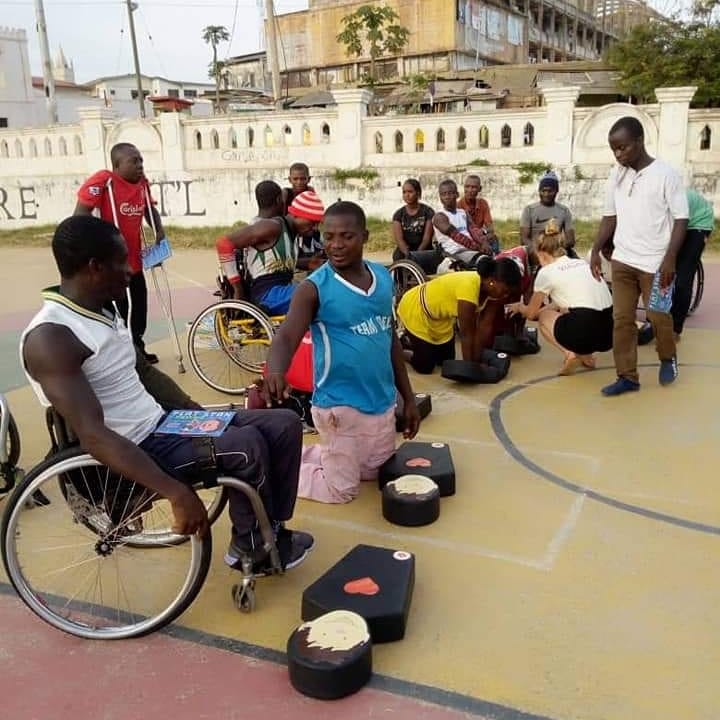
For secondary students, the focus is on how to deal with common injuries, perform CPR using traditional manikins, how to use a defibrillator/AED, how to deal with an unconscious casualty, and treating injuries. “The focus is real-world readiness,” Ferris said.
Ferris said the workshops for students with disabilities, both physical and intellectual, are geared to support the learning needs of this group. “One size does not fit all, and delivery must be adapted to suit the audience,” he said. “This could include the language we use, the pace of delivery and equipment.”
Flat Stan First Aid also is taught to students who are homeschooled.
“Our qualified trainers deliver sessions directly to homeschooling groups or through organized networks and community bookings,” Ferris said.
Ferris also teaches anaphylaxis preparedness for schools.
“Cases of anaphylaxis are increasing internationally, and the U.K. government says all staff in schools must have an understanding of the condition and schools must have action plans in place,” he said.
New anaphylaxis guidance in schools established this year focuses on increased availability of emergency medication, staff training, and faster recognition of allergic reactions.
Digital Resources Continue Learning at Home
The Flat Stan First Aid Academy digital resource package is an online learning platform with videos, activities, and lesson plans. The Flat Stan First Aid app was introduced at the onset of COVID-19, allowing children to revisit topics via short refresher videos.
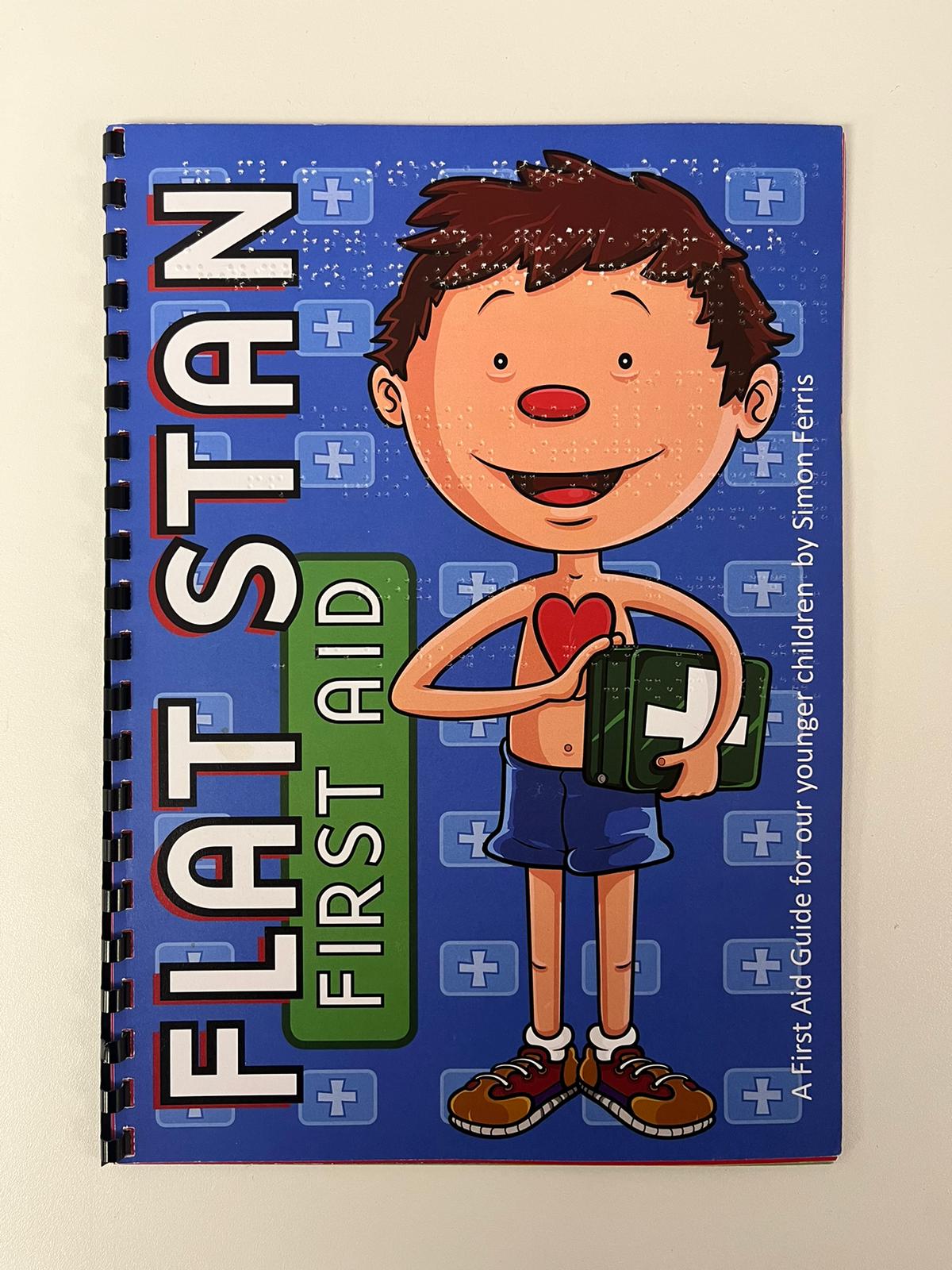
Flat Stan First Aid includes a guide that gives every child free access to the Flat Stan App, activities, a video platform with a British Sign Language version, and Scouting and Guides first aid criteria, which allows children to revisit lessons, share their skills, and teach others. Every child gets a first aid guide including children who miss the sessions if they’re not at school, said Ferris, adding “no child misses out.”
Flat Stan First Aid has a nucleus of six trainers in the United Kingdom. “We can call on more from a national team of qualified, experienced trainers delivering workshops across the U.K.,” Ferris added.
Success and Recognition
Ferris has received a significant amount of positive feedback about the training. The training has resulted in at least three successful interventions for choking siblings, he said.
“The feedback is incredibly meaningful,” he said. “Hearing that a child felt confident enough to act in an emergency is the ultimate validation of what we do; it’s exactly why Flat Stan First Aid exists.”
Flat Stan First Aid has earned significant recognition for its efforts. The organization has won the Diversity and Inclusion Award and Calderdale Area Member of the Year in 2025 and the Innovation Award in 2023 from the Mid Yorkshire Chamber of Commerce Business Awards.
Flat Stan First Aid also has won First Aid Training Provider of the Year for 2023/24 and 2025/26 from the Yorkshire Prestige Awards. Corporate LiveWire Global Awards honored the organization as the Global Primary School First Aid Training Provider of the Year for 2021/22.
The U.K. Enterprise Awards honored Flat Stan First Aid as the Best Primary School First Aid Training Provider in 2021, the U.K.’s Best Children’s First Aid Training Specialist in 2020 and the U.K.’s Best Primary School First Aid Training Provider in 2019.
For those in other countries interested in starting a similar program, Ferris noted “there is a lot of time and effort involved in developing and initiating a program. Our program can be adapted to satisfy a country’s requirements, culture, and education system. It’s proven and is credible. This can save time and costs for organizations in other countries. There is a cost implication because otherwise organizations might not be fully committed.”