The Third System in the Ambulance
Scenario
The relative quiet in the back of the ambulance was suddenly interrupted by the monitor on the bench. Alarm blaring, the printer spit out a row of asterisks: *** ACUTE MI SUSPECTED ***
The patient was young, febrile, tachycardic, complaining of chest pain that changed when he breathed. The new paramedic looked at the strip, looked at the screen, and reached for the radio to call in a STEMI alert. His partner looked up from where she was documenting the patient’s medications and asked what he saw. He ripped off the strip and thrust it at her, pointing at the machine’s interpretation.
Not the rhythm, not the ST segments, and not the patient. Just the sentence printed at the top.
The problem wasn’t that he had considered the monitor's interpretation. He should. The problem was that he had no independent answer to compare it with. The machine hadn’t influenced his judgment. The readout had arrived before judgment.
EMS has spent decades building systems to make high-stakes care safer: protocols, checklists, drug calculators, monitor interpretations, electronic decision trees, clinical apps, online and even on-scene medical control.
Most of these tools are useful. Some are indispensable. Cognitive aids can improve adherence to critical steps, reduce omissions, and preserve mental bandwidth when the call is moving faster than the clinician's working memory.
But every safety tool carries a design question we haven’t asked often enough: What happens when the aid does so much of the thinking that the clinician never develops the capacity it was meant to support?
The question has become urgent as artificial intelligence (AI) enters education, documentation, dispatch, quality review, and clinical decision support. It may also explain something EMS leaders have been describing long before generative AI arrived: new clinicians who perform well inside a familiar algorithm but struggle to pivot when the patient, scene, or physiology refuses to follow the script.
This is usually described as a generational problem. I’m not convinced it is. A generation didn’t design its own learning environment. We did.
Fast, Slow, and Artificial
Daniel Kahneman popularized the distinction between System 1, the mind's fast and intuitive process, and System 2, its slower, deliberate reasoning. A 2026 Wharton working paper by Steven Shaw and Gideon Nave adds a third participant: System 3, cognition produced outside the human brain by artificial systems.
System 3 can help a person reason. It can generate options, surface contradictions, calculate risk, and challenge an initial impression. That’s cognitive offloading: strategically assigning part of the work to a tool while the human remains engaged in framing, evaluating, and deciding.
Cognitive surrender is different. It occurs when the external answer is adopted with little scrutiny, replacing rather than supporting intuition and deliberation.
Shaw and Nave tested this by giving participants optional access to an AI assistant while they completed reasoning problems. The AI was deliberately correct on some trials and confidently wrong on others. Participants consulted it on more than half of the available trials. When they used it, they followed the faulty advice about four times out of five. Accuracy fell from 45.8% without AI to 31.5% when the AI was wrong, yet access to the tool increased confidence. The participants weren’t merely making different errors. Their performance became tethered to the reliability of the external system.[i]
That is the operational hazard: the tool can be wrong while the user becomes more certain.
The study was conducted with reasoning tasks in a controlled environment, not paramedics on the roadside. It doesn’t prove that AI is causing poor field performance, and the authors explicitly call for real-world and longitudinal research, but the mechanism is familiar to every high-risk industry that has automated complex work. Aviation has spent decades studying the “out-of-the-loop” operator: the pilot whose workload falls when the automation works, along with vigilance, situational awareness, and readiness to recover when it doesn’t. Research on automated decision aids has repeatedly found that people check less when systems appear reliable and that deliberate exposure to automation failures during training improves verification behavior.[ii]
EMS shouldn’t wait for its own accident report to recognize the family resemblance.
The Skill That Never Forms
The most important contribution may not be the phrase "cognitive surrender." It may be the distinction between deskilling and never-skilling.
Deskilling is the erosion of an ability once possessed. Never-skilling is the failure to develop that ability because the central cognitive work was outsourced during training. Mis-skilling is worse: learning the wrong habits, such as equating fluency with accuracy, treating confidence as competence, or assuming that a recommendation is more objective because it came from a machine.
A recent paper on the "cognitive ecology" of medicine argues that answer-first AI threatens adaptive expertise: the ability to reason when a case is novel, ambiguous, or doesn’t match a known pattern.[iii] Routine expertise grows through repetition. Adaptive expertise grows through productive struggle — framing the problem, identifying what matters, tolerating uncertainty, generating alternatives, looking for disconfirming evidence, revising a plan when the facts change.
That description could have been written for paramedicine.
The job isn’t difficult because the protocols are long. It’s difficult because the information is incomplete. The environment is uncontrolled. The clock is moving, and the patient may be simultaneously sick, frightened, intoxicated, injured, medicated, hypothermic, deceptive, or simply unlike the patient in the textbook. Clinical reasoning in EMS begins before contact and changes continuously as the crew integrates everything from scene hazards to response to treatment, to the very real possibility that the original problem representation was wrong.[iv], [v]
Situational awareness and decision-making aren’t decorative "soft skills" around the edges of paramedicine. Reviews of EMS cognitive and nontechnical skills place them near the center of safe performance.[vi], [vii] Yet they are difficult to teach, assess, and document. It’s much easier to test whether a student selected the approved branch of an algorithm than whether the student noticed the branch did not fit.
That creates a predictable institutional bias. We teach what we can standardize. We measure what we can count. We remediate what we can cite. Over time, protocol compliance becomes a proxy for judgment, even though the two are not the same.
The Protocol Is Not the Villain
This argument can go sideways quickly, so let’s establish the guardrail: cognitive offloading isn’t inherently bad, and protocols don’t make weak clinicians.
A checklist that prevents a missed medication or prompts a team through a rare pediatric arrest is doing exactly what it should. A drug calculator is more reliable than arithmetic performed at 3:00 AM after 14 hours on duty. A protocol can protect patients from idiosyncratic care and protect clinicians from trying to reconstruct infrequent procedures from memory. Simulation studies have shown that cognitive aids can improve adherence and time efficiency in emergency care.[viii]
The danger begins when the aid becomes the clinician's first and only representation of the problem.
A competent paramedic shouldn’t memorize every dose, invent treatment standards, or ignore medical direction in the name of intuition. Neither should competence be defined as moving obediently from one box to the next. The real threshold is whether the clinician can explain what the tool is doing, identify when its assumptions aren’t met, recognize when the patient's trajectory has changed, and escalate or deviate appropriately within the clinical and medical oversight structure.
Protocols should reduce avoidable cognitive burden so clinicians have more attention available for the parts that can’t be scripted. They shouldn’t eliminate the productive struggle that builds the judgment to recognize those parts.
This Is a Leadership Problem
It’s tempting to frame this as a complaint about younger medics and shorter attention spans that’s emotionally satisfying and operationally useless.
The more useful question is what our systems reward. In many agencies, onboarding emphasizes learning the protocol, locating the protocol, documenting the protocol, and avoiding deviation from the protocol. New clinicians quickly learn that certainty sounds competent, hesitation alarms supervisors, and a defensible algorithm is safer than an independently reasoned answer that may be questioned later.
Then we hand them increasingly polished tools that provide interpretations, recommendations, narratives, and documentation before they have formed their own. We shouldn’t be surprised when they become excellent operators of the scaffold and uncertain clinicians without it.
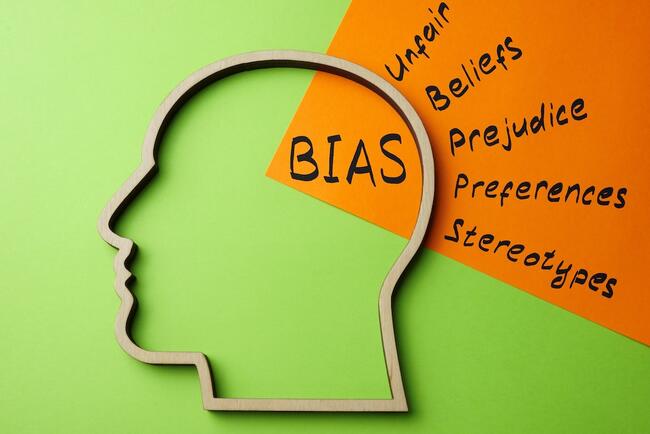
AI raises the stakes because it can produce not only the answer but a persuasive explanation. It speaks in complete sentences. It doesn’t look nervous. It can make shallow reasoning appear finished. For an experienced clinician with a strong knowledge base, that output may be useful material to interrogate. For a novice, it may become the first coherent version of the case, anchoring everything that follows.
That’s why the same tool may be augmentation for an expert and substitution for a beginner.
Building Clinicians Who Can Pivot
The answer isn’t an AI ban or a ceremonial return to paper protocols. It’s calibrated engagement, preserving human authorship of the judgment while using tools that genuinely improve performance. That begins with learner commitment.
Before opening an app, consulting AI, or accepting an automated interpretation, the learner should state a working impression, the evidence supporting it, the most dangerous alternative, and what finding would make the current plan wrong. The blank page comes first. The tool comes second.
Training should include deliberate tool failure. Monitors should misinterpret rhythms. Decision aids should occasionally offer an incorrect branch. AI-generated summaries should omit a critical fact or anchor on the wrong diagnosis. The learner's task shouldn’t merely be to complete a scenario, but to catch the surrender point. Research outside EMS suggests that experiencing rare automation failures improves checking behavior more than simply warning users that failure is possible.
We should also evaluate the pivot itself. Scenario rubrics often reward treatment completion and penalize missteps. They should also capture whether the clinician updated the working diagnosis, sought contradictory information, recognized a trajectory change, and articulated uncertainty. "What changed your mind?" should be a routine debriefing question.
AI can be designed into this process without taking it over. Instead of asking it for the diagnosis, ask it to generate competing hypotheses after the learner commits to one. Ask it what evidence would weaken the working impression. Ask it to play the skeptical medical director, the receiving physician, or the partner who noticed something everyone else missed. Use it as a question engine, not an answer engine.
Finally, leaders must make disciplined doubts psychologically safe. A clinician who says, "The protocol points here, but these findings don’t fit," shouldn’t automatically be treated as resistant or incompetent. That statement may be the sound of System 2 coming online. The next step isn’t blind deviation. It’s explanation, verification, consultation, and accountable judgment.
The floor can’t be “follows the protocol.” The floor is “uses the protocol without surrendering the patient to it.”
The Sentence at the Top
Back in the ambulance, the senior medic puts her tablet down. She doesn’t tell him to ignore the monitor. Instead, she covers the automated interpretation with one gloved finger and asks him to read the tracing again.
"Take a minute. Look at your patient first, now look at this. What do you see? Do they make sense?"
The question created a small amount of friction. That was the point.
The future of EMS will include more algorithms, more predictive tools, and more artificial cognition, not less. Used well, they can make care safer and clinicians stronger. Used too early, too completely, or without resistance training, they can create competence without apprenticeship. Providers who know where the answer appears but not how it was built.
Our responsibility isn’t to preserve difficulty for nostalgia's sake. Nobody is romanticizing the days when everyone carried around drug cards stained with coffee, tears. and questionable life choices.
It’s to preserve the kinds of difficulty that form judgment. To create the type of friction that stimulates growth and curiosity, that challenges perceptions and keeps those neural pathways developing.
Because one day the monitor, the app, the protocol, or the AI will be wrong, but the patient will still be right there waiting for someone who knows the difference.
References
-
Shaw SD, Nave G. (2026). Thinking—fast, slow, and artificial: How AI is reshaping human reasoning and the rise of cognitive surrender [Preprint]. PsyArXiv. https://doi.org/10.31234/osf.io/yk25n_v1
-
Bahner JE, Hüper A-D, Manzey D. (2008). Misuse of automated decision aids: Complacency, automation bias and the impact of training experience. International Journal of Human-Computer Studies, 66(9), 688–699. https://doi.org/10.1016/j.ijhcs.2008.06.001
-
Chow M, Li AY, Quek DYJ, et al. (2026). The cognitive ecology of medicine: Generative AI, clinical reasoning, and the preservation of adaptive expertise. Postgraduate Medical Journal. Advance online publication. https://doi.org/10.1093/postmj/qgag068
-
Andersson U, Maurin Söderholm H, Wireklint Sundström B, et al. (2019). Clinical reasoning in the emergency medical services: An integrative review. Scandinavian Journal of Trauma, Resuscitation and Emergency Medicine, 27, 76. https://doi.org/10.1186/s13049-019-0646-y
-
Reay G, Rankin JA, Smith-MacDonald L, Lazarenko GC. (2018). Creative adapting in a fluid environment: An explanatory model of paramedic decision making in the pre-hospital setting. BMC Emergency Medicine, 18, 42. https://doi.org/10.1186/s12873-018-0194-
-
Sedlár M. (2020). Cognitive skills of emergency medical services crew members: A literature review. BMC Emergency Medicine, 20, 44. https://doi.org/10.1186/s12873-020-00330-1
-
Bennett R, Mehmed N, Williams B. (2021). Non-technical skills in paramedicine: A scoping review. Nursing and Health Sciences, 23(1), 40–52. https://doi.org/10.1111/nhs.12765
-
Droege H, Trentzsch H, Zech A, et al. (2023). A simulation-based randomized trial of ABCDE style cognitive aid for emergency medical services CHecklist In Prehospital Settings: The CHIPS-study. Scandinavian Journal of Trauma, Resuscitation and Emergency Medicine, 31, 81. https://doi.org/10.1186/s13049-023-01144-3