Examining and Mitigating Bias in EMS
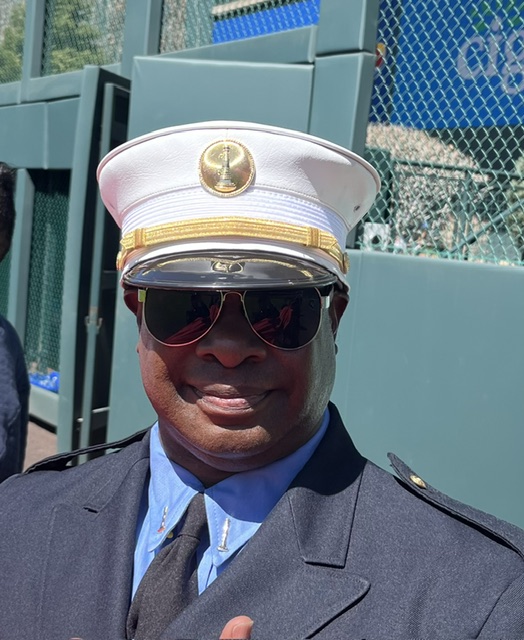
Whether implicit or explicit, everyone has a bias, said Calvin Brown, Hudson (Colorado) Fire Protection District division chief of training. He presented on bias in EMS during the September Innovation Conference for Emergency Medical Services at the Florida Center for EMS – CAMLS in Tampa, Florida.
Brown noted the effects of healthcare bias include:
- Increase in negative outcomes
- Continuation of negative stereotypes
- Perceptions continuing to be part of training curriculum
- Inaccurate diagnoses
- Delays in proper treatment
- Mistrust of medical providers
- Certification loss and/or criminal charges
Implicit vs. Explicit Bias
Brown showed attendees a video from Stacey A. Passalacqua, PhD, assistant professor at the University of Texas at San Antonio Department of Communication, noting explicit biases are the beliefs and attitudes “of which we are aware and they can be addressed through such measures as self-reporting.”
Implicit biases are beliefs or attitudes existing outside of one’s conscious awareness, such as attitudes about individuals who belong to particular social groups.
“Being able to pinpoint where we have room for improvement can be challenging,” she said.
Project Implicit offers a test to analyze bias in social attitudes, age, and health.
“Be aware of certain patient populations that are at risk for being subject to healthcare providers' implicit biases,” she said, including women, African Americans, Hispanics, Native Americans, patients with disabilities, those from the LGBTQ+ community, addicts, and those suffering from mental health issues.
Brown noted that problems ensue “when you allow that bias or that concept of a certain person or a certain group to dictate how you treat your patients,” called “depersonalization.” He illustrated his points with videos providing case studies, such as the incident surrounding George Floyd in Minneapolis.
“If you are an EMS or prehospital professional, even an in-house professional, and you are rolling into this situation, it's already going to be tense and heightened,” Brown noted. “How are you going to react to it? Because if you already have a preconceived notion about someone or a situation, that's going to change the way you treat your patient.”
That includes homeless people for whom there may be multiple calls.
“When you look at this person, it's just a patient,” said Brown. “It may be the exact same thing we saw eight hours ago, but we still have a responsibility, and we've taken an oath to say, ‘I'm going to do the best that I can for this patient, just like I'm going to do the best I can for someone who lives in that house.’”
Brown noted two key biases in emergency services are the anchoring effect and the Dunning-Kruger effect.
“The anchoring bias is your first impression of that patient or that interaction that you stay with, regardless of anything else that may happen,” said Brown.
The Dunning-Kruger effect is the concept that someone knows more than they really do, he added. Confirmation bias is “whenever we see things or we seek things out that validate our opinion or our experience, regardless of anything else.” The bandwagon effect is when ‘everybody says this person is a bad person,’ so it must be true, he added.
Tracking Bias
Brown showed a video in which Anurag Gupta, MPhil, JD, founder and CEO, Be More America, says in healthcare there are three primary ways to track bias.
One is in interpersonal interactions between a patient and provider, where unconscious bias affects diagnoses and impacts the amount of trust patients have in providers. That manifests itself in pain management, such as patients with darker skin receiving lower doses of pain medication “because of assumptions being made around addiction or their ability to actually be truthful around what they're experiencing,” Gupta said.
The second lies in the internal dynamics of organizations, including team collaboration, team dynamics, performance reviews, and reviews around compensation.
The third way is wasted costs. A 2018 study funded by the National Institute on Minority Health and Health Disparities, part of the National Institutes of Health, revealed racial and ethnic health disparities cost the U.S. economy $451 billion.
Brown noted the cost of misdiagnoses and patients not going to the doctor or delaying treatment. “Add into that within the last 10 years the cost of lawsuits, because we are being sued as an agency multiple times where we were not before, as well as the cost of going to jail,” Brown said.
Bias to Watch For
“There are studies showing there are people in EMS and in the physician area who think that black skin is tougher than white skin or think that black people don't feel pain to the same extent, or they have stronger bones,” Brown said.
Physician advisors, trauma surgeons and ER physicians who are teaching in prehospital medication or emergency services the different ways to treat people have an idea in their head and are “passing it down to us in prehospital care, and now we are perpetuating that stereotype, and treating our patients in an incorrect way,” Brown said.
Brown noted that while there is an opioid problem in the United States that needs to be managed at all levels, “if you have a fracture, regardless of what color you are, that's going to hurt. We need to be managing that patient exactly the same way across the board. Because if you don't, then the outcomes are worse.”
Children are also bias victims, Brown said. “We learn in paramedic school to treat your patient, not the monitor. If the symptoms and the situation call for it, manage the patient the way that you should.
“Everybody does different protocols, but keep in mind that just because this is a three-year-old Black kid with colic doesn't mean that he's any different than a three-year-old white kid. These are the things that we're getting ourselves in trouble for.”
Add to that access and functional needs, autism, emotional disturbances, hyperactivity, aggressive behaviors, immaturity, and withdrawal among children.
“An estimated 17.1 million kids have these conditions, and this is what we're coming into,” Brown said. “Keep in mind, you're rolling up in a big red fire truck and a big red ambulance, and six of you are jumping out of this thing, getting all kinds of equipment and all dressed out. We crowd in around this four-year-old who is terrified and doesn't know why she doesn't feel good, and doesn't know why there are six strangers in her house that all look like giants, and now we are poking and prodding at her.”
Protocols should accommodate those fears, Brown added.
Obese patients are also discriminated against, he noted, adding while there may be an assumption that someone is constantly falling due to their weight, it could be another factor such as blood pressure medication.
“We are tied to a certain stereotype or an idea that this person is just wasting our time, which is ironic because this is what we get paid to do,” Brown said of EMS response.
The elderly are prone to misdiagnosis or undertreatment, Brown added, pointing out “at some point, we're all going to be there. Just because you're old doesn't mean that you can't articulate the problems you're having. Treat your patients, listen to what they're saying, and then go from there.”
Regarding women, it wasn’t long ago that there was the notion they didn’t have heart attacks, but rather their symptoms were attributed to anxiety or “that time of the month,” Brown explained. “To this day, we are still undertreating females when it comes to cardiology and the effects of it,” he added. “I guarantee they do have heart attacks, and they die from them as well.”
Preeclampsia is more prevalent in Black women than in other races, Brown said. “When you respond to a female patient who is pregnant, this is something that you have to keep in mind, especially if they have just recently given birth — how has that changed their physiology?” he added.
The Aftermath of Elijah McClain’s Death
“We no longer have immunity to screw up. It is costing us money, our certifications, and our freedom,” Brown said. “When you think about these things and go into these calls, keep that in mind.”
There’s already an inherent distrust of people in uniform, Brown noted. “If we keep adding to it, then the problem just gets bigger,” he said. “Colorado has not had it figured out. There are things we are still working on.”
He pointed to the Aug. 24, 2019, incident in Aurora, Colorado involving Elijah McClain, 23, who after purchasing soft drinks at a gas station was confronted by police responding to a 9-1-1 call about a Black man walking around wearing a mask, which his family said he did without ill intent. Police restrained him with a carotid neck hold; he resisted and became unconscious. Paramedics arrived, injecting him with what would be a fatal dose of ketamine.
One officer was convicted of criminally negligent homicide; the other two were acquitted. The paramedics were initially convicted of criminally negligent homicide. In June, the Colorado Court of Appeals reversed the homicide convictions, sending the cases back to a lower court for potential new trials.
In 2021, the city of Aurora agreed to pay $15 million to settle a federal civil rights lawsuit brought by McClain's parents, the largest liability suit in the city’s history.
Brown noted Colorado for the most part uses ketamine in very limited situations.
“Ketamine in and of itself is a fairly benign drug,” he said. “It works well. It doesn't affect the blood pressure. It’s like any other tool; if you use that tool incorrectly, then it has consequences.”
Brown noted the judge in the court cases indicated he was shocked by the indifference manifested.
Training Against Bias
Training can mitigate bias consequences, said Brown.
“You have to understand you have a bias, these are the consequences, and this is how you can prevent it,” he added. “Have conversations with your physician advisor to say, ‘How do you want us to handle these calls?”
Talk about quality assessment/quality improvement for specific groups, genders, and calls, Brown said, adding it’s best to track patterns. Senior staff must be willing to concede there is a problem and be willing to fight it.
“If you continue to have these issues, then you're not going to work here, because not only are you costing your certification, you're costing us money,” he added of those presenting bias problems.
“How you react to people, how you do the different things, can set the standard for the ceiling or the floor for the next 20 minutes. Have a broad perspective. Treat everybody the exact same way. Eighty-three percent of the calls we run in EMS are not the same patient. If you go into it with that concept, you're going to keep yourself out of trouble,” Brown said.
“Stay away from assumptions. One of the most profound but lesser-known things Dr. Martin Luther King said was of all the forms of inequality, injustice in healthcare is the most shocking and the most inhumane.”