How EMS Plans for 34,000 Walkers on the Mackinac Bridge
On a warm, late summer morning, a middle-aged man walking with friends and family begins to stumble. When someone asks if he is OK, he is unable to speak clearly. He has a look of panic on his face, and it seems like he might fall. Two people quickly step forward to support him.
Worried that their friend might be having a stroke, someone calls out to the state police trooper who is standing nearby, "We need an ambulance!"
The trooper spots a small crowd waving at him and, recognizing a medical emergency, calls on the radio for an EMS response to the patient's location, which is the southbound outer lane of the Mackinac Bridge, about two miles north of Mackinac City, Michigan. Moments later, Emmet County EMS (Mich.) paramedics are driving past thousands of other walkers in a UTV toward the patient.
Why the Mackinac Bridge Walk Creates a Unique EMS Challenge
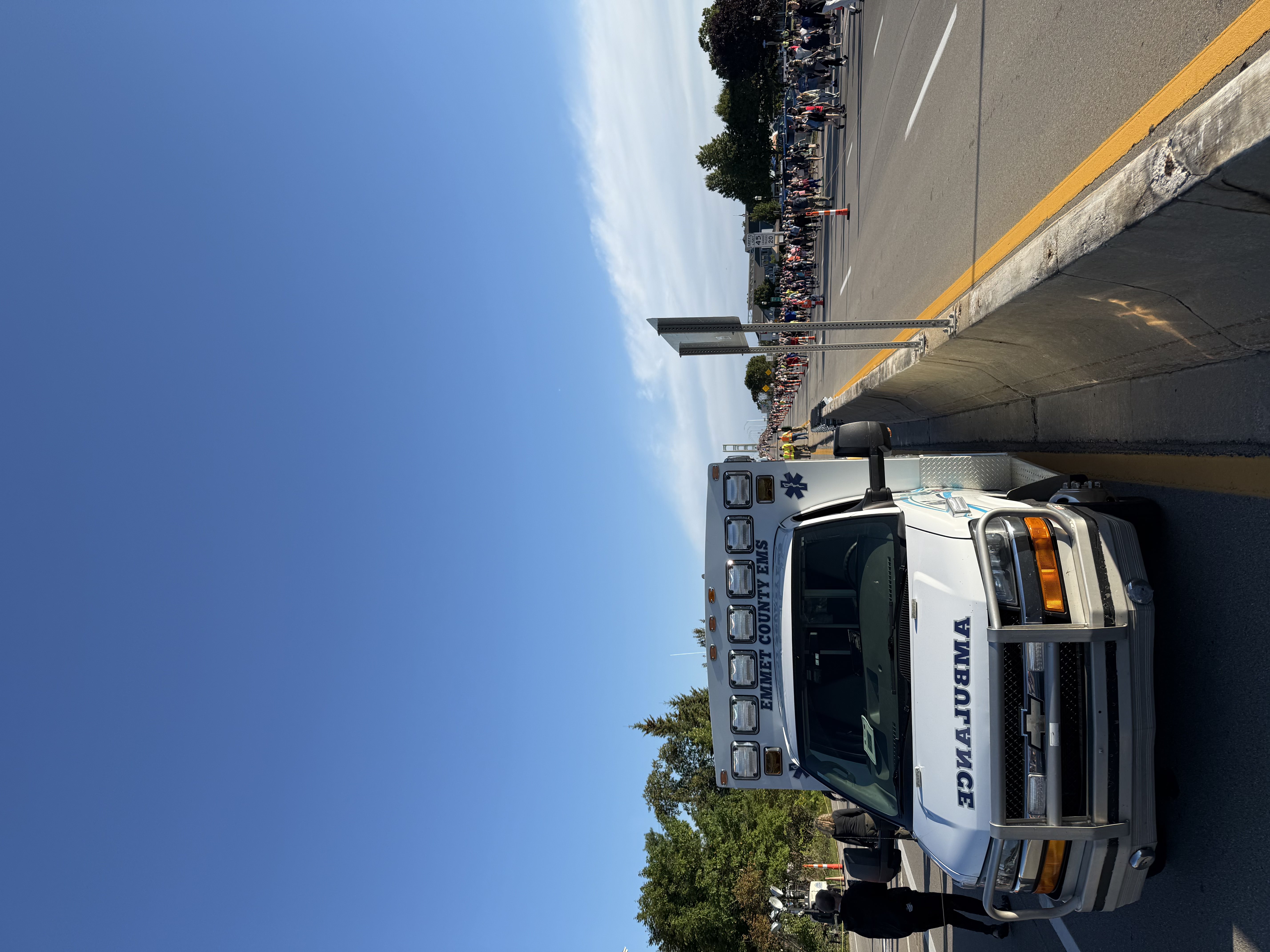
Every Labor Day, tens of thousands of people participate in the Mackinac Bridge Walk. Emmet County EMS, responding from a medical operations area at the south end of the bridge, has a fleet of UTVs ready to respond to emergencies, like this hypothetical patient, on the southern half of the bridge.
The Mackinac Bridge, opened to traffic in 1957, is the longest suspension bridge in the western hemisphere and the world's fifth longest suspension bridge. The total length of the "Mighty Mac," which connects Michigan's lower peninsula to the upper peninsula, is 26,372 feet and the suspension portion of the bridge is 8,614 feet. The bridge is 54 feet wide, which is just enough for four traffic lanes and a small median that separates north and south bound traffic. At mid-span the bridge is 200 feet above the water.
As a suspension bridge, the Mackinac Bridge is designed to move up and down and side-to-side depending on the wind speed, wind direction and ambient temperature, as well as the load the bridge is bearing. Pedestrians, like motor vehicle passengers, can feel the bridge moving.
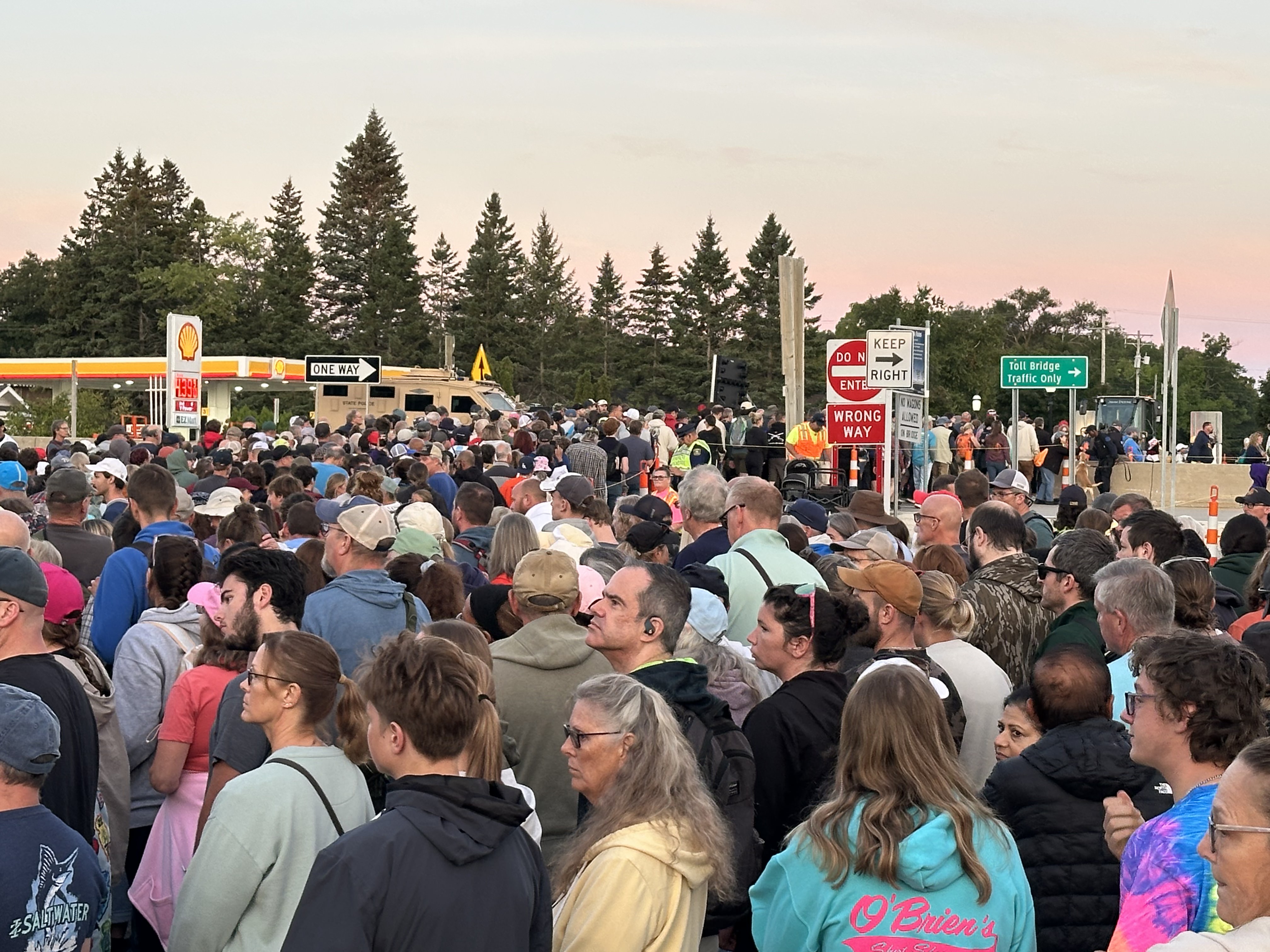
The Mackinac Bridge Walk, the only time pedestrians are allowed on the bridge, held annually since 1958, except for 2020, is open to anyone who would like to participate and doesn't require pre-registration, and participants can walk as much or as little of the bridge as they'd like. Some fast and fit walkers walk the full length of the bridge and back, while others walk across and find a car, bus, or boat ride back to their starting point. Many people choose to walk to the bridge's midpoint and return to the side where they started. As the morning goes by, the turnaround point gets progressively closer to the mainland, so the bridge can reopen to motor vehicles at 12:30 P.M.
One Bridge, Two EMS Operations
This mass gathering, which is usually led by the Michigan governor walking at the front of the pack, takes place exclusively on a piece of critical infrastructure and has only two ingress and egress points at each end of the bridge for participants, as well as law enforcement, fire, and EMS responders. These factors make pre-planning and event day coordination among the Mackinac Bridge Authority, federal, state, and local agencies critical to the safe execution of the event and restoration of motor vehicle and Great Lakes commercial shipping. The Coast Guard, Department of Defense, and Department of Homeland Security are among the federal agencies that provide land, air, and marine security before and during the event, including protected airspace and no boat or freighter traffic under the bridge.
Bryce Tracy, Chippewa County Emergency Manager, has been a part of the bridge walk unified command since 2007 and now leads the development of the Event Action Plan (EAP). For Tracy, the complexity of the event, including two emergency management regions, three sheriff's offices, other local and tribal police agencies and multiple EMS agencies and hospitals, is useful for bringing everyone together to collaborate on planning and operations.
"This is a great annual event that allows us to work together under unified command," Tracy said. "If we can get ready for this, we can get ready for anything."
Emmet County EMS, while also staffing four ALS ambulances for other 9-1-1 calls across the county, assigns 15 people to the Mackinac Bridge Walk South EMS Ops, which consists of four additional ALS ambulances and the UTVs for on-the-bridge response. An equivalent number of resources from Cheboygan Life Support Systems respond from the north side of the bridge.
"Because of the distance and the way everything is set up, we are completely split into two commands," Brian Patten, EMS Director, Emmet County EMS, said. "It's two separate operations."
Patten and two supervisors act as the South EMS Ops command staff, monitoring the radios for response requests and coordinating the assignment of EMS personnel to UTVs and ambulances from the EMS staging area.
Building an EMS Communications Plan When Cell Service Fails
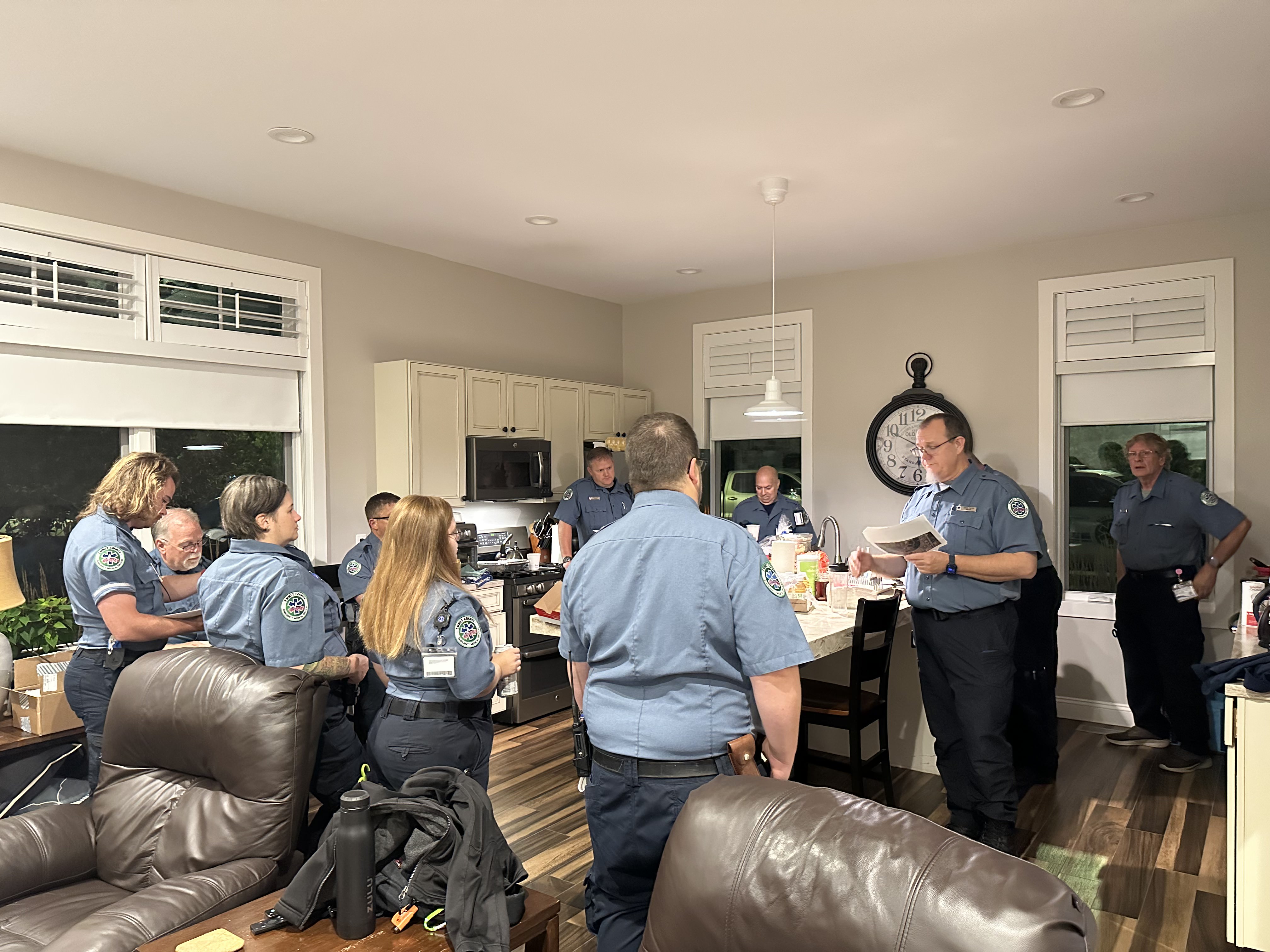
At 4 a.m. on Labor Day morning, the Emmet County EMS team starts moving equipment to the South EMS Ops area. Staff assemble at the service's station #3 in Mackinaw City at 5:30 a.m. for a breakfast safety briefing.
"We go through the event action plan, talk about our staging, and focus on communications," Patten said.
With so many people in a relatively concentrated area, cellular service is limited and often unavailable for EMS communications or for participants to call 9-1-1. Emmet County EMS uses two different talk groups during the event and monitors several others.
Calls that do make it through to a 9-1-1 dispatcher are forwarded to the bridge command dispatcher.
"We have a PSAP dispatcher dedicated to the bridge answering 9-1-1 calls if we can identify geographically that they're made from within that area," Patten said.
Bridge Command uses a radio talk group to relay EMS requests from those 9-1-1 callers or the troopers on the bridge. A second talk group is used by Patten and the rest of the EMS command staff to deploy and communicate with the EMS crews.
Staff and vehicles are in South EMS Ops EMS staging by 6:30 a.m. and the event concludes when the bridge reopens to motor vehicles at noon.
Reaching Patients in a Moving Crowd
Paramedics, dispatched from South EMS Ops, drive toward the suspected stroke patient in the inner lane kept open for emergency vehicles by the Michigan State Police, using bridge pier numbers to navigate to the patient's location. En route they wonder, is the man stumbling because of the bridge sway? Is he having a stroke or another type of medical emergency?
Triage for Fatigue, Motion Sickness, and Medical Emergencies
According to Patten, 80% of patients requesting evacuation assistance are people who underprepared for the elevation gained climbing to the center span or the actual distance.
"People tend to underestimate how difficult it is," Patten said. "Motion sickness and general fatigue exacerbate underlying medical conditions. We get them back, let them rest, and evaluate them."
Although many of the patient's complaints during the Bridge Walk are minor, Emmet County EMS is ready for anything.
"We've had some significant medical calls," Patten said.
Preparing for Patients Most Likely to Need Help
Medical emergency response usually starts with Michigan State Police troopers who are positioned along the length of the bridge. Troopers provide event and infrastructure security and communicate by radio to Bridge Command if they receive or recognize a medical emergency. A dedicated dispatcher notifies Patten in South EMS Ops or his counterpart in North EMS Ops. Patten attributes the coordination between multiple agencies as the key to success and what makes this event unique.
"The cool thing is all of the things that are in place to get the communication of when somebody needs help and the two or three steps that it takes to get them to an ambulance and out to a hospital for treatment," Patten said.
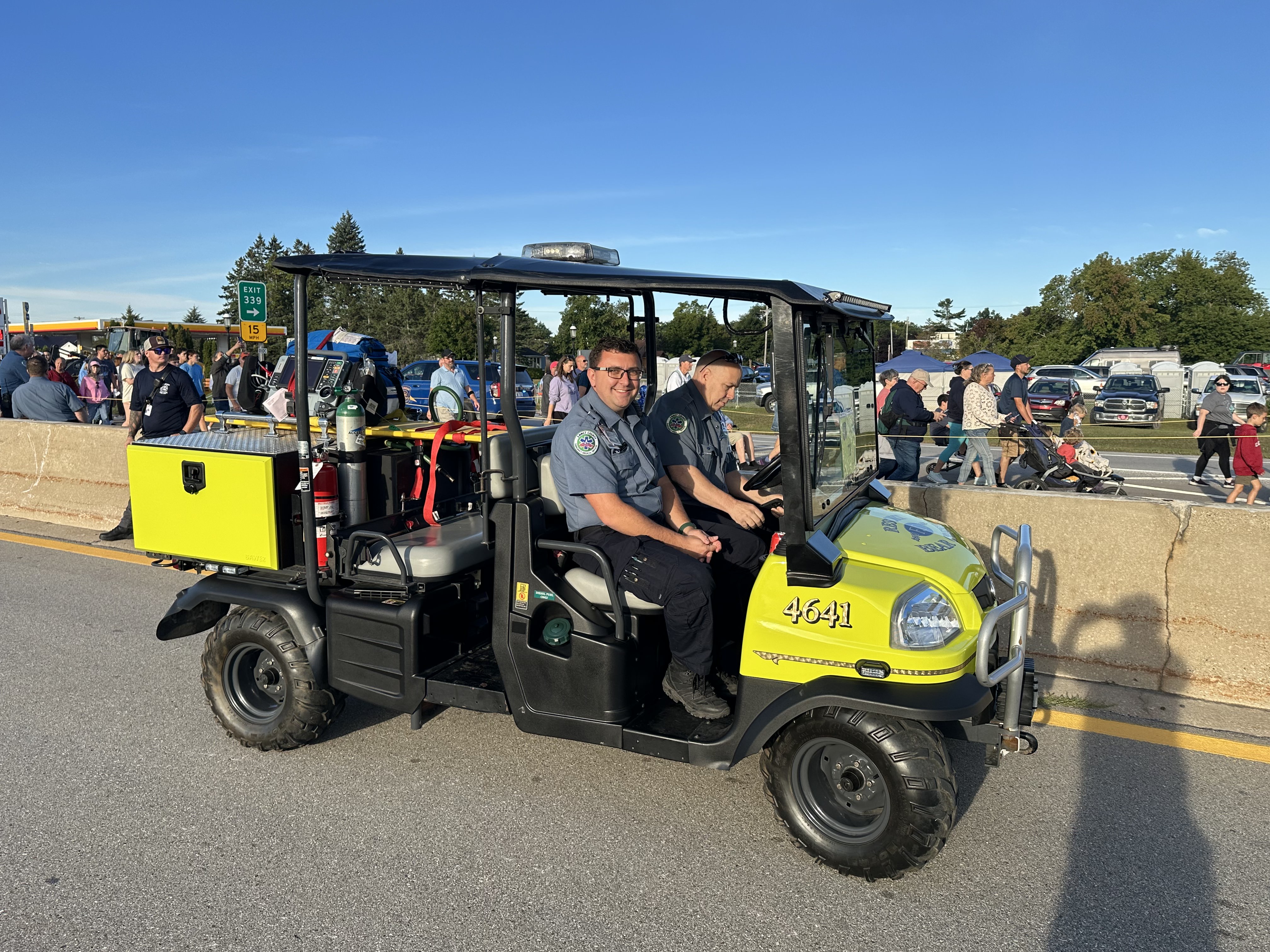
Once dispatched, Emmet County EMS responds in an ALS-staffed and equipped UTV, many of which are provided by area fire departments. The inside, metal-grated lane of the bridge is mostly kept open for emergency vehicles, which makes it a little easier to reach the patient while navigating past 20,000 people.
"There's so many people that you can't safely [respond to] in full-size vehicles," Patten said.
Treating Less on the Bridge to Move Patients Faster
Because of the size of the crowd and limited space to work, most patients are transported to the North or South EMS Ops area and receive a full assessment and treatment in the ambulance before transportation to a receiving facility if needed.
"The biggest challenge we have to plan for is the very limited access to where the largest groups of people are," Patten said.
Unlike many mass gatherings where patients can be moved away from and out of the event in many directions, bridge walkers can only go in two directions; back to the start or to the other side. With limited space and the mass of people, patient care on the bridge is limited. People, much like motorists passing an accident scene, are likely to slow or stop if EMS is treating a patient on the bridge. To keep walkers moving toward the turnaround point or back to the mainland very little care is delivered on the bridge. It’s safer and more practical to move patients off the bridge to EMS command rather than staying in place and disrupting the flow of walkers.
"The only treatments we perform on the bridge are stopping bleeding and other absolute life-saving interventions," Patten said. "There's very little assessment done out there."
Most patients are transported off the bridge to ambulance staging sitting upright.
"If they're able to sit in a cart, they get in a cart, they get off the bridge, and then treatment," Patten said.
If their condition requires supine positioning, the UTV has a Stokes basket.
The Bridge Walk is also unique because of the sheer number of participants. In 2026, the Michigan Department of Transportation estimated 34,000 people participated. That was 2,000 more than the number of runners who started the 2025 Boston Marathon, a 26.2 mile point-to-point running event that is supported by numerous EMS agencies with access to 25 hospitals.
"All these people are funneling onto a narrow bridge where there's no access or any other way around," Patten said. "You have to go with the flow."
EMS Ops uses dispatch information to triage patients who just need a ride off the bridge. UTVs, staffed by a fire department EMR, are also available for the walkers who are too tired or too nauseated from the swaying bridge to continue.
"We'll typically have two to three of those carts active at any one time," Patten said.
"The weather is always a huge factor because if it's a little bit cooler and overcast, that tends to lead to less medical complaints and sometimes fewer people walking," Patten said. "If it's hot and sunny, we can expect that we're going to have more medical patients who are dehydrated or the heat is going to exacerbate existing medical conditions."
Emmet County EMS also provides assessment and care for walk-up patients. Those people generally need minor care, like an ice pack or Band Aid.
What EMS Leaders Can Learn From the Mackinac Bridge Walk
For EMS leaders, Tracy stresses the importance of planning, using the incident command system and communicating with common terminology.
"If you bring people together, build relationships and establish interoperable communication, this event shows how those things make success possible," Tracy said.
After the 2026 Mackinac Bridge Walk Patten said this about the importance of planning, teamwork and communication.
"Finding one patient in a crowd of 10,000 on a five-mile-long, 54-foot wide bridge is more challenging than people might think. It takes good communication and operational awareness from every member of our team. This is an event where you can’t gloss over the emergency action plans. With limited access and high exposure risks on the bridge, we have fewer options to adapt as we would at a festival or county fair, even when it comes to weather. We need well-thought-out plans and contingencies because our options are limited."
About the Author
Greg Friese, MS, NRP, is an EMS clinician, educator, and content strategist with more than two decades of experience in emergency services, continuing education, and public safety media. A Wisconsin-licensed paramedic, Friese has designed and delivered hundreds of accredited courses, training resources, webinars, and conference presentations for EMTs, paramedics, firefighters, and public safety leaders. His work bridges field experience, adult learning, leadership development, and clear communication. Friese is known for translating complex operational and clinical topics into practical tools EMS professionals can use to improve decision-making, team performance, and patient care.