Every City is a Host City: EMS Lessons From the 2026 FIFA World Cup
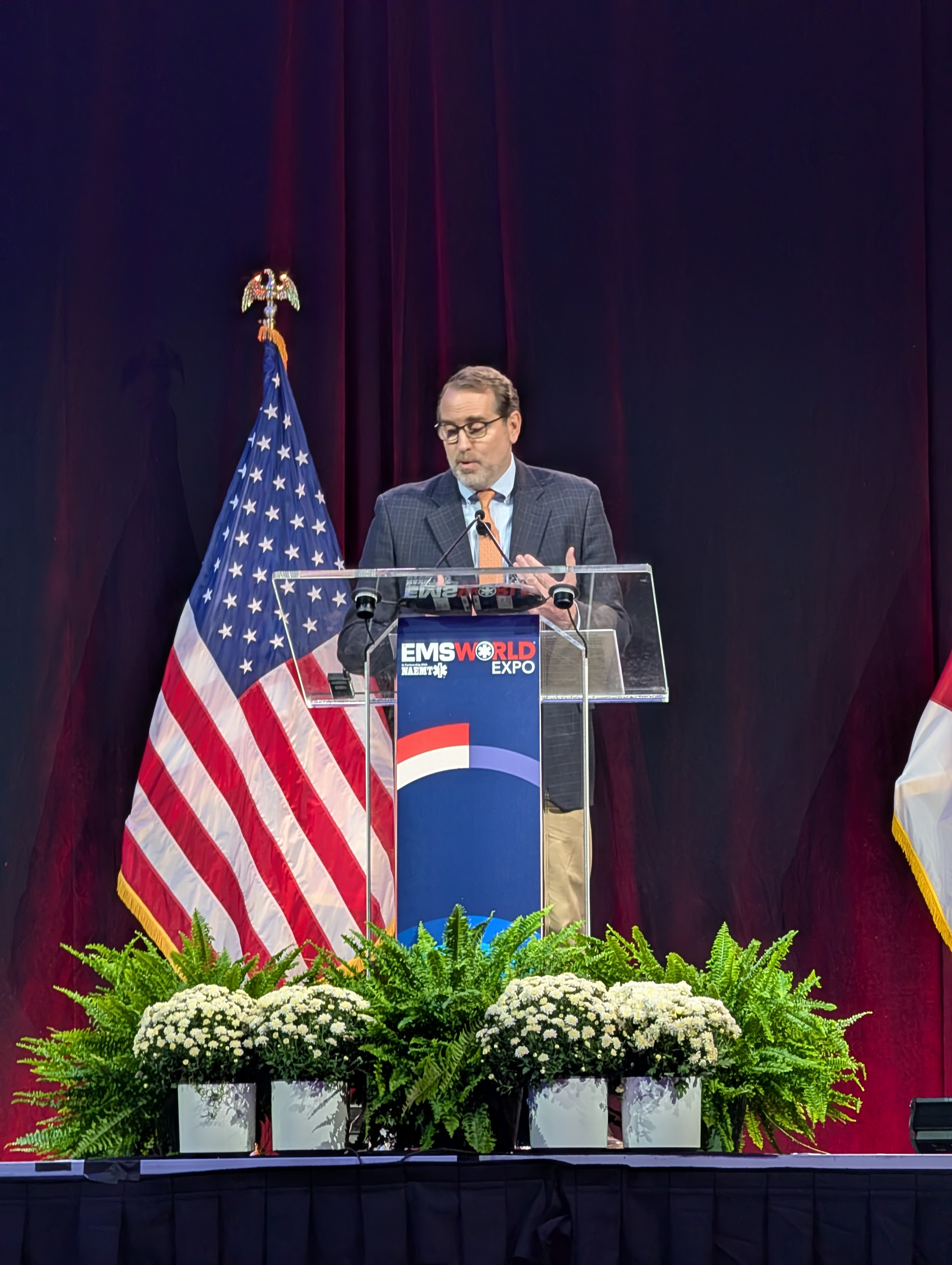 The FIFA World Cup is the world's largest sporting event, making it one of the largest mass gatherings requiring medical coverage. Dr. Eric Ossmann, MD, FACEP, delivered the opening keynote at EMS World Expo, sharing insights into the planning process, operational complexity and lessons learned from the 2026 FIFA World Cup in North America.
Ossmann opened and closed his presentation with three pieces of advice, including encouragement that regardless of the event size or complexity EMS professionals need to "be curious" and use the vast knowledge within their professional network.
"The only thing standing between you and the answer is asking,” Ossmann said. "If you're curious, ask the question."
Ossmannn is a physician executive with more than 25 years of experience in emergency medicine, disaster preparedness, and mass gathering medicine. As Director of Medical Administration for FIFA World Cup 2026, he designed and implemented medical programs for both the FIFA Club World Cup 2025 and FIFA World Cup 2026.
Every City is a Host City
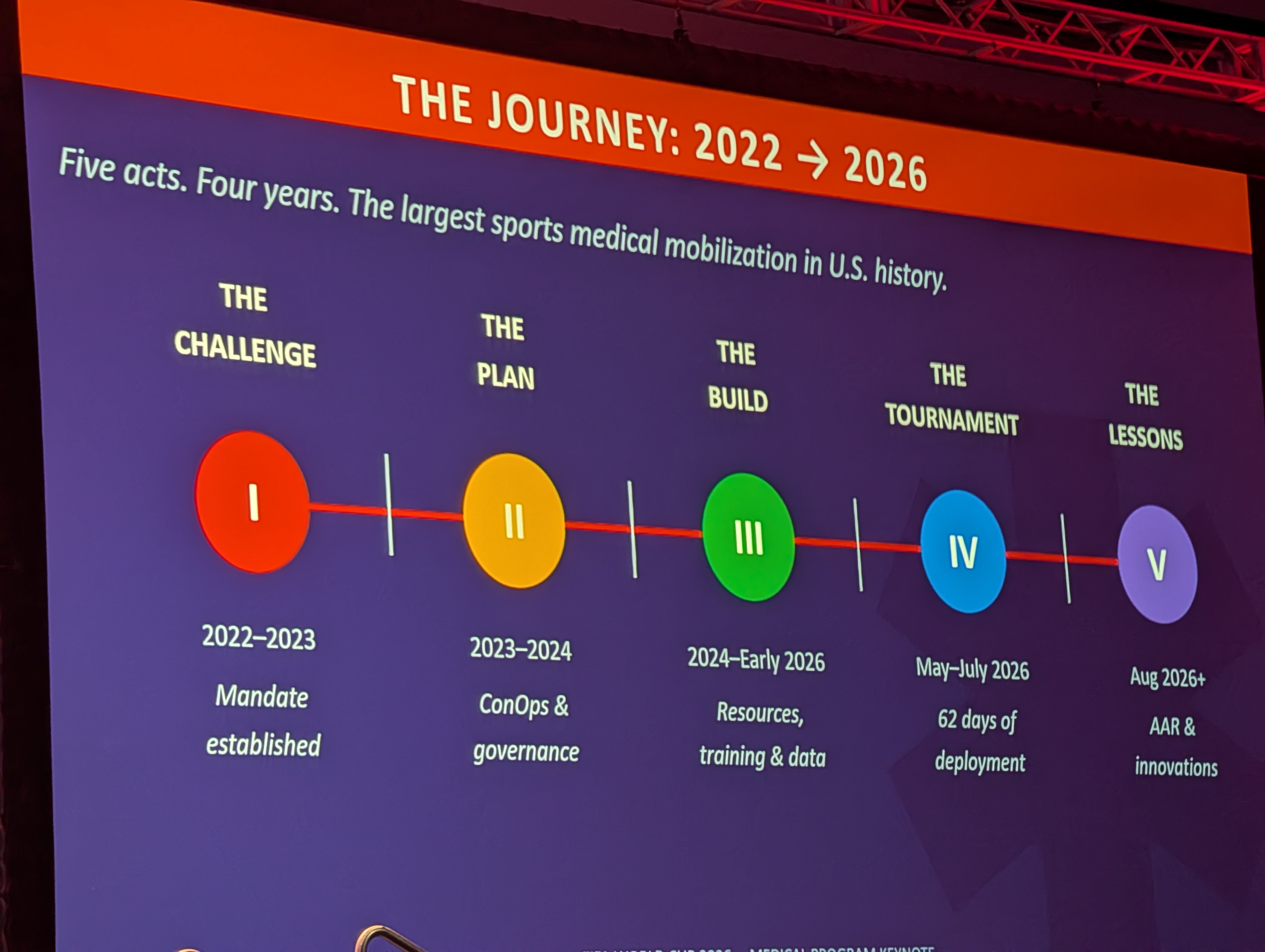
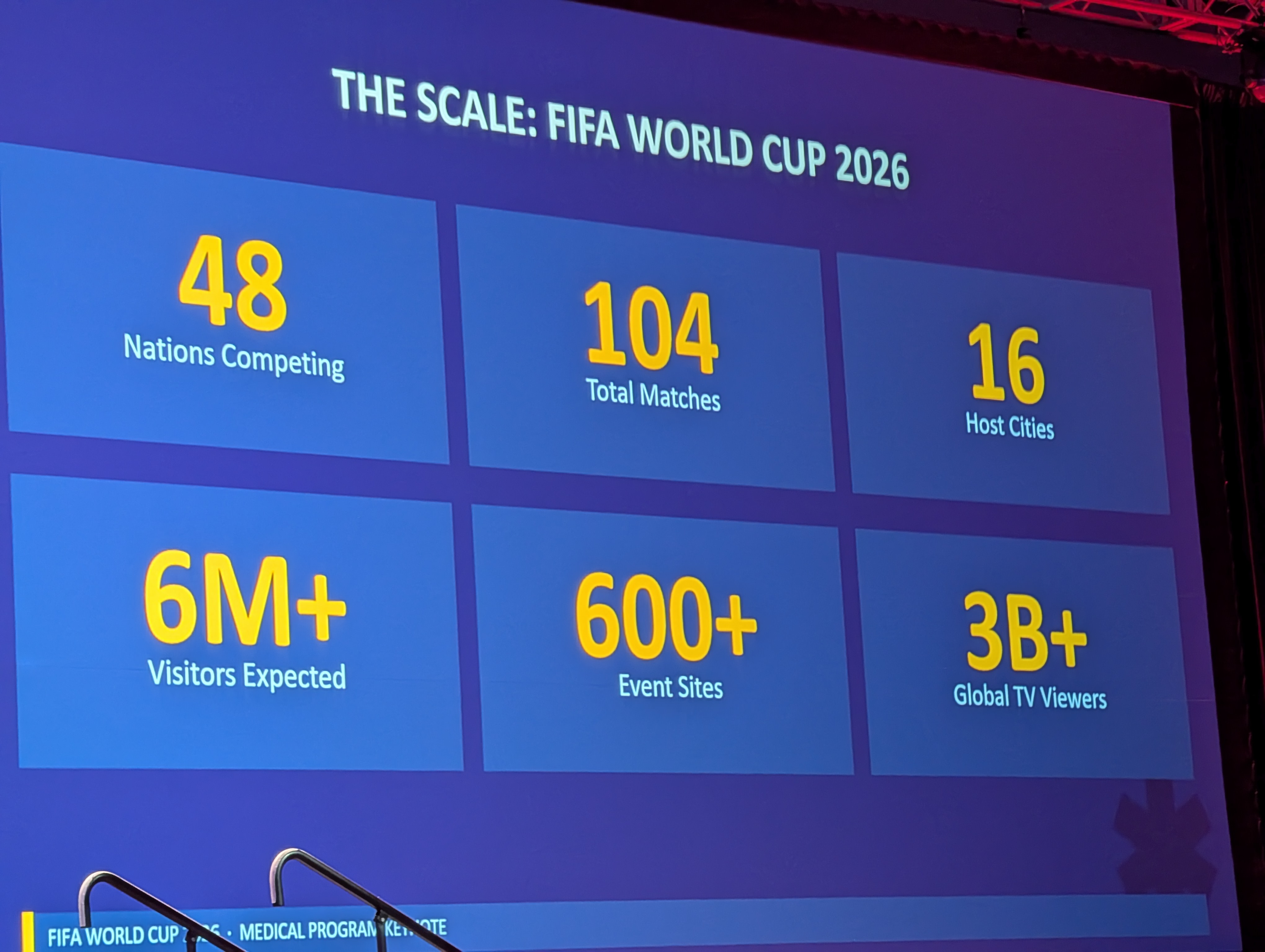
Sixteen cities in three countries — the United States of America, Canada, and Mexico — hosted 2026 FIFA World Cup matches. More than 6.6 million people attended matches during the 39-day tournament, but the medical team was responsible for a 62-day operational period.
Though your jurisdiction might not have been a FIFA World Cup host city, every jurisdiction is a host city for mass gathering events. Whether your community hosts an annual music festival, holiday parades, amateur or professional sporting competition, political rallies, or spontaneous protests, it's important to plan the medical mission, learn from similar events and operations, and apply your lessons learned to future events.
Meaningful Moment: Be Curious, Be a Listener, Be a Teammate
Ossmann's most important points weren't how to calculate the wet bulb temperature or how to treat an injured footballer. Instead, he imparted three pieces of advice from a long career in clinical care, medical direction, and event operations leadership. He wanted each attendee to:
- Be curious as “there is always something to learn.”
- Be a good communicator which includes "being a good listener and understanding where people are coming from.”
- Be a team player because in EMS “we are more alike than we are different.”
Three Lessons for Planning the Next Mass Gathering
Ossmann delivered a fast-paced, information-dense presentation to thousands of EMS professionals from around the world. For the specific details of the presentation, follow Ossmann's advice to be curious and follow-up with him for the event planning roadmap, medical encounter data, and lessons learned. Meanwhile, here are three event planning insights from Ossmann for the next event in your jurisdiction.
Plan for the Likely and Imagine the Unlikely
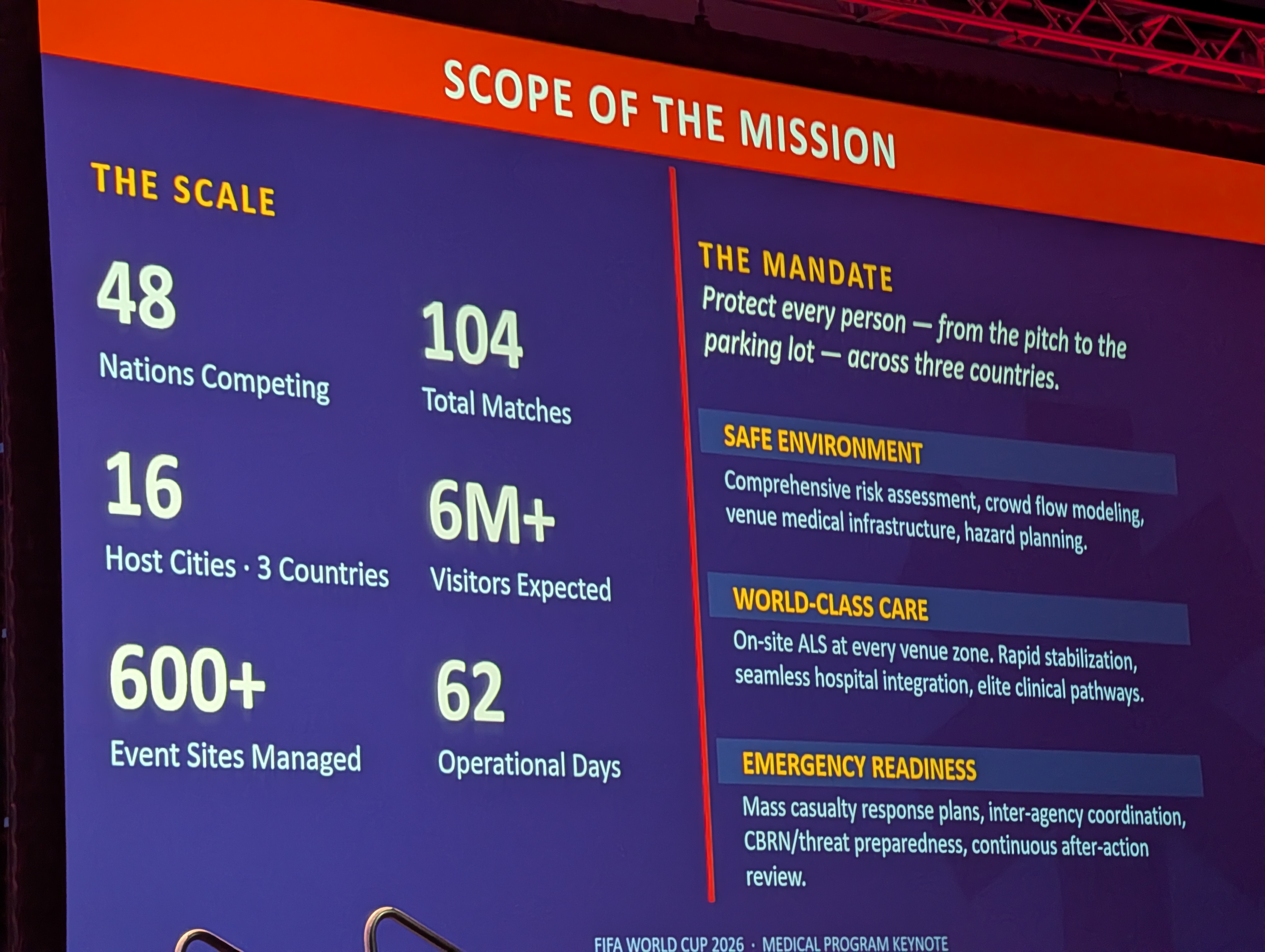 Ossmann explained the importance of assessing and understanding the risk landscape for the FIFA World Cup. The team studied medical encounters at previous World Cup events in Russia and Qatar. They modeled potential medical emergencies based on the event locations, summer weather, and the number of attendees. From a venue worker complaining of a headache to sudden cardiac arrest to a terror attack, the medical team needed to prepare for anything. Add to this, days before tournament operations began, planners had to respond to a newly declared public health emergency involving Ebola in the Democratic Republic of the Congo and Uganda.
Hard-earned lessons learned in major-event operations often come back to failures of communication and imagination during the planning process, Ossman said. For a series of mass gatherings in the summer heat of North America, failing to imagine the potential for a mass casualty heat emergency would have been a huge mistake.
"We knew the thing that was most likely, was some sort of heat-related disaster," Ossmann said.
Risk assessment is a critical part of any mass gathering event that requires imagination, reviewing data from similar or previous events, and applying lessons learned from similar events and venues. As Ossmann emphasized, someone probably has the experience and answer you need. You just have to ask.
Define Who Owns What
The focus of the billions of people watching the 2026 FIFA World Cup in person and on TV was the players on the field, but the FIFA World Cup medical team was responsible for four operational areas — the field of play, spectators, VIPs and delegation, and workforce and staff — and the people associated with each area. They also had an ambitious three-minute ALS response time goal. According to Ossmann, most of the more than 7,000 medical encounters were for spectators and the workforce providing services at the matches and surrounding areas. Two cardiac arrest patients, one in Mexico City and one in Los Angeles, were resuscitated and according to Ossmann, both patients walked out of the hospital.
 Mass gathering events in every EMS provider's community, from a youth or professional sporting event to a music festival or a parade, will have multiple operational areas. The potential patient populations might include athletes, spectators, performers and the workforce providing services at the event.
To plan for a four-zone operational area, each with unique patients, needs, staffing configurations, contracts, and likely emergencies was a significant planning effort.
"The essential part was communication and ensuring that everybody understood who was responsible for what," Ossmann said.
According to Ossmann, the FIFA medical team contracted with more than 60 EMS agencies. The contracting process to set operational and clinical standards was relatively straightforward compared to the complexity of legal review and approval of contracts.
"You (may) need to start three to four years in advance, not because of the operational side, but from the administrative side," Ossmann said.
Start Earlier Than You Think
Ossmann wished he had more time to plan.
 “Time is your enemy," Ossmann said. "You need to start early”
He explained that 18 months wasn't enough to scale medical staff, focus on heat, and deliver training. For the 2026 FIFA World Cup, Ossmann wished they had more time for exercises.
"Spend more time on training on multi-agency exercises," Ossmann said. "You got to build this into these events."
An event in your jurisdiction may not require three to four years for planning or training as Ossmann wish he had for the 2026 FIFA World Cup, but allocating more time may allow for more opportunities to learn from similar events, anticipate and mitigate worst-case scenarios, and provide a range of training opportunities, from plan reviews to tabletop exercises to full-scale exercises.
From Expo to the Street: Build Staffing Around Predictable Risks
Ossmann encouraged attendees to model the staffing needed for mass gatherings based on predictable variables. For example, for the mid-summer tournament heat emergencies was a focus during planning. The medical team modeled different scenarios for normal, above normal and extreme heat to determine the medical staffing needs. There were also volunteer teams tasked with writing white papers focused on heat emergencies, medical surge, and natural disasters. Their work informed operational planning, particularly for heat emergency prevention and care.
"Cooling first before a transport strategy was absolutely essential," Ossmann said. "It was a recommendation we folded into the operational plan."
Leadership Starts With Listening
Every major event debrief and after-action report calls for better communication, and it isn't usually the communication's hardware that needs improvement. Ossmann's advice to be a good listener and understand where people are coming from is an underrated leadership skill that needs to be practiced in everyday interactions with field personnel, routine meetings with public safety partners and purposeful encounters with the people you serve.