Turkey Invests in Ambulances, Airborne EMS Capacities
Turkey (Türkiye) is advancing its long-term program to modernize the country’s EMS fleet, continuing to acquire new ambulances and aircraft for various units located across the country.
Turkish Health Minister Kemal Memişoğlu has announced that, as of end 2025, the country’s EMS relied on a network of some 3,574 emergency medical stations. The General Directorate of Emergency Health Services (GDEHS), a unit of the Turkish Ministry of Health, oversees the nation’s EMS sector.
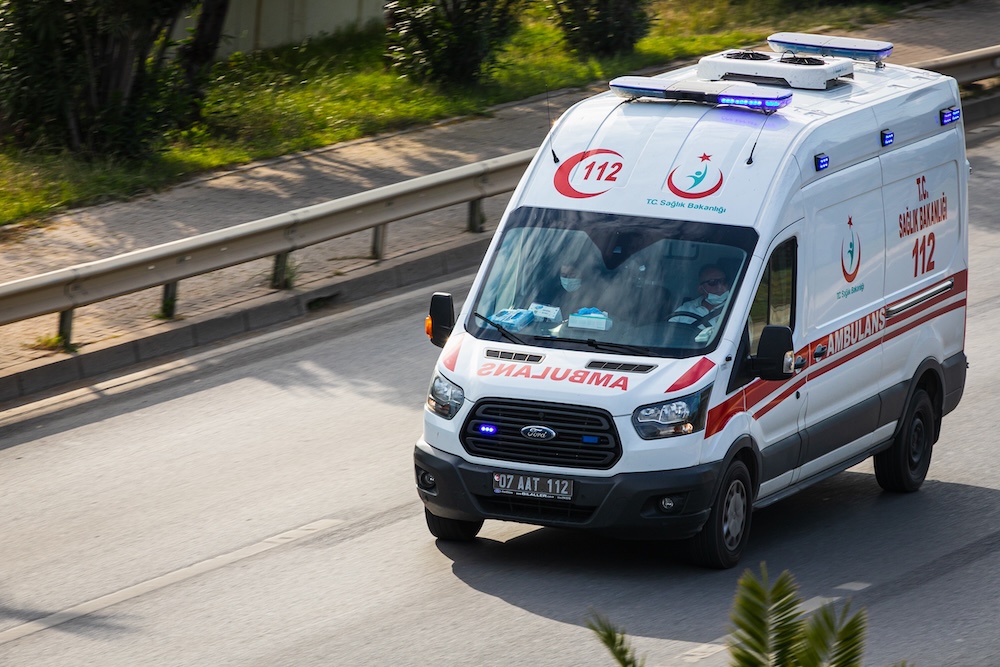
“With the 856 new ambulances we put into operations that year, we have reached a total fleet of 6,308 vehicles,” Memişoğlu said, as quoted by local news agency Anadolu Ajansı. “We are ready for any scenario with our 228 snow track ambulances … for our most remote villages, our 50 newborn ambulances for our youngest children, our 55 motorcycle teams racing against time in traffic, our 93 intensive care and bariatric ambulances, and our 62 four-stretcher ambulances.”
Investments in New Equipment
The health minister said that the investments carried out over the past few years have allowed the country’s EMS system to reduce the population density per ambulance by 10% and increase the number of ambulances per station by 8%. The Turkish EMS had an annual case response capacity of 380,000 in 2002. Last year, this capacity was increased to as much as 7 million cases, according to data released by the health ministry.
In 2023, Turkey’s southern and central regions were struck by a massive earthquake, and, in its aftermath, the country has sourced funds from the World Bank to finance purchases of ambulances for affected areas. As part of these efforts, in April 2026, the health ministry launched a tender to acquire a total of 285 ambulances. Of these, 140 ambulances are to be fitted with a 4x2 drive, and a further 145 ambulances with a 4x4 drive. The procurement will be financed by the World Bank’s Turkey Earthquake Recovery and Reconstruction Project.
Turkish authorities are also making efforts to purchase aircraft for the nation’s helicopter EMS (HEMS), according to Memişoğlu.
“We started this journey in 2008 with five air ambulances, and today we are providing services with 17 air ambulances. To date, we have transported more than 70,000 citizens,” the minister said. “By the end of 2026, we will expand these capacities with our domestically produced Gökbey helicopter ambulance.”
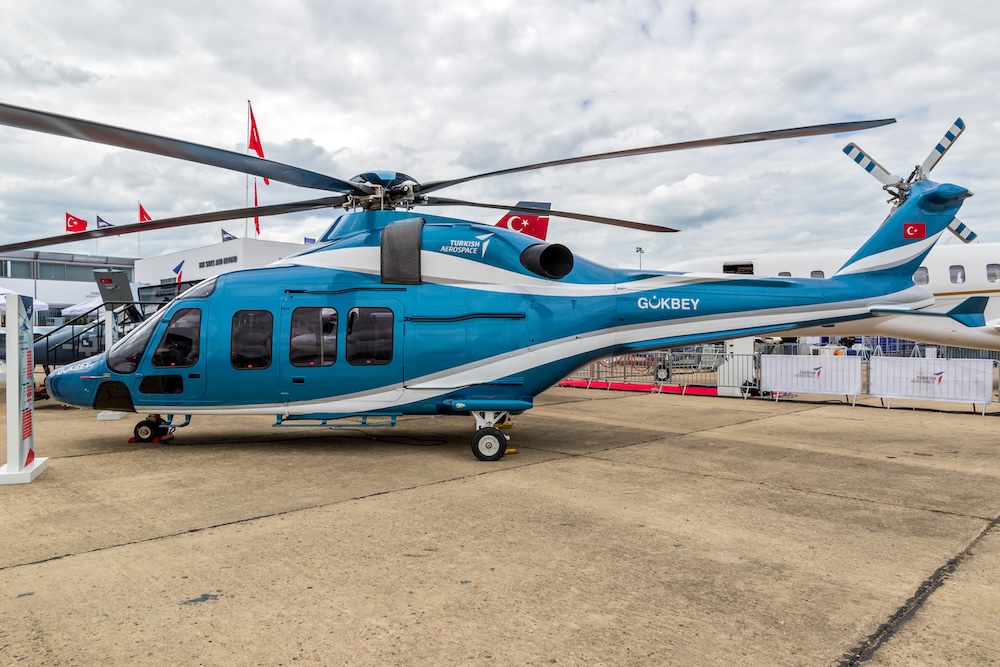
In 2022, the health ministry unveiled plans to upgrade its capacities by purchasing new T625 Gökbey helicopters made by local manufacturer Turkish Aerospace Industries. The service has relied on helicopters leased from private companies since 2008.
“Due to its wide range of capabilities, the helicopter can perform missions such as transport, VIP transport, cargo, air ambulance, search and rescue, and offshore transport,” Turkish Aerospace Industries said in a statement.
Turkey’s territory comprises more than 500 islands and islets located in the Mediterranean, Aegean, Black, and Marmara Seas, among others. The country’s geography, stretched between Europe and Asia, makes it particularly necessary for the Turkish EMS to bolster its airborne capacities in the country’s western region where most islands are located.
The Gökbey program was created with the objective to meet “the general-purpose helicopter needs of the Turkish Armed Forces and other authorities in need with a unique platform,” according to Turkish Aerospace Industries. The project was launched in June 2010 after a decision was made by the country’s Defense Industry Executive Committee (SSIK). Three years later, the government awarded a contract to Turkish Aerospace Industries, paving the way for the helicopter’s serial production.
On Sept. 6, 2018, the twin-engine Gökbey had its first successful flight, in the Turkish capital Ankara. In its standard variant, the aircraft is able to carry a crew of two and up to 12 passengers. The Gökbey has a maximum range of 948 km (589 miles) with an auxiliary fuel tank, and an endurance of more than five hours. The helicopter can reach a maximum cruise speed of 306 km/h (190 mph), and it can reach a service ceiling of 6,069 meters (19,911 ft), as indicated by figures from Turkish Aerospace Industries. The craft is positioned within the 6-ton (13,228 lbs) class.
Jaroslaw Adamowski is a freelance writer based in Warsaw, Poland. He covers various developments related to European and Asian EMS.