When Stress Looks Like a STEMI
Christy Graves was only 53 years old when she suffered a major cardiac episode — one that could have cost her life. Graves, who is Assistant Chief of EMS for Spring Creek, Texas, experienced the episode after a stressful board meeting in October 2025. Yet, despite 35 years in emergency medicine, she initially dismissed her pain as a strained muscle or stress.
Only later, when Graves asked a young intern to run an EKG, did she realize that she was in serious trouble. Armed with this data, her staff activated a code STEMI and rushed her to Memorial Hermann Cypress.
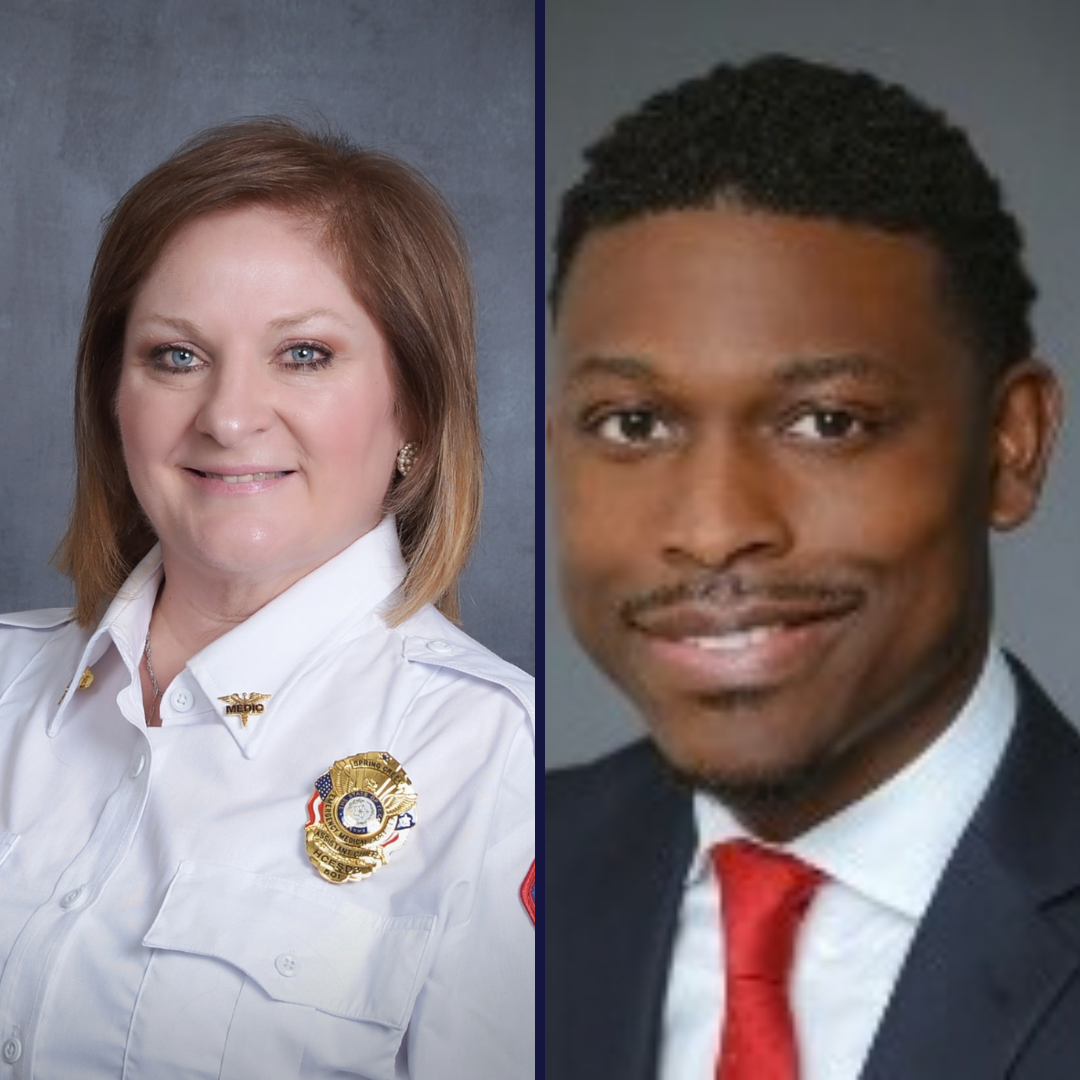
At the hospital, interventional cardiologist Dr. Naddi Marah diagnosed Graves with stress-induced cardiomyopathy. Also known as Takotsubo cardiomyopathy or "broken heart syndrome,” this condition mimics a massive heart attack but is actually triggered by extreme emotional or physical stress.
Today, now that she is back at work, Graves and Dr. Marah are sharing her story to raise awareness about heart attack symptoms in women — which are often downplayed or ignored — the impact of excessive stress on first responders, and the life-saving results of swift EMS action.
EMS World spoke with both Graves and Dr. Marah to walk us through this harrowing ordeal, the lessons learned, and what other women in EMS can learn from this experience.
EMS WORLD: Christy, could you walk us through what happened on the day of your cardiac event?
CHRISTY GRAVES: Early that morning, I was actually having some pain between my shoulder blades. I thought I had stretched a muscle or slept on it wrong. I told my daughter my neck was strained and took some ibuprofen. I blew off the pain, which is so typical of what we tell our patients and families not to do.
Later, I went to a government board meeting. We have budgets, timelines, and lots of stressful things that go on. At the end of the meeting, I requested a private conversation with our attorney about a stressful employee issue. While we were talking, she kept asking me, "Are you okay?"
I was not okay. I had gotten a sudden jolt of chest pressure, but it was coming through my back. It was indescribable compared to any pain I had ever had in my life. It began to shoot down both of my arms into my fingers, and it felt like somebody had put their hand through my back and was squeezing my heart.
EMS WORLD: As a veteran paramedic, how did you initially process those symptoms?
GRAVES: I was trying to blow it off. I was telling myself, "You need to relax. What is wrong with you? This pain must be stress." Even though I was remaining outwardly calm, internally I was in extreme duress and thought I was going to collapse.
I walked the attorney out of the building, and I saw a team of our paramedics, a supervisor, and a young female intern sitting at a table. My instinct was to have her get up and do an EKG. I told her to meet me in the ambulance. Part of me was embarrassed because these were my coworkers, but another part of me was in denial. You’re the commander of the ship. What happens when the commander goes down?
As soon as they put the EKG on and I saw it, I said some profanities. I have 35 years in the field, and I knew. But I told the intern, "You don’t tell a soul."
EMS WORLD: How did your crew respond to you trying to hide your condition?
GRAVES: That young intern was brave. She said to me, "If Christy was talking to Christy as a patient, what would Christy the paramedic say?" She convinced me to stop being the chief and start being the patient. She took my phone, called the supervisor, and as soon as he saw the EKG, he sounded the alarm.
They whisked me away within seconds. I was extremely ill, hypertensive, and at some point, I blacked out. They called ahead to Memorial Hermann for a potential STEMI. It turned out to be a STEMI imposter, but they treated me with the same vigor as any patient.
EMS WORLD: Dr. Marah, when did you first meet Christy and what did you diagnose?
DR. NADDI MARAH: I happened to be the physician on call for post-STEMIs that day. We met in the cath lab on the cardiac catheterization table immediately before I started my procedure to see if she was having an acute coronary obstruction.
My angiogram demonstrated that she did have some plaque in the coronary arteries, but nothing obstructive. I ended up doing an LV gram, which is additional imaging to better understand the heart's structure. With that test, I was able to diagnose her with what we commonly call broken heart syndrome, also known as stress-induced cardiomyopathy or Takotsubo cardiomyopathy.
EMS WORLD: The old cliché is "you're going to give me a heart attack," but it sounds like stress actually did. What happened?
MARAH: Practically, that's what happened to Christy. When I was taking pictures, she was crying the whole time. I said, "Your heart looks fine. There aren't any major blockages, but it seems like you have a broken heart. What's going on?" She said, "Yes, doc, my heart is broken," and she told me what was going on in her personal and professional life.
Broken heart syndrome stems from significant emotional or physical stress that causes a surge in catecholamine stress hormone release. That stress hormone gets released into your bloodstream, can temporarily stun your heart, weaken your heart muscle, and cause heart failure or dysfunction.
EMS WORLD: Christy, what was your experience like once you arrived at the hospital?
GRAVES: I was scared. I thought I was going to die because the pain was astronomical. When I entered the facility, the receptionist—who I had greeted countless times over the years when bringing in patients—recognized me. She jumped up and never left my side.
While all these highly educated people were getting me ready for the cath lab, she recognized that I was Christy the human, not Christy the chief. I realized I was dying with strangers, not my husband and children. But she reached down and hugged me, and I thought, "If I'm going to die today, I'm okay dying with you." It made me wonder: In all my years as a paramedic, had I been the kind of person worth dying with, like she was for me?
EMS WORLD: Dr. Marah, Christy also experienced vision loss. Was that related to the cardiac event?
MARAH: Yes. After her cardiac catheterization, she complained of vision issues hours later. We activated a code stroke and notified a neurologist who did MRI and CT scans, which didn't show any acute strokes, fortunately. We realized that patients who have Takotsubo syndrome can sometimes have transient vision loss. That's all part of the disease process with stress-related changes in your cardiovascular system.
EMS WORLD: Christy, how did that temporary blindness impact your perspective?
GRAVES: When I came out of the cath lab, I was briefly blind because of the stress. I got my sight back, but at the time, my biggest worry was that my career was over.
It was my 25th wedding anniversary. My husband and children stood by my bed and said, "We love you, but we need you to understand that you need to love yourself more than you worry about losing your career." It was unfathomable to them that I was more worried about not being a paramedic than I was about not seeing. In that moment, I realized titles and ranks come and go, but you only have one you.
EMS WORLD: Dr. Marah, how was Christy treated and how long did her recovery take?
MARAH: We utilized guideline-directed medical therapy. An echo confirmed that her heart function was pumping at 30%, when normal should be about 60% and above. We gave her medications meant to ease the strain on the heart muscle, reduce blood pressure, improve blood flow, and get the heart to relax. Within a few months of being on those medications, changing her lifestyle, and minimizing her stress, her heart function recovered back to 60%. It took about 30 days.
EMS WORLD: Many people don't realize women have different warning signs for heart issues. Can you both talk about that?
MARAH: Women do present differently when it comes to acute coronary syndrome. While chest pain is the most common symptom in both men and women, women might present with fatigue, indigestion, back pain, or nausea. Nearly 40% of women having a heart attack report no chest pain at all. These symptoms often go unnoticed and are mistaken for stress, aging, menopause, or anxiety, which delays diagnosis and treatment. Despite increasing awareness, heart disease remains the leading cause of death among women.
GRAVES: As women, we are mothers, spouses, caregivers, and leaders, and we naturally put ourselves last. My body was like a car with squeaking brakes, giving me symptoms and rattling, but I allowed outside noise to get in the way of listening to it. I chose to make a board meeting the priority instead of myself. If you don't feel well, take five minutes and get checked out. Keep your doctor's appointments. If you have peculiar symptoms, don't let anyone be passive about it if you know instinctively something isn't right.
EMS WORLD: What lifestyle changes did you have to make, Christy?
GRAVES: I had to do a lot of work on reducing stress. I started doing box breathing and meditation, and I began working with a therapist on stress deregulation — learning to leave stress where it is and not constantly carry it with you.
I also had to learn to say no. In EMS, we take on extra projects, extra shifts, and extra jobs because we don't want to say no. I stepped down from my role as an ESD commissioner and left a few extracurricular jobs to do a real assessment of my work-life balance. I started exercising, got my ejection fraction back up, and made my health a priority.
EMS WORLD: What final message do you want to get across to people?
MARAH: I wanted to give kudos to the EMS team. From her symptoms, EKG findings, and elevated blood tests, she looked exactly like someone having an acute myocardial infarction. The only way to know it was stress-induced cardiomyopathy was to rapidly activate the STEMI pathway and perform emergent coronary angiography. For EMS professionals, this case serves as a reminder that early recognition, prompt transport, and activation of the right resources can be lifesaving, even when the final diagnosis turns out to be something other than a traditional heart attack.
GRAVES: I'm doing better than I ever have, but it took intentional steps. If you are pouring from an empty cup, you have nothing left to give. Because I take better care of myself today and do less, I can actually give more. We are in a crisis out here, and if we don't take care of ourselves, it’s a marathon, not a sprint. We all just go, go, go, and give, give, give, but we have to take those moments to take care of ourselves.