Ebola Preparedness: What EMS Agencies Need to Know About Decontamination and Transport Safety
Source: AeroClave
WINTER PARK, FL—The World Health Organization has declared the spread of the Ebola virus in the Democratic Republic of Congo and Uganda a public health emergency, renewing concerns about how healthcare systems and emergency responders would manage if a case occurred locally.
Ebola remains one of the deadliest infectious diseases in the world, with mortality rates exceeding 50% in many outbreaks. The West African epidemic from 2014–16 caused more than 28,000 infections and over 11,000 deaths, underscoring the reality that infectious disease threats can quickly become global concerns.
While the current outbreak is occurring thousands of miles away, EMS leaders understand that preparation—not reaction—is the key to protecting providers, patients, and communities.
Specialized Response Networks Created After the Last Outbreak
In the wake of the 2014–16 Ebola crisis, the U.S. Department of Health and Human Services (HHS) partnered with state and local agencies to establish specialized response capabilities for highly infectious diseases.
Across the country, designated Regional Transportation Response Teams (RTRTs) were developed and trained to safely transport patients with confirmed Ebola infections to one of nine Regional Ebola Treatment Centers. These teams received advanced training in infection control, personal protective equipment (PPE), patient handling, and decontamination procedures.
Florida's Infectious Disease Transportation Network
One example of this preparedness effort is the Florida Infectious Disease Transportation Network (FIDTN), a statewide system designed to transport patients with confirmed highly infectious diseases from locations throughout Florida to designated regional treatment centers, including Atlanta.
What distinguishes these specialized units is not only their training but also the equipment they use to manage contamination risks during and after transport.
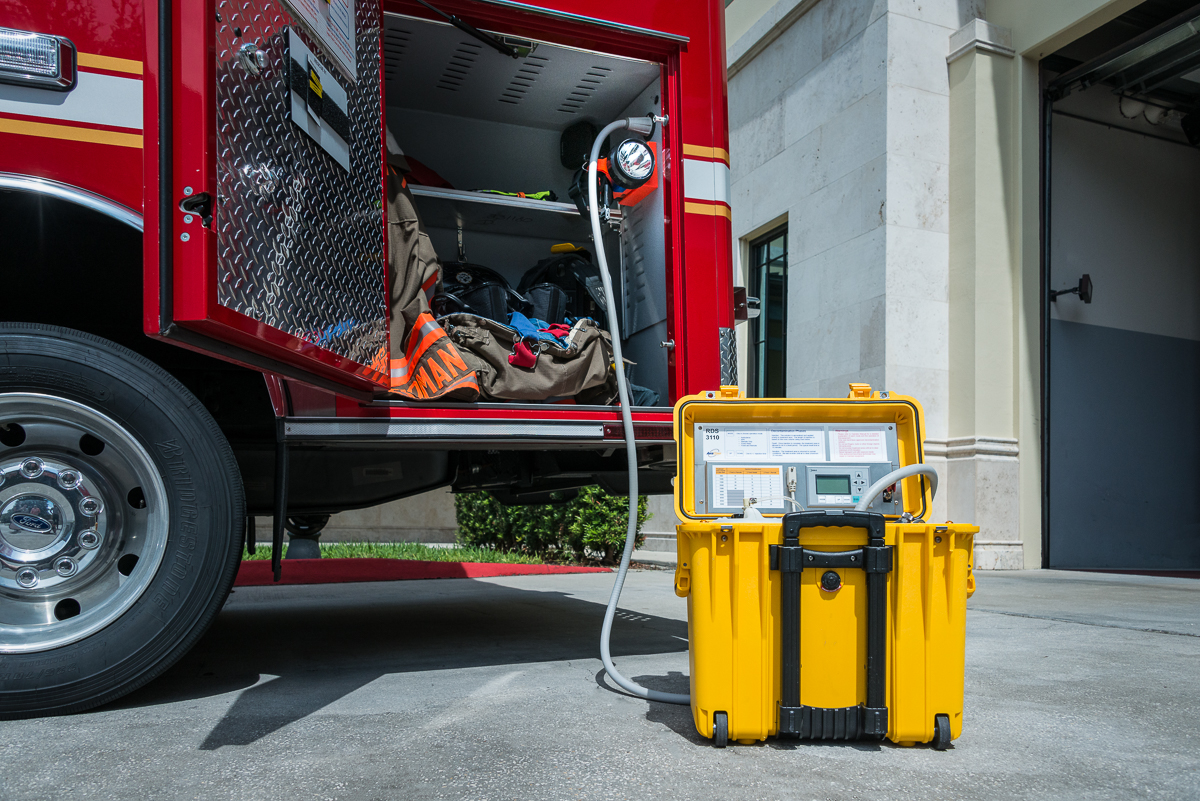
A key component of Florida's response capability is the use of AeroClave's RDS 3110 decontamination system, a portable platform designed to disinfect vehicles, facilities, equipment, and other potentially contaminated environments.
The Challenge of Ambulance Decontamination
For EMS agencies, decontamination presents unique operational challenges. Ambulances contain numerous high-touch surfaces, electronic devices, medical equipment, and hard-to-reach areas that can be difficult to disinfect consistently through manual cleaning alone.
Following the transport of a patient with a highly infectious disease, responders must ensure that every exposed surface has been properly treated before the unit returns to service.
Florida's RTRT ambulances are equipped with AeroClave's patented port technology that connects directly to the RDS 3110 to disperse an aerosolized disinfectant that fills the patient compartment with a dense, disinfecting fog.
The system is designed to distribute the hospital-grade disinfectant uniformly throughout the compartment to effectively reach every exposed surface. The process takes approximately 20 minutes, after which vehicles can immediately return to service. The entire process can be performed by personnel outside the vehicle, eliminating the need for PPE during decontamination.
Faster Turnaround for Specialized Transport Units
For dedicated infectious disease transport teams, vehicle downtime can significantly impact operational readiness.
Using the RDS 3110 platform, Florida's Infectious Disease Transportation Network can decontaminate a standard ambulance patient compartment in less than 20 minutes, helping specialized units return to service more efficiently while maintaining stringent infection control standards.
The system allows personnel to conduct decontamination entirely from outside the vehicle, eliminating the need for PPE donning and doffing.
Beyond the Ambulance
Transferring infectious disease patients between states often involves the use of a temporary patient transfer or "change-out" location near the border that is used to transfer patients from one ambulance to another. These temporary transfer areas must be thoroughly disinfected after use to prevent potential exposure to personnel and the public.
Using the portable RDS 3110 systems in room-fogging mode, RTRT teams are able to disinfect the entire transfer space in a matter of minutes. Like when they are used to decontaminate a patient compartment, these systems disperse a dense disinfecting fog that fills the entire transfer space and helps eliminate infectious pathogens before the area is returned to normal use.
Equipment and PPE Still Require Attention
When dealing with highly infectious diseases, such as Ebola, vehicle and facility decontamination represent only part of the infection-control process.
Stretchers, monitors, medical devices, and personal protective equipment all must be properly disinfected following patient contact. To support these needs, RTRT teams use a hand applicator that connects to their RDS 3110 systems to apply a hospital-grade disinfectant directly to equipment and surfaces as needed.
Preparedness Starts Before the First Call
Programs such as Florida's Infectious Disease Transportation Network were developed to safely transport confirmed infectious disease patients to the centers that can provide the highest level of care. However, one of the biggest challenges facing EMS agencies is the possibility of encountering undiagnosed patients in their community.
Whether it’s dealing with Ebola or some other emerging public health threat, preparedness requires more than just training and stockpiling PPE. Agencies should take steps now to evaluate their decontamination capabilities and determine whether their current processes adequately protect responders.
The current situation in Africa serves as an important reminder that infectious disease preparedness remains a critical component of EMS operations. Departments and communities that plan ahead are better positioned to protect responders, maintain operational readiness, and reduce the risk of disease transmission when the next public health emergency occurs.