After EMS: If I Retired Today
This article is part of an ongoing series from Mike Rubin. In this series, he’ll reflect on his career and share practical retirement advice for emergency medical personnel. Catch up on articles you missed.
I was supposed to have jury duty this week. It was canceled, which left me with even less to do than normal. Anyone want their memoirs written by Tuesday?
I never imagined I’d crave jury duty just to stay active. It’s not a good sign. If I can’t do a better job of occupying my time, I’ll have to occupy someone else’s time. Nobody I know wants that.
Some consider retirement healthy. I envy them. They must have more precious bodily fluid than I do. It’s probably genetic. My folks were too kind to warn me about my defects.
I still don’t even have what you’d call a hobby. Mostly, I do my share of managing the household: bill paying, tax planning, grocery shopping, mail awareness. Helen can handle twice as much with half her brain tied behind her back. Talk about the deep end of the gene pool.
Forget the African safaris and 50-state road trips that super-fit septuagenarians gift themselves after decades of workplace fealty. A better use of my time is downsizing: keeping track of important things and getting rid of everything else. That makes sense, but whenever I try it, I feel sad about stuff I’m throwing out. Take old tax returns: I still have every one of mine. If I’m ever audited, it’ll take a while.
Is it too late to retire … again? I promise I’ll do better. I’d start with an upgraded to-do list that makes me feel productive, not gloomy. It would be simple and safe; nothing involving power tools. Whoever electrified saws and sanders is no friend of mine.
If you’re already retired and tragically idle, join me in plotting Retirement 2.0:
- Social Security: The problem isn’t the benefits; it’s getting them without lots of research and Xanax. Let me summarize the strategy for you: Delay Social Security payments eight years if you can, from 62 to 70. You’ll earn about 60% more “old age insurance” per month forever. Many of you will pay taxes on some of that, despite what you’ve heard, but you’ll net thousands of dollars more by postponing.
- Medicare: Take it at 65 and avoid eligibility problems later. Choose traditional Medicare instead of Medicare Advantage if you want to pick your own doctors almost anywhere in the U.S. Add Medigap insurance plus drug coverage (Part D) to fill holes in Medicare.
- Government: According to Abraham Lincoln, government is supposed to be “of the people, by the people, for the people.” I’m not sure it’s ever been that way, but it certainly isn’t now. I hate to think where we’re headed. Being retired makes us even more vulnerable and gives us extra time to worry about locked-and-loaded leaders. Prepare for bad outcomes — reduced Social Security and Medicare benefits, tax increases that benefit only the privileged, ongoing tribal hostility, violins in the streets.
- Family physicians: This is a special branch of healthcare that you won’t find on many lists. Pick a PCP (primary care physician) who specializes in listening — someone you trust to coordinate all your care. Flexibility and experience are important, too. Don’t tolerate patronizing providers who ignore you when you need them most.
- Long-term health: Many of you and I are going to have to make difficult decisions about a long life versus a comfortable one. I already have. I won’t bargain for a few months more if treatment sounds too painful or inconvenient. Think about that now and document your preferences before you start confusing grandchildren with pets.
- Part-time work: Consider a part-time job for fun. If you choose the fast-food sector, as I did for a summer 56 years ago, try not to eat what you’re cooking.
- Finances: Please be good boys and girls and start each year with a sensible budget. You don’t need more than a pencil, paper, and the desire to stop spending what you don’t have.
- Location, location, location: If you’ve paid high state and local taxes for many years, consider relocating to a region where you can keep more of your money. For best results, trust gravity and buy on the high ground.
- Limitations: Don’t pretend you don’t have any. Learn to live with them. Reduce kinetic energy as you age.
- Stress: You won’t get rid of it when you retire. It may even be worse. Find something calming that won’t damage major organs. Music and old movies are two of my favorites — just not at the same time. Helen prefers jigsaw puzzles. Our dog likes anything that looks like a squirrel. To some dogs, skunks look like squirrels.
- Retirement for us, not for me: Whatever you do, wherever you go, find someone to share it with. I don’t know what’s worse than being unemployed and alone.
That’s enough for now. I have to check the mail.
Mike’s Exit Poll #24: Which EMS lesson helps the most after retirement?
I’m going with “First, do no harm.” That simple rule applies to almost every daring idea I’ve had. It warns against self-indulgent risks while reminding retirees that outcome is more important than execution. And it discourages use of power tools.
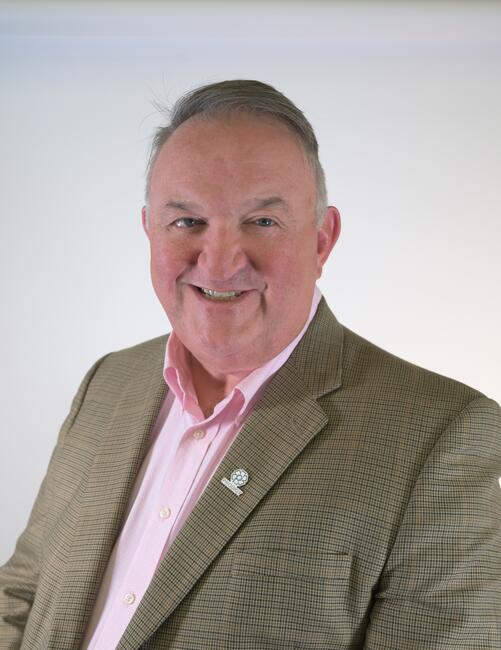
Mike Rubin is a retired paramedic and the author of Life Support, a collection of EMS stories. Contact Mike at mgr22@prodigy.net.