A Decade of LAAO: Experience, Innovation, and the Future of Stroke Prevention
Interview With Stan Weiner, MD
Interview With Stan Weiner, MD
© 2026 HMP Global. All Rights Reserved.
Any views and opinions expressed are those of the author(s) and/or participants and do not necessarily reflect the views, policy, or position of EP Lab Digest or HMP Global, their employees, and affiliates.
EP LAB DIGEST. 2026;26(10):22-23.
Interview by Jodie Elrod
After performing more than 1700 left atrial appendage occlusion (LAAO) procedures over the past decade, Dr Stan Weiner has seen the therapy evolve from a highly selective intervention to a safe, efficient option for a broader range of patients. In this interview, he shares how his team's experience, multidisciplinary approach, and participation in clinical research have shaped a high-volume LAAO program and continued to inform the future of stroke prevention in patients with atrial fibrillation (AF).
Tell us about your electrophysiology (EP) program at CHRISTUS Trinity Mother Frances Louis and Peaches Owen Heart Hospital, and what distinguishes it within East Texas and the surrounding region.
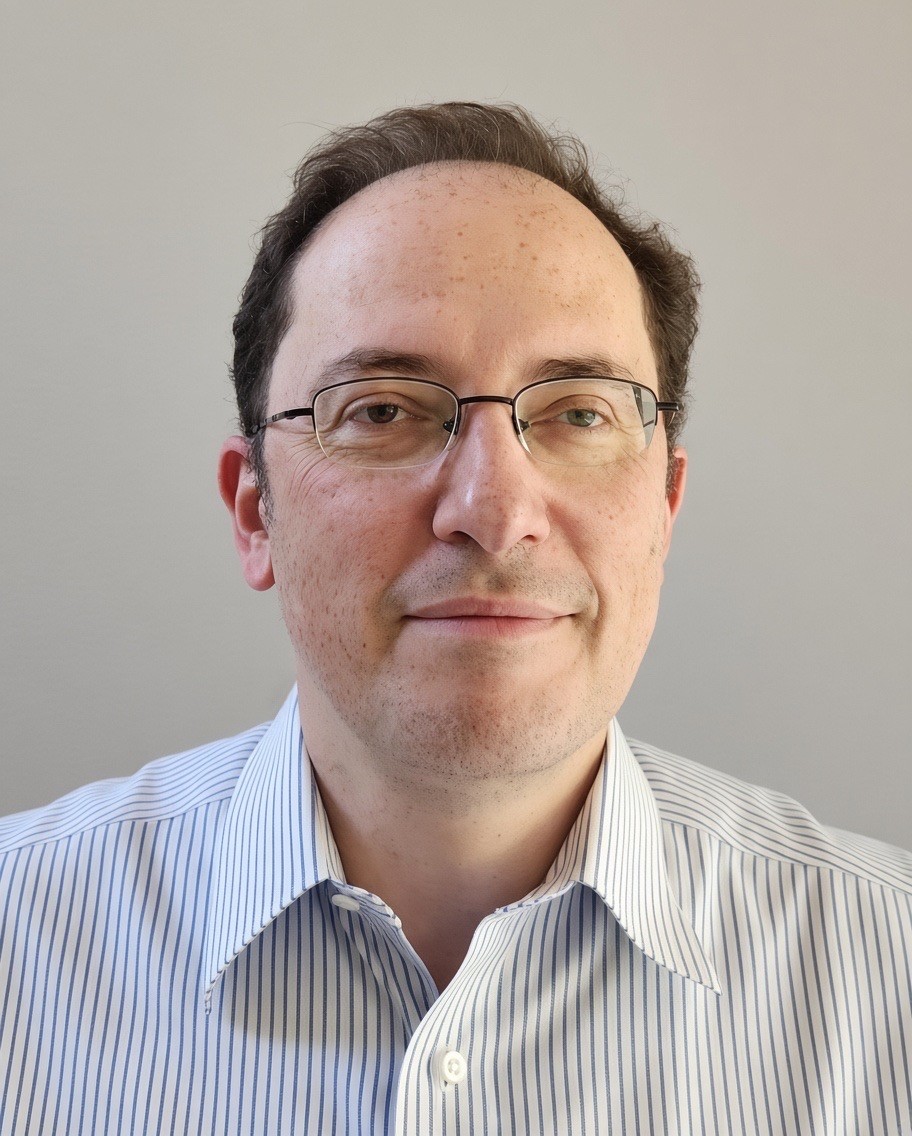 We have a fairly robust EP program based in Tyler, a town of about 100,000 people, that serves as a regional referral center for tertiary care for many smaller communities in the surrounding area of approximately 1,000,000 people.
The EP program consists of 4 full-time electrophysiologists and about 12 nurse practitioners (NPs) and physician assistants who support our operation. We provide both outpatient and hospital-based EP care, offering a wide range of services—from basic device management, supraventricular tachycardia ablations, and AF ablations to more complex procedures such as ventricular tachycardia ablations and lead extractions.
We also conduct a significant amount of research on newer technologies, which allows us to be involved in some of the more interesting and innovative aspects of EP care.
From your perspective, how has LAAO changed since you first began offering the procedure, and what advances have had the greatest impact on patient care?
We started performing the Watchman (Boston Scientific) procedure in 2016, so about 10 years ago. To date, we have performed just over 1700 Watchman procedures. It certainly is a very different procedure now than it was in the early days. Back then, it took careful planning and a thorough understanding of how the procedure worked. We were highly selective about which patients and could be treated and how we approached each case.
Fortunately, with all the experience we've gained, we've learned quite a bit about how to perform this procedure effectively. As a result, it has become a much more efficient, high-volume procedure, allowing us to perform many more cases than we did initially. We are also able to treat many more patients with more challenging anatomies. In addition, we can now offer this option to patients who are older and have more comorbidities than when we first started. I think that experience with this procedure has made it much easier for us to offer this option to a broader range of patients.
We've also made quite a few changes in our approach over the years. One of the biggest changes occurred around the COVID-19 pandemic. As you know, Watchman was traditionally an inpatient-only procedure, so patients who came in for a Watchman implant had to stay overnight to recover. During the pandemic, with bed shortages, that became much more difficult. As a result, we transitioned to same-day discharge for Watchman procedures, similar to what we do with AF ablations and other similar procedures.
This approach has been very well received by our patients. The overwhelming majority can go home safely the same day, and that has been a great benefit to our program.
Building a successful LAAO program requires more than procedural expertise. How have collaboration among electrophysiologists, referring physicians, imaging specialists, and the broader care team contributed to your program's growth and long-term success?
The team approach to Watchman has been absolutely critical to building the program and making it what it is today. There are many different aspects of the program that require coordination with other care providers, and that collaboration is really essential to building a high-volume program.
It starts with our interactions with referring physicians and extensive education of both hospital- and clinic-based providers about the option of LAAO. As with the management of AF, we have done extensive outreach to local physicians to make sure everyone understands that this is an option for appropriate patients. We have also built strong relationships with a number of noninvasive cardiologists who support the shared decision-making process for patients who are thought to be eligible for the procedure. That helps ensure patients have a good understanding of what they're getting into while also meeting Medicare requirements for this type of procedure.
We also have a group of anesthesiologists who rotate through the EP lab to provide transesophageal echocardiography (TEE) support during these implants, and that has been very helpful. While we can perform some procedures using intracardiac echocardiography (ICE) guidance, we find that many patients with more challenging anatomies benefit from TEE support. Having dedicated physicians who provide that support has been a real advantage for our patient population.
We have a large cadre of NPs who help us through every step of the process—before the implant, around the time of the procedure, and throughout follow-up. They educate patients and help ensure they remain on the appropriate medications around the time of the procedure. We've had very good success educating our patients and making sure they're comfortable with the process. NPs and PAs are invaluable for patient education.
We also have a number of support staff who help track our outcomes, enter data into the LAAO Registry, and follow up with patients to make sure outcomes are what they should be. We've been very excited to see that when we compare our clinical outcomes with the stroke rates predicted by the CHA2DS2-VASc scoring system, we appear to have achieved a meaningful reduction in stroke rates among patients treated with the Watchman in our program.
How do you approach the use of TEE versus ICE for LAAC procedures, and what advantages does TEE offer?
We use TEE for the majority of our Watchman procedures because it allows for more detailed multiplanar device imaging. TEE is performed by one of our 6 cardiac anesthesiologists who have a lot of experience with this technique. We will utilize ICE imaging if the patient has any esophageal issues (eg, tumors, recent surgery, anatomic anomalies, etc) or difficulty with general anesthesia. ICE is also helpful in patients who are scheduled on days when cardiac anesthesia is not available as well as for concomitant cases (to avoid reintroduction of the TEE probe after completion of the ablation). We prefer 3D ICE for these procedures.
As indications for LAAO continue to expand, what patient populations or clinical scenarios do you think remain underrecognized or underreferred, and how can clinicians improve access to appropriate patients?
It's very important, as this therapy becomes more and more mature, that we're able to perform these procedures both safely and efficiently. It's also important to understand which patients are most likely to benefit. To help expand that understanding, we participate in a variety of clinical trials.
We've been involved in multiple studies, including the OPTION, CHAMPION, and LAAOS-4 trials. We are hoping to start enrolling patients in the Watchman Elite clinical trial shortly. All of these studies are evaluating current and potential future indications for the Watchman procedure and how best to apply it to different patient populations. What we've seen is that this procedure can be performed with a very low complication rate, both in the short and long term. It may also be appropriate for patients who don't necessarily have major bleeding issues but instead have intolerances to blood-thinning medications.
We generally feel that if we wait until a patient falls, develops a subdural hematoma, and is then referred for a Watchman procedure, we've waited too long. We want to identify patients with gait instability before they experience injuries that require repairs or other interventions.
We recently completed enrollment in the SIMPLAAFY clinical trial aiming to clarify optimal post implant medication regimen.
We're also looking toward expanding the indications for this therapy. For example, we're participating in a clinical trial evaluating patients who have no contraindications to anticoagulation, with the goal of using the Watchman procedure in combination with anticoagulation to further enhance the stroke prevention benefit of this therapy. We're hopeful that we'll see meaningful clinical data come out of that.
What's one lesson you've learned that you think every physician or program offering LAAO should know—but isn't often discussed in meetings or the literature?
It took a little while to figure out how to perform the Watchman procedure. We learned how to do it, and then we became very good at it and highly proficient. But as we learned more, we also realized just how many things we still don't fully understand. While the procedure is now much easier and more reproducible than it was in the early days, we also recognize the tremendous variability in patient anatomy and the challenges that it presents.
The majority of patients can be treated very easily using conventional tools. However, we do see a minority of patients with very challenging anatomy, where a straightforward approach simply isn't going to work. That's why having a wide variety of tools in your toolbox is so important.
When we first started the program, Watchman was the only option we offered. Now, having access to the Lariat procedure and the Amulet device for patients with unsuitable anatomy or other clinical factors, as well as access to investigational devices through research for patients with particularly difficult clinical situations or anatomy, has been very beneficial.
The more we learn about this field, the more we realize there are still quite a few challenges ahead. We certainly haven't figured everything out yet, but we're well on our way to providing successful treatment. I think we'll continue to learn, continue to improve, and continue to get better at this.
Disclosures: Dr Weiner has completed and returned the ICMJE Form for Disclosure of Potential Conflicts of Interest. He reports payment or honoraria for lectures, presentations, speakers’ bureaus, manuscript writing, or educational events from Boston Scientific, Medtronic, Abbott, and Synaptic. He also reports participation on a Data Safety Monitoring Board or Advisory Board for Boston Scientific and Medtronic.
Related Content