









The Evolving Role of Digital health

The Evolving Role of Digital Health
Perspectives from Immunology Health Leaders
The future of digital health is uncapped, and its utilization within immunology is rapidly increasing, as evidenced by interviews with top immunology health leaders. With the changing climate of reimbursement, increased usage of telemedicine, and the reality of patients becoming increasingly savvy, informed consumers of health care, digital health solutions are needed more than ever. In this article, we share insights from immunology thought leaders to discuss the advances in digital health and how they can be leveraged to improve both patient outcomes and experience.
UCB Pharma convened a multidisciplinary group of experts to discuss the evolution of digital health across the health delivery network. UCB Pharma sponsored the development of this paper, which reflects expert opinions on the topic of digital health and how it has evolved over the last year, however, these opinions reflect the beliefs of the individual experts and not necessarily those of UCB.
This project was initiated and interviews conducted by Donna Finale, Nicole Williams, Olu Oyedele, and Eric McCulley.
IMMUNOLOGY HEALTH LEADERS
The immunology influencers we spoke with represent a range of backgrounds and bring unique viewpoints on the impact of digital health within each of their respective settings.
Lilli Brillstein
CEO, BCollaborative
Ms Brillstein founded BCollaborative (Brillstein Collaborative Consulting) to help payers, providers, pharma, and other stakeholders progress from fee-for service to value-based care models.

Kjel Johnson, PharmD
Vice President of Specialty Strategy & Client Solutions, CVS Health
Dr Johnson works with specialty clients and uses his expertise from previous positions to develop data-driven, value-based programs to help optimize health care.

Mark Kaufmann, MD, FAAD
CMO, Advanced Dermatology & Cosmetic Surgery
Dr Kaufmann is a board-certified dermatologist and dermatologic surgeon, with more than 25 years of expertise exploring innovative ways of providing quality dermatologic care. He is currently serving as President-Elect of the American Academy of Dermatology.

Susan Manzi, MD, MPH
System Chair, Department of Medicine, Allegheny Health Network
Dr Manzi is the chair and Acting Medical Director of the Lupus Foundation of America.

Brian Owens
CIO, Bendcare
Mr Owens has more than 25 years of experience as a technology leader. He has worked with a variety of pharmaceutical companies to leverage complex data as key value drivers.

Miguel Regueiro, MD
Chair of Department of Gastroenterology, Hepatology, & Nutrition, Cleveland Clinic
Dr Regueiro specializes in inflammatory bowel disease, with a focus in postoperative prevention of Crohn’s disease.

Betsy Wernli, MD, FAAD
President of Forefront Dermatology
Dr Wernli is a board-certified dermatologist and dermatological surgeon in Manitowoc, Wisconsin. As President of Forefront Dermatology, she focuses on practice efficiencies while optimizing patient outcomes across all of Forefront’s offices. She has more than 14 years’ experience in the medical field and has expertise in medical, surgical, and cosmetic dermatology.
Value-based care has gradually shifted immunology health stakeholders toward digitalization to capture the data needed for a new world of accountability. The transparency of data makes value easier to measure, yet harder to achieve. The achievement of value in health care requires understanding and addressing the determinants of poor health outcomes; these may include limited access to quality care or treatment, limited understanding of the risks vs benefits of drug therapies, and low adherence to prescribed medications.1 Digital health
strategies have been identified as a means to advance the quality, safety, and effectiveness of health care for patients and their families.2
Simultaneously, the COVID-19 pandemic jump-started a revolution in health care delivery by necessitating a rapid increase in the use of telehealth and an emphasis on remote monitoring3. While these technologies were once in their infancy, they are now growing and expanding into multiple facets of the industry.
All the while, patient expectations of care quality and support continue to increase in this era of health care consumerism. Digital health technologies have transformed from something that was not accepted to something that is now expected.
This acceleration is not without challenges; the digital divide between patients and providers with and without access to technology or limited computer literacy has only been exacerbated.3 These barriers to health equity will need to be addressed as the use of digital solutions in health care continues to expand.
We gathered insights from immunology health leaders from the entire health care delivery network to learn how digital health is being leveraged to support clinical decision-making, improve patient care, and achieve value.

IMMUNOLOGY HEALTH LEADERS
The immunology influencers we spoke with represent a range of backgrounds and bring unique viewpoints on the impact of digital health within each of their respective settings.
Lilli Brillstein
CEO, BCollaborative
Ms Brillstein founded BCollaborative (Brillstein Collaborative Consulting) to help payers, providers, pharma, and other stakeholders progress from fee-for service to value-based care models.
Kjel Johnson, PharmD
Vice President of Specialty Strategy & Client Solutions, CVS Health
Dr Johnson works with specialty clients and uses his expertise from previous positions to develop data-driven, value-based programs to help optimize health care.
Mark Kaufmann, MD, FAAD
CMO, Advanced Dermatology & Cosmetic Surgery
Dr Kaufmann is a board-certified dermatologist and dermatologic surgeon, with more than 25 years of expertise exploring innovative ways of providing quality dermatologic care. He is currently serving as President-Elect of the American Academy of Dermatology.
Susan Manzi, MD, MPH
System Chair, Department of Medicine, Allegheny Health Network
Dr Manzi is the chair and Acting Medical Director of the Lupus Foundation of America.
Brian Owens
CIO, Bendcare
Mr Owens has more than 25 years of experience as a technology leader. He has worked with a variety of pharmaceutical companies to leverage complex data as key value drivers.
Miguel Regueiro, MD
Chair of Department of Gastroenterology, Hepatology, & Nutrition, Cleveland Clinic
Dr Regueiro specializes in inflammatory bowel disease, with a focus in postoperative prevention of Crohn’s disease.
Betsy Wernli, MD, FAAD
President of Forefront Dermatology
Dr Wernli is a board-certified dermatologist and dermatological surgeon in Manitowoc, Wisconsin. As President of Forefront Dermatology, she focuses on practice efficiencies while optimizing patient outcomes across all of Forefront’s offices. She has more than 14 years’ experience in the medical field and has expertise in medical, surgical, and cosmetic dermatology.
Gaining Perspective from Immunology Health Leaders
We spoke to a diverse group representing different perspectives to discuss how they are innovating in immunology to address these needs and to share what they believe the future holds for digital health.
In our conversations, three recurring themes became apparent:
1. Integration of digital health across health care systems, the technology used, and the impact of these strategies on outcomes
2. New and developing digital health technologies that allow for continual tracking of patient adherence
3. The role of digital health within dermatology, rheumatology, and gastroenterology and how these technologies can impact patient care, practitioner business, and payer relationships
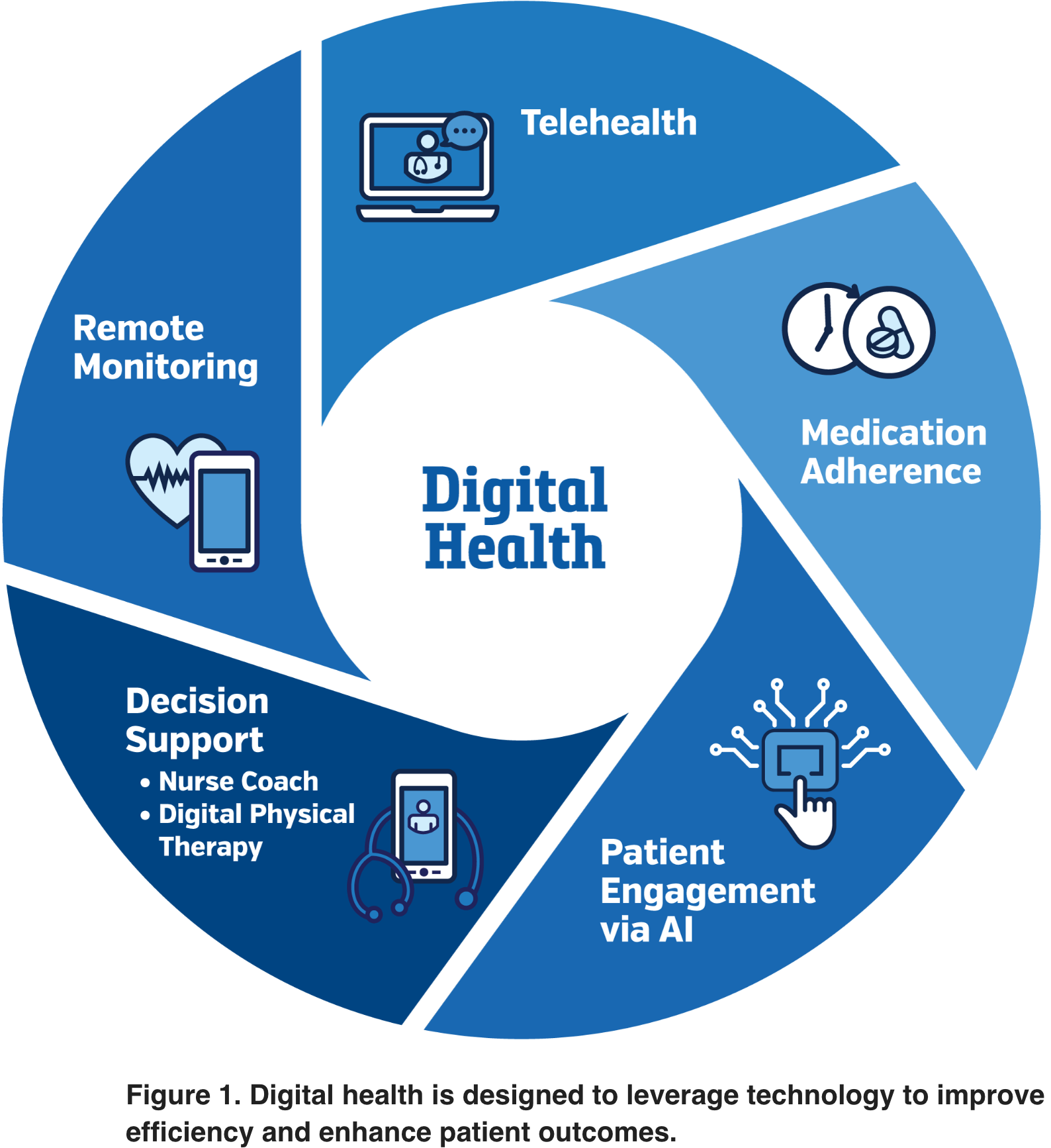
As the landscape of digital health continues to expand (Figure 1), value-based care and personalization of care are accelerating its adoption. The evolving role of digital health is to seamlessly converge expectations of patients, needs of providers, and requirements of payers.
“Digital technology and remote monitoring can be very helpful in managing individuals living with chronic conditions. Understanding barriers to individuals’ ability to adhere to medication and other prescribed therapies is the key to the physician’s ability to optimize care.”
Lili Brillstein

Accelerated Digital Health Adoption
Though digital health care solutions were on the rise before the COVID-19 pandemic, acceptance among health care providers proved challenging. Prior to the pandemic, one-third of consumers surveyed by Accenture reported that they did not use any digital tools to manage their health.4 In 2018, data showed that patient-reported use of mobile devices and applications for health care was 48% and decreased to 35% in 2020, pre-pandemic.4
However, since the initial US COVID-19 outbreak in March of 2020, digital health adoption has rapidly accelerated. Health care providers were newly exposed to technologies they may not have been aware they needed, such as remote health monitoring.
“COVID has poured rocket fuel on telehealth,” said Mark Kaufmann, MD, FAAD, CMO, Advanced Dermatology & Cosmetic Surgery. “Dermatologists have been slow to adopt telehealth, mostly because they viewed the technology as not good enough to evaluate a patient when it comes to the skin. Digital tools are getting much more advanced, yet they will have to continue to advance in the future. We are beginning to see examples in dermatology with remote technology that allows a patient to get ultraviolet treatment in home and send information back to their clinician. This will not replace the value of face to face live visits interactions, however; these innovations will support our efforts when a patient cannot be seen in the office.”
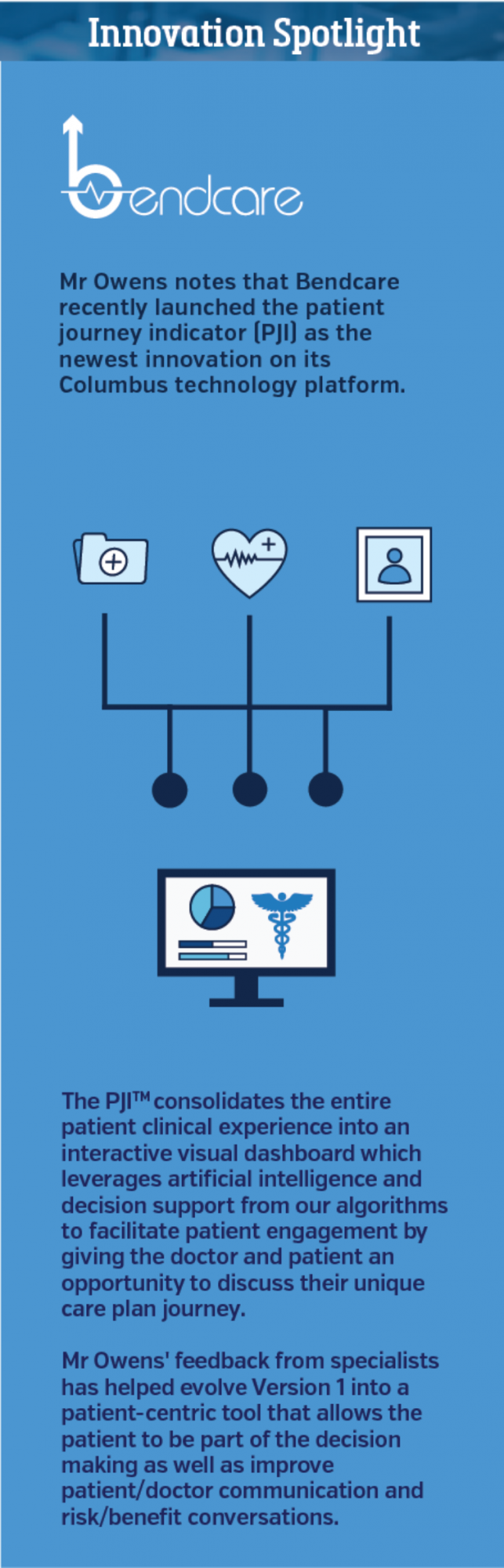
Brian Owens, CIO, Bendcare, agrees regarding the increase in telehealth, stating: “The most effective pandemic-specific initiative launches were the deployment of telehealth. When the pandemic hit, there was no telehealth present in many rheumatology practices.” Digital health technology companies had to work rapidly to meet the new needs of telehealth, and physicians had to quickly adapt and incorporate these services into their practice. He continued, “We were proud of our ability to deploy enterprise telemedicine, while using our Columbus platform to support our specialty providers to incorporate safety measures that enabled our patients to receive in-person care.”
Results of a study in which patients were interviewed regarding their technology use showed the use of technology in a health care setting gave patients a sense of safety and increased feelings of social support.4
The study also demonstrated that patients appreciate digital health technologies because it provides opportunity for them to monitor their own health and keep them in touch with not only their doctors but patient communities.4 This ability to create communities for support is especially beneficial for patients who have a chronic illness.4
“We have been able to take physicians off tightropes and enable them to practice autonomously in their clinics. In short, they are spending more time practicing medicine and spending all their energy focusing on the patient’s needs and are not stretched thin anymore.”
Betsy Wernli
It is important to monitor the appropriate use of telemedicine and understand its potential limitations. Telemedicine may not be as accessible for patient groups with limited technology availability or literacy. Furthermore, the absence of face-to-face patient encounters may pose a challenge to accurate diagnostic and treatment monitoring.3
Susan Manzi, MD, MPH, system chair, department of medicine, Allegheny Health Network, notes that other digital health solutions—many of which existed before the pandemic—are also increasing. Many new health assets’ goals are to prevent hospitalization and other unnecessary office visits.
“Health plans are heavily invested in digital health solutions and wearable devices,” states Dr Manzi. “However, provider networks are generally unaware of the solutions offered to their patients by their health plans. This disconnect leads to suboptimal results. In addition, provider networks are not as heavily invested yet because they lack the same level of funding for innovating technology such as wearable devices.”
“We have been able to take physicians off tightropes and enable them to practice autonomously in their clinics. In short, they are spending more time practicing medicine and spending all their energy focusing on the patient’s needs and are not stretched thin anymore.”
Betsy Wernli
Given the option, many patients are open to and would even prefer virtual care and monitoring, especially those living in rural areas that do not have access to specialists or centers of excellence. Patients have even reported that they would switch providers if virtual visits were not offered. It is not only digital appointments that patients want to see in digital health solutions; of the patients surveyed by Accenture, 57% answered that they would “definitely” or “probably” do virtual remote monitoring of ongoing health issues via at-home devices. These findings support the insights of our thought leaders that these new digital offerings are not only accepted but are now expected.

Critical Data Elements for Individual and Public Health
Increasing usage of digital health assets provides greater health data to physicians which allows for real-time, decision-based support. Digital drug delivery services allow for remote counseling, remote monitoring, and tracking efficacy to optimize care, particularly for patients with chronic conditions.
Critical data points are necessary for continued patient monitoring. The more information available to the physician, the better the patient is treated. Kjel Johnson, PharmD, Vice President of Specialty Strategy & Client Solutions, CVS Health, reports that patients with rheumatic disorders have experienced fewer flares and less pain related to their disease, as well as less anxiety and fewer phone calls to providers related to medication injection.
“Patient-reported outcomes through digital interactions are very important. Up to 42% of patients with rheumatoid arthritis have depression but rheumatologists aren’t screening for it. Organizations are now recognizing the need to detect this and are pushing for implementation of depression screening via digital health assets."
Kjel Johnson
Dr Johnson further emphasizes the importance of collecting critical data points to improve patient experience. “Data helps us validate whether there has been behavior change, and if interventions are leading to improved quality of care and patient experience, and lower costs.
A survey conducted by Transcend Insights (part of Humana) in 2017 found that, of patients surveyed, 64% already utilized a digital device—such as a mobile app—to manage their health, and 71% of these patients believe providing this information to their physician would be beneficial in maintaining their medical history record.5
Data gathered through digital health can be used to improve overall patient health. Applying data to specialty value-based care models can increase the quality of clinical outcomes and the patient experience. To create these models, adherence and symptom data are the most important data sets.
“Specialty value-based care models are used to reduce variations in care to optimize patients’ health,” says Lili Brillstein, CEO, BCollaborative. “While it depends on the disease state, anything that addresses adherence, symptoms, and variation in care is valuable.”
WEGO Health, a company that connects health care companies with patient leaders to improve engagement, surveyed providers to ask what digital tools would most improve their practice. Of the 125 physicians surveyed, 40% said digital medication reminders and tools for adherence would be the most beneficial.6
The same WEGO Health survey included insights from patients. When asked what specific digital initiatives they most value, patients cited medication reminders/other medication management tools (40.3%) and devices/tools for improved self-monitoring (24.3%) the most.6
As digital health programs are physically conducted outside physicians’ offices, they require a certain level of behavioral psychology and incentivization to encourage patient usage. In the WEGO Health survey, 1 out of 3 patient leaders say the best strategy for engaging patients with new digital health options is to work directly with their health care providers. “Having physicians prescribe the technology directly will make patients aware of the innovation while also backing it with an informed voice that patients trust when it comes to medications and treatments,” states the results of the WEGO Health survey.6
Data collection alone is not enough. Leveraging the data is necessary to make patient-specific decisions and to develop actionable insights via payers. Taking the collected information and transforming it into something that is usable by physicians can allow for informed insight-based decisions.
“[Real-time data] creates real-time decision-making support,” says Ms Brillstein. “Doctors today do not know if a drug is working or what is happening with a patient until the next visit. Continuous data collection allows for these physicians to act sooner and make decisions that can prevent hospitalizations, disability, and reduce overall cost of care.”
Payers see the benefit of this data collection as well. The ability to access and leverage this data for insights allows payers to develop informed, patient-specific policies and decisions.
“It would be great to find a way for pharmaceutical companies to develop a tool that identifies what treatment a patient is on and if they need support. It is important for doctors to have a full history of the patients to make quick decisions.”
Brian Owens
Pharma’s Role in Evolving Digital Health
The pandemic not only shifted the use of digital health but rapidly accelerated its applications. Previously, digital health was not seen as a necessity but now and going forward it will play an integral role in optimizing patient care. Aside from its connection to direct patient contact (eg, telehealth), digital health is vital to the collection of data. Tracking adherence via remote monitoring and support tools is necessary to improve efficacy and achieve better patient outcomes. The development of a medication and associated monitoring tool will play a pivotal role in real-time decision-making for providers.
Medication adherence can be tracked through objective measures, such as a patient initially filling a prescription, or subjective measures, such as a patient reporting taking their medication exactly as it is prescribed.7 Reasons for low adherence rates are unique to each individual patient and thus can be very complex. Any combination of affordability, patient education, convenience, and adverse events (to include pain during injections for some biologics) can compound the risk of nonadherence to medications.7

One way drug manufacturers are looking to solve these issues is through connected smart drug delivery devices. “Connected” means that the device can collect and share data; for example, if a patient is taking their medication on time or if they took the entire dose. instructions and customizing “Smart” refers to the device’s ability to provide feedback and guidance to better address patient needs, such as providing step-by-step instructions or customizing administration to meet the patient’s lifestyle. With these devices, artificial intelligence analytics are being used to predict when a patient is in distress. These advanced devices are currently being used in the United States in therapeutic areas like chronic obstructive pulmonary disease, diabetes, and oncology through “smart” inhalers and pens.
Both Dr Wernli and Ms Brillstein emphasize the need for tracking adherence. Dr Wernli adds, “A device that would improve adherence and access would show better outcomes for patients.” UCB recently launched a smart connected device in several European countries for use with its biologic medication in rheumatology indications to improve medication adherence, support patients, as well as collect and share data.
In the survey conducted by WEGO Health, patients rated the pharmaceutical industry’s overall digital health efforts, regarding patient support and engagement, as a 5.7 out of 10.6. The immunology health leaders agreed that the pharmaceutical industry should play an increased role in digital health. The consensus among our interview participants was the need for tools that allow for remote monitoring, improve efficacy, and enable health care providers to make quick decisions based on patient data.
Optimal treatment of patients relies heavily on an interdisciplinary team. Incorporating pharma to help develop solutions for the treatment team, combined with the benefits of digital health tools, would be beneficial to patient outcomes. Pharma companies could aid in developing remote monitoring and support tools which would enable the physician to make the best decisions to optimize care for the patient and improve outcomes.
References
- Office of Disease Prevention and Health Promotion. Social Determinants of Health. HealthyPeople.gov. Accessed March 23, 2021. https://www.healthypeople.gov/2020/topics-objectives/topic/social-determinants-of-health
- Agency for Healthcare Research and Quality. AHRQ’s Digital Healthcare Research Program. Agency for Healthcare Research and Quality website. Accessed March 23, 2021. https://www.ahrq.gov/cpi/about/otherwebsites/healthit.ahrq.gov/index.html
- Hernandez-Boussard T, Amstutz K, Embi P, Robinson E. Expanding telemedicine in the age of COVID-19. AHRQ Views. December 15, 2020. Accessed March 23, 2021. https://www.ahrq.gov/news/blog/ahrqviews/expanding-telemedicine-covid19.html
- Accenture. Digital Health Consumer Survey 2020. Accessed March 23, 2021. https://www.accenture.com/_acnmedia/PDF-130/Accenture-2020-Digital-Health-Consumer-Survey-US.pdf
- McCarthy J. Survey: 64 percent of patients use a digital device to manage health. Mobi Health News. Published March 6, 2017. Accessed March 23, 2021. https://www.mobihealthnews.com/content/survey-64-percent-patients-use-digital-device-manage-health
- Freeburn C. SURVEY: patient perspectives on digital health adoption 2020. WEGO Health. Accessed March 23, 2021. https://www.wegohealth.com/2020/08/11/survey-patient-perspectives-digital-health-adoption-2020/
- Brown MT, Bussell JK. Medication adherence: WHO cares? Mayo Clin Proc. 2011;86(4):304-314. doi:10.4065/mcp.2010.0575




