






Making Lifestyle Interventions Practical and Accessible in MDD Care
How can clinicians make lifestyle interventions more accessible and actionable for patients with major depressive disorder (MDD)?
In this interview, Arwen Podesta, MD, DFAPA, Psych Congress Steering Committee Member, and Mike Asbach, DMSc, PA-C, Co-Chair, Psych Congress PA Institute, discuss practical strategies for incorporating nutrition and exercise recommendations into psychiatric care. They explore how financial constraints, family responsibilities, and other social determinants of health can influence patients' ability to make lifestyle changes. The experts also highlight the value of starting with manageable goals, using motivational interviewing, and providing educational resources to reinforce recommendations beyond brief appointments and support gradual, sustainable changes in daily routines.
Key Clinical Summary
- MDD care can incorporate nutrition and exercise recommendations tailored to patients' financial resources, family responsibilities, and access to healthy food and physical activity. Clinicians should consider social determinants of health when developing actionable lifestyle goals.
- Incremental lifestyle changes may be more manageable than ambitious initial goals. Starting with 5 minutes of daily exercise or identifying affordable, convenient meals can help patients establish routines that may be expanded over time.
- Motivational interviewing and take-home educational resources can support lifestyle counseling during brief psychiatric visits. Handouts, websites, and follow-up materials reinforce recommendations and allow patients to revisit them when ready to make changes.
Read the Transcript
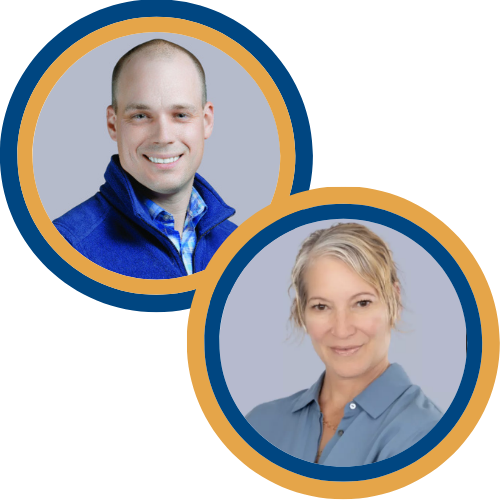
Arwen Podesta, MD, DFAPA: Hi, I'm Dr Arwen Podesta, a psychiatrist in New Orleans, Louisiana. I specialize in integrative medicine and forensic psychiatry, addiction medicine, and adult general psychiatry. I'm excited to be here with my colleague, Mike.
Michael Asbach, DMSc, PA-C: Thanks, Arwen. My name is Mike Asbach. I'm a psych PA. I serve as the associate director of interventional psychiatry at Dent Neurologic Institute up in Buffalo, New York. I also serve as a medical liaison on behalf of the American Academy of PAs to the American Psychiatric Association (APA).
Psych Congress NP Institute (PCNPI): How can clinicians incorporate nutrition and exercise recommendations into major depressive disorder treatment plans?
Podesta: We have all of these lofty goals where we want to say, “Hey clinicians let's teach our patients to eat better and exercise more and do these things,” that we know have the studies to support them helping their mental health. But how can we do that in an accessible way and make it easy in that short visit?
Asbach: Yeah, it's so tough. We know that social determinants play a big role in mental health and that very often just telling a patient to go to the gym may not be feasible if they don't have money or access to a gym. Telling them to eat organic may not be a reasonable option if they live in a food desert.
I think a lot of times when we talk to our patients we need to make sure that we're giving recommendations that are accessible and actionable. For that a lot of times it may be starting small. If we tell our patients to go run 10k, they probably won't do it. But if we tell them to just focus on getting outside and exercising for 5 minutes a day, that might be a more accessible change once they implement that habit. they start to incorporate that in their daily life, we can then expand that and build on it.
I think similarly with nutrition, we don't necessarily need to let perfect get in the way of good. If you have patients that are maybe eating fast food multiple times a week because it's cheap, it's filling, and it's low stress to have to just go to the drive-thru and get it. You've got screaming kids in the back that don't necessarily give you an opportunity to cook. Well then, maybe we talk about quick and easy meals that are healthy and accessible, but also reasonably cost. Then, we build to talking about eliminating all fast food and going to a low inflammation diet or the other things that we can do to help. But I think starting small and building upon that is really key.
Podesta: I think it's really important to think about it that way and also how you can incorporate it into the family and the real lifestyle of the patient in front of us and make it very accessible to them. Because like you said, kids in the back seat, you know, we need something quickly. How can we help them prepare and manage their lifestyle a little bit so that they can learn to do that?
There's a community kitchen in my area in New Orleans and we actually have community cooking classes.
Asbach: Oh, that's great.
Podesta: So, we can teach them both mental and physical wellness of food. Also, they teach them how to shop. We have the residents from Tulane go there as well. So, Tulane psychiatry residents get to go there and do modules and learn how to teach their patients how to do this. We don't all have access to a community kitchen like that. So, it's on us because we know the studies and so being able to just put little pieces in their mind so that they can start thinking about that as a mindset.
Everybody I know that has kids wants their kids want their kids to be healthy. So, talking about it from a perspective of health for the children and for even immune-boosting and psychiatric wellness and even thriving in school we know that there are studies that relate to that. So, I like to start putting those little ideas and letting the patients kind of do some motivational interviewing with me to move into understanding how they can implement it. It's hard, and I admit it, and it might take years, but we can do these little teeny pieces.
I like to have handouts. I like to have websites. I like to send an email or have some way that a patient can take something home where I don't have to go through the whole education process right there in my 15-minute visit.
Asbach: Correct. I also use a lot of handouts in my practice, and I think it's such a great opportunity. We know that very often the things that we talk about in our visits, the patient may not remember all of the things that we discussed. So, a handout has dual benefit. It allows us to leverage that very short period of time that we have with the patient by giving them things to review later but it also is a nice reinforcement if they forget, “What did they say about that how many minutes should I exercise?” we have a handout that can then reinforce it. I also like to think about that even if the patient doesn't care they nod their head in our visit and say, “Oh, yeah, yeah, I'll look at it, I'll exercise, I'll eat healthier,” and they take the handout and they throw it in a drawer. 3 months from now they may pull that out of the drawer and at that point that may be something that they're interested in pursuing So I love the idea of using handouts.
Michael Asbach, DMSc, PA-C, is a doctorally-trained physician assistant and Associate Medical Director at the DENT Neurologic Institute in Buffalo, New York. He earned his Master’s in Physician Assistant Studies from Daemen University and his Doctor of Medical Science from A.T. Still University. He also holds the Psychiatry Certificate of Added Qualification from the National Commission on Certification of Physician Assistants. Dr Asbach’s work bridges clinical innovation, professional advocacy, and disruption in healthcare, with a focus on advancing psychiatry, elevating the PA profession, and shaping the future of collaborative care.
A nationally recognized educator and CME speaker, Dr Asbach specializes in treatment-resistant depression, bipolar disorder, and emerging psychiatric therapies. He holds a faculty appointment with Shenandoah University’s Doctor of Medical Science program, teaches across multiple universities, serves on the Psych Congress Steering Committee, and is a co-chair of the Psych Congress PA Institute annual meeting.
Boarded in Psychiatry, Addiction Medicine, Forensic Psychiatry and Holistic & Integrative Medicine, Arwen Podesta, MD, DFAPA, DFASAM, works in Louisiana, with an office in New Orleans. She authored a book on addiction, HOOKED (see her website, www.podestawellness.com). She was recently awarded the honor of distinguished fellow of the American Psychiatry Association as well as the American Society of Addiction Medicine and is the immediate past President of the Louisiana Psychiatric Medical Association. She consults to the Louisiana governor’s HOPE committee and is a member of the Attorney General’s Opioid Abatement Taskforce. She is a national speaker, she teaches, consults, and is an advocate for integrative best practices for those with addiction and psychiatric needs.
© 2026 HMP Global. All Rights Reserved.
Any views and opinions expressed above are those of the author(s) and do not necessarily reflect the views, policy, or position of the Psych Congress Network or HMP Global, their employees, and affiliates.
Related Content


Advance Your Expertise & Gain Confidence in Your Approach at NP Institute!
Nurse Practitioners play a vital role in mental healthcare, and specialized education is key to creating the best patient outcomes. Join us at NP Institute for an in-depth, practical learning experience designed to cover everything you’ve wanted to know but have been afraid to ask.
Why Attend?
- Expert-Led Education – Learn from world-class leaders in psychiatry
- Deep Dive into Psychopharmacology – Master essential principles, treatments, and medications
- Practical & Actionable – Gain confidence in your approach to manage complex cases
- Tailored for NPs – Networking opportunities with like-minded professionals and education designed to fit your unique role in mental healthcare
Join us to expand your knowledge and enhance patient care!




