Allergic Contact Dermatitis to Benzyl Alcohol
Benzyl alcohol (BA) is an aromatic alcohol widely used as a preservative, fragrance component, and solvent across a variety of products.1 Allergic contact dermatitis (ACD) to BA has been reported in association with personal care products, topical medicaments, and industrial exposures such as epoxy adhesives.2-6 Despite its relatively low reaction rate, BA demonstrates high clinical relevance when positive.7,8 Its prevalence has increased in recent years, with ingredient database analyses from 2020 to 2025 identifying BA in 2% to 53% of products surveyed worldwide.9 In recognition of its emerging importance, BA was named the 2026 Allergen of the Year by the American Contact Dermatitis Society (ACDS).10 Given its widespread use and potential to contribute to treatment-refractory dermatitis, recognition of BA as a clinically relevant allergen is essential. Here, we present 4 cases of ACD to BA (tested as 10% in petrolatum) from our tertiary contact dermatitis clinic. These cases highlight key clinical patterns and sources of exposure.
Case 1
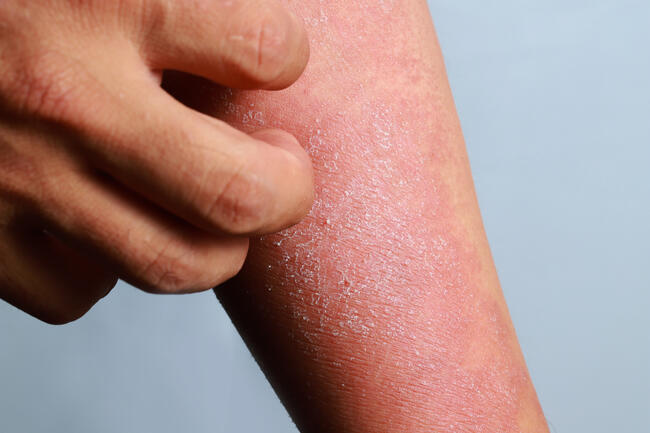
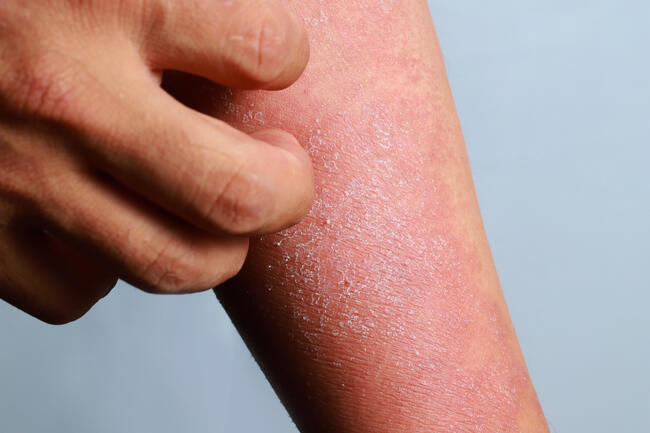
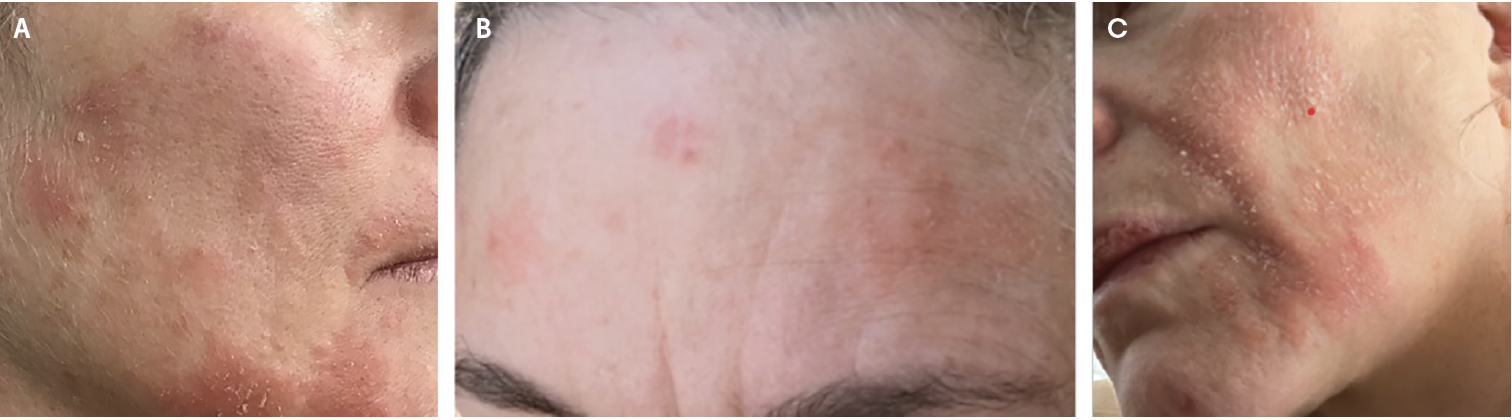
A 56-year-old woman presented with acute-onset facial dermatitis initially involving the cheeks, which progressed to the forehead, chin, lips, and perioral skin. The rash was erythematous, pruritic, burning, and scaly, coalescing over several weeks (Figure 1 A–C). Biopsy demonstrated chronic spongiotic dermatitis with eosinophils and confluent parakeratosis. She experienced partial improvement with a 16-day prednisone taper and topical pimecrolimus but flared following discontinuation of oral steroids.
Patch testing to the North American Contact Dermatitis Group (NACDG) standard series and several supplementary series revealed strong (2+) reactions to BA, methylisothiazolinone, and her Neutrogena Oil-Free Moisturizer; 1+ reactions were noted to balsam of Peru, methylchloroisothiazolinone/ methylisothiazolinone mix, pimecrolimus cream (both clinic and patient supplied), and her Oribe shampoo (tested in semi-open fashion).
BA was present in multiple products applied directly to the face, including the Neutrogena Oil-Free Moisturizer and pimecrolimus cream, both of which elicited direct positive reactions. She also reacted to an Oribe shampoo containing sodium benzoate, a structurally related preservative.10 Overall, findings supported a diagnosis of ACD to BA, methylisothiazolinone, and other relevant allergens. She was counseled on strict allergen avoidance with guidance from the ACDS Contact Allergen Management Program (CAMP) tool.
Case 2
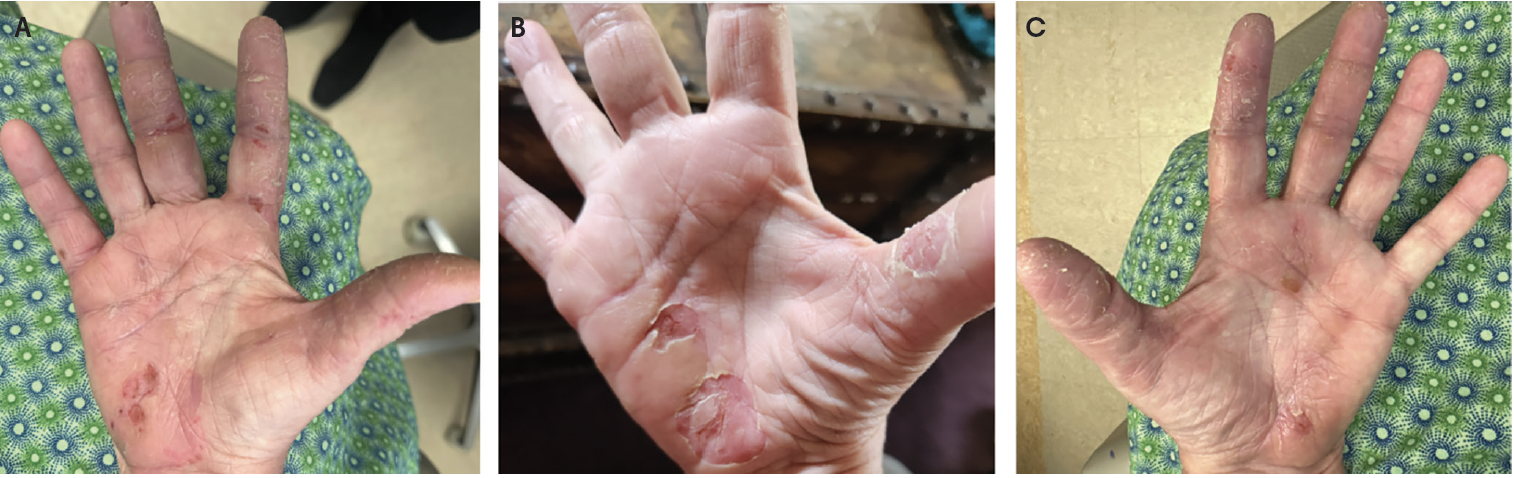
A 68-year-old woman presented to our clinic with a 1-year history of dermatitis primarily involving the palms. Her symptoms began with mild pruritus and progressively worsened to an intensely pruritic, brightly erythematous eruption with vesiculation, fissuring, peeling, and erosions; the dorsal hands were relatively spared (Figure 2 A–C). She had previously trialed clobetasol 0.05% ointment with only partial improvement.
Patch testing was performed using the NACDG standard series and our clinic’s personal care product series, yielding a 1+ reaction to BA after 96 hours. BA was identified in several products that were in direct contact with her hands, including shampoo, leave-in hair products, cosmetics, and moisturizers. She was diagnosed with ACD to BA and counseled on avoidance. Following elimination, she reported moderate improvement, suggesting BA was at least partially contributory.
Case 3
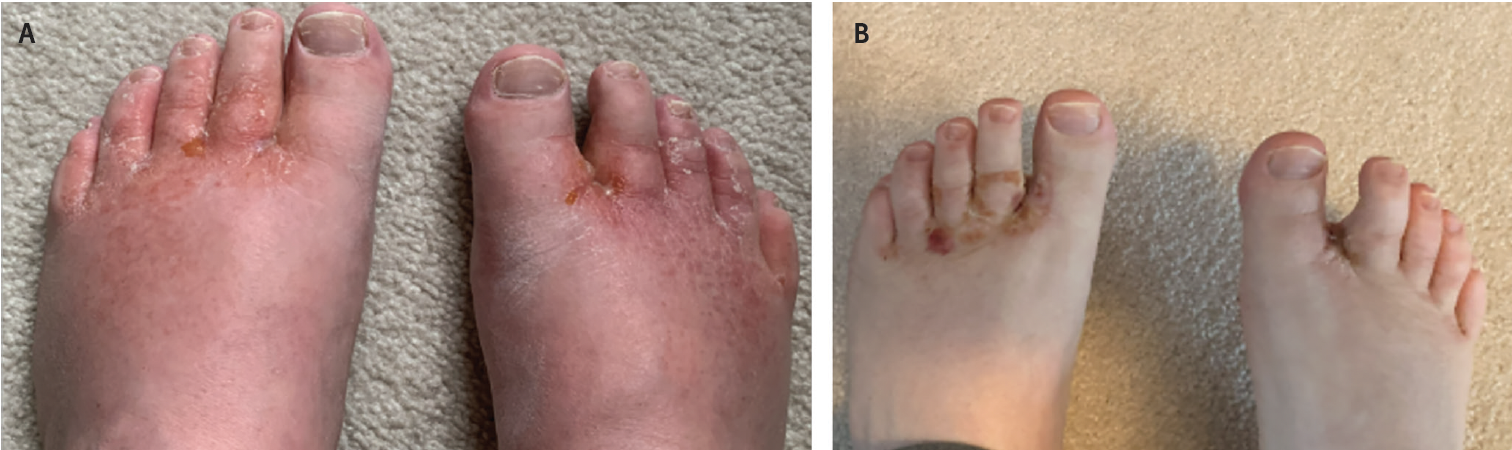
A 59-year-old man with a 20-year history of tinea pedis previously managed with over-the-counter antifungals presented with 3 months of worsening foot dermatitis. He developed an itchy, burning, blistering rash with serous exudate primarily involving the toes after applying clotrimazole 1% cream, which worsened with subsequent use of miconazole spray and terbinafine cream (Figure 3 A–B).
He underwent comprehensive patch testing, including the NACDG standard series, as well as our personal care, preservative, emulsifier, shoe, rubber, and antifungal series, in addition to his personal products. Testing revealed strong positive reactions to BA, terbinafine cream, and clotrimazole cream, as well as a strong positive reaction to our preparation of hydrolyzed oats (2+), which contains BA. In both antifungal creams to which he reacted, BA was also identified. He was diagnosed with ACD to BA and reported complete resolution following discontinuation of BA-containing medicaments and personal care products.
Case 4
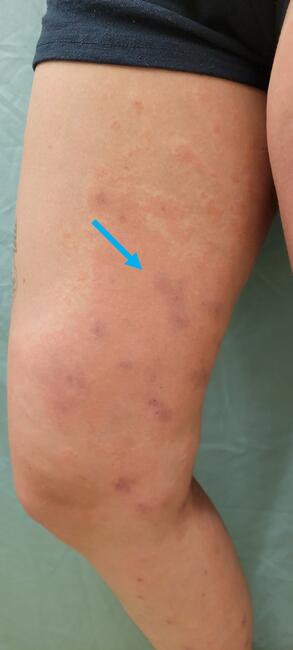
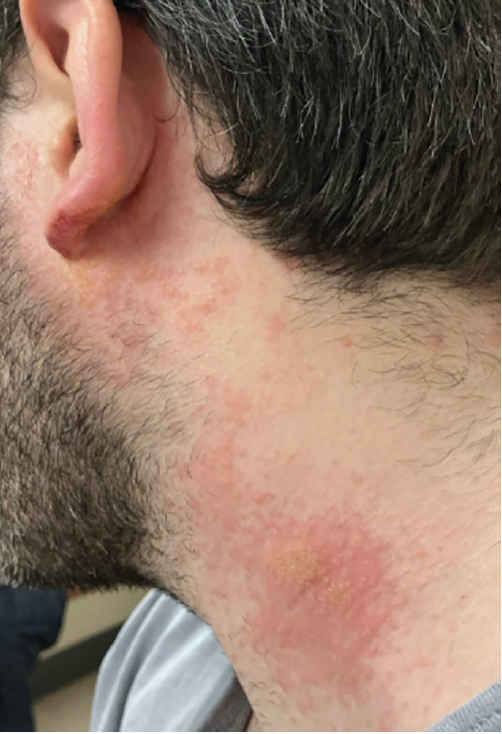
A 32-year-old man presented with a 1.5-year history of severe, treatment-refractory dermatitis involving the face, neck, trunk, and extremities. The eruption initially appeared on the neck and ear before progressing to a widespread, erythematous, vesicular, pruritic dermatitis that was intermittently impetiginized with crusting and oozing (Figure 4). Despite multiple treatments, including topical corticosteroids, tacrolimus, antifungals, and antibiotics, his dermatitis continued to worsen. Skin biopsy of the right proximal dorsal forearm showed spongiotic dermatitis with a mixed inflammatory infiltrate.
Patch testing to a modified NACDG standard series and several supplementary series revealed strong positive reactions to BA (3+) and balsam of Peru (2+), along with mild reactions (1+) to propylene glycol and several of the patient’s personal care products, including Cetaphil Moisturizing Lotion and Cremo 2-in-1 Shampoo & Conditioner, both of which contained BA. As BA is a component of balsam of Peru, and in the absence of reactions to other fragrance allergens, his balsam of Peru reaction was interpreted as pseudo-cross-reactivity with BA rather than primary fragrance allergy.
Product review identified BA in multiple routinely used items, including body wash, hair products, and facial cleansers. Findings were consistent with ACD to BA and propylene glycol, for which he was counseled on strict allergen avoidance.
Discussion
BA is an uncommon allergen, with a reaction rate of 0.21% among patch tested patients between 2010 and 2019 as reported by the Information Network of Departments of Dermatology.11 In the latest NACDG 2021–2022 cycle, 0.5% of 3050 patients reacted to BA.8 However, when positive, BA has consistently demonstrated high clinical relevance; in the 2019–2020 NACDG cycle, 87.6% of BA-positive reactions were considered clinically relevant, rising to 93.3% in the 2021–2022 cycle.7,8 Despite this, BA allergy is underrecognized, in part because it is not routinely included in typical standard patch test series, which may lead to missed diagnosis. Our cases highlight clinical patterns, sources of exposure, and diagnostic pearls in the recognition of BA allergy.
Sources of Exposure in Personal Care Products
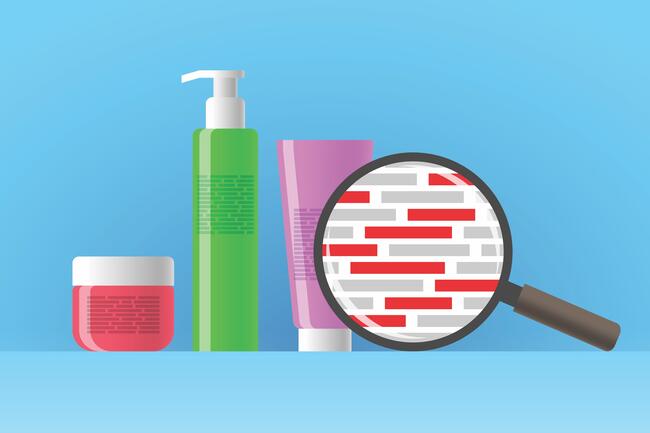
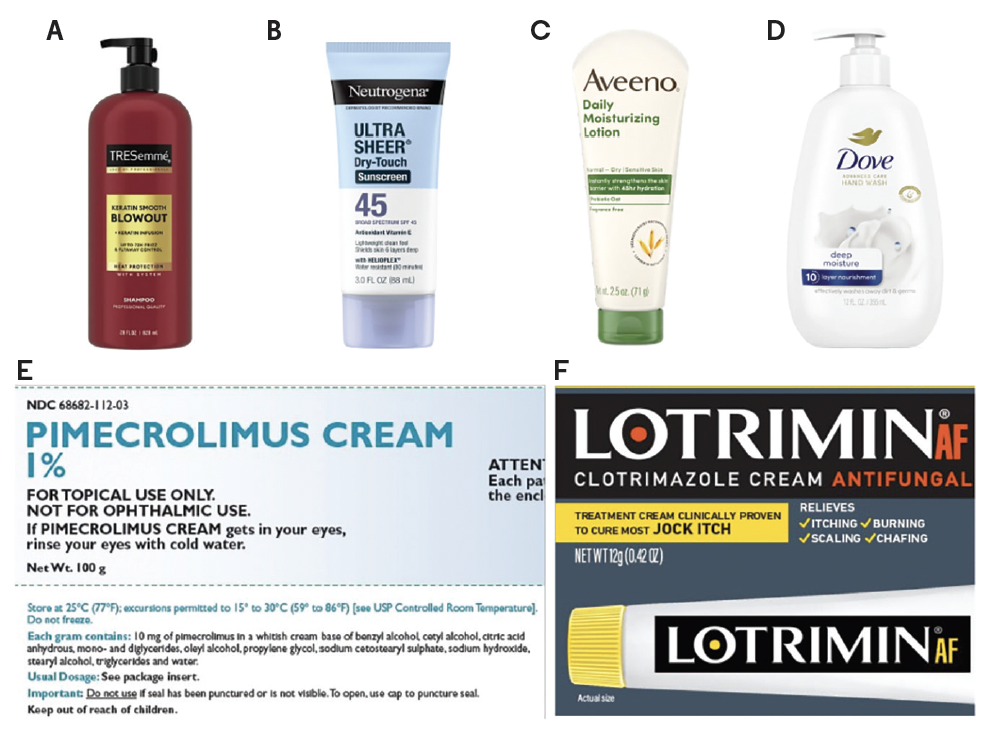
BA is widely used as a preservative, solvent, and fragrance component in personal care products, including shampoos, cleansers, moisturizers, sunscreens, and cosmetics (Figure 5 A–F).1 This widespread use is reflected in Cases 1 and 2, where patients were exposed to BA through multiple routinely used personal care products. In both cases, clinical improvement following targeted avoidance confirmed the relevance of BA. ACD to BA in personal care products has been previously reported, including reactions to popular products, such as Aveeno Moisturizing Lotion and Sarna Anti-Itch Lotion.2,3 As incorporation of BA into consumer products expands, it is likely that rates of sensitization and clinically significant contact allergy will rise as well. These factors underscore the importance of including BA in patch test screening series.
Benzyl Alcohol in Topical Medicaments
BA is a common inactive ingredient in both prescription and over-the-counter medicated creams. ACD to BA in medicaments has been previously reported, including vulvar and perianal dermatitis attributed to BA in topical mupirocin, clotrimazole, and methylprednisolone aceponate cream.4 This creates a clinical paradox in which the treatment itself may exacerbate the dermatitis it is intended to treat. Cases 1 and 3 illustrate this phenomenon.
In Case 1, BA in prescribed pimecrolimus cream was identified as a contributor to treatment-refractory facial dermatitis. All currently available formulations of pimecrolimus cream contain BA, and patients with confirmed contact allergy to this preservative should avoid pimecrolimus in all its formulations. In Case 3, antifungal preparations containing BA in the vehicle contributed to persistent dermatitis. Notably, the reaction to hydrolyzed oats in this case likely reflects sensitization to the BA preservative rather than the oat protein itself, as BA is used in certain patch test allergen preparations, including hydrolyzed oats, and may produce confounding positive reactions in sensitized patients.
These cases underscore the importance of screening topical medicaments for vehicle components that may serve as contact allergens, particularly in patients with persistent or worsening dermatitis despite appropriate therapy. Allergen-avoidance programs that include prescription and over-the-counter medications may assist clinicians in identifying formulations free of specific contact allergens.
Relationship to Benzoates and Structurally Related Compounds
BA is structurally related to benzoic acid and its derivatives and is metabolized to benzoic acid via oxidation. Although the relationship between BA, benzoic acid, and its derivatives remains incompletely defined, prior reports suggest that sodium benzoate-containing products may include small amounts of benzoic acid and patients reacting to sodium benzoate may also react to benzoic acid-containing products.11,12 Given the structural similarity of BA to benzoic acid and sodium benzoate, it is plausible that BA may exhibit similar patterns of co-reactivity. Notably, in Case 1, the patient reacted to a shampoo containing sodium benzoate but not BA itself, suggesting that reactivity to structurally related compounds may contribute to reactions even in the absence of direct BA exposure. These findings highlight the importance of considering related preservatives, such as sodium benzoate and benzoic acid, when counseling patients with BA sensitization.
Relationship to Balsam of Peru and Fragrance Sensitization
BA is a known component of balsam of Peru, comprising approximately 1% to 2% of the resin, a concentration reported to be sufficient to elicit positive test reactions in sensitized individuals.14,15 In Case 4, concurrent reactions to BA and balsam of Peru occurred in the absence of reactions to other fragrance allergens. Several mechanisms may explain multiple positive patch test reactions, including true cross-reactivity, pseudo-cross-reactivity, and concomitant sensitization resulting from exposure to multiple allergens.14 Pseudo-cross-reactivity occurs when positive reactions to 2 patch test substances arise because both contain the same hapten.14 This differs from true cross-reactivity, which results from immunologic recognition of structurally related but distinct compounds.14 Because balsam of Peru is a complex resin containing numerous fragrance constituents, a positive patch test reaction to balsam of Peru does not necessarily identify which constituent is responsible for sensitization. In this case, concurrent reactions to BA and balsam of Peru in the absence of reactions to other fragrance allergens may reflect reactivity to the BA component rather than independent sensitization to other balsam of Peru constituents.
Conclusion
In summary, despite its relatively low reactivity rate on patch testing, BA demonstrates high clinical relevance when positive, and its expanding incorporation into personal care products may further increase the likelihood of sensitization. Clinicians should consider contact allergy to BA in patients with treatment-refractory eczematous dermatitis, recognizing that ACD to BA can cause dermatitis affecting diverse anatomic sites, including the hands, face, and feet, as demonstrated in this case series. Careful review of personal care products and topical medicaments is essential when BA allergy is suspected, as prescribed therapies themselves may be perpetuating dermatitis. Where possible, BA should be included in patch testing panels, and when allergy is confirmed, avoidance counseling should address all potential sources of exposure. Allergen databases, such as SkinSafe and ACDS CAMP, can assist patients and clinicians in identifying BA-free alternatives. Early recognition and targeted avoidance can lead to significant clinical improvement.
References
1. Johnson W, Bergfeld WF, Belsito DV, et al. Safety assessment of benzyl alcohol, benzoic acid and its salts, and benzyl benzoate. Int J Toxicol. 2017;36(3 suppl):5S- 30S. doi:10.1177/1091581817728996
2. Curry EJ, Warshaw EM. Benzyl alcohol allergy: importance of patch testing with personal products. Dermatitis. 2005;16(4):203-208. doi:10.2310/derm.1.2005.2118
3. Corazza M, Mantovani L, Maranini C, et al. Allergic contact dermatitis from benzyl alcohol. Contact Dermatitis. 1996;34(1):74-75. doi:10.1111/j.1600-0536.1996.tb02129.x
4. Sestini S, Mori M, Francalanci S. Allergic contact dermatitis from benzyl alcohol in multiple medicaments. Contact Dermatitis. 2004;50(5):316-317. doi:10.1111/ j.0105-1873.2004.00341c.x
5. Menanteau M, Bensefa-Colas L, Crépy MN. Another case of occupational hand allergic contact dermatitis to benzyl alcohol in an epoxy floor paint. Contact Dermatitis. 2024;91(3):252-253. doi:10.1111/cod.14584
6. Pesonen M, Ylinen K, Suomela S, et al. Occupational contact allergy to benzyl alcohol in epoxy hardeners. Contact Dermatitis. 2023;89(6):507-509. doi:10.1111/cod.14415
7. DeKoven JG, Warshaw EM, Reeder MJ, et al. North American Contact Dermatitis Group patch test results: 2019–2020. Dermatitis. 2023;34(2):90-104. doi:10.1089/ derm.2022.29017.jdk
8. Houle MC, DeKoven JG, Atwater AR, et al. North American Contact Dermatitis Group patch test results: 2021–2022. Dermatitis. 2025;36(5):464-476. doi:10.1089/ derm.2024.0474
9. de Groot AC. Benzyl alcohol. In: Monographs in Contact Allergy: Volume 2: Fragrances and Essential Oils. CRC Press;2021:81-92.
10. Le NT, Wu PA. Benzyl alcohol: allergen of the year 2026. Dermatitis. 2026;37(1):4- 12. doi:10.1177/17103568251386038
11. Aerts O, Goossens A. Contact allergy to preservatives. In: Johansen JD, Mahler V, Lepoittevin JP, Frosch PJ, eds. Contact Dermatitis. Springer;2021:835-876.
12. Scheman A, Hipolito R, Severson D, et al. Contact allergy cross-reactions: retrospective clinical data and review of the literature. Dermatitis. 2017;28(2):128-140. doi:10.1097/DER.0000000000000254
13. Fonacier L, Frankel D, Mawhirt S. Contact allergens for the allergist. Ann Allergy Asthma Immunol. 2022;128(6):629-644. doi:10.1016/j.anai.2022.03.022
14. de Groot AC. Myroxylon pereirae resin (balsam of Peru)—a critical review of the literature and assessment of the significance of positive patch test reactions and the usefulness of restrictive diets. Contact Dermatitis. 2019;80(6):335-353. doi:10.1111/cod.13263
15. NACDG allergen: benzyl alcohol. The Dermatologist. May 2007. Accessed July 31, 2026. https://www.hmpgloballearningnetwork.com/site/thederm/article/7191