Refining Psoriasis Treatment in High-Impact, Limited Disease: IL-23 Data and Real-World Strategies From Fall Clinical 2025
At the Fall Clinical 2025 session, “Clear Skin, Clarity in Care: Emerging IL-23 Data Highlights for Psoriasis,” presenters James Q. Del Rosso, DO; Bruce Strober, MD; and E. James Song, MD, provided a detailed review of current treatment considerations for high-impact, limited psoriasis—particularly palmoplantar disease—and new data on IL-23 inhibitors. The session also addressed screening for psoriatic arthritis, topical treatment failure, and the evolving role of systemic therapies, including off-label use of Janus kinase (JAK) inhibitors.
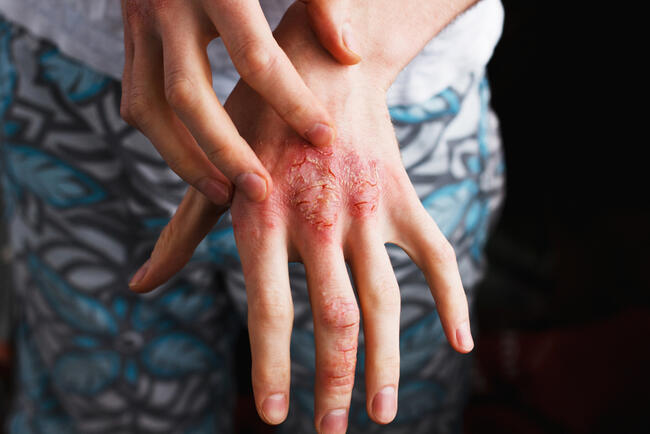
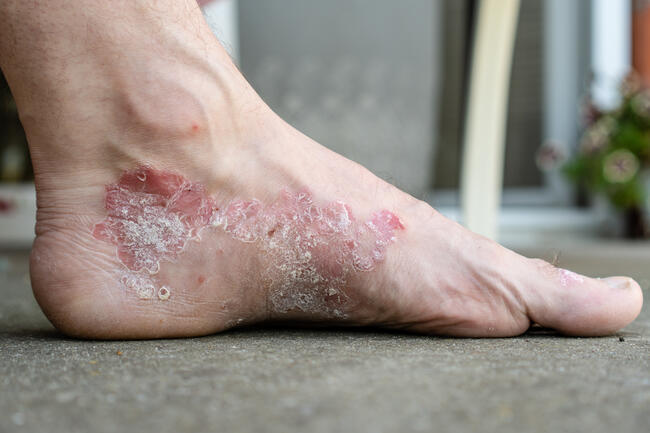
Dr Strober began with a representative case: a 43-year-old man with palmoplantar psoriasis affecting 2% body surface area (BSA). Despite the small surface area, the disease severely impacted the patient’s quality of life and was resistant to topical steroids and roflumilast.
“Palmoplantar psoriasis is a common presentation and a different brand of psoriasis,” Dr Strober said, emphasizing that such patients often don’t meet traditional clinical trial criteria, which historically required ≥10% BSA or Psoriasis and Severity Index (PASI) ≥12. To address this, the International Psoriasis Council (IPC) has reclassified severity categories into a binary system: topical therapy candidates and systemic therapy candidates.
Dr Strober explained, “Systemic therapy candidacy includes patients with ≥10% BSA; failure of topical therapy; or high-impact limited disease, like scalp, nails, genitals, palms, soles, or face, that doesn't respond to topicals.”
Dr Song clarified what constitutes topical failure: “If a topical works but flares back upon discontinuation, or if the patient needs constant use of super-potent corticosteroids, that's not long-term control.” Dr Strober added, “We published a definition last month in JAD: failure means 2 consecutive 4-week courses of different MOAs without sufficient improvement.”
Psoriatic arthritis (PsA) screening remains a critical component of routine psoriasis care. Strober recommended a structured, 7-point checklist at each visit:
- Family history of PsA
- Nail changes
- Swollen/tender fingers or toes, past or present
- Pain awakening the patient at night
- Morning stiffness
- Low back pain or stiffness
- Neck pain or stiffness
He also suggested asking directly, “Has another physician ever told you that you have psoriatic arthritis?” While these questions are not fully sensitive or specific, Dr Strober noted, “They usually get you to the right diagnosis.” Choosing systemic therapy with efficacy in PsA, particularly IL-17 or tumor necrosis factor (TNF) inhibitors, is essential when axial or joint symptoms are present.
The panel underscored the distinct pathophysiology and treatment challenges of palmoplantar psoriasis, distinguishing it from plaque psoriasis with palmoplantar involvement. “Patients with predominant palmoplantar psoriasis often respond less favorably to biologics than those with classic plaque psoriasis,” Dr Song explained.
Dr Strober reviewed IL-23 inhibitor data specific to palmoplantar disease. In dedicated studies, guselkumab and risankizumab demonstrated clear or almost clear rates of ~33% in palmoplantar psoriasis, compared to 75% to 80% clearance rates in broader plaque psoriasis populations. “They all work, but not as well,” he said.
Even so, delayed efficacy should not be mistaken for treatment failure. “IL-23 inhibitors may require more time—6 months or more—to reach full effect in palmoplantar disease,” Dr Strober said. He presented a successful case of a patient who cleared with risankizumab after a year, noting similar outcomes in his practice.
Despite moderate efficacy of biologics in palmoplantar disease, Dr Strober emphasized his clinical preference for JAK inhibitors in this setting. “They really work, better than 3 out of 4 patients, if not 9 out of 10,” he stated. “If you feel comfortable using a JAK for this kind of patient, you'll almost always get success.”
Although JAK inhibitors are not currently approved for palmoplantar psoriasis, Dr Strober called them “the best drugs” for this population based on his experience. Their use may also extend to pustular variants, with robust clinical response observed.
The key takeaway from the session was a call to reevaluate treatment thresholds for systemic therapy in psoriasis, particularly for patients with high impact but limited disease. The IPC’s reclassification emphasizes impact over surface area, urging clinicians to think beyond PASI scores and include quality-of-life measures and topical responsiveness in decision-making.
“This is a patient who’s never going to qualify for a clinical trial,” Dr Strober said of the case he presented. “But he’s absolutely someone who needs systemic therapy.”
Dermatologists should also avoid prolonged cycling through topicals when disease control is not durable. “Don't keep churning through topicals endlessly,” Dr Strober advised. For patients who don’t achieve long-term remission, phototherapy or systemic therapy should be initiated.
The growing number of systemic options—IL-17, IL-23, TNF inhibitors, and JAK inhibitors—enables precision medicine in psoriasis, but also requires nuanced selection based on patient-specific features, such as:
- Disease location (palms, soles, scalp, nails, genitals)
- Presence or risk of PsA
- Prior topical treatment response
- Impact on daily functioning
For palmoplantar disease, expectations should be tempered. “All of these drugs have palmoplantar data,” Dr Strober concluded, “but the efficacy is always lower than in classic plaque psoriasis.”
Ultimately, off-label use of JAK inhibitors may offer superior efficacy, but dermatologists must weigh benefits against regulatory considerations and patient preferences. Regardless of the agent selected, recognizing the impact of high-burden, limited-area disease is essential to improving outcomes for a previously underserved psoriasis population.
Reference
Del Rosso J, Song J, Strober B. Clear skin, clarity in care: emerging IL-23 data highlights for psoriasis. Presented at: 2025 Fall Clinical Dermatology Conference. October 23–26, 2025; Virtual.