Dermatology in the Digital Age: How Technology Is Transforming Clinical Practice
Dermatology has long been at the forefront of visual diagnosis, but a new wave of technologic innovation is rapidly reshaping how clinicians evaluate, document, and manage skin disease. From advanced imaging systems and artificial intelligence (AI)powered decision support to ambient documentation tools and teledermatology, emerging technologies are creating opportunities to improve diagnostic accuracy, streamline workflows, and expand access to care. At the same time, these advances raise important questions about clinical validation, patient privacy, data security, and the enduring role of physician judgment.
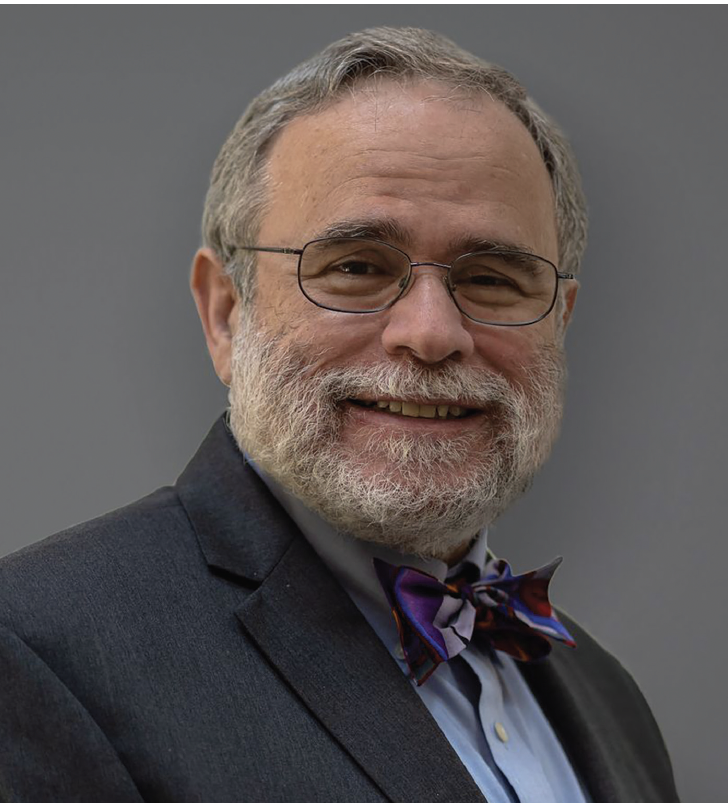
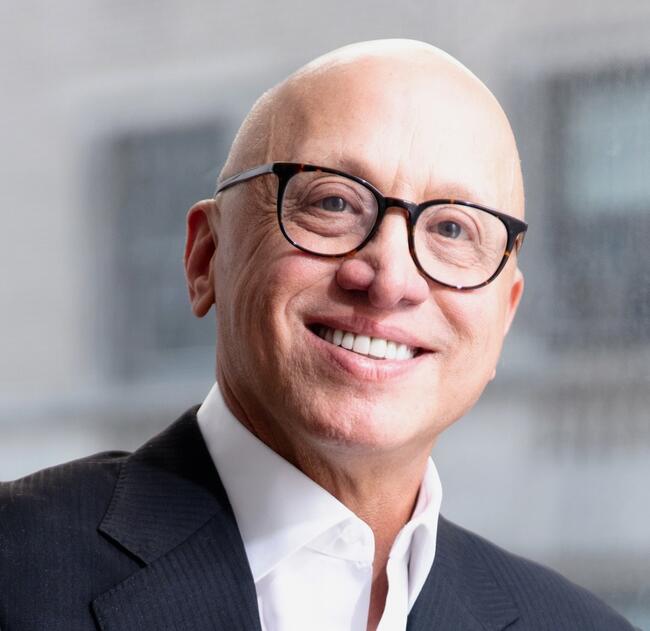
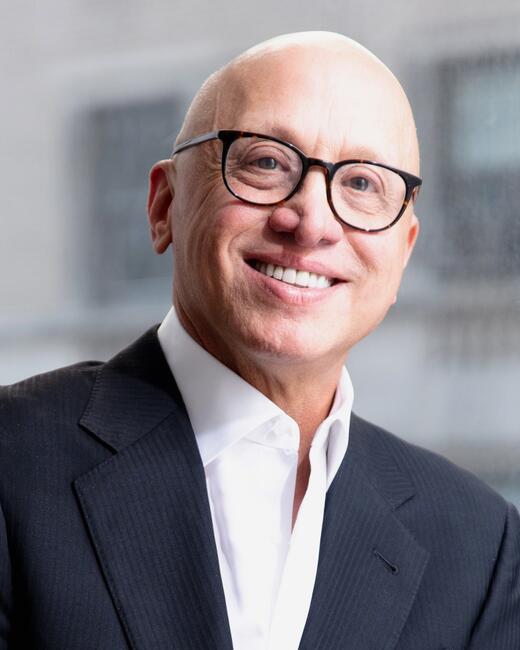
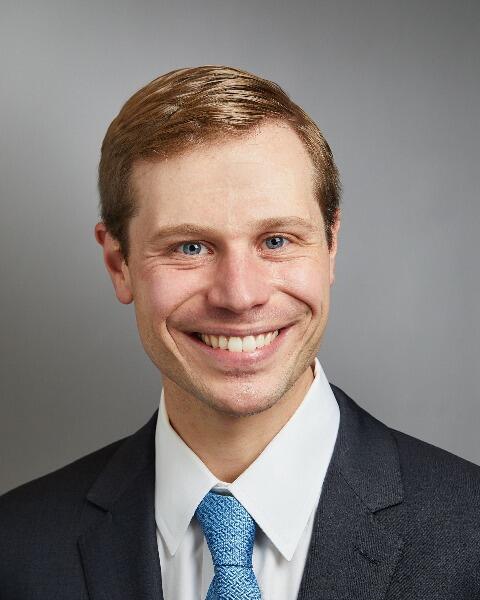
Dr Daniel M. Siegel, co-chair of the Masterclasses in Dermatology Annual Meeting, presented at the 2026 conference on the latest technologic capabilities, offering practical considerations around privacy compliance and implementation in everyday workflows to equip clinicians with the knowledge to judiciously adopt tech innovations in dermatologic care. We recently sat down with Dr Siegel to further the conversation about dermatology in the digital age. In this exclusive interview, he shares his perspective on the technologies poised to transform dermatology over the next several years. Drawing on decades of clinical experience, he discusses the promise and limitations of AI, the evolution of imaging and diagnostic devices, the realities of teledermatology after the pandemic, and why careful validation and human oversight remain essential as innovation accelerates.
THE STATE OF TECHNOLOGY IN DERMATOLOGY
The Dermatologist: Dermatology has always been a visually driven specialty. Why do you think imaging technology is accelerating so rapidly in our field right now?
Dr Siegel: We are getting better at capturing not just straightforward clinical images, but also spectroscopic and thermal images. I think that there will be increasing interest in integrating different modalities to make better decisions. We may look at a patient right now for whom our differential diagnosis includes atopic dermatitis, mycosis fungoides, and drug eruption, but it is possible that some of these newer modalities when combined may help us home in on the diagnosis more precisely.
In terms of imaging, one of the major changes was when we went from film to digital. In the days of film, there was a need to take good photos, but now everyone has a camera, and they do not necessarily compose the picture. I am always telling my residents that we want certain things to be consistent when taking photos.
For instance, the tip of the patient’s nose and their tragus should be aligned for a front or side view. Oblique views can be useful if something does not show up clearly in these views, but they are supplemental views. Specialties like radiology have done 2 things that we have not done in dermatology: every view is standardized and they embed data with the DICOM standard, so they can do more data mining. But we are going to get there.
The Dermatologist: There is growing interest in smartphone-based screening tools, handheld diagnostic devices, and genomic testing platforms. How do you view these technologies fitting into dermatology practice?
Dr Siegel: Right now, there are multiple screening tools on the market, such as Nevisense and DermaSensor, that have different technologies for delineating, defining, and marginating in skin cancer. Genomic tests are another example of valuable tools, but it costs far more than many of the devices. You can buy or lease some of these devices for a few hundred dollars a month; however, a single genomic test could be hundreds to thousands of dollars. I think prices will have to come down. Certain technologies have a lot of potential. For example, DermTech has a very sensitive assay that looks at the likelihood of a pigmented lesion becoming a melanoma. It uses a specialized tape strip that you put on the skin; massage the area, peel it off, put it on a special card, repeat 3 or 4 times, send it in, and get the results back in a couple of days. An assay like this combined with some of the electrical and optical devices will continue to improve things.
And why should we look forward to that? When you do immunostaining today, it is expensive and often involves toxic chemicals. If we can get to the point of having less toxicity and quicker assays, I think it will be wonderful. In the future, we may see multiple technologies in 1 device; you would just touch, probe, or image the lesion and it all goes down in 1 fell swoop and you have a potentially better answer. I do not know when we will reach that point, but I think we are going to get there.
I was in the United Kingdom recently and talking to friends about the enormous backlog of getting seen for a skin cancer evaluation in a dermatology office because primary care providers want to refer all to the dermatologist to evaluate and a lot of these are negative evaluations. Imagine if you give the primary care provider the screening tools. As someone who has spent most of my professional career doing skin cancer surgery, I would much rather be doing a necessary surgery on a patient than screening someone. If primary care providers have the technology assisting them, it can help the screening process. They can get the correct diagnosis earlier and just refer the complex cases, and it would be a major cost saver because the patient would not need go through a bunch of unnecessary visits to get to the right place to be managed appropriately.
The Dermatologist: Teledermatology experienced rapid growth during the pandemic. Where do you think it stands today?Dr Siegel: Teledermatology is a fascinating area of medicine that I was once an enthusiastic supporter of until the pandemic. And I am still a supporter, but for targeted uses. When telederm came along, it was going to be the panacea. There were early studies done in Texas where they looked at retinal photography and they found that if you set up remote sites to do retinal photography, you could pick up and treat diabetic retinopathy much earlier than you might otherwise. In dermatology, some early work was done that found a 768 x 524 native image before zooming was all you needed to make good diagnoses. There was a lot of excitement, but we really did not get to test this en masse until the pandemic. I had COVID early on and as soon as I was recovered before I went physically back to work at the VA, I was doing telederm. I was gung-ho enthusiastic, but by the end of the first week, I was telling the residents, “Text me when the patient is ready," which meant confirming that the patient could take a video on their phone, making sure they were not sitting with the setting sun behind them so you could see more than a black outline of a person, and making sure they could actually hold the camera still. I lost enthusiasm rapidly.
One instance I still laugh about is where I had to text the resident, "Tell the patient to park somewhere safe where they have privacy and take a picture because the chief complaint for the visit was ‘a spot on my butt.’” You are looking at the patient coming on the video and the picture is moving up and down because they are driving with the camera in 1 hand and they want to tell you about the spot on their backside. Dermatology being a visual specialty, it is much easier to have the patient take a good picture, send it, and we can reach back out to them. As every dermatologist knows, what you see is more important in many cases than the history. I cannot opine on something on your buttocks when all I am seeing is your face moving back and forth as you are steering the car on a highway.
Where is telemedicine useful? Consider chronic disease management. If you have a reliable patient, it can be asynchronous where they can just take photos of how they are doing and you can adjust dosages. And when you have a live visit with them, imagine you have got an AI in the background that can measure the Psoriasis Area and Severity Index score so you can quantify and decide if dosages need to go up or down.
But often when you do telehealth with a patient you have never met before, you do not have a sense of why their treatment is not working. How compliant is this patient? Are they the kind of person who forgets the prescription on the bus before they even get home? There are a lot of facts you might not have. For noncritical things like mild seborrhea that are not hard to diagnose and can be controlled in a variety of ways, it may be okay, but for complex disease, you really want to develop a relationship with the patient so they know what your expectations are and you can know what theirs are.
In general, I think telemedicine still plays a role and there are instances where it is better than a live visit. For example, if the next available in-person appointment is 6 months downstream.
The Dermatologist: Are we approaching an inflection point where technology fundamentally changes how dermatologists practice medicine?
Dr Siegel: I think we are and I think it is going to be painful. For example, we now have ambient AI for transcription, where the AI immediately recognizes the difference in voices in the room. It can separate out 2, 3, or 4 people. The problem with ambient AI documentation is that the generated notes are often too comprehensive. If the patient wants to have a sidebar with you and says, "I want to be honest with you, but I do not want this in the medical record," the notes will include, "The patient wishes to be honest but does not want this in the record and the patient stated the following." Plus, when the AI is doing what it is doing, where exactly is it doing it and who owns the content? I have used Doximity for ambient notes because it is designed for physicians. It does not store things for more than a year, and the content is not used to train AI systems.
I think AI can be helpful with writing preauthorization letters and helping with claim challenges. But whenever you query AI or use AI for transcription, the rule of thumb is if it is just a casual 50,000-foot overview, you can take it with a grain of salt and you are fine. But if you are going to count on the information, you need to verify it. I will mention Doximity again because it has links to references and, with most of them, you can click and read the material right there. AI hallucinates at times. When you use ambient AI for transcription, you still need to read your note. You cannot assume that it is accurate. In other words, it may capture everything said, but there are nuances. A patient may say something that is just opinion and the AI does not know that. Now, it may get better at some point, but right now, just like any note, you still need to review it before you sign off to make sure it is accurate.
If you want AI to help you with research, you need to validate it. This is very important because the AI may be trying to make you happy, or may not have access to everything, or it may be using nonreliable data. For example, if you have a patient with atopic dermatitis who has failed several biologics, you can put it into an AI with the following query: "Patient took [drug name] for [length of time] and did not respond, then took [drug name] and their eczema flared. What would your next recommendation be? Please share with me the references that would support this decision." It could save you some time looking through hundreds of abstracts on PubMed. So, let the AI do the searching for you, but remember you are ultimately responsible.
ARTIFICIAL INTELLIGENCE: HYPE, REALITY, AND CLINICAL UTILITY
The Dermatologist: AI is dominating conversations across medicine. Where do you see the most immediate and practical applications for dermatologists?
Dr Siegel: Let’s say you are looking at a patient’s skin, and you are scratching your head—you just do not know what is going on. You land on a potential diagnosis, but the biopsy does not fit. I could see uploading a photo to an AI you are comfortable with, where you know it is secure, and asking, “What is your diagnosis and show me similar pictures so I can compare it.” I think that will be valuable. In addition, there are certain diseases such as mycosis fungoides in which some pathologists will call it early whereas others will not call it until the patient has classic features, and you wonder who is right. Take the following hypothetical: A biopsy was read initially as benign but suggestive of early evolving mycosis fungoides, and 5 years later the patient is full blown. And then another biopsy got the same read, but 5 years later there is nothing left and the patients has no disease. Are there findings that the human eye does not see but the AI might see? Again, you want to validate and if the AI cannot explain what it is seeing, I would be concerned about the result. But if the AI can zoom in on an image and say, in this area, this is showing up, it may be helpful.
The Dermatologist: You mentioned ambient AI transcription, which has generated significant interest. How might these tools change physician workflow, documentation quality, and burnout?
Dr Siegel: I think ambient AI could be a game changer, although it could also result in a loss of scribing jobs. Before you jump into AI documentation though, check with your institution to see what their privacy rules are because some may feel this is a violation. Where is the AI occurring? If it is in the cloud somewhere, consider the following scenario: A patient pours their heart out to you about their 12 sexual partners and their sexually transmitted disease history, then the hospital or system refuses to pay when a hacker group steals the data and the patient’s history ends up on Facebook.
Ambient AI still needs to surmount some issues before it does a really good job. It will need to learn how to indicate that a patient says, "I do not want this in the record." This could be something as basic as a flashing font that says, “Patient asked to discuss certain relationship issues and did not want in the record.” So, at least it will trigger in your mind the next time you see them. And, again, you still must check accuracy. I hammer away at residents and colleagues almost every day: If you are using ambient AI and you like it, by all means continue, but you must read your note before you sign off because that note is the legal record.
The other concern is that many electronic medical records (EMR) will check every keystroke you make. If you are recording directly to the EMR and editing in the EMR rather than editing in a program, such as Microsoft Word or Google Docs, then is it possible that if there is ever a subpoena, they can subpoena the keystrokes and get all the information the AI picked up that was not intended to be out there? I am not aware of any legal cases involving those circumstances yet, but I think we will see this at some point, and I think our goal is not to be the interesting test case or the anecdote for these things.
The Dermatologist: What role do you envision AI playing in clinical decision support vs simply improving efficiency?
Dr Siegel: I think decision support is good in the cases where you scratch your head and say, "I am not sure." Now, where will this occur commonly? If you are a dermatologist who has spent your entire career doing surgery, you may not be the best general dermatologist anymore. I think decision support tools can help you hone your skills, keep up, or answer questions that may not be obvious to you. If your field is treating skin cancer, you may be up on checkpoint inhibitors and so forth, but you may not know the best biologics, and decision support can potentially help you. But I still think in the present day, I would much rather have somebody who is out there doing it every day who has both the knowledge and the experience. They know the literature, and their experience may outweigh some of the benefits of the AI because the AI may be pulling data where the statistics are not strong enough or the validity may not be there.
The Dermatologist: How should dermatologists evaluate whether an AI tool is truly reliable and clinically useful before incorporating it into practice?
Dr Siegel: The way I play with an AI is I test it. I feed the AI photos I have taken, making sure that recognizable faces are blocked or cropped out, and I see how good the AI does against what a skilled pathologist validated. If the AI is giving me an answer that disagrees with the pathologist, I then ask it to give me a broader differential. And I see how good that does. Check the validity before you base a serious clinical decision on it. If you are asking the AI which treatment is better in a list of innocuous treatments, it would be safe to try. One of the hobbies I suggest everybody take up is testing the guardrails on an AI.
I would also recommend experimenting with different AIs. Some institutions have subscriptions and your institution may have a server that is like a 1-way street coming in from the AI, but it does not share the info. The AI is not learning on you like it does with free versions. Find out and I cannot overemphasize this enough, talk to your compliance officer about what you are allowed to use. For instance, the VA where I am sitting right now is starting to use AI and I am waiting to see what the directives are and how they want it used. But I am sure they do not want us using or uploading personally protected health information to a free version of a commercial AI.
You have got to be very, very careful. We have not seen this yet that I am aware of, but will malicious AIs try to spoof legitimate AIs? You would be uploading questions to a website that looks like the original but in the background, it is capturing information that is in your computer’s memory.
Be judicious, make good use, but verify everything. Try it out; do not just throw something into clinical practice without having guardrails you create to check and validate things. And even if you check and validate to make sure it works, validate and check every time. Do not assume that just because the AI has done ambient transcription 10 times nicely, the 11th time is also going to be good. You must stay on top of it.
COMMON MISCONCEPTIONS, RISK MANAGEMENT, AND THE NEXT WAVE OF INNOVATION
The Dermatologist: What are the biggest misconceptions dermatologists have about AI?
Dr Siegel: The big one is that we are going to be out of work. Three months after I started my residency, isotretinoin was approved and the old timers, who were probably younger than I am now, said, “We are going to lose the specialty. There will be nothing left.” Well, we only got busier and I suspect there will be some of that now with AI too. There will still be the need for human input. And, yes, there may be a point when a robotic surgeon is better than a human, but we are not there yet.
Some people worry that AI is going to replace dermatopathologists, but there are concerns about the AI hallucinating, so having human oversight is always important. One of the things I think is truly fascinating is the concept that AI could basically be a tool when you want it. So, if you are reading pathology and that is what you do all day, every day, most of the time you know what you are looking at, but there are times when you scratch your chin or maybe you are just in training or you are just finishing training and you want some assistance.
I always think of it as having an LED screen in your eye piece. You are looking at something obvious like nodular basal cell carcinoma, okay, next case, but then you look at something and you are thinking, is it inflammatory? Lupus? Lichen planus? Lichenoid drug eruption? At that point, you are scratching your head, and you just say, “AI on.” And with the AI, you have different levels of on.
At level 1, the AI will have the pointer go somewhere and there will be something that adds up saying, "This is a Civatte body or notice inflammation with interface change in the appendages." All the things to give you hints. And then you can say, “AI level 2,” which will come up with a differential diagnosis. Then you can say, “Enhance.” And the AI will tell you the features that are helping it make the diagnosis. I think that will be useful.
Take melanoma. When they had the National Institutes of Health Consensus Development Program in the early 1990s, there was about 17% discordance, which did not mean right or wrong, but rather people would say, "This does not fit the classic features of melanomas. I will not call it melanoma, but I would treat it as an early melanoma because it may evolve based on what I am seeing.” It would be nice if you could get more accuracy and see if the AI may help see things the pathologist does not. As my dermatopathology friend puts it, as long as she is the one pressing the button, she will be fine with working with an AI.
The Dermatologist: New technology creates new risks. What are the most common privacy and security mistakes you see dermatologists making today?
Dr Siegel: It seems like every day you read about another health insurance system, hospital, bank, credit card company, cruise line, or airline that has been hacked. It has just gotten so dangerous out there that you must be careful. It is easy to spoof things, and it is so common. I have lost track of the number of times that I pick up the phone and call a friend's office to say, "Dr Siegel calling for his friend, Dr Such and Such to let her or him know that they have been hacked." And they will come on the phone and say, "What happened?" I reply, "Well, obviously you are not in Paris, but I just got an email from you saying that your nephew was in a car accident and needs $2000 in iTunes cards right now. So, somebody has hacked your email because they probably sent this out to your entire email list and I am the first one reaching out.”
You also have to be careful with personal health information. I always tell residents, if you are going to put clinical images on your phone, you want to use a secure vault, something that is HIPAA compliant. And even if it is HIPAA compliant, if it is your practice, that is probably okay, but if you are a trainee or you work for a health system, check with your compliance office because they are the ones who decide whether something is compliant enough for their system. If you violate that, and I know you did, if you lost your phone and it is not set to wipe after 3 attempts to unlock it and I do not turn you in, I could be penalized the same way you can with fines and losing my job. So, you want to be very careful. When I have these discussions, I have residents say, "You do not have children because if you do, you cannot wipe in 3 or even 10 passes because your kids will play with your phone and they will wipe it." That is why common sense should dictate using a secure vault.
The Dermatologist: Among the emerging technologies available today, which do you believe will have the greatest impact on dermatology over the next 3 to 5 years?
Dr Siegel: I think we will see great advances in the development of technologies for diagnosing malignancy, such as electrical impedance spectroscopy and chromatography. They have good sensitivity, which is important, but the specificity is not where we want it to be. We may still be doing more biopsies than we need to. Two devices are US Food and Drug Administration approved: DermaSensor, an AI and optical spectroscopy device, and Nevisense, which uses electrical impedance spectroscopy. And in Europe they have the SkinVision app for patients to document and monitor concerning skin spots, which is currently in clinical trials in the United States. There are even technologies looking at histology enhancements. There is a company called NovaScan working on a device that uses the Cole relaxation frequency. If you tickle a living cell with current, it contracts and the way it relaxes is different depending on whether it is benign or malignant. They started with a little probe on a needle to detect breast cancer and they are expanding.
All of these are amazing technologies, but if you combine them, can you get an even better answer? I predict those studies will happen sometime in the next few years. There was a recent paper out of the United Kingdom that found radiologists could read what was on cardiac computed tomography scans—hypertrophy, thickening, fluid, etc.—but they could not really prognosticate. But when AI was used to look at the scans over intervals, it could predict the development of congestive failure within 5 years, although no changes were visible to the clinician. The AI is finding patterns that we may not be able to see.
During a talk he gave last year, the cofounder of Oracle Larry Ellison had a segment on Mohs surgery, and it was exciting to watch as a dermatologist. He said Mohs is wonderful, you can clear a cancer and only take the diseased tissue, but humans have good days and bad days and machines do not. What if we can find a way to automate the process, to identify the cell without cutting things out and doing histology? Imagine you can selectively query a cell, vaporize it, and just track along. This may sound like science fiction, but if you were to show my long-deceased grandparents a current cellphone, they would look at it in disbelief. These are not quantum leaps; they are incremental fixes. It is exciting times ahead as long as we can control the technology.
Conclusion
As technology continues to evolve, dermatologists will have access to increasingly sophisticated tools that can enhance diagnosis, improve efficiency, and support clinical decision-making. Yet, as Dr Siegel emphasized, innovation should complement, not replace, clinical expertise. Whether using AI to generate documentation, analyze images, or assist with treatment decisions, physicians remain responsible for validating the information, protecting patient privacy, and exercising sound clinical judgment.
The future of dermatology will likely be defined not by a single breakthrough, but by the thoughtful integration of multiple technologies working alongside experienced clinicians. Those who embrace innovation while maintaining rigorous standards for accuracy, security, and patient care will be best positioned to realize the full potential of the digital transformation now underway. Dr Siegel will be presenting on AI at the 2027 Masterclasses in Dermatology Annual Meeting. Visit https://www.hmpglobalevents.com/masterclassesindermatology to register.