Longevity Medicine and the Future of Dermatologic Care
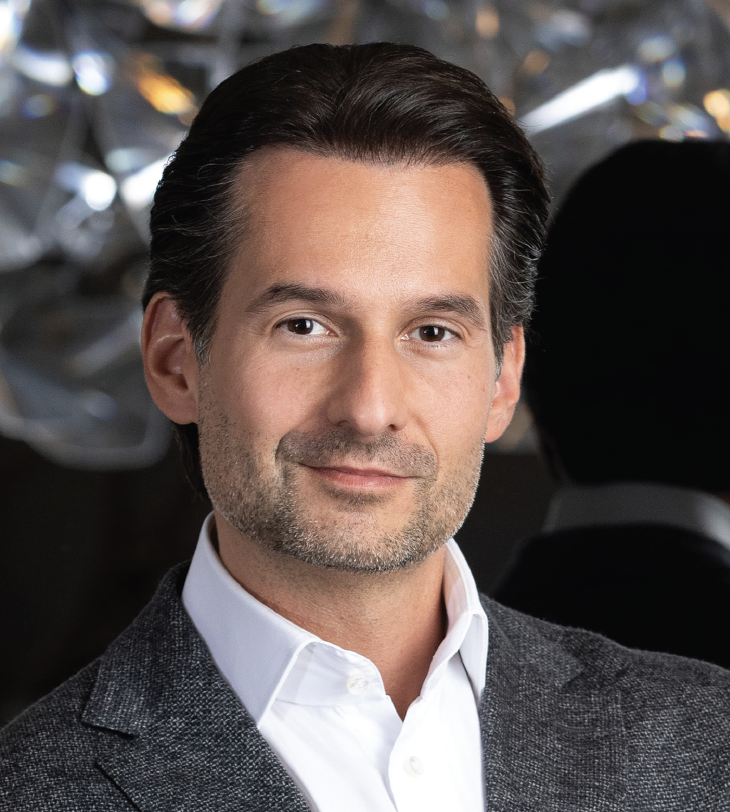
Longevity medicine is reshaping conversations about healthy aging by emphasizing prevention, biological function, and healthspan rather than lifespan alone. Dermatologists are uniquely positioned within this evolving field because the skin can provide visible clues to inflammation, metabolic dysfunction, environmental exposure, and regenerative capacity. In this interview, 2026 Music City SCALE Annual Meeting faculty Dr Dominik Thor discusses biological readiness for aesthetic procedures, the growing role of biomarkers and artificial intelligence (AI), and how dermatologists can evaluate emerging longevity interventions while maintaining evidence-based care and realistic patient expectations.
The Dermatologist: You have described longevity medicine as a shift from reactive disease-focused care to predictive and preventive care. What does that look like for dermatologists?
Dr Thor: For dermatologists using longevity medicine or addressing pathways of aging, it is about identifying biological drivers of aging early. Although this is usually done through advanced diagnostics, dermatologists have a lot of experience deducing general health, and even a health trajectory, just from looking at a patient’s skin. Skin longevity is about preserving tissue quality and function, and its resilience and regenerative capacity. Dermatology is certainly a specialty that is increasingly getting interested in targeting pathways of aging because patients are now expecting to age well, not just to look better. And dermatologists are in an interesting position because they tend to see a lot of patients when these patients are younger and still healthy, at least in the context of aesthetic concerns. This is an opportunity to address healthy aging in a preventive fashion, which is the way we think about improving healthspan.
Healthspan is extremely important. When we talk about longevity medicine, sometimes people think it is just about living longer, but it is actually about making the most of your years and ensuring that you enjoy your life. When you look at that through the eyes of a dermatologist, this means a patient who not only looks young and healthy, but who actually is healthy. It is about long-term skin health and aligning that with aesthetic outcomes. The skin often gives us clues about things that are going on under the surface, such as inflammation, metabolic health issues, and exposure to harsh environments, which can altogether modulate aging trajectories. Therefore, I think the role of the dermatologist cannot be overstated.
The Dermatologist: You frequently discuss biological readiness. What does this mean in the context of dermatology and aesthetic medicine?
Dr Thor: Quite often, a patient comes into a practice; the physician examines them, thinks about the ideal therapy to apply, and prescribes that therapy; and still the outcome is not great despite the physician doing everything right. What is the cause of this? To find out why, it often means looking into a patient’s biology to see whether there may be some things going on that might have a negative impact on the results of otherwise well-received therapy. In the realm of aesthetic treatments, biological readiness means a patient’s capacity to heal, regenerate, and respond optimally to treatments. Tissue regeneration plays an important role, but chronic inflammation, metabolic dysfunction, and aging can all impair collagen production. They can even reduce our capacity to repair the skin on a cellular level, increasing the likelihood of complications and negatively affecting the treatment outcome in general. If a patient who is undergoing an aesthetic treatment has biological readiness, not only will their body heal the stress on the tissue, but they will also experience aesthetically improved results, such as younger looking skin, more tightness, more flexibility, and so on. If we do not have the readiness of the organism to regenerate from the intervention, then we should not be doing it to start with.
The Dermatologist: Are we moving toward a future where treatment plans are informed by biological age rather than chronological age?
Dr Thor: We are certainly swiftly moving toward a direction where we use more data to make sense of what is going on under the surface. This means looking at different kinds of biomarkers to help us assess pathways of aging. In general, it is extremely important that therapeutic approaches be ultra-personalized. As we gain data from additional biomarkers and diagnostic tools, physicians will be increasingly empowered to build more personalized therapeutic protocols for their patients.
The Dermatologist: Patients increasingly arrive with information about longevity interventions gathered from social media, podcasts, and AI tools. How should dermatologists prepare for this growing demand without overpromising what current science can deliver?
Dr Thor: I think this is one of the most important questions, and it is asked regularly. It is what drives students and physicians to the Geneva College of Longevity Science and its courses. Physicians really need to up their game now because they have patients coming in with wish lists of medical products or even early-stage regenerative therapies that are not yet fully endorsed by the medical authorities and they want this to be used on them. Physicians need to be aware of what is out there and assess scientific merit, safety, and efficacy. Are there clinical studies that prove a therapy is suitable for patients in general and for that patient specifically?
It is a lot of work to filter out all the noise that you now see on social media and across the different channels where there is promotion of peptides, or exosomes, or stem cells. The first thing to do is focus on biological possibility. Does it make sense? If you look at what the molecule, or peptide, or supplement is doing, is that something you think can be applied on a larger scale on a human? We have a ton of evidence where things work in a preclinical setting, but I think humans are immeasurably more complicated than smaller organisms limited to a lab.
For physicians, it is important to remain evidence-based and continually updated by seeking vetted information and education. Institutional education is very important in this context because there are too many self-declared experts out there. It is a question of available evidence and always patient safety. Although a patient might think it is worth the risk, from a physician’s perspective, unless it is a rare case of a special disease, we want to shy away from things that have not been fully covered in terms of scientific evidence.
The Dermatologist: What is the biggest disconnect between public enthusiasm and scientific evidence in longevity medicine right now?
Dr Thor: A lot of people assume that we already have lifespan extension ready and it is just a question of the kind of money you need to have to purchase more products, such as numerous supplements or as many peptides as possible. However, scientists say we should focus on healthspan and improving the years we already have by starting with the basics such as lifestyle interventions. New therapies are increasingly being researched and might become available in the future, but it is important to say that science often does not move as fast as consumer demands.
The Dermatologist: Which technologies do you believe will have the greatest impact on healthy aging and skin longevity?
Dr Thor: We recently did a survey among longevity physicians, and the technology that they rated as number 1 in terms of its impact on the field of longevity medicine was AI. Certainly, we need machine learning and AI to make sense of all the diagnostic data. But at the same time, there are a lot of interesting developments in the field of regenerative medicine, and we have just started to discover and reveal the many ways regenerative medicine can be used in different settings for different kinds of disease to promote healthy aging. Metabolic therapies, multiomics, diagnostics, regenerative medicine, and AI all need to work together in an optimized, ultra-personalized, integrated care model for patients.