Pediatric Atopic Dermatitis: Diagnosis, Treatment Selection, and Long-Term Health Considerations
Clinical Summary
Pediatric Atopic Dermatitis: Growth, Bone Health, and Long-Term Disease Management
- Pediatric atopic dermatitis (AD): Severity assessment should include body surface area, lichenification, sleep disruption, school performance, growth patterns, and quality-of-life impact. Treatment selection should consider age, disease severity, and family preferences.
- Dupilumab and growth: Among children aged 6-11 years, approximately 33% receiving dupilumab achieved a ≥5-percentile height increase at 4 months versus approximately 10% receiving placebo. Bone growth biomarkers also increased.
- Atopic march: Swanson highlighted emerging evidence suggesting early dupilumab treatment may reduce subsequent asthma and allergy risk. Clinicians should discuss potential systemic consequences, growth concerns, and treatment expectations with families.
Reviewed by Jessica Garlewicz, Managing Digital Editor of Immunology Group
Lisa Swanson, MD, emphasizes the importance of early, effective treatment of pediatric atopic dermatitis, highlighting emerging evidence that dupilumab may improve growth and bone health outcomes while potentially reducing the risk of atopic comorbidities.
Lisa Swanson, MD, is a a dermatologist and pediatric dermatologist in Boise, Idaho. She works at Ada West Dermatology, and is affiliated with St. Luke's Children's Hospital.
Transcript
What are the most important considerations when diagnosing and assessing the severity of atopic dermatitis in pediatric patients?
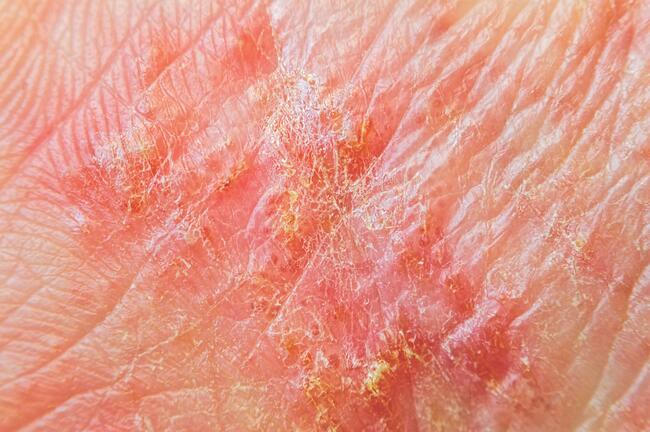
Dr Swanson: I think there are so many things to take into account when you're diagnosing and assessing atopic dermatitis severity in kids and teens. Of course, you want to take a look at them that day. How does their skin look? Is it mild, moderate, or severe? What's the body surface area (BSA) affected? Is there lichenification or signs of chronicity? You pay attention to all those things.
But then it's also important to follow up and say, "What kind of day are you having today? Is this a good day? Is it a bad day? Is it a medium day?" Just to get a sense of the whole general landscape of where their disease has been, because you're only seeing a snapshot.
And then it's also important to have a discussion of how the disease is impacting them. Are there any things that they're not doing on account of their atopic dermatitis? How is the child or the teen sleeping at home? How is their focus at school? If they're a younger child, how are they doing on growth curves? How is the parent adjusting and adapting to the condition, and how are they managing the condition?
Taking into account all those life factors is really, really important. So, it's how a patient looks, how that compares to how they often look, and then how they are experiencing their disease.
How do you approach treatment selection for children with atopic dermatitis across different ages and levels of disease severity?
Dr Swanson: We're practicing at such a wonderful time, especially in the treatment of atopic dermatitis. We have more options than ever before, and they're good options. We have a wealth of really amazing ways that we can help control, mitigate, and minimize atopic dermatitis flares and overall severity.
We've got wonderful topical nonsteroids that are all approved down to age 2. We've got numerous systemic therapies, one that's approved down to the age of 6 months. The others right now are approved for ages 12 and up. So, depending on the age of the patient, that's probably the biggest factor in determining for me what options are available to them.
But what I'm going to do in clinic is write down the names of all the things that are available for their age range and atopic dermatitis severity. So, I'll write down topical corticosteroids, and then I'll list the topical nonsteroids that they're eligible for.
I'll tell them about the pros and cons of each of those choices, and then I'll go into the systemic therapies, what options are available to them in their age group, and the pros and cons of each of those.
Because I do this all day, every day, I'm able to do it pretty efficiently. I know a lot of people are like, "How can you spend all that time?" I've got it down. So, I'm able to buzz through the list pretty quickly but still give them a thorough understanding of all the options that are available to them.
And then I don't do the choosing. I let them do the choosing. I give them the tools they need to understand the options available and see what sounds the best to them. So, most of the time, it truly is a shared decision-making process where I'm simply navigating the options, and they're choosing the way they want to proceed.
I also think that explaining it in this way and giving them that list of options keeps their hope alive that we will achieve control of their child's atopic dermatitis. Whatever they choose first, hopefully it works great, but if it doesn't, they at least know that there are so many other choices they could make in the future to help control the child's atopic dermatitis.
What are some of the most common challenges families face when managing pediatric atopic dermatitis, and how can clinicians help address them?
Dr Swanson: I think one of the biggest challenges, specifically in the pediatric space, is a reluctance to use topical corticosteroids. There's a lot of fear out there about topical steroids. A lot of that boils down to a fear of topical corticosteroid withdrawal syndrome and some of the information that's on social media and the internet.
So, families come in afraid of topical steroids, and that's fine. We have so many more options. We have numerous topicals, and we have systemic therapies. We can treat atopic dermatitis without needing topical corticosteroids.
But what it kind of translates to is an overall fear of treatment, period. And I find that sometimes families are more afraid of the treatments than they are of the condition itself.
So, I spend a lot of time emphasizing the fact that atopic dermatitis is not just a skin disease. It's not just that their child won't stop scratching.
This is a systemic disease of inflammation that has systemic consequences down the road, increasing the risk of numerous things like asthma, eosinophilic esophagitis (EoE), growth disturbance, attention-deficit/hyperactivity disorder (ADHD), and an increased risk of fractures in kids.
So, while the disease manifests in the skin, it's not just a skin thing, and appropriately managing it is really crucial to the overall health of the child.
I really emphasize a holistic approach to the management of the condition. This is an inflammatory disease. We need to approach it as an inflammatory disease and get it under control to hopefully prevent some of those consequences and minimize the impact on the general health of the patient.
How might emerging evidence linking moderate-to-severe pediatric atopic dermatitis with growth, bone health, and components of the atopic march influence how clinicians monitor and manage these patients over time?
Dr Swanson: These factors are so huge. We have known for a long time that kids with bad atopic dermatitis tend to grow up and have asthma, EoE, food allergy, and allergic rhinitis, hence the atopic march.
And we have data now that early, good, solid treatment with dupilumab actually reduces the risk for asthma and allergies later on in life. That is revolutionary. We have not previously had a treatment that thwarts the atopic march. So, we're loving that for our patients and our families.
It's something I spend a lot of time on in clinic currently. A lot of the parents of my patients with AD have some of these conditions. Maybe they have asthma or they have EoE. So, if I can tell them, "Hey, if we really adequately treat your child with a medicine like dupilumab, we can reduce their risk of following in your footsteps even more," I think that speaks volumes to families.
The issues of growth and bone health are also just huge, huge, huge, huge, huge.
We have noticed for a long, long time that kids with bad atopic dermatitis tend to be small on growth curves for height. We've also noticed increased osteoporosis, osteopenia, and fractures in kids with atopic dermatitis.
And while all of this is likely multifactorial, I think the biggest common denominator is sleep quality because when we sleep, and particularly when we sleep well, that is when growth hormone is secreted.
So, if you have atopic dermatitis and therefore you're not sleeping, you're not secreting the appropriate amount of growth hormone, and so you don't grow. Growth hormone also contributes to bone strength and development, so then your bones don't get as strong as they should be.
We even have data for the use of dupilumab in patients aged 6 to 11 that show that it actually helps kids grow and increases bone growth biomarkers.
So, in the study, a third of the patients at just 4 months had grown at least 5 percentiles. That's huge. I'm vertically challenged. I'm a short person. I don't think I grew 5 percentiles in 4 years.
So, to see these kids just sprout up is really, really impressive. And that was compared with 10% of the kids in the placebo group doing the same.
They saw the increased bone growth biomarkers, which means your bone is forming, developing, and growing strong, and we hope that translates to a decreased risk of fractures, osteoporosis, and osteopenia later on.
I find this is the issue that really is important to discuss with patients and their families. I think growth disturbance is one issue that really resonates with parents.
I find myself talking about asthma and EoE a lot, which are very, very important. But when I mention that atopic dermatitis could make their child short or could affect the child's final height, I find that parents are all ears.
They're like, "Oh, I didn't realize that. I want to do something about that."
So, it's very important to be talking about these factors in clinic with our patients and their families.