Decades of Progress, Persistent Challenges: Rethinking Lesion Preparation
© 2026 HMP Global. All Rights Reserved.
Any views and opinions expressed are those of the author(s) and/or participants and do not necessarily reflect the views, policy, or position of Vascular Disease Management or HMP Global, their employees, and affiliates.
VASCULAR DISEASE MANAGEMENT. 23(11):227-228
 Hello and welcome to the November 2026 issue of Vascular Disease Management. I have chosen to comment on Dr Michael Lichtenberg’s article “FLEX Vessel Preparation System for Lesion Preparation”.
I have chosen to comment on this as I reflect on the great strides that have been made in intervention since Dr Charles Dotter performed the first peripheral vascular intervention utilizing specially designed catheters advanced across lesions to expand the critically stenotic femoral artery lumen of Laura Shaw, who had presented with critical limb ischemia. That procedure was successful, and the patient avoided amputation. This was the beginning of percutaneous peripheral intervention, but this device could not expand the artery more than the size of the catheter vessel entry size. Subsequently, innovation created better guidewires to cross obstructed vessels, balloon angioplasty to allow luminal gain far greater than catheter access size, and improved flexibility for delivery. Despite some pitfalls, these changes dominated early intervention for more than a decade, during which the pitfalls of angioplasty alone, including flow-limiting dissections, abrupt closure, perforation, embolization, and high rates of subsequent vessel closure, were exposed. The next era introduced scoring balloons, atherectomy devices to actually remove plaque and improve vessel compliance, and self-expanding nitinol stents to seal dissections and prevent vascular recoil. While these techniques clearly allowed practitioners to address many of the pitfalls of simple balloon angioplasty, new problems were created including increased rate of embolization, stent fractures, and occlusion of the treated vessels. Vascular surgeons noted that stent implantation often impaired subsequent bypass surgery.
While stent designs were improved and atherectomy technique modification continued to make headway in addressing challenges, a new era that many now consider the “drug era” began with the application of paclitaxel to balloons to deliver to the vessel wall with angioplasty, which lessened restenosis in multiple studies. Many thought that we clearly had answered the problem of durability of outcomes. Obviously, this offered the chance to “leave nothing behind”, but it still required the initial angioplasty to result in significant luminal gain without flow-limiting dissection. Paclitaxel drug-eluting stents were created to address that problem. Follow-up studies demonstrated markedly improved patency. A subsequent meta-analysis of the trials, by Katsonis, suggested that drug-elution delivery increased mortality. Although many believe that this has been disproved, several recent articles argue that point. In response to this, sirolimus-eluting balloon technology has been created with renewed optimism.
Despite all the advancements with technology, if we are to effectively treat patients with intervention resulting in durable results, we still must first cross a lesion and create an adequate channel size. This has remained a challenge since the beginning of intervention. We now have lithoplasty balloons to allow fracture of medial calcium to improve compliance and luminal gain with low risk of embolization. We have atherectomy devices that can ablate intraluminal calcified lesions. We have improved scoring balloons that can create a larger initial lumen with less risk of flow-limiting dissections. Results have continued to improve, but we must continue our quest to optimize intervention.
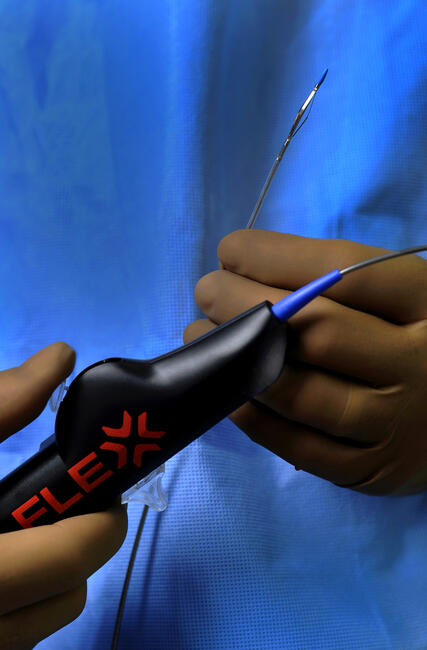
The FLEX Vessel Prep System reported by Dr Lichtenberg with cited studies treating the femoral and popliteal vessels as well as restenotic arteriovenous (AV) access stenoses is promising. He cites studies showing improved outcomes in these areas. It does not address infrapopliteal disease. I agree with his assessment that further studies are needed, but I am encouraged by the results. This is a simple device to utilize. Once a lesion is crossed, this over-the-wire device is delivered slightly distal to the obstruction. The device is actuated, at which time 3 self-expanding blades are allowed to contact the vessel. The device is then pulled retrograde across the obstructive lesion, allowing the blades to create 3 linear incisions that are 0.25 mm deep through the obstruction to facilitate subsequent balloon angioplasty at lower pressures and possibly facilitate enhanced drug uptake. If necessary, several passes with the device can be utilized. The data in the treatment of AV access stenotic lesions with this device followed by drug-coated balloons has shown great promise in delivering long-term patency in that set of patients.
I look forward to larger multicenter trials that will give us more data. As it has been through the history of peripheral intervention, our progress has been significant but difficult. Each lesion has different characteristics that may require different treatments. We have a lot more work ahead of us. n
Related Content


About Us
Vascular Disease Management™ (VDM), the official media partner of the International Symposium on Endovascular Therapy (ISET) and the Amputation Prevention Symposium (AMP), is a monthly peer-reviewed online journal that educates readers on the latest advancements in endovascular treatment strategies.
Learn more about ISET and AMP and register for the events here: