The Future of CTP Evidence: How RCT Design Flaws and New Regulatory Pressures Could Impact Wound Care
Disclaimer: On December 24, 2025, CMS withdrew the final LCDs for certain skin substitutes. This content was created prior to that announcement and may reference policies that are no longer active. Much of the information remains applicable under other current or future regulations. Always consult your local MAC or payor policies for the most up-to-date guidance.
Key Summary
- CMS (US) — LCD RCT criteria: New requirements mandate that CTPs used on exposed bone or tendon be supported by RCTs including those wound types; however, RCTs routinely exclude common real-world variables—non-DFU/VLU wounds, intertriginous sites, joint wounds, implanted devices, ischemia, age/comorbidities, adherence issues.
- Real-world patient impact: Social determinants account for ~80% of health outcomes (Commonwealth Fund), yet such factors are absent from controlled trial environments, risking policies that limit access for vulnerable populations.
- Industry and regulatory evolution: Emerging fee-for-RCT models and CMS’s evidence demands may shift CTP oversight toward pharmaceutical-like regulation, affecting innovation and future reimbursement categorization.
Transcript
Please note: This content is a direct transcript, capturing the authentic conversation without edits. Some language may reflect the flow of live discussion rather than polished text.
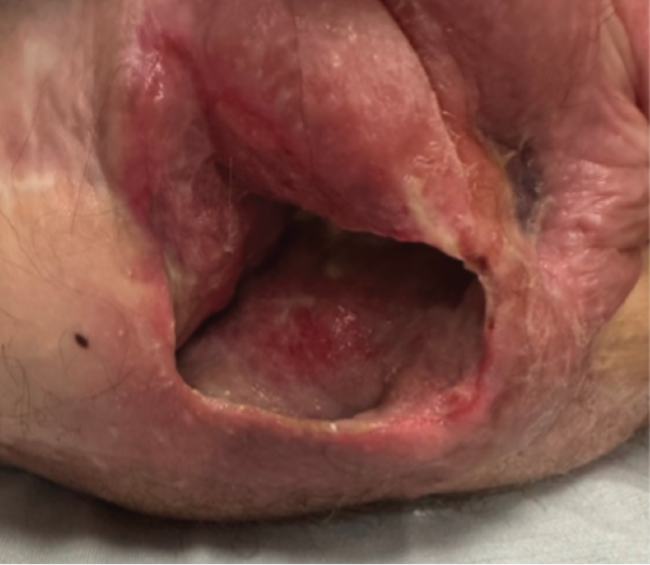
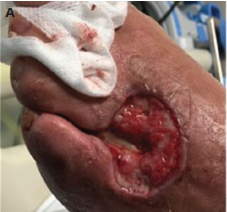
Trial designs are not currently reflective of real-world patient populations I treat. And I think most wound providers would agree here. RCT exclusions are commonly made regarding wound type. So if it's outside of a diabetic foot ulcer or venous leg ulcer. Wound location, we see a lot of patients with intertriginous wounds that are very complicated to treat just based on their location or wounds over joints and things like that that suffer from movement, exposed structures and implantable medical devices that are exposed, patient age and comorbidities, adherence variables.
So all of those things that we see every single day in the clinic are excluded from randomized controlled trials. And for some of these patient population, it's been pretty clear how we can proceed. For example, the new LCDs very clearly state that if you're placing a CTP on exposed bone or tendon, that the graft needs to be approved for that purpose. Therefore, that patient population needs to be included on the RCT, whether that's needed from a medical or scientific basis is a whole different discussion, but that is at least the guidance we've received from CMS.
More randomized controlled trials are needed to explore the efficacy of CTPs on patient presentations to wound healing centers that we see commonly—you know, varying levels of ischemia, the implanted devices, structures, bone, tendon. And of course, real-world patients are subject to social determinants of health. And we know from the Commonwealth Fund, their research that that influences 80% of health outcomes.1 Even if we delivered the exact same evidence-based care to every single patient, we would be controlling 20% of their health outcome. And that's even in an optimized health delivery situation.
So this is where the real world interferes with randomized controlled trials because real world patients will miss appointments because their transportation didn't show or they can only come twice a month because their cancer infusions are in another state or they're deciding whether to buy a nutritional supplement or pay their rent so you can see how in a very controlled environment of a randomized controlled trial, how vulnerable populations are excluded. And then when we reexamine patient access later, those vulnerabilities can be baked into policies like these LCDs.
So we're seeing a new kind of science emerge with funding sources that have changed drastically. And then when we reexamine patient access later, those vulnerabilities can be baked into policies, like these LCDs. So we’re seeing a new kind of science emerge with funding sources that have changed drastically.
So coupled with the new RCT requirements, there's this new business of creating RCTs. We're already seeing this new business of collecting fees from industry to quickly produce RCTs, which is concerning and something that I'm sure CMS will be closely monitoring. The new evidence requirements and the subsequent future reimbursement categorization based on regulatory approval status, appears to be a move closer to regulating these products like pharmaceuticals. So there’s historically always been this misunderstanding that skin substitutes are simply matrices in sheet form that allow for cellular migration. However, we know that the skin does much more wound healing. We don’t just put it and let the body so it’s thing. It’s actually augmenting the healing process eventually. But when we talk about that action we’re getting close to pharmaceutical territory and that’s a whole other ball of wax.
Dr. Laura Swoboda is a translational scientist, family nurse practitioner, and wound specialist in Milwaukee, Wisconsin. Dr Swoboda serves as principal investigator for quality improvement, evidence-based practice, and research projects in complex wound care. They serve as treasuror of the AAWC, and on the board of directors for the ISTAP and the SALSAL Foundation. Dr Swoboda volunteers on various committees and task forces including the NPIAP's prophylactic dressing standards initiative task force and the American Heart Association's Peripheral Arterial Disease National Action Plan.
Reference
1. Abrams MK, Nuzum R, Chang DI, Perla R. Let's get it right: consistent measurement of the drivers of health. Commonwealth Fund. Available at https://www.commonwealthfund.org/blog/2023/lets-get-it-right-consistent-measurement-drivers-health. Published Dec. 15, 2023. Accessed Dec. 11, 2025.
© 2025 HMP Global. All Rights Reserved.
All information regarding reimbursement, legislation, regulations, policy, and legal proceedings, is provided as a service to our audience. Commercially reasonable efforts have been made to ensure the accuracy of the information within this resource but HMP Global, their employees, their affiliates, contributors, commenters, and reviewers do not represent, guarantee, or warranty that any information provided within this resource is error-free. HMP Global, their employees, their affiliates, contributors, and reviewers disclaim all liability attributable to the use of any information, guidance, or advice contained in this resource. The responsibility for verifying information accuracy for individual use and in individual circumstances lies solely with the audience member. The information in this resource is also not a substitute for legal, medical, or business advice, and is for educational purposes only. Any views and opinions expressed are those of the author(s) and/or participants and do not necessarily reflect the views, policy, or position of Wounds or HMP Global, their employees, and affiliates.