








My Sojourn Into Private Practice - A Personal History
© 2026 HMP Global. All Rights Reserved.
Any views and opinions expressed are those of the author(s) and/or participants and do not necessarily reflect the views, policy, or position of Cath Lab Digest or HMP Global, their employees, and affiliates.
Morton J. Kern, MD, MSCAI, FACC, FAHA
Clinical Editor; Interventional Cardiologist, Long Beach VA Medical Center, Long Beach, California; Professor of
Medicine, University of California, Irvine Medical Center, Orange, California
Disclosures: Dr. Morton Kern reports he is a consultant for Abiomed, Abbott Vascular, Philips, ACIST Medical, and Opsens Inc.
Dr. Kern can be contacted at mortonkern2007@gmail.com
On X @MortonKern
With a commentary on private practice by Arnold H. Seto, MD, MPA, FACC, FSCAI.
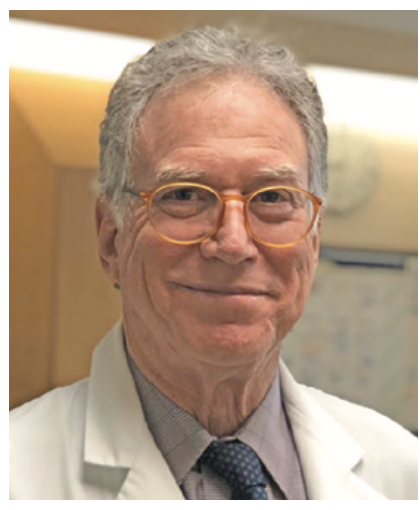 I know most of the CLD readers may not be the audience for my story, but cath labs around the world have a wide variety of personalities and practitioners with whom they work every day. I believe the cath lab is interested in personal stories of their doctors as they transition to different jobs over their career. Why and how this is done may not impact the cath lab staff personally, but I think it would be good for the lab to have some background on the team members and particularly the physicians. I’m sure there are a myriad of stories about them as well as the physicians, both good and bad. Here’s mine.
My Story
One of my fellows recently asked what it was like to have gone into a private practice after years in academics. Reflecting to 2005, I thought it would be a good time to share the experience with my fellows and young associates seeking insights into joining a cardiology practice. Why did I move and what was it like to go into private practice after a career in academic cardiology? And what was it like to return to a university position afterwards? I’ll answer these questions as we go and provide some words of advice (and try not to be too full of myself).
Noteworthy is the commentary by Dr. Seto who recently went on this journey with a different result. See what he says below.
Family Needs
In 2005, after 20 years being chief of the J.G. Mudd Cardiac Catheterization Lab at St. Louis University, I thought it was time to make way for younger leadership to bring new energy into the lab. I believe that no one should be a director more than 20 years as habits become stale and outdated. I was thinking about my next (and hopefully, last) career move, but I had not committed to change yet. Eventually, I moved with my family to Long Beach, California, and entered a private practice group in Orange County for 18 months before returning to practice in the University of California, Irvine.
Many of my friends and colleagues asked me why I made this move. Chris White, a colleague and at the time of my move, the editor-in-chief of the journal Catheterization and Cardiovascular Interventions, recently suggested I write my story highlights and provide some insights to aid our young colleagues as they transition from fellowship to clinical practice, as well as assist the mid-career cardiology journeyman on new cardiology ventures. I humbly acknowledge my lack of insights before starting this adventure and express my utmost gratitude to all those who provided me with counsel and support which at the time I greatly appreciated, but promptly ignored.
Why Did I Go Into Private Practice?
After my 20th year directing the cath lab, I was preparing to pass the torch of leadership to my younger colleague and mentee, Dr. Mike Lim, from the University of Michigan. But the real reason for the move was that my wife, Margaret, said to me, “Our daughter is going off to college, your job has evolved and you’re not having as much fun, and I want to live near my sister and our families in California. Can we move now?” In addition, I learned St. Louis University was not going to fund some new high-tech gear we wanted for our interventional program. That was a lightbulb moment which overcame my reluctance to get off the fence and search for another job in earnest, either in private practice or at another university. Where do I start? Who can I talk to about this? I had to wing it.
Job Location
My first consideration was location. Because our families lived in Southern California, this was the obvious location to start. It is true that one’s practice choices will be greater if not restricted by location, but if lifestyle is critical (which means living close to family) then this factor becomes a priority criterion.
Advice:
If you have a practice location/state in mind, get the medical license and paperwork started early even if you do not ultimately settle there. It took an entire year to get a California license.
Type of Practice: Solo, Private Group, University, Hospital Employee
Next, what kind of practice group to you want to work in? Large, small, solo, multi-specialty? Truthfully, I didn’t know at that time. I wanted to work in an active, high-volume invasively oriented physician group, preferably in a university, but these spots were unknown or unavailable. Large practices offer more call coverage but come with more bureaucracy.
Ideally, I wanted to do only interventional cardiology and without the general cardiology (transesophageal echocardiogram, nuclear, arrhythmia management) as I had limited day-to-day exposure to this in my academic job. The reality is that in private practice, very few jobs are 100% interventional, and most interventionalists are expected to do general cardiology. My strongest skill set was invasive and interventional procedures. I could read echos, stress tests, and Holter monitors, and of course, see outpatients effectively, but I knew I was not as well-rounded as some of my colleagues and even fellows. I would have to have partners to cover my weaknesses until I got up to speed. In addition, I did not want to do much general medicine or non-cardiology work. At this point, I realized that the more skills one has in private practice, the better, in contrast to academia where specialization is expected. Nonetheless, a high expertise in one area still has value to the practice.
Advice:
Become broadly and well trained, but concentrate expertise in only a couple of areas that you will enjoy long term.
Finding a Practice
I did not do much searching or enlist the aid of placement firm, so I have few new insights into these methods of finding a practice. Word of mouth seemed to be the best way at the time. I had met an interventional cardiologist who was the president of a large cardiology group (14 physicians) practicing in Orange County, California. We met, discussed the practice operations (e.g., how many hospitals and what each was known for), call schedules, compensation, benefits, and expectations. With little up-front negotiation, I accepted the job offer and sent the contract to my attorney. The contract was brief (too brief for the attorney), but I needed a position before moving. With minor modifications, I signed the contract and proceeded to complete the necessary steps to move to California. (Little did I know that my wife had already submitted my papers to get a California license the year before this decision. Surprise.) I then submitted my 6 months’ notice to St. Louis University that I was changing jobs.
Advice:
Take enough time to read and modify the contract with the help of a health care employment attorney. Identify the important issues around your family and lifestyle. Talk about what’s good and bad with the offer. Don’t be pressured into immediate acceptance. A practice that forces you to sign quickly without input from counsel may not be the right people to work with.
Advice 2:
When identifying the practice, look around, meet the people you’ll work with. Go to the hospitals where your practice is based. Do it at night as well.
First Hurdles
For years, I thought I had a good idea of what it meant to go into practice, advising fellows and friends about my (mis)conceptions about working in the front lines of real-world cardiology.
On arrival at the outpatient office, my first thoughts were, “I can’t wait to get to the cath lab”. I was thinking of new challenges and overcoming the unknown obstacles of private practice. I was enjoying freedom from university bureaucracy which came with a tradeoff — experiencing some loneliness without fellows, residents, or other faculty. In practice, if there are two of you in the same place at the same time, somebody is not going to get paid. Previously as a salaried employee, I did not pay much attention to the financial activities going on behind the scenes. These concerns did not rise to my daily consciousness except that I wanted to be productive.
Advice:
Be prepared to overcome obstacles in terms of new personnel, activity, bureaucracy, and isolation. Be flexible in your approach to the people around you and do not worry about the money (initially).
What About the Hospital Environment?
Hospital environments are generically hospitable, some having more physician perks than others. The greatest obstacles to getting to work in the hospital and, more specifically, the cath lab, is the arduous credentialing and documentation process. Every hospital requires copious and often duplicative paperwork verifying your qualification, training, experiences, residencies, malpractice history, shoe size, etc. This sea of paper should not be underestimated.
Advice:
To starting practitioners, get your paperwork submitted and completed well in advance of your starting date or it will delay your earning activities and paycheck.
Hospital Idiosyncrasies
Your first days at the new job involve learning the layout of the parking lots, the hallways, the locked doors, key codes, ID cards, and physician tribal cultures. By 6 months in California, my hospital privilege applications had been submitted but processing had not been completed. Without appropriate approvals, one cannot perform a heart cath. Until the sea of paper has been successfully crossed, you need to find your way around and learn the most efficient routes from your office to the stress lab, echo lab, and hospital floors.
Advice:
Learn which doors will open, and which ones won’t. Additional critical features include, where’s the bathroom, what’s for lunch, and who am I going to eat with? (I suggest you eat with your potential referring physicians and not your cardiology colleagues as these are your competition for business.)
Fitting Into a New Cath Lab
The cath lab staff’s daily routines make the lab what it is. This aspect of the private practice experience was the easiest and most enjoyable for me. The lab staff were happy to see me. They were universally gracious and helpful to all physicians who returned the courtesy. Among all the personal characteristics physicians display in the cath lab environment, a professional, polite, and courteous demeanor was the most effective and highly valued trait, serving as a preview to the physician’s style of working with people. It was remarkable to see how many times the haughty, discourteous, and self-righteous physician had difficulties in the lab trying to get things done. As a newcomer, I found that working into the existing lab routine and not trying to change things, at least right away, was the most successful path to a smooth day.
Advice:
Fitting into the lab routines is the best starting point. It will facilitate some of the changes that I thought would make our procedures better, but would have to come later. For those cath lab staff at the several hospitals with whom I had the pleasure to work, I thanked them for helping me learn these lessons painlessly.
The Sea of Paperwork
As a private practice cardiologist doing all the things general and interventional cardiologists do, the paperwork of consults, billing, note and order writing, report dictating, and filling out hospital forms was a mandatory daily large pill to swallow. It was during these paperwork fiestas that I truly missed my former fellows, and dreamt of having a nurse practitioner or an assistant to relieve me of these mundane tasks. This paperwork, a necessary evil, is being addressed more by the electronic medical record which I now have come to respect and at times even admire. During my last days at one hospital, their entire system went to an electronic medical record format. This transition proved to be a blessing as the single greatest timesaver to a practitioner’s day.
The Sword of Damocles: Taking Call
After many years of having fellows be the first responders to urgent calls for an intervention, it was difficult and sometimes irritating to search through phone messages to determine the urgency of the problem and whether an off-hours trip to the hospital was truly necessary. Going to the hospital for a ST-elevation myocardial infarction (STEMI) patient was usually straightforward. But even so, sometimes there was a false activation from the emergency department (ED) for a presumed STEMI patient. In those days before cell phones could transmit a copy of the electrocardiogram for STEMI, being called to come into the cath lab was important, and for the most part, not worth fighting about. I cannot say I had the same feeling about routine consults and off-hour calls for some general cardiology, internal medicine, or nursing queries. Sleeping pills, laxatives, aspirins, fluids, bowel preps, notification of monitor alarms for a fast heart rate that was now normal were straws that eventually broke this camel’s back. Get me a fellow. I was truly a spoiled practitioner. No one likes a call, but it is a necessary part of building a practice.
Advice:
Every consult is part of your pay package. Don’t take it for granted. For those going into interventional practice, if you can find someone to trade the routine general cardiology call while you concentrate on the acute interventional cases, your life will be easier, and you will be happier.
Commuting
The long and short of this issue is that you should live close to the hospitals where you work and take call. If you live far away, grow to love highway driving. I did not like commuting in southern California traffic. In St. Louis, my commute was never more than 30 minutes, even at peak rush hour (in St. Louis, really more of a “rush minute”). A longer commute of 1 hour was routine in SoCal which stressed both my patience and my bottom. I found that being on call from a distance was excruciating and realized that one phone call could put me on the road and out of my family’s life for a big chunk of time.
Advice:
For commuters, learn to like audio books and podcasts. If possible, live a reasonable distance from your principal work sites.
Advice 2:
Make the ED your friend. A good ED doctor can save you a mountain of trouble. The bad ones will hurt you, especially at night, and then they’ll gossip. Cultivate an image of high-quality physician who is responsible, responsive, and excellent in your work.
A New Job, A New Mindset
Unless you start your own practice, you must work with a variety of partners with unique personalities. Depending on your arrangements, you may feel isolated and register a loss of independence. In a large practice, you may be required to service more than one hospital in one day. You will be asked, or possibly ordered, to assist, supervise, or consult at another location. At times, I felt I had no control over my daily life. My autonomy had disappeared. Also, the failure to have significant input into workings of your practice policies and work life can produce frustration which can overwhelm job satisfaction. Over time, this situation will likely require a job change if not rectified.
Advice:
On starting in a new practice, clarify the boundaries of your workday, time off, coverage responsibility, service at remote locations, and who is in charge of assignments that day. Over time, it behooves you to become more involved in building the practice, shared decision-making, and partner acquisition. If you see no future of improving your lot, think about changing your practice.
A Return to Academics
Over the course of my 18 months in practice, I had learned a great deal. I appreciated the expertise of my practice partners and willingness to help build a better group. Fortuitously, after a year into the practice, I met the chief of cardiology at University of California-Irvine at an out-of-town cardiology meeting. We spoke about our miscommunication about a job before coming to California and that there was now an opportunity to return to a university practice. Without much arm-twisting and after careful consideration, I jumped at the chance to help build a more vigorous university cardiology program as the associate chief of the division. My return to a university program with fellows and new colleagues felt glorious, and reminded me that private practice is not for everyone.
Teamwork
The nurses, technologists, and support staff are the core of a cardiology practice and like the physicians, very interested in the well-being of their patients. However, like everyone, they have a family life, too. They work and try to end their day at a reasonable hour. As a new physician in a cath lab, don’t forget how your scheduling affects the patients, nurses, and families for these procedures. Cooperate with the scheduling person. If you win him/her over, your day will be smoother, your cases will move faster, and your schedule can become more flexible. Physicians should share their knowledge and teach the nurses whenever they can. Explain what you are doing and why. Be a resource and advocate for the nurses and the patients. Expand the laboratory’s capabilities when possible. Bring new ideas to the lab and perform new procedures after appropriate training.
The Bottom Line
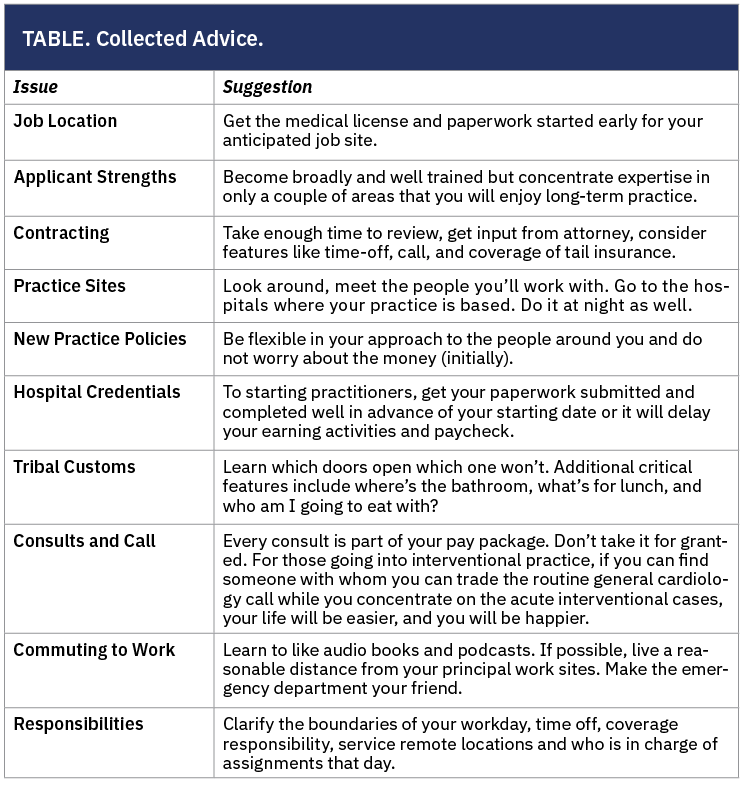 Everyone moving in a new direction with their life worries about career choices. However, initially, although it seems overwhelming to choose a practice, there are no mistakes in your career at this point, only opportunities to refine what you like and move ahead to the next job, armed with some great experience and knowledge. There is a reason they call the job you get right out of fellowship the first job…and that is because over time, there is a second job to come. Don’t fret the small stuff and remember most of this is small stuff in the big scheme of things. The Table summarizes a few issues and advice suggestions.
Commentary: Dr. Arnold Seto
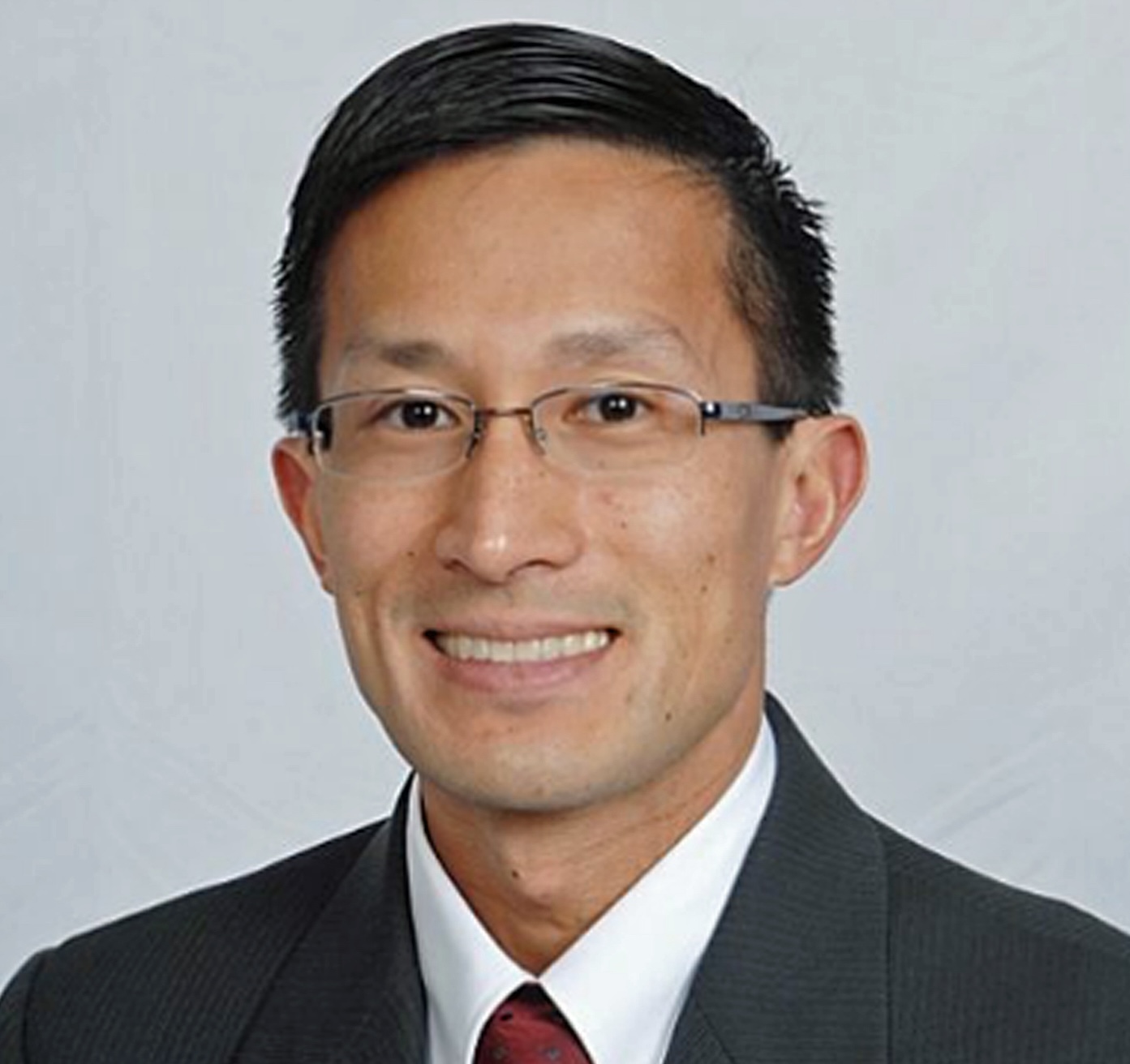 Twenty years ago, my colleagues as first-year fellows were fortunate enough to have Dr. Morton Kern join the faculty at UC-Irvine. We were told by senior fellows that we had better read up on fractional flow reserve (FFR), and I confessed to knowing nothing about either FFR or Dr. Kern. After 18 months in private practice, Dr. Kern threw all his energies into teaching us, and along with Dr. Chowdhury Ahsan, inspired 4 out of 5 fellows in our class to pursue interventional careers.
To put Dr. Kern’s experience in context, there are different models of practice. According to MedAxiom’s 2024 report, based on 2023 data, 88% of cardiologists are employed in integrated models (i.e., with the hospital or healthcare system),1 whereas 85% were independent 20 years ago.2 However, of the 12% of cardiologists who are independent, nearly 50% of these are interventional cardiologists,1 because they tend to be able to serve most or all the needs of patients.
I personally work in private, independent practice outside of my Veterans Affairs (VA) time and find it to be a refreshing break from being an employed physician at the VA. In independent practice, you have complete autonomy over your schedule (instead of asking an administrator to take a day off 60 days in advance), staff who want to help you (and know that you’re bringing in the bacon that pays the bills), hospitals that are competing for your business and patients (with convenient parking and doctors’ lounges), and patients that come to see you and not a generic ‘provider’ they are assigned. This traditional mode of practice has been nearly eliminated by market forces and Medicare policies that suppress reimbursements for office-based care in favor of hospital-outpatient departments (with stress tests now reimbursed 3-4x higher in hospital outpatient departments), but with advocacy focused on the patient-doctor relationship and professional autonomy, we can make medicine better for patients and doctors.
Dr. Seto is past Chief of Cardiology at Long Beach VA Medical Center, Professor of Medicine at Charles R Drew University, and Treasurer and Advocacy Chair of SCAI. He can be contacted at arnold.seto@va.gov.
References
1. Sauer J. What the future holds for interventional cardiology: ownership models, compensation, production, and beyond. Cardiac Interventions Today. 2024 September/October; 18(5). Accessed June 3, 2026. https://citoday.com/articles/2024-sept-oct/what-the-future-holds-for-interventional-cardiology-ownership-models-compensation-production-and-beyond
2. Daniel Jr J, Sauer JR. Business of medicine | Cardiology practice models: is one better than another? Cardiology Magazine. 2024 Aug 30. Accessed June 3, 2026. https://www.acc.org/Latest-in-Cardiology/Articles/2024/09/01/01/42/Business-of-Medicine-Cardiology-Practice-Models-Is-One-Better-Than-Another





