Mechanism of Pneumopericardium During Pericardiocentesis
© 2026 HMP Global. All Rights Reserved.
Any views and opinions expressed are those of the author(s) and/or participants and do not necessarily reflect the views, policy, or position of Cath Lab Digest or HMP Global, their employees, and affiliates.
Shashwat Joshi, MBBS
Junior Resident, Department of Cardiology, AIIMS, New Delhi, India
Dr. Joshi can be contacted at shashwatjoshi000@gmail.com.
I recently read the article titled “A ‘Crunching’ Heart: Pneumopericardium following Pericardiocentesis" by Samman Verma et al, published in the April 2026 issue of the Journal of Invasive Cardiology (a sister publication to Cath Lab Digest). I commend the authors for their insightful work on diagnosis and management of pneumopericardium. However, I would like to address the mechanism of the aspiration of air, as I believe the literature around iatrogenic pneumopericardium is scarce and warrants further consideration for prevention and better management.
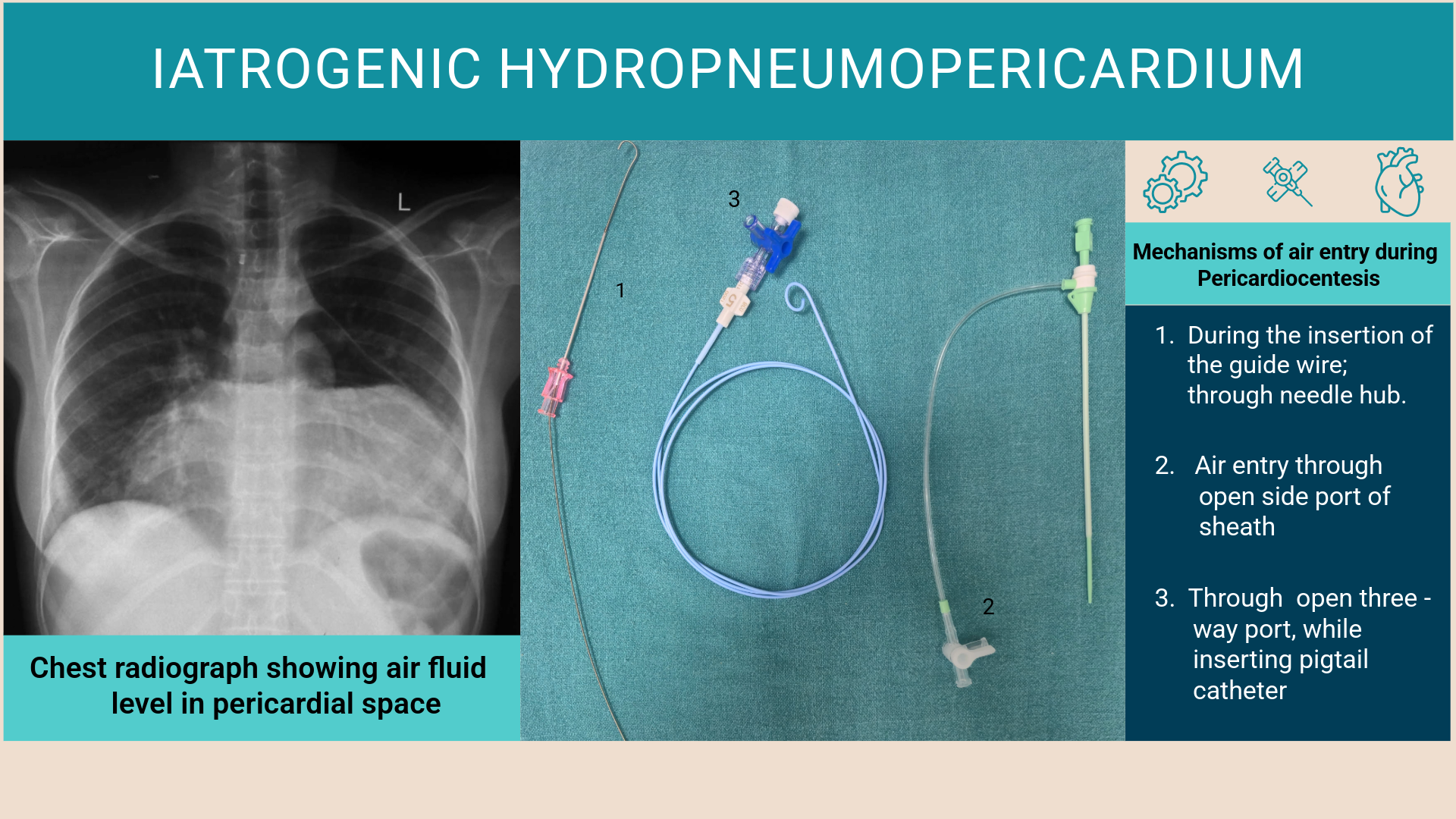
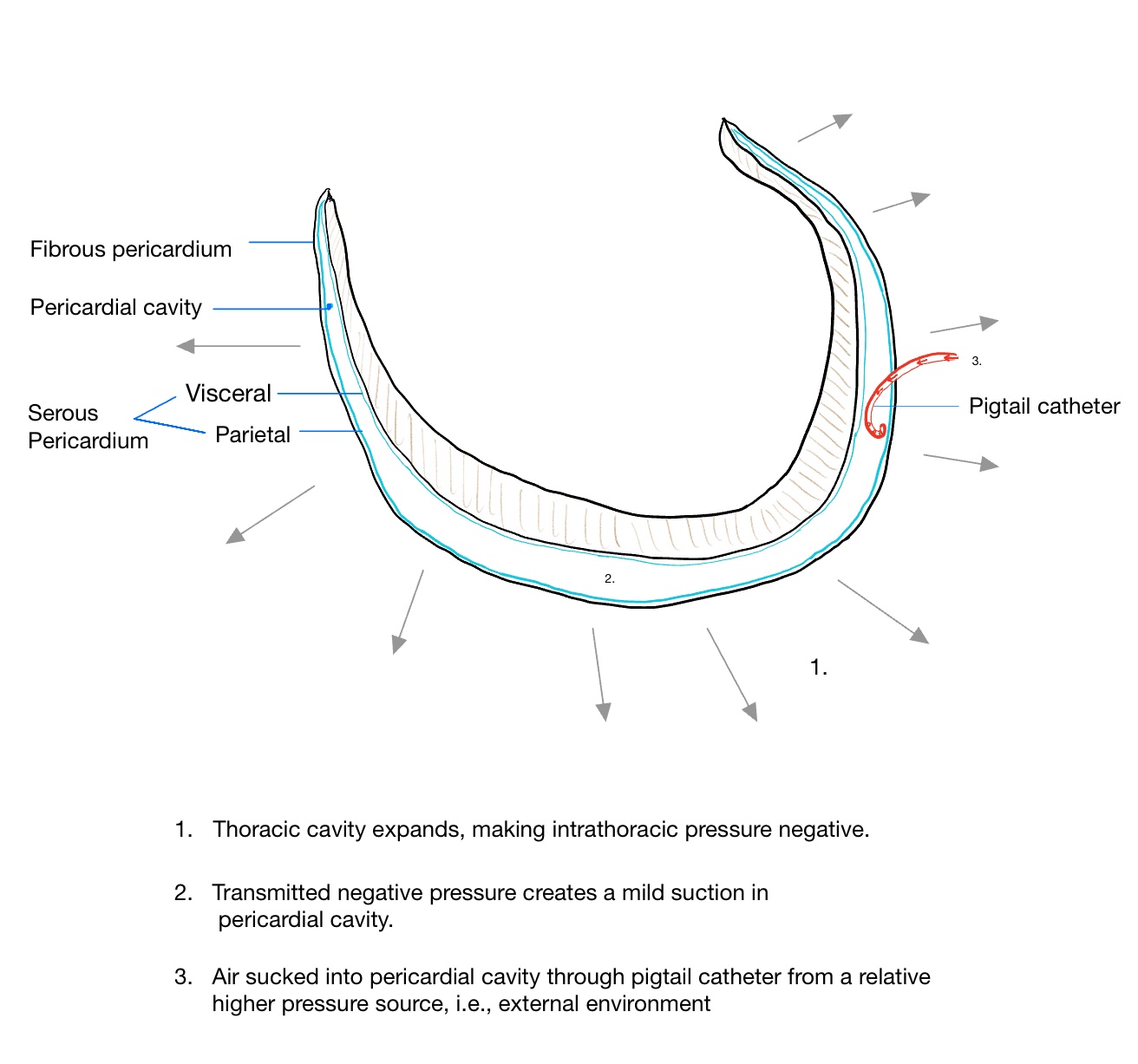
The pericardial sac is a closed cavity in the thorax, and its pressure fluctuates with inspiration and expiration. The intrathoracic pressure becomes more negative during inspiration, and it is transmitted to the pericardial sac, which is the ultimate principle behind iatrogenic air aspiration. There have been a few cases reported where the air was aspirated through the puncture needle hub, pigtail sheath side port, and proximal holes of the pigtail catheter.1,2 A similar mechanism is possible with a pigtail catheter connected to a three-way cannula with an open female Luer. Hence, forced expiration during insertion and manipulation of the aforementioned instruments and very careful inspection of the side port of the sheath and female Luer of the three-way cannula are imperative to prevent air entry.
I appreciate the opportunity to share my thoughts on this important topic.
References
1. Agstam S, Gupta A, Gupta P, Agarwal T. Iatrogenic Pneumopericardium During Pericardiocentesis. Journal of Invasive Cardiology. 2020;32(11). doi:https://doi.org/10.25270/jic/20.00020
2. Andò G, Villari A, Cavolina G, Trio O. Pneumopericardium after pericardiocentesis. Cardiovascular Revascularization Medicine: Interesting Cases. 2025;7:100077. doi:https://doi.org/10.1016/j.crmic.2025.100077
Find More
A ‘Crunching’ Heart: Pneumopericardium following Pericardiocentesis
Shockwave C2 Aero Partner Spotlight
Renal Denervation Topic Center
Cardiovascular Ambulatory Surgery Centers (ASCs) Topic Center
Grand Rounds With Morton Kern, MD
Peripheral Artery Disease Topic Center