Five Things to Remember at a Crime Scene, From Two Former Detectives
I approached Sy Ray, host of the Socialite Crime Club podcast, at last year’s Crime Con, a large, nationwide gathering of the kind of people who like to listen to a story about a triple homicide instead of sports talk on their commute into work.
I asked him one simple question, after explaining that I’m currently a paramedic working in a leadership position at a training department: Do prehospital medical providers often make any mistakes at crime scenes that make it harder to complete an investigation?
Ray laughed like I’d just delivered a punch line. “You know what we used to call you guys?” he asked, referring to his lengthy and distinguished career as an investigator.
I admitted that I did not.
“Crime scene eradicators.”
I asked Kathi Lang, who spent decades as a sheriff in Snohomish County, Washington, the same question. While she either lacked witty nicknames for EMS or was simply too polite to share them, she agreed with Ray: EMS has some room for improvement here.
Here are some simple practices EMS providers should take to make that witticism a thing of decades past, straight from two detectives with a lifetime of combined law enforcement experience:
- Do whatever you need to save a life. Both Ray and Lang were very clear on this topic: If someone has a pulse or even a distant hope of being resuscitated, we should forget everything else and do our jobs. They both emphasized that while investigative mishaps make forensics a lot more difficult, a human life is irreplaceable and will always matter more. However, often we are called to the scene of a crime, and it’s immediately apparent the patient is beyond help.
- Minimize foot traffic at the crime scene. If it’s definite or nearly so that a patient is deceased, send in just one provider to confirm and document the death. This practice offers the additional benefit of limiting the horrific memories to just one individual, which is why my captain already utilizes it. Furthermore, regardless of how many providers are needed, all EMS personnel should enter and leave by the same path. This minimizes forensic traces, such as boot prints and shed hairs.
- Don’t set anything down. Our monitors and clipboards and tablets come into contact with scores of humans over the course of a week. When we set them down at a crime scene, that DNA can transfer to the scene itself. This makes the job of the forensics team exponentially harder. A single moment of inattention can require months of expensive, laborious testing to exclude the DNA samples that were introduced this way. The same principle applies to doing a 4-lead on the victim: Those wires will introduce all kinds of DNA samples that can obscure the truth and also give a defense lawyer a foothold. Unless it’s entirely necessary to confirm death, don’t attach those cables.
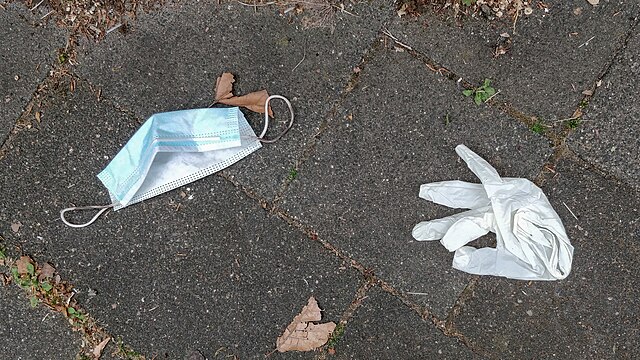
- Don't use pocket gloves. If you must touch the patient, i.e. to confirm rigor or pulselessness, make sure you use a fresh pair of gloves that came out of a kit or a box. I keep several pairs of gloves in my size in my pants pockets, as many of us do. However, these can and frequently do meet forensically contaminated items, such as old pairs of gloves or shears or pens. This can also introduce foreign and irrelevant DNA to the scene, making the already massive task of the crime lab even larger.
- Photograph critters. If you’re checking out a patient and you see a fly, try and capture a photograph of it. Try to get as clear and close of a photo as possible to make life easier for the forensic entomologist. This does not violate HIPAA since insects have no privacy rights, but just a reminder, take care not to photograph any part of the patient or anything in the room that could identify them by accident. This simple favor can help a specialist determine a more accurate time of death, which is crucial to the success of the investigation.