A Helping Hand for the Horses
Lessons are learned from each natural disaster to help inform response for the next.
During Hurricane Katrina in 2005, one such lesson was that many people would not evacuate from their homes because they had pets at home or would evacuate only to return to find the animal was deceased or lost. That gave rise to a greater availability of pet-friendly shelters.
During natural disasters such as the recent onset of Hurricanes Helene and Milton, horse owners face unique challenges due to the size and specific care needs of their animals.
"Equine owners lack adequate support and resources during natural disasters,” notes Barry Spinweber Jr., a firefighter/paramedic/field training officer with Venice (Florida) Fire Rescue. Spinweber is also a member of the department training committee, holding certificates in VMR, Aerial Ops, LFTI, Fire Boat Captain, Large Animal Technical Rescue, and BLS/ACLS/PALS/ PHTLS Instructor.
“Traditional emergency response systems prioritize human life, often leaving the equine and livestock communities vulnerable,” Spinweber says. “While pet-friendly shelters are available, there are few if any safe havens for large animals like horses. Owners must secure transport, identify safe evacuation locations, and stock up on necessary supplies, often at short notice.”
That led Spinweber to establish the non-profit Florida Equine Disaster Response (FLEDR) in 2020 in an effort to bridge the gap by organizing resources and logistics for safe evacuation and care.
A forward distribution point was established in south Sarasota County and Fort Myers, FL, with the support of the Florida Department of Agriculture and Consumer Services to collect donations and distribute much-needed supplies to those in need.
Its mission now encompasses providing proactive, organized support through comprehensive disaster preparedness and response services to the equine community, including evacuating horses; distributing emergency supplies such as hay, water, and first aid; educating horse owners and first responders on best practices for equine disaster response, and coordinating with government agencies for recovery efforts.
In the aftermath of a natural disaster, FLEDR’s team also conducts damage assessments, provides medical care, and assists with locating lost animals, notes Spinweber.
“Additionally, FLEDR offers support to equine owners as they rebuild, helping them manage the mental and physical stressors that come with post-disaster recovery. As a firefighter/paramedic with Venice Fire Rescue, I bring a deep understanding of emergency response protocols, risk management, and crisis communication,” says Spinweber.
“This background has been instrumental in developing FLEDR’s approach, ensuring that our team operates efficiently under pressure, prioritizes safety, and integrates seamlessly with other emergency response agencies.”
FLEDR is composed of a team of volunteers with backgrounds in firefighting, emergency response, equine care, and logistics. The team includes coordinators, trainers, transport specialists, and on-ground volunteers who work together to ensure comprehensive support for the equine community during emergencies.
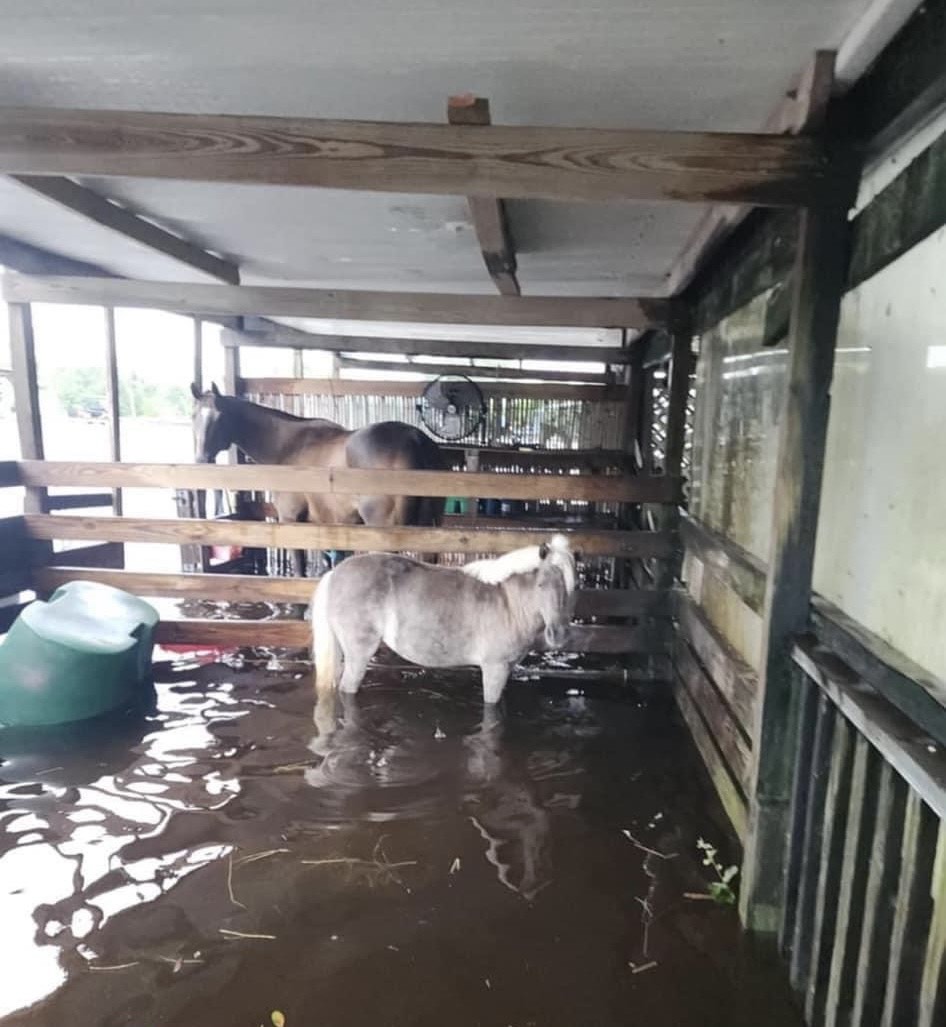
In the aftermath of Hurricane Ian in 2022, FLEDR team members witnessed significant challenges in securing safe facilities for displaced horses, coordinating large-scale supply drops, and managing the physical toll on animals, says Spinweber.
“Hurricane Helene brought similar challenges, reinforcing the need for proactive resources and stronger infrastructure to minimize losses and hardship for both animals and owners,” he adds.
Spinweber notes that by providing disaster response, FLEDR prevents horses from being abandoned or left in unsafe conditions during emergencies.
“FLEDR also eases the burden on horse owners by ensuring they have resources and support, which reduces stress and minimizes risks for both animals and their caretakers,” he says. “This work directly contributes to the overall safety and well-being of both horses and humans across Florida.”
Spinweber notes there are options for horses during a storm.
“The saying ‘hide from the wind and run from the water’ holds true,” he notes. “Some in rural communities will spray paint phone numbers on the side of the horse and turn them out into large open pastures. Their natural instincts kick in and they will face their hindquarters into the wind to protect themselves.”
With Florida being as heavily developed as it is, that’s not always an option, Spinweber points out.
“There are a few hurricane-rated facilities that graciously open their doors for evacuees such as the World Equestrian Center located in Ocala,” he adds. “We also have automated a form that can be filled out by those willing to open their barns and can be accessed by those looking to evacuate their horses to a safer area.”
FLEDR also provides specialized training to first responders, including fire departments, law enforcement, and animal control personnel.
Training covers equine handling in emergency situations, safety protocols, and rescue techniques to ensure responders are equipped to help safely, says Spinweber.
“Additionally, FLEDR educates horse owners on preparedness strategies, from evacuation planning to creating emergency kits for their horses,” he adds.
FLEDR relies on donations, grants, and in-kind support from private and corporate donors, mainly through its website donation page and through its Facebook page: Florida Equine Disaster Response.
FEMA offers support through grants and funding for disaster response, while the Florida Department of Agriculture and Consumer Services collaborates on emergency planning and response.
“These partnerships are critical to the organization’s success, allowing FLEDR to expand its capacity and reach,” says Spinweber.
FLEDR’s work is about more than just disaster response, he says, adding “it’s about building resilience within Florida’s equine community. We are committed to growing our impact by developing partnerships, expanding our volunteer network, and advocating for resources that keep Florida’s horses safe.”