Training People to Help Before the Ambulance Arrives
As far as the public is concerned, the best thing to do when a serious medical emergency occurs is to call the ambulance and then wait. But those who work in EMS know better. They know that much can be done before the ambulance arrives to maximize the patient’s chances of survival and a successful recovery. Of course, to do this, members of the public need to be trained in what to do before the ambulance gets there.
This is precisely what Mobile Medical Response (MMR) is doing. It’s a nonprofit EMS agency that serves 17 counties in Michigan. MMR is co-owned by Covenant Healthcare, MyMichigan Saginaw, and Munson Healthcare. They do about 125,000 transports a year across 8,000 square miles.
Eric Snidersich is MMR’s vice president of operations. In an exclusive conversation, he explains how MMR’s First on the Scene (FOTS) teaches the public how to keep patients alive until EMS gets there.
EMS World: Please tell us about FOTS.
Snidersich: First on the Scene is a public training program available through NAEMT. It's about four hours long, depending on how many people are there, and our maximum ratio of students to instructors is six to one.
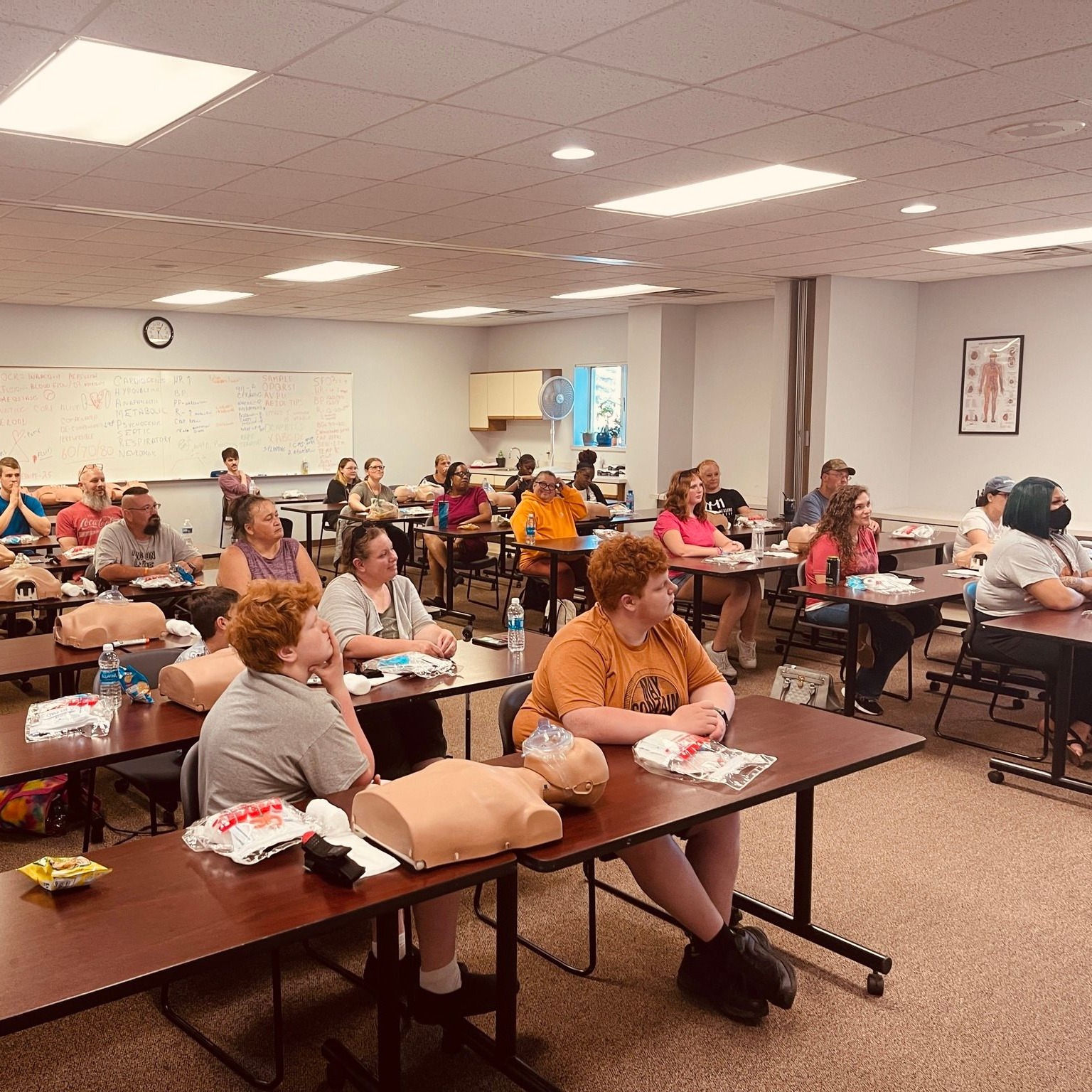
First, we go over what to do when you call 9-1-1. We focus on things like knowing your location and being able to relay information accurately to the dispatchers so they can get pre-arrival instructions. Next, we go into hands-only CPR, and how to find and utilize an AED. We try to put that in the forefront of their minds: If they're at their workplace, do they even have an AED available?
We also go into things like choking, what to do if a patient's unconscious, and putting them into a recovery position. We cover intranasal naloxone (Narcan) instructions [in the event of a drug overdose]. For cases of severe allergic reactions or anaphylaxis, we go over the EpiPen, as well as major bleeding, chest wounds, and things like that. There are all sorts of things that the public can do while they're waiting for EMS to arrive.
EMS World: What benefits does offering FOTS provide to MMR and EMS agencies as a whole?
Snidersich: First, it helps us engage well with the community. The best time to meet somebody is before there's an emergency, so when one happens, we're familiar to them as people.
Second, those of us in EMS know that you can't have an ambulance on every corner. In the rural environment, getting the ambulance on scene takes a little bit longer. We decided that this was a good thing to go out and give them a little bit of instruction on how to do things until we get there.
EMS World: Is FOTS training helping to save lives in MMR’s jurisdiction?
Snidersich: It is. I know of three incidents now where we've had people who took our FOTS course actually performing things that they learned in the class.

For example, we saw a recent news story in the Traverse City area about two of the people that we had in a FOTS class saving lives. One of them performed a recovery position on an unconscious patient, while the other one had cleared a choking incident at a restaurant. And then we also had somebody else end up doing CPR and the person they treated ended up surviving. So, the effectiveness is there.
EMS World: What approach did MMR take when you started teaching FOTS courses, and how have they grown since then?
Snidersich: When FOTS started three years ago, we were just doing it as a ‘Hey community, we're holding this event if you'd like to come, just sign up and show up and we'll teach you this.’ And then, as word spread, it really grew into a huge thing. We have senior communities that are calling us for classes. We have civic groups who are contacting us now. School systems are contacting us because they'd like us to teach their students, and even small businesses are calling us now to perform this.
The audience has really grown based on word-of-mouth and social media. People are saying, ‘Hey, this is important stuff to know.’ Consequently, we're getting requests from everywhere. In fact, even outside of our service area, we're getting requests. I'm going to guess there's probably been around 30 classes to date, and we've probably taught 500 to 600 people.
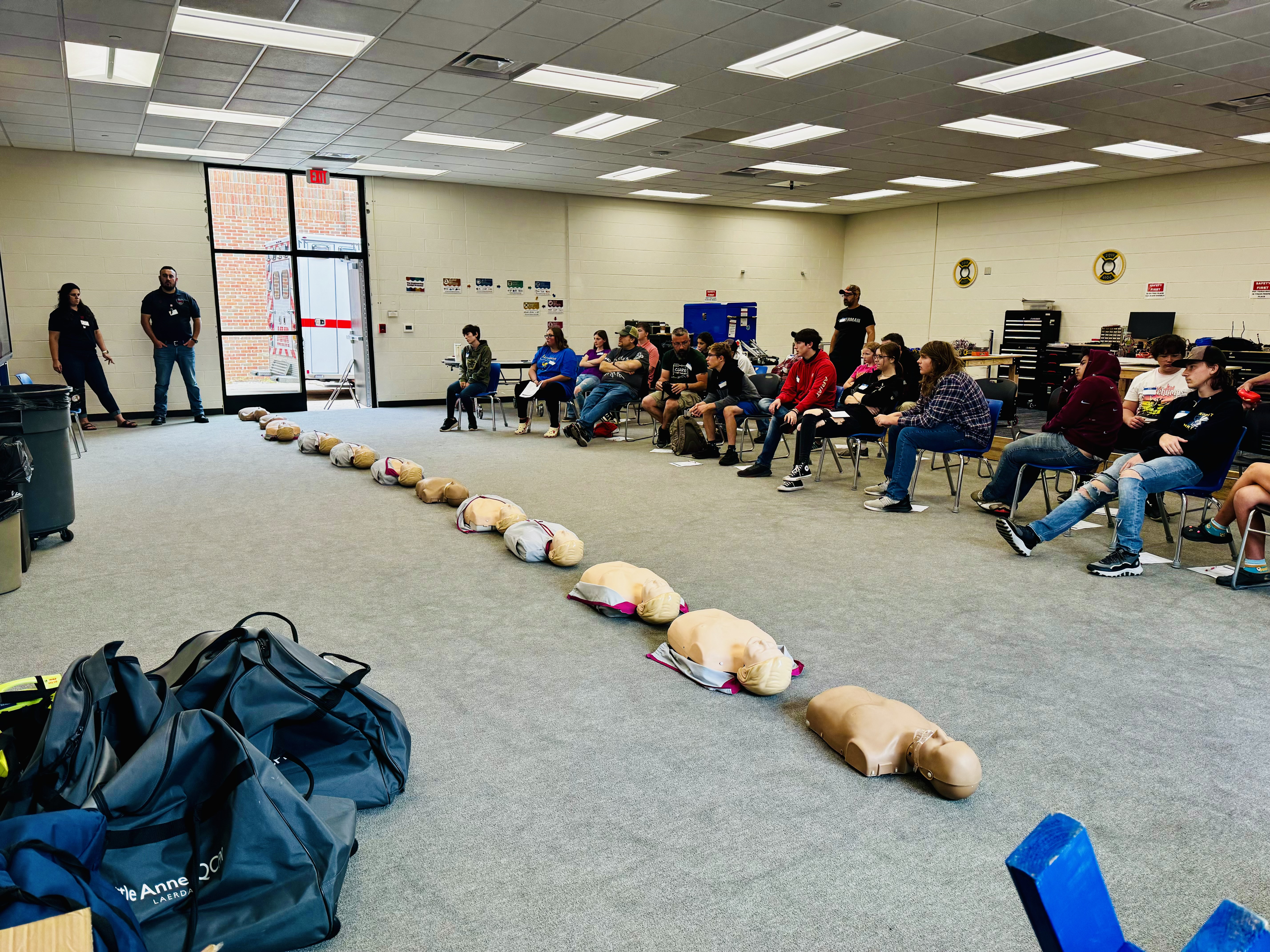
EMS World: What does it take to teach a FOTS class?
Snidersich: You have to be an instructor/coordinator certified by the state of Michigan. I'm one, and there are other people within our organization that hold instructor licenses. All told, there are hundreds of instructors in our state.
NAEMT provides everything certified instructors need to teach FOTS through the NAEMT website. They provide all of the slides and handouts, the skills station checklist—even quite a nice certificate that you can print out as well.
EMS World: Is it worth MMR’s time to teach FOTS courses?
Snidersich: Definitely. Besides the first aid value of people learning FOTS skills, being in touch with our community is one of the most important things we can do as an EMS agency. I don't think a lot of people understand how EMS operates and what it takes to have an ambulance on the road. So having a little bit of background of the things that we’re able to do and what the public can do to help creates a lot of synergy in our communities—and helps us all save lives!