Knicks Win on the Court, Narcan Wins in the Crowd: The Realities of Off-Duty EMS Care
The New York Knicks were having a moment. They had won their first NBA championship since 1973, and New York was going to celebrate as New York does: with big crowds and a ticker-tape parade through the “Canyon of Heroes” downtown. Simone Kelly, a Knicks fan, volunteer EMT, and college student from New Jersey, had a day off and decided to travel across the Hudson River and join over 2 million people lining the parade route on June 18, 2026. Little did she know that she was going to have a moment as well.
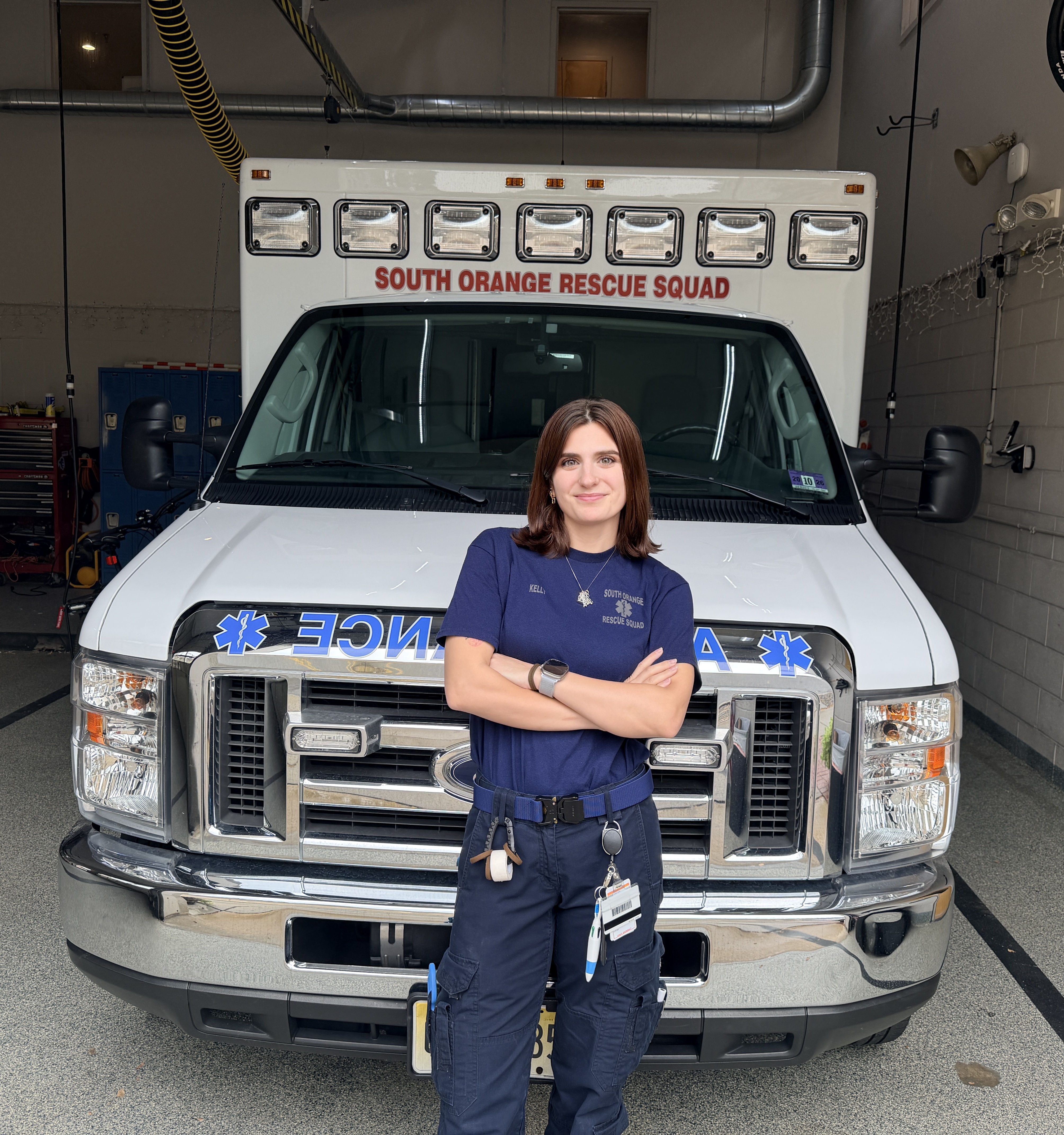
Kelly found a high viewing spot along with dozens of other fans on top of a parked New York City Sanitation truck. While there, she noticed a man atop an elevated subway entrance who appeared to be drinking excessively, and the crowd was cheering him on. She observed him stumble and then go down. She thought to herself, “This is more than just someone who is drunk.” She watched and waited for about 30 seconds, thinking someone in this large crowd would act, beyond yelling and filming him with their phones. At that moment, Kelly shifted from spectator to responder.
She moved through the crowd, identifying herself as an EMT, and along with a few other bystanders, climbed up on top of the structure.
“I used my assessment skills and tried to figure out what we were dealing with,” Kelly told EMS World. Another off-duty EMT and several other good Samaritans joined her. Kelly noticed that the man was unconscious and had possibly stopped breathing. Her index of suspicion was that he was having an overdose, but she had no equipment and no PPE. Bystanders attempted to help. Someone tossed up a bottle of water. The crowd shouted encouragement.
Someone in the crowd tossed up a New York City Opioid Response kit that the city distributes for free.
“It was sealed,” Kelly explained.
She checked it and confirmed all the “rights” when it comes to medication: right drug, right dose, right route, right time. She then administered the drug and helped open the man’s airway. The man regained consciousness, sat up, and attempted to touch her, but she avoided contact. From there, she then took charge of the scene and moved the man down from the structure with the help of other civilians. A waiting unit from FDNY EMS then assumed care.
Kelly and her fellow responders were hailed as heroes in the media. The event was recorded in full 4K video and shared on social media by one of the people who climbed up with her. Additionally, thousands of people recorded the event on their phones.
“As an EMT, I’m trained to assume that when I give care in public, someone is recording. In this case, thousands of people were watching me,” Kelly said of the situation. “I was nervous, but I also knew I had used this medication and skill many times before. The more important skill, I think, was taking control of the scene and guiding people on how to properly lift and move a patient from a hazardous location.”
After the parade, clips of Kelly and the others went viral on social media and were then picked up by major TV networks as well as New York and New Jersey media outlets.
“It has been a pretty exciting time,” Kelly said. “I was invited to the premiere of the Supergirl movie in New York City and got to walk the red carpet with my boyfriend, Sean. I also was given extra tickets that I shared with other EMTs from my volunteer EMS unit from Essex County, New Jersey, the South Orange Rescue Squad.”
The following week, Kelly was hosted by Dr. Alister Martin, the New York City Health Commissioner, who presented her with an award and a personal letter of recommendation for medical school.
Kelly is using her moment in the spotlight to advocate for overdose victims as well as volunteer EMS.
“We are sometimes quick to judge a patient’s perceived poor choices. Our job in EMS is to provide care and offer support, not to judge their lives and decisions,” she said.
She encourages people to carry free Narcan that is available at most pharmacies. She is also highlighting the fact that she has served for several years on the South Orange Rescue Squad, a 100% volunteer agency that does not bill for EMS services.
Navigating the Off-Duty Dynamic and 'Good Samaritan' Laws
Kelly made the choice to respond while off duty and is being hailed as a hero. What was her liability? An off-duty EMS provider has no statewide statutory duty to stop and render aid simply because they hold an EMS certification. However, if an off-duty provider chooses to step in, Good Samaritan laws exist in all 50 states to shield volunteer caregivers from civil liability. This doesn’t mean they can’t be sued or ordered to appear in court; it simply means that whoever is suing them most likely won’t prevail.
New York and New Jersey Legal Provisions
Kelly is a certified EMT in New Jersey and was acting in New York. What do the laws in those two states say?
Under N.Y. Public Health Law § 3000-a, New York applies a heightened standard of "gross negligence" to volunteers rendering emergency care outside a hospital or doctor's office. While typical healthcare providers are judged by an ordinary negligence standard, the legislature cloaks volunteers with higher protection to encourage immediate action. This law grants civil immunity to anyone acting in good faith to assist an unconscious, incapacitated, or injured person. However, this protection is entirely forfeited if the volunteer is grossly negligent, intentionally causes harm, or acts outside the scope of their training and expertise.
The state of New York has taken further legislative steps to encourage naloxone use and protect those who carry or administer it. N.Y. Public Health Law § 3309 classifies naloxone administration as “first aid or emergency treatment” and provides that anyone acting "reasonably and in good faith" is shielded from criminal, civil, and administrative liability. This applies to trained professionals and untrained bystanders alike. N.Y. Criminal Procedure Law § 60.49 bars the use of naloxone possession as evidence in drug prosecutions, eliminating legal risk from simply carrying the medication.
According to attorney Ely Goldin, a partner with Fox Rothchild LLP, “The statute broadly defines who may carry and administer naloxone to include not just individuals at risk or their family and friends, but also employees of 'entities' — a term that expressly includes sporting or event centers, hotels, restaurants, and bars. So overall, New York has systematically removed legal barriers to Narcan possession and administration. The law treats good-faith naloxone use as first aid, protects those who call 9-1-1, and ensures that simply carrying the medication cannot be used against someone. After a check of several legal databases, as far as I can determine, no court in any jurisdiction has ever held a bystander liable for good-faith Narcan administration.”
Under N.J.S.A. 2A:62A-1, New Jersey provides broad civil immunity to any individual, including licensed medical professionals, who, in good faith, renders emergency care at a scene. Like New York, New Jersey law (N.J.S.A. 2A:62A-9) dictates that a Good Samaritan can still be held liable for monetary damages if they commit gross negligence or intentional misconduct.
Additionally, New Jersey has a second statute known as the Overdose Prevention Act (N.J.S.A. 2C:35-30). This law protects individuals from arrest and criminal prosecution when they report a possible drug overdose, and it prevents law enforcement from using evidence obtained as a direct result of someone calling for medical help.
While most Good Samaritan laws are state-based, the federal Aviation Medical Assistance Act (AMAA) of 1998 extends these protections to healthcare professionals who volunteer during medical emergencies on U.S.-registered airlines.
To qualify for Good Samaritan protection in most states, three general core elements must be satisfied:
- The care must be rendered voluntarily with no expectation of compensation as a direct result of a true emergency.
- The volunteer must not be in an official capacity or obligation to provide care, nor shall they have caused or contributed to the initial emergency or injury.
- The care must not be delivered in a grossly negligent or reckless manner.
Practical Liability Guidance for Off-Duty EMS Providers
To minimize legal risk, off-duty EMS providers should adhere to the following common-sense guidelines if they choose to intervene in a situation:
- Activate EMS: Call 9-1-1 immediately or explicitly ensure someone else has done so.
- Identify and Consent: Appropriately identify yourself as an off-duty EMS provider and obtain verbal consent from the patient if they are conscious and capable of giving it.
- Stay Within Your Scope: Practice strictly within your level of training and certification. Use good-faith clinical judgment, as courts generally do not second-guess reasonable decisions made under emergency pressure.
- Do Not Abandon the Patient: Once you initiate care, you must remain with the patient until:
- You are relieved by EMS or another provider with equal or greater capability.
- The patient refuses further care (provided they are competent to do so).
- Continuing care becomes physically impossible or unsafe.
- Document the Encounter: If practical, write down the details of the encounter after the event, especially if you provided significant medical intervention before official EMS arrived. Keep your records in case there is any kind of legal or medical follow-up.
Final Thoughts
While Kelly is enjoying her moment in the spotlight, she is also humble.
“There were five other people up there with me, including another EMT,” she said. “I’m glad the victim is OK. If this scene ended tragically, we would be having a different conversation. I’m bristling at being called a hero. I just acted and gave Narcan to a guy.”
She further added, “As a medical provider, I want to help people. It is not in my nature to stand by and watch while someone needs help.”
References
DeGuerre C. (2004, April). Good Samaritan statutes: Are medical volunteers protected? AMA Journal of Ethics, 6(4), 181–184. https://doi.org/10.1001/virtualmentor.2004.6.4.hlaw1-0404
New Jersey Legislature. (n.d.). New Jersey Statutes Annotated § 2A:62A-1: Immunity from civil damages for emergency care. New Jersey Legislature. https://www.njleg.state.nj.us/
New York State Senate. (2026). New York Public Health Law § 3000-a: Emergency medical treatment. New York State Senate Open Legislation. https://www.nysenate.gov/legislation/laws/PBH/3000-A
West B, Varacallo MA. Good Samaritan Laws. [Updated 2022 Sep 12]. In: StatPearls [Internet]. Treasure Island (FL): StatPearls Publishing; 2026 Jan-. Available from: https://www.ncbi.nlm.nih.gov/books/NBK542176/
About the Author
Barry A. Bachenheimer, EdD, NREMT/FF, is a frequent contributor to EMS World. He has been an active instructor and field provider for 40 years and is currently associated with Montclair EMS, the South Orange Rescue Squad, and the Roseland Volunteer Fire Department.
Disclaimer
This article is intended solely for educational purposes and to promote awareness of Good Samaritan laws affecting emergency responders. It is not intended to provide legal advice or serve as a substitute for consultation with qualified legal counsel. Because laws differ among jurisdictions and may change over time, readers should consult their agency's legal counsel, medical director, or a licensed attorney regarding the application of these laws to specific situations. The opinions expressed are those of the author and should not be interpreted as legal guidance.