Machine Learning Meets EMS Stroke Triage
EMTs and paramedics know the importance of early stroke detection and diagnosis. Unfortunately, most ambulances lack the advanced diagnostic capabilities to definitively identify subtle or severe strokes.

A new study titled "Machine learning models powered by emergency medical services data enhance stroke triage in prehospital settings," which was published in Scientific Reports, hopes to change this situation. Loyola University researchers Michael Saban and Dr. Samie Tootooni were on the team who evaluated whether AI could use routinely collected EMS data to support early stroke detection.
The retrospective study analyzed 8,221 ambulance encounters from a suburban Chicago EMS region and is intended as an early proof of concept rather than a field-ready clinical system. The study directly compared its models with CPSS; its comparison with VAN relied on previously published VAN performance data.
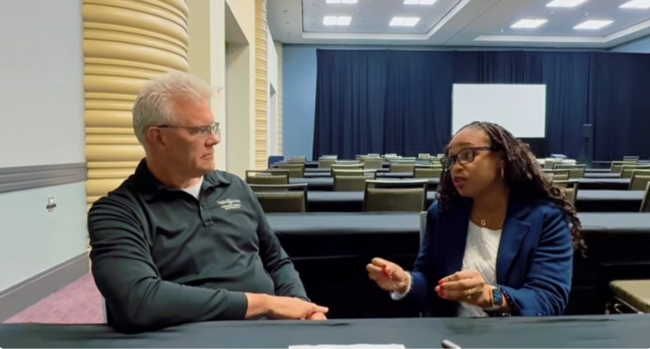
EMS World spoke with Saban and Tootooni to discuss their findings and the future of AI in the back of the ambulance.
EMS WORLD: What precisely were you hoping to achieve in this study?
MICHAEL SABAN: Stroke is highly time-sensitive, and definitive identification usually requires advanced imaging unavailable in most ambulances. Paramedics collect a massive amount of data from the 9-1-1 call to hospital arrival, but they don't have the time to sift through it all while treating a patient. We wanted to see if well-validated AI methods could analyze this routinely collected data to help paramedics confidently decide if a patient is having a stroke, and if so, where to take them.
DR. SAMIE TOOTOONI: This started from a practical problem raised by Dr. Daniel Heiferman, a cerebrovascular neurosurgeon now at Endeavor Health. He was frustrated by stroke patients requiring mechanical thrombectomies who were initially transported by EMS to hospitals incapable of the procedure. They then had to be transferred to a comprehensive stroke center like Loyola, losing critical time. We hoped AI could provide paramedics with better early triage insights right at the scene.
EMS WORLD: How does this model use the vast amount of EMS data?
SABAN: We specifically focused on routinely collected structured data — like patient demographics, dispatch information, and vitals such as Glasgow Coma Scale (GCS) scores. We intentionally avoided unstructured free-text notes for this initial model so it wouldn’t require paramedics to do any extra documentation. The goal is for the model to pick up on nuanced signals in the data they already collect, acting as an alarm for subtle or atypical presentations.
EMS WORLD: So, the goal isn't to replace the paramedic's clinical judgment or current scoring tools?

TOOTOONI: Exactly. The tools paramedics currently have — like the Cincinnati Prehospital Stroke Scale (CPSS) or Vision, Aphasia, Neglect (VAN) assessments — are simple scoring tools. We are trying to seamlessly add another tool to give them more information without adding a single task to their busy workflow. The final decisions remain entirely with the actual paramedics.
SABAN: People often associate the umbrella term "AI" with large language models like ChatGPT, leading to justified skepticism. Our study uses well-validated machine learning methods. The model isn't dictating care; it's supplementing it, acknowledging that false positives and negatives exist in AI just as they do in current tools.
EMS WORLD: What needs to happen before this can be implemented in the field?
SABAN: While our paper shows existing EMS data carries enough signal to flag stroke risk comparably to — or even better than — current tools, it isn't ready for integration today. Next steps involve incorporating the unstructured free-text notes that paramedics told us carry a lot of crucial information and utilizing state-of-the-art multi-modal AI models.
TOOTOONI: We also need to study the economic sustainability and workflow integration. Importantly, we have to understand how paramedics will actually interact with it. In a 2023 BMC Medical Informatics study we ran with pharmacists, they agreed with an AI's accurate recommendations but refused to change their clinical decisions based on them. They demanded transparency and explanations because, at the end of the day, they are accountable. Paramedics will need that same transparency.
EMS WORLD: How does this impact the broader healthcare system, particularly regarding equity?
TOOTOONI: Equitability is a huge issue. In Chicago, hospitals are 30 minutes apart. But in rural areas, this tool's impact becomes critical. A paramedic might face a dilemma: a 10-minute drive to a local hospital that might not have stroke capabilities, versus a 50-minute drive to a comprehensive stroke center. Every minute matters; every minute equals millions of neurons dying. If the patient has a severe stroke, that 50-minute drive saves their life. If not, the long transport causes unnecessary trouble. Giving paramedics in disadvantaged or rural areas — where ambulances may have fewer advanced tools — a smart system to navigate that dilemma is where we see the most profound impact.