Same Stakes, Fewer Reps: Decision-Making in Low-Volume EMS
The call comes in as “weakness.”
The patient is sitting at the kitchen table when you arrive. She is pale but conversational, apologizing for bothering you. The house is clean, her family is calm, and nothing about the room suggests catastrophe.
The numbers are less reassuring. Her pulse is fast; her blood pressure is technically present but trending in the wrong direction. She denies chest pain. The nearest emergency department is more than an hour and a half away. The weather is deteriorating, and your second ambulance is already committed elsewhere. You glance at the unit phone long enough to acknowledge what you already know—you will have to drive back to the highway before a consult would even be an option.
This is where low-volume EMS becomes a different discipline.
In a busier system, someone on the crew may have seen this presentation just last week. The organization may have treated several variations of it this month. Pattern recognition is constantly being refreshed by repetition.
In a frontier system, the last comparable patient may have been six months ago or may exist only as a case discussed during recertification.
The clinical stakes have not changed. The number of repetitions has.
That is the low-volume paradox. Rural, remote, frontier, volunteer, and small-town providers must make the same time-sensitive decisions as their high-volume peers, often with fewer diagnostics, longer transport times, less backup, and far fewer opportunities to build experience through ordinary call volume.
On a city unit, uncertainty can be diluted across people and resources. Help is often just minutes away, whether that’s another medic, a supervisor, or getting to the hospital. In the frontier, uncertainty often sits in the passenger seat for the entire transport. The provider must decide not only what the patient needs, but what can be started now, what can wait, what may fail en route, and what will be impossible to recover later.
That is not a character flaw; it is a systems problem, and systems problems require deliberate design.
The Experience High-Volume Systems Acquire by Accident
Clinical experience is not merely time employed or the number of years printed on a certification card. Expertise develops when clinicians encounter meaningful patterns, make decisions, receive accurate feedback, and refine their mental models. Deliberate practice matters because passive exposure alone does not reliably produce improvement.1
High-volume systems receive many of those repetitions as a byproduct of operations. The next chest pain patient, difficult airway, altered elder, or sick child is already waiting somewhere in the queue. Not every encounter is educational, and high volume can certainly reinforce poor habits, but it continually supplies raw material for learning.
Low-volume systems do not have that luxury. Their clinicians may be highly capable, deeply committed, and extraordinarily resourceful while still seeing very few high-acuity, low-occurrence events. Studies of rural emergency providers have repeatedly identified gaps in pediatric, cardiopulmonary, obstetrics, respiratory, trauma, and crisis management training. Precisely the cases in which the clinical consequences are high and real-world repetitions are scarce.2
Low volume can also conceal the problem. There may be no obvious failure rate because rare events have not occurred recently. Providers can remain current on paper while confidence and fluency quietly erode. An annual competency day may confirm that a skill can be performed once in a classroom. It does not prove that the clinician can recognize a need for it, assemble the plan and execute it at 2 a.m. with just one partner, and an hour of road ahead.
Volume is not the only route to competence, but when volume is absent, the system must replace what it would have provided: pattern exposure, decision practice, feedback, and correction.
Low-volume EMS must manufacture the experience that high-volume systems acquire by accident.
Your Assessment IS the Diagnostic Workup
Frontier clinicians rarely suffer from a complete absence of information. The problem they deal with is that it is incomplete, scattered, delayed, and occasionally disguised as something reassuring.
There may be no laboratory panel coming. No CT scanner will settle the argument. Cell service may make consultation theoretical. The patient may be an hour from definitive care before the first set of vital signs is even entered into the chart.
Under those conditions, assessment is not the prelude to the diagnostic workup. It is the diagnostic workup. Your basic patient interview may be the first and perhaps only healthcare interaction that patient may have had.
Interested in Frontier EMS? Attend Tracey Loscar's Presentation at EMS World Expo!
That means using ordinary tools with uncommon discipline: the history and physical examination, basic monitoring, serial reassessment, and the evidence contained in the environment.
The medication bottles on the counter matter. The untouched food, the new walker, the family members answering questions the patient usually answers, and the fact that nobody can explain why the patient is on the floor.
Silence is evidence too. Patients omit information because they are frightened or embarrassed. Maybe they are fatigued, cognitively impaired, or simply do not know which detail matters. Scenes omit the resources clinicians are accustomed to having. A missing baseline, an unexplained change in function, or a family member says, "This is not normal for her," which may be more important than a reassuring complaint label.
Time is also data. A single blood pressure is a photograph. Three blood pressures is a short film. A patient who remains "stable" while becoming quieter, paler, slower, or less able to compensate is not stable in any meaningful clinical sense.
The field clinician must think like a detective. Not because medicine is like a parlor game, but because detectives know the difference between collecting facts and building a case. A good assessment does not need to produce a perfect diagnosis. It needs to produce enough evidence to choose the safest next action.
The textbook rarely walks through the door. You have to work with what you have, notice what does not fit, and decide how much risk you are willing to leave behind.
Has Your Gut Earned a Vote?
Experienced clinicians often describe clinical gestalt as a feeling: The patient looks wrong, the story does not fit, or something about the scene is making the hair rise on the back of the neck.
That feeling is not mystical. In many cases, it is compressed pattern recognition. The clinician has encountered enough variations of illness to recognize a configuration before consciously naming every component. Naturalistic decision-making research shows that experts often make effective decisions by matching present cues to patterns built through experience.3
But intuition is only as well calibrated as the experience and feedback that created it.
A provider who has managed hundreds of respiratory emergencies may notice subtle deterioration that a checklist misses. A provider who sees one seriously ill child every several years cannot assume the same degree of calibration in pediatric shock. Experience in one domain also does not automatically transfer to another.
Prehospital clinicians are vulnerable to the same anchoring/framing, availability, confirmation, overconfidence and premature closure errors seen elsewhere in critical care. A recent scoping review also identified lack of unbiased feedback and time pressure as important contributors.4 In low-volume systems, both problems can be amplified. The cases are rare, and the clinicians may never learn the eventual diagnosis or outcome.
The practical question is not whether to trust your gut or reject it. It is whether your gut has earned a vote in this case.
Relevant experience, internally consistent findings, and a familiar pattern strengthen that vote. Contradictory information, unfamiliar presentations, high-risk mechanisms, and irreversible consequences should weaken it. When the picture does not add up, the discomfort itself becomes data, but it should trigger a more deliberate assessment, not a confident guess.
Pre-Commit Before the Scene Starts Negotiating
Resource scarcity changes decisions long before anyone consciously acknowledges it.
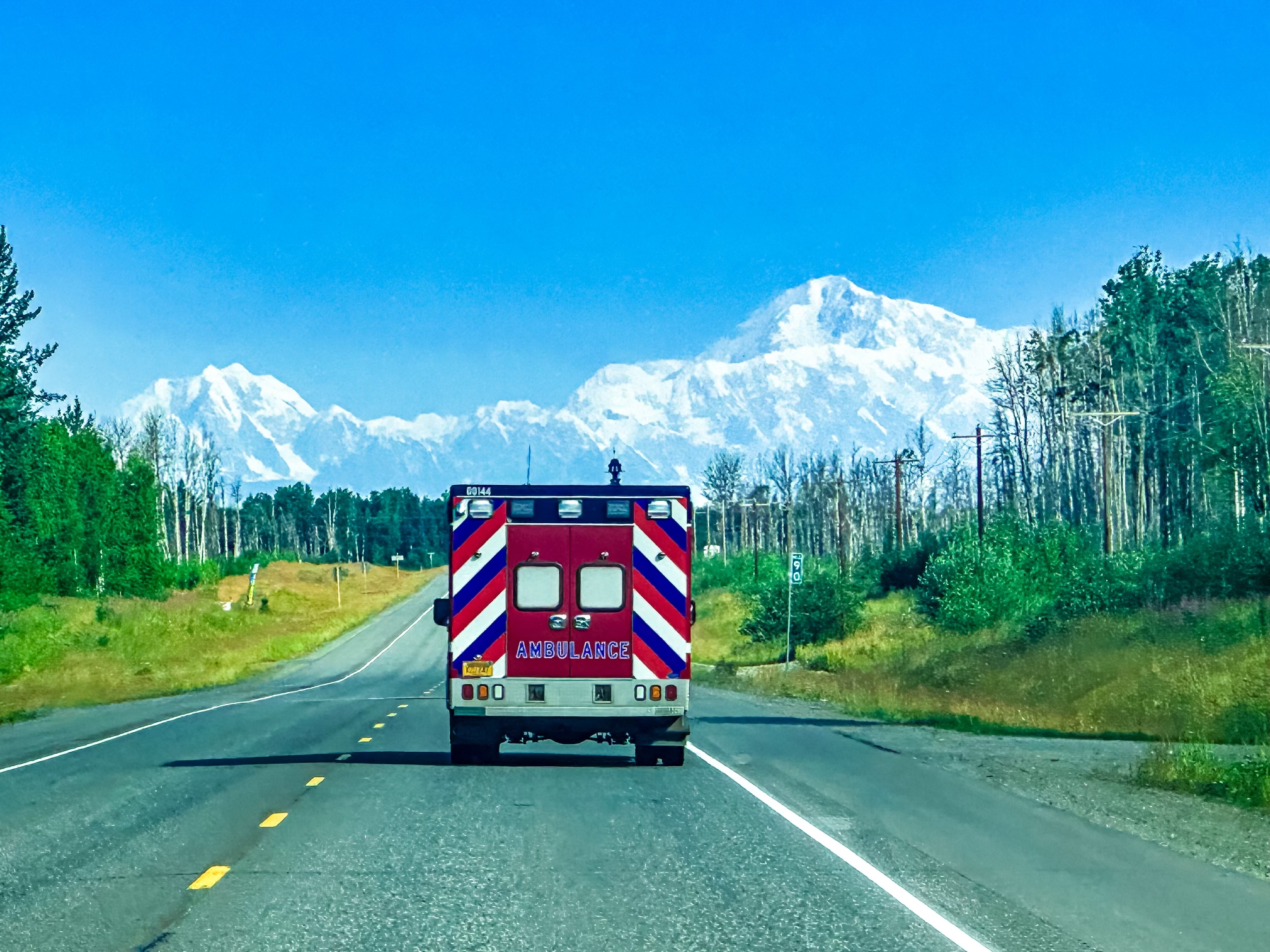
A clinician knows that transport will leave the district uncovered. The weather is worsening. The patient does not want to go. The nearest appropriate facility is far away. The crew is tired. The family is overly reassuring (because they don’t want to travel), and the first vital signs are not quite catastrophic.
Each fact may be legitimate. Together, they become a negotiation against action.
(Pro Tip: We don't negotiate with terrorists.)
The “hard deck” is a pre-commitment strategy designed to interrupt that negotiation.
In aviation, a hard deck is an altitude below which a training maneuver cannot continue. The decision has already been made before the aircraft reaches it. Applied to EMS, a hard deck is a locally defined set of findings that automatically trigger movement, escalation, consultation, or transport. The clinician does not need a final diagnosis before acting. Certain evidence is sufficient to establish that delay is no longer the safer option.
The specific triggers should be developed with medical direction and aligned with local protocols, scope, population, transport times, and system capability. They might involve hemodynamic instability, oxygenation failure, new neurologic findings, a concerning EKG finding, or a high-risk presentation whose consequences are time dependent.
The framework matters more than any universal list.
The hard deck does not diagnose the patient. It prevents uncertainty, inconvenience, and environmental pressure from becoming paralysis. It moves the decision upstream before the pleasant conversation, long transport, limited staffing, and reassuring furniture begin to influence it.
Taking a decision such as, “Should we go to the hospital?” off the table reduces cognitive burden, allowing providers to focus on the patient assessment and treatment, while preventing potentially harmful delay.
The question is not "Do I have everything I need?" The question is "Does this patient have time for me to get it?"
Chutes, Ladders and the Cost of Waiting
Not every patient crosses a clean threshold. Most calls live in the broad, uncomfortable territory between obviously well and obviously dying. That's where the low-volume clinicians need more than a red flag list.
The chutes and ladders model asks a different question: Is time making this decision safer or more dangerous?
A “ladder” is a situation in which additional observation or information is likely to improve the decision. The patient remains physiologically stable. History is coherent. Treatment is producing measurable improvement. Reassessment is available, and a mistake in initial judgment can still be corrected before permanent harm occurs.
A “chute” is a one-way door. The patient may look stable now, but delay risks closing a treatment window, exhausting compensation, or allowing deterioration beyond the capabilities of the local system. The possible harm is time-sensitive and potentially irreversible.
The distinction is not severity alone. It is reversibility.
You can usually step back from aggressive management. You cannot always recover from delayed escalation.
That asymmetry matters. You cannot recover time lost waiting for certainty. A stroke window closes. A compensated patient decompensates during the longest portion of the transport. The airway that was merely difficult becomes impossible after fatigue, swelling, or repeated attempts.
This does not mean every uncertain patient receives maximum intervention. It means that uncertainty is not neutral. Its acceptability depends on the patient's trajectory. How reliable is the reassessment, and what is the time to definitive care?
Return to the patient at the kitchen table. Perhaps the first numbers are marginal, but serial vital signs stabilize. Her color improves with treatment. Her account becomes clearer. The examination remains consistent, and consultation is available. Time is producing useful evidence. A ladder.
Or perhaps the blood pressure continues to drift. The patient becomes less talkative, and the family mentions a syncopal episode. They initially called because she was “just getting dizzy." Time is not clarifying the picture. It is consuming the remaining margin. A chute.
The framework does not tell the clinician the diagnosis. It forces the clinician to acknowledge the direction and consequences of delay.
Manufacturing the Missing Repetitions
Low-volume systems cannot create more critically ill patients, and nobody should wish otherwise. They can create more opportunities to recognize, decide, communicate, and act before the real patient arrives.
The most useful training is rarely the annual theatrical disaster with smoke machines and 47 objectives. It is small, repeated, observed, and tied to actual system risk.
Skills should be broken into components and practiced until the routine mechanics stop consuming all available attention. Scenarios should rehearse decisions as well as procedures: when to escalate, when to abandon a failing plan, when to call early, and what evidence should force a change in direction. Feedback must be specific and, whenever possible, connected to actual patient outcomes.
Spaced practice and deliberate repetition are particularly important because psychomotor and resuscitation skills decay after training, sometimes within months.5-6 Newer rural programs are using mobile simulation, tele-simulation, and other distributed approaches to bring high-acuity, low-occurrence training to clinicians who cannot routinely travel to academic centers.7 Recent rural simulation initiatives have reported improvements in team skills and confidence when training is brought into the environment where care is actually delivered.8
A practical repetition plan can be built at several levels: brief cognitive walkthroughs of rare calls, short hands-on drills focused on one failure point, periodic team simulations using the actual ambulance and equipment, and deliberate exposure through rotations or exchanges with higher-volume partners. They don’t have to be elaborate.
Each should end with the same debriefing questions:
- What cue should have triggered action?
- What created delay?
- What failed first?
- What will we do differently next time?
The goal is not to make every frontier clinician imitate an urban clinician. It is to build competence for the environment and conditions they work in, serving communities diluted by distance with fewer resources, longer timelines, wider scope, and less room to hand the difficult decision to someone else.
Low volume changes how experience must be built. It does not change what the patient deserves.
References
1. Ericsson, KA (2008). Deliberate practice and acquisition of expert performance: A general overview. Academic Emergency Medicine, 15(11), 988–994. https://doi.org/10.1111/j.1553-2712.2008.00227.x
2. Wehbi, NK, Wani, R, Yang, Y, et al. (2018). A needs assessment for simulation-based training of emergency medical providers in Nebraska, USA. Advances in Simulation, 3, Article 22. https://doi.org/10.1186/s41077-018-0081-6
3. Klein, G (1998). Sources of power: How people make decisions. MIT Press.
4. Awanzo, A, & Thompson, J (2025). Cognitive biases in clinical decision-making in prehospital critical care: A scoping review. Scandinavian Journal of Trauma, Resuscitation and Emergency Medicine, 33, Article 101. https://doi.org/10.1186/s13049-025-01415-1
5. Arthur, W Jr, Bennett, W Jr, Stanush, PL, & McNelly, TL (1998). Factors that influence skill decay and retention: A quantitative review and analysis. Human Performance, 11(1), 57–101. https://doi.org/10.1207/s15327043hup1101_3
6. Sutton, RM, Niles, D, Meaney, PA, et al. (2011). Low-dose, high-frequency CPR training improves skill retention of in-hospital pediatric providers. Pediatrics, 128(1), e145–e151. https://doi.org/10.1542/peds.2010-2105
7. Zanno, A, Holmes, J, Ferguson, M, & Melendi, M (2025). Innovative technology to improve simulation access for rural clinicians. Pediatric Clinics of North America, 72(1), 133–150. https://doi.org/10.1016/j.pcl.2024.07.023
8. Thenuwara, K, Santillan, D, Henkle, J, et al. (2024). A statewide mobile simulation program for improving obstetric skills in rural hospitals. Anesthesia & Analgesia, 139(5), 931–939. https://doi.org/10.1213/ANE.0000000000006883