Abbott Receives FDA Approval for its TactiFlex™ Duo Ablation Catheter to Treat People With Abnormal Heart Rhythms
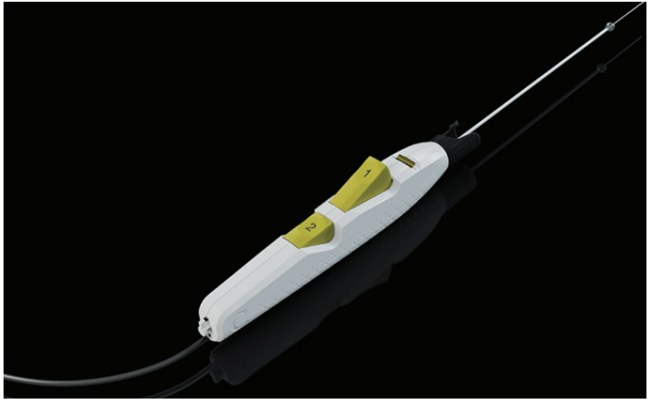
- Abbott's TactiFlex™ Duo Ablation Catheter, Sensor Enabled™ combines pulsed field ablation (PFA) and radiofrequency (RF) energy in a single catheter to treat complex atrial fibrillation (AFib) cases
- Strong clinical evidence demonstrates the device's high rates of safety and effectiveness in treating AFib patients
- FDA approval of TactiFlex Duo strengthens Abbott's expanding PFA portfolio following recent cardiac ablation approvals in the U.S., Europe, Asia and Latin America
- Abbott's TactiFlex™ Duo Ablation Catheter, Sensor Enabled™ combines pulsed field ablation (PFA) and radiofrequency (RF) energy in a single catheter to treat complex atrial fibrillation (AFib) cases
- Strong clinical evidence demonstrates the device's high rates of safety and effectiveness in treating AFib patients
- FDA approval of TactiFlex Duo strengthens Abbott's expanding PFA portfolio following recent cardiac ablation approvals in the U.S., Europe, Asia and Latin America
ABBOTT PARK, Ill., Sept. 8, 2026 -- Abbott, the global healthcare leader, announced today it has received U.S. Food and Drug Administration (FDA) approval for the TactiFlex™ Duo Ablation Catheter, Sensor Enabled™ to treat patients with challenging cases of atrial fibrillation (AFib). The U.S. approval of this dual-energy catheter, the latest generation of Abbott's cardiac ablation technology, marks a significant milestone in Abbott's commitment to advancing therapies that help physicians treat complex heart rhythms with greater precision and flexibility. Abbott will soon begin cases with broader commercial adoption across the country in the coming weeks.
Why cardiac ablation matters for people with AFib
For the 10.5 million people in the U.S. who live with a heart that beats too fast, too slow or in an irregular way, treatment is critical as AFib increases the risk of serious complications, including stroke.1,2 While many people are treated with medications, others require cardiac ablation, a minimally invasive procedure that targets the tissue responsible for abnormal electrical signals in the heart.
TactiFlex Duo is Abbott's latest ablation catheter designed to give physicians more flexibility when treating AFib. The technology allows physicians to use pulsed field ablation (PFA), radiofrequency (RF) energy, or a combination of both during a procedure, helping them tailor treatment to each patient's needs. Abbott's EnSite™ X EP System also provides physicians with real-time feedback as an integrated mapping solution with the PFA Index (PI), a tool designed to assess lesion formation during ablation with TactiFlex Duo. The dual-energy approach means physicians can create precise therapeutic lesions, or small areas of scar tissue, that block the abnormal electrical signals causing an irregular heartbeat while helping minimize the impact on surrounding healthy tissue. Successfully treating these areas can help restore the heart's normal rhythm and improve outcomes for patients living with AFib.
"Electrophysiology is rapidly evolving as physicians adopt new technologies that improve the safety and effectiveness of AFib treatment," said Atul Verma, M.D., Director of Cardiology at the McGill University Health Centre in Montreal, Canada, and a globally recognized expert in pulsed field ablation technology. "TactiFlex Duo provides physicians with greater flexibility during procedures, and when it is combined with the high-resolution 3D visualization available through Abbott's EnSite X mapping system, physicians have a suite of practice-changing tools to confidently treat patients with complex AFib."
Safety and effectiveness data support TactiFlex Duo FDA approval
The FDA approval of TactiFlex Duo was secured based on the results from Abbott's FlexPulse IDE study. Late-breaking data from the study recently presented at the European Society of Cardiology (ESC) Congress 2026, which was simultaneously published in EP Europace, showed favorable safety and effectiveness outcomes in patients with paroxysmal AFib (irregular heart rhythm episodes that come and go).
"TactiFlex Duo represents an important advancement as Abbott builds the industry's most comprehensive electrophysiology portfolio," said Uri Yaron, senior vice president of Abbott's electrophysiology business. "From diagnosis, mapping and intracardiac ultrasound imaging to advanced treatments for the most complex arrhythmias, Abbott is uniquely positioned to support physicians at every stage of patient care. By continuing to expand our PFA portfolio and integrate innovative technologies across cardiovascular care, we're helping physicians navigate increasingly complex procedures while ensuring more patients receive the right care at the right time."
Regulatory momentum across Abbott's PFA portfolio
The U.S. FDA approval of TactiFlex Duo further expands Abbott's portfolio of technologies designed to help physicians treat patients with cardiac arrhythmias. It is the company's fifth major electrophysiology approval in just over a year, following Europe's Amulet 360™ and TactiFlex Duo CE Mark approvals this year, and U.S. and European approvals of the Volt™ PFA System in 2025.
Frequently Asked Questions
What is TactiFlex Duo?
TactiFlex Duo is an advanced cardiac ablation catheter designed to treat irregular heart rhythms. Its dual-energy feature combines pulsed field ablation (PFA) and radiofrequency (RF) energy in a single device, allowing physicians to tailor treatment to each patient's unique needs during AFib ablation procedures.
How do physicians know the precise locations in the heart to treat patients with TactiFlex Duo?
TactiFlex Duo is integrated with Abbott's EnSite X EP System, a sophisticated mapping system that creates highly detailed three-dimensional maps of the heart to help doctors find and treat the source of an irregular heartbeat. Working together with Abbott's Advisor™ HD Grid X mapping catheter, ViewFlex™X ICE (intracardiac echocardiography) catheter and EnSite Echo Module, the integrated portfolio is designed to give physicians real-time images of the ablation catheter's positioning and movement, and a digital model of the patient's heart throughout a procedure. The EnSite X EP System also provides physicians with real-time information – called PFA index – which shows how the small areas of scar tissue created by TactiFlex Duo's pulsed field energy develop during an ablation procedure.3
Who may need an ablation using TactiFlex Duo?
Patients with atrial fibrillation, particularly those with complex anatomy, prior or failed ablations or other challenging clinical situations, may benefit from treatment with TactiFlex Duo as determined by their physician.
What are the patient benefits of being treated with TactiFlex Duo?
The catheter offers physicians greater procedural flexibility and precision through dual-energy capabilities, helping treat irregular heart rhythms while reducing the potential for damage to surrounding tissue. Clinical data has shown the technology to be safe and effective.
For U.S. important safety information go to:
TactiFlex Duo Ablation Catheter, Sensor Enabled
Advisor HD Grid X Mapping Catheter, Sensor Enabled™
ViewFlex X ICE Catheter, Sensor Enabled™ and EnSite Echo Module
The Amulet 360™ Left Atrial Appendage Occluder is approved for investigational use only in the U.S.
About Abbott
Abbott is a global healthcare leader that helps people live more fully at all stages of life. Our portfolio of life-changing technologies spans the spectrum of healthcare, with leading businesses and products in diagnostics, medical devices, nutritionals and branded generic 3 medicines. Our 122,000 colleagues serve people in more than 160 countries.
Connect with us at www.abbott.com and on LinkedIn, Facebook, Instagram, X and YouTube.
|
|
|
1 Noubiap JJ, Tang JJ, Teraoka JT, Dewland TA, Marcus GM. Minimum National Prevalence of Diagnosed Atrial Fibrillation Inferred From California Acute Care Facilities. J Am Coll Cardiol. 2024;84(16):1501-1508. doi:10.1016/j.jacc.2024.07.014. |
|
2 About Atrial Fibrillation.Centers for Disease Control. (n.d.). About Atrial Fibrillation | Heart Disease | CDC. |
|
3 Friedman, et al. (2025 September) Development of a PFA index to guide energy delivery with a force sensing flexible, irrigated tip catheter [Oral presentation]. ESC 2025, Madrid, Spain. |
Related Content