

Improving Diabetes Management in Complex Populations
Certain patient populations who are considered to be high risk for Type 2 diabetes achieved significant control of their disease through community-based health program participation, researchers recently reported in a new study published in Clinical Diabetes. Through the use of these programs, active intervention and culturally sensitive education can improve the course of certain illnesses.
Researchers observed several neighborhoods throughout New York City that were heavily populated by Bangladeshi-Americans in what was called the DREAM trail—Diabetes Research, Education, and Action for Minorities. The researchers noted that this patient population has a notably higher rate of Type 2 diabetes than the general population. 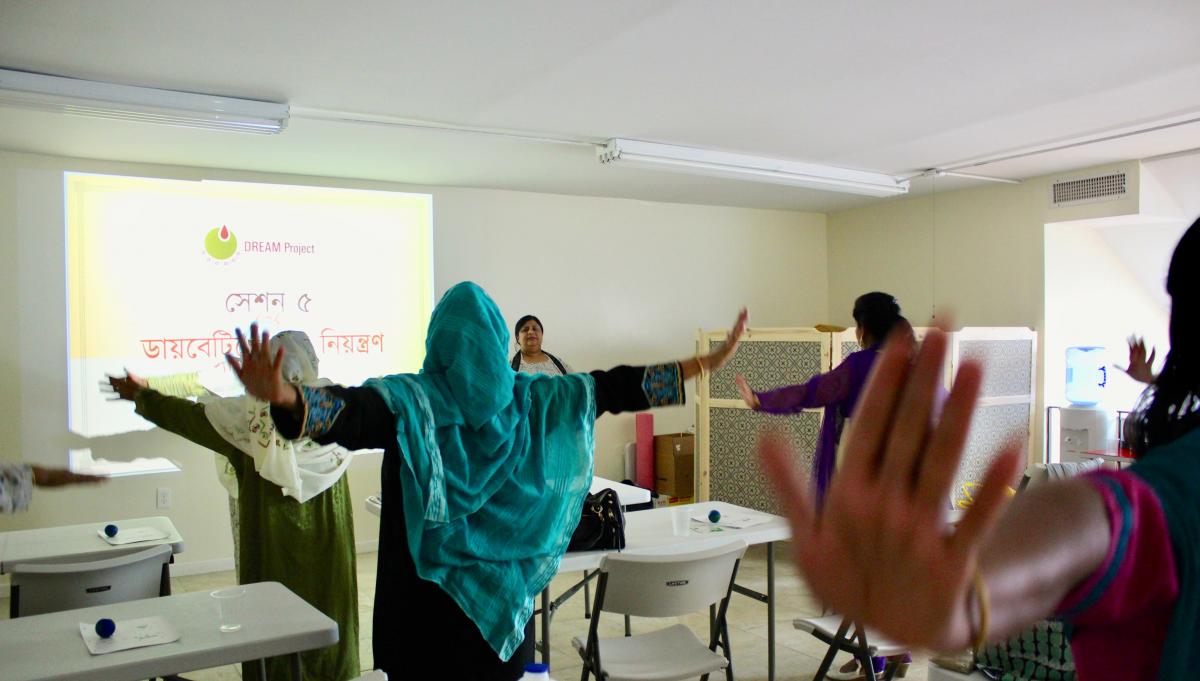
- 336 patients aged 21 to 75 years who identified as Bangladeshi with a confirmed diagnosis of Type 2 diabetes were observed. Researchers defined the diabetes diagnosis as a hemoglobin A1c level of 6.5% of higher.
- Patients were randomly assigned to intervention groups that participated in 5, 2-hour monthly education sessions and 2 one-on-one visits, which lasted 90 minutes each. Each group was led by bilingual health works.
- At the end of the trial, researchers reported that 36.3% of the intervention group achieved control or stabilization of their hemoglobin A1c levels compared with 24.6% of the control group.
- 55.2% of patients who were participating in intervention groups had blood sugar levels of 7% or less compared to 42.5% in the control group.
- The researchers noted that both the intervention and control group reported overall changes in behavior, such as increased diabetes knowledge, weekly activity, and weekly blood sugar monitoring.
To better understand targeted, community-based interventions, lead study author Nadia Islam, PhD, along with co-authors Laura Wyatt, MPH, and MD Taher, MPH, recently spoke to First Report Managed Care to explain how their study could help with diabetes population health management.
INSIGHT FROM THE AUTHORS
 Can you discuss why you believe targeted, community-based intervention improved diabetes management?
Do you believe that these programs will lower health care costs for both the patient and payer population?
Our new research is actually addressing this very question. We believe that longer-term engagement and more frequent contact with CHWs produces greater improvements in health. However, this model can only be sustained with new opportunities to integrate CHWs into healthcare teams. We want to test our assertion that integrating CHWs into primary care team will improve patient outcomes and lower costs. Building on positive research findings, we have a new study funded by the National Institute of Health to integrate and test this CHW-led diabetes management model into 20 primary care practices across the city that serve the South Asian community. We are partnering with health insurance organizations and city agencies to ensure the models we develop are financially sustainable.
 Based on your research of immigrants, how do you think community-based programs would impact other complex populations?
Our results demonstrate that to effectively improve patient’s health, we need models that can bridge community and clinical settings to deliver care that addresses cultural and social factors influencing health. As immigrant and minority community continue to grow across the U.S., CHW models will have more relevance to health providers in order for them to better meet their patients’ needs.
For more articles like this, visit the Diabetes Resource Center