

Leveling the Field: The Case for Site-Neutral Payments in Cancer Care
In this interview, Ted Okon, executive director of the Community Oncology Alliance, discusses how payment disparities between hospitals and community oncology practices—exacerbated by 340B program misuse and hospital consolidation—are driving up costs, reducing access to care, and threatening the survival of independent cancer practices, especially in rural and underserved areas.
 Please introduce yourself and state your name, title, and any relevant experience you’d like to share.
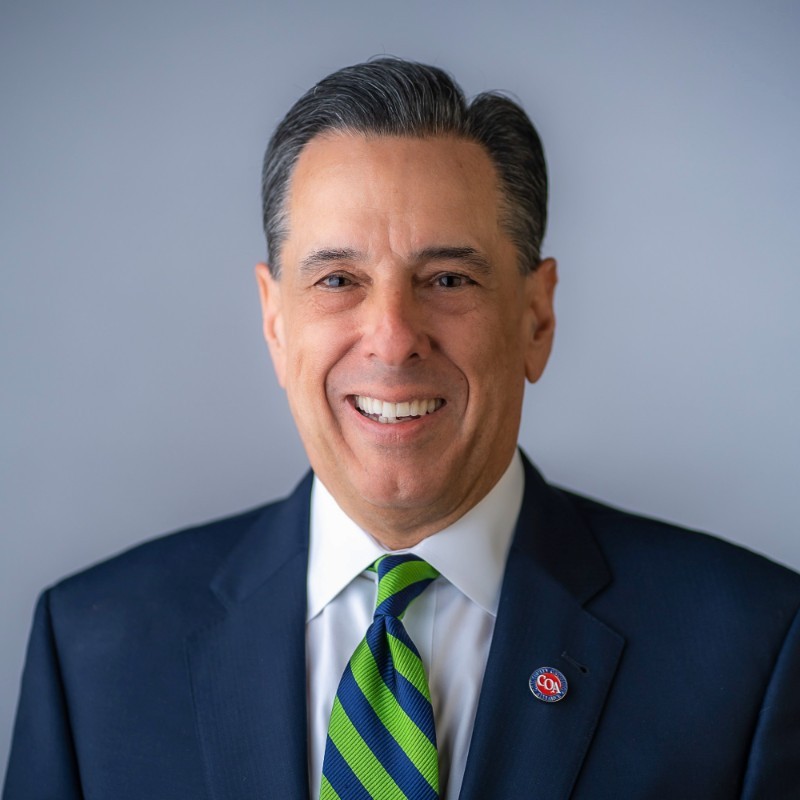
Ted Okon: I am Ted Okon. I’m the executive director of the Community Oncology Alliance.
From your perspective, how would the proposed payment changes for cancer providers specifically affect patient access to cancer treatment, particularly in rural or underserved areas where independent community oncology practices are often the only option?
Okon: There are a couple basic problems. One is that, if you look at what hospitals are reimbursed for the same exact, identical service that oncology practices provide—for example, the first hour of chemotherapy administration—there’s a total imbalance there. Over the years, there's been a huge gap between the cumulative inflation rate and the downward spiral of what physicians are paid, including those in independent community oncology practices.
It puts a real burden on practices when there's this imbalance between the two. We'll talk about some site-neutral payments, but it creates a real imbalance and a pressure. When you add to that the fact that these hospital systems are consolidating and they have 340B discounts, the more drugs that they can get under the umbrella, the more they make from those drugs.
That means putting pressure on oncology practices. It's bad. Typically, what will happen is they will force a practice out of business or take a practice over and have the oncologists retire, especially in rural and underserved areas. Those are usually areas in which independent community oncology practices, like Dr Barbara McAneny in the Navajo Nation in New Mexico, have a facility and are out there treating patients.
These big hospital systems won't do that because those areas are traditional breakeven or money losers at best. With this consolidation, there is a huge pressure on independent practices, especially when you start seeing medical deserts creeping up. We already know there are pharmacy deserts, now we're seeing medical deserts creeping up in those rural and underserved areas.
What would a more comprehensive site-neutral payment policy look like, and what barriers do you see to CMS implementing it?
Okon: It's just site-neutral. That means any procedure on an outpatient basis—like the first hour of chemotherapy, or any other procedure done as part of a hospital system—should be reimbursed the same. When you compare that to an independent physician office, that payment should be identical—the same. There is no reason why it should be different.
The hospitals say, "Oh, we can't have site-neutral because we treat sicker patients.” You have to realize that, to begin with, nonprofit hospitals have tremendous nonprofit advantages, and then most of them also have 340B discounts. Those 340B discounts are meant to stretch those scarce resources. It just doesn't make any sense. Hospitals are panicked now because they see the Centers for Medicare and Medicaid Services (CMS) actually taking the right steps, and we hope they follow through in terms of site neutrality.
There has been research done that shows that hospitals are actually fueling costs, not only on the drug side but on the services side, and that needs to be stopped. It is unfair. The worst example is when a practice is taken over by the hospital, and, let's say, a patient has just completed their third round of chemotherapy and is now going into their fourth round. The name on the door is the same, the nurse administering that chemotherapy is the same, it's the same chemotherapy, it's the same physician—but now, instead of being an independent practice, the deal is done with the hospital, and that patient says, "Wait a minute, why am I paying drastically more?" They get a facility fee. They're paying more for the whole procedure and, in some cases, depending on what their insurance is, even more for the drug.
CMS is proposing a one-time increase in the physician fee schedule conversion factor. Why do you believe this measure is insufficient, and what kind of structural changes would be needed to ensure long-term payment stability for oncology practices?
Okon: It's literally a ripple in the ocean. We have a really telling graph that shows the cumulative rate of inflation. I'm not just talking about a couple years ago—8% inflation—I’m talking about 3% to 4% inflation. You look at what CMS pays, what Medicare pays physicians, including independent oncology practices, and it's flat to now downward.
Adjusting it up just a little bit does nothing. It's better than a cut, but it does nothing. There needs to be a drastic rebalancing of what hospitals are paid on an outpatient basis. In many cases, it's a practice that was actually acquired by the hospital. Site neutrality needs to happen across the board.
You’ve raised concerns about the misuse of the 340B program and inflated drug pricing. How can greater transparency requirements balance the needs of hospitals, patients, and taxpayers without creating unintended harm?
Okon: 340B is so out of control that it's reached a pinnacle. If you read the recent Congressional Budget Office report on 340B, or the report that USC Schaeffer issued, there have been more data on 340B showing that charity care at many of these 340B hospitals is going down. It's certainly not at the level of what they get in terms of 340B, and it's a black hole.
Instead of 340B discounts going to help patients in need, especially those who can't afford their drugs, how many times do you read an article that says that hospitals are aggressively going after debt collecting and they're 340B hospitals? It makes no sense.
It needs to start with transparency to show where these dollars are going. This is one of the first things that the Senate Health Committee said. There needs to be transparency in terms of how these discounts are used. These discounts are used to fund CEO salaries, build buildings, and put grand pianos in lobby spaces.
There are certain situations that it's being used correctly. After the Supreme Court's decision, when CMS had to go back to paying 340B hospitals, the average sales price went up 6%, as opposed to something closer to their acquisition cost. By the way, in this current rule, CMS is proposing to collect those data. Hopefully, they will literally pay hospitals close to their acquisition price. But because of what's called budget neutrality, when CMS pays those 340B hospitals more for drugs, that literally comes out of the pockets of all hospitals, including small and rural hospitals.
If CMS paid less, closer to the acquisition price for those 340B hospitals, then small and rural hospitals would be paid more because, again, it's budget-neutral. Funds that they save go back into the pot for hospitals. No wonder why small and rural hospitals are struggling, because even if they have 340B discounts, the weight of those discounts is nothing compared to all the services they provide, so it's dragging them down. That's why we see small, rural, and hospitals in underserved areas struggling right now.