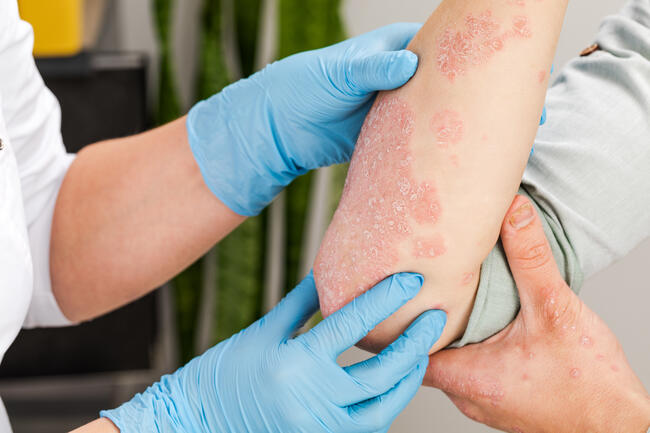
Nevoid basal cell carcinoma syndrome (NBCCS), also known as Gorlin syndrome, is characterized by numerous BCCs and a constellation of clinical and radiographic findings including palmar pits, high arched palate, bifid ribs, medulloblastomas, and odontogenic cysts.1 It is easily diagnosed on clinical examination and the molecular defect (PTCH1 gene) is well described; however, treatment can be difficult due to the sheer number of tumors and possible treatment options.2
Radiation is often avoided for fear of inducing multiple new tumors. Surgical excision, Mohs micrographic surgery, and curettage and desiccation often remain mainstays of therapy. Topical medications have also been shown to be useful. In addition, the use of carbon dioxide (CO2) laser has been reported in the treatment of NBCCS.3 The fractional CO2 laser has become an effective and safe tool in the application of full face ablative laser resurfacing.4 We utilized the fractional CO2 laser to treat multiple BCCs in a patient with NBCCS.
A 73-year-old Caucasian woman with NBCCS was seen on routine follow-up for treatment of multiple BCCs (Figure 1). She had previously been treated with multiple treatment modalities, including Mohs micrographic surgery, excisional surgery, curettage and desiccation, isotretinoin, and various topical therapies including imiquimod, 5-fluorouracil, and photodynamic therapy2 (Table). While she experienced excellent results from each, and a combination of the therapies, she continued to develop additional tumors as expected. With the exception of a previous intracranial aneurysm that was treated without consequence, she was otherwise in overall good health. Therapy with vismodegib (Erivedge) was next initiated and was beneficial; however, the expected hair loss that ensued eventually caused the patient to elect to discontinue the medication. As an alternative, she was treated with fractional CO2 laser for both treatment of smaller BCCs and attempted prophylaxis from developing as many tumors as quickly as she had in the past.
She was sedated under anesthesia with monitored anesthesia care for the fractional CO2 laser procedure. This included the use of propofol and fentanyl administered by anesthesia. Standard pretreatment included valacyclovir the morning of surgery and for 3 days after. Regional facial nerve blocks (lidocaine) were administered. Appropriately sized eye shields were placed for corneal protection. Prior to fractional resurfacing, larger tumors were reduced with traditional ablative CO2 laser resurfacing using a 2-mm handpiece (continuous [defocused] mode, 5-12 W power). The settings varied based on anatomic site and ranged from 15 to 70 mJ with density ranging from 20% to 40%, for a total of 4 passes. The patient has undergone 2 fractional CO2 laser procedures in the past 5 years with a noted reduction in facial BCCs (Figure 2). Strict postoperative instructions were given and followed by the patient.

The patient had a history of numerous BCCs including an unknown number prior to care in our clinic. The patient estimated this number to approach 30 to 40 skin cancers in the 5-year period prior to treatment at our facility. Her first treatment with fractional CO2 laser was performed in 2010 and she had a total of 13 facial BCCs that required treatment with Mohs micrographic surgery in the 5 years following this initial fractional CO2 laser treatment. While subjective, this was less than the number of facial BCCs that she reported treating in the 5 years prior. She was treated a second time with the fractional CO2 laser 5 years after the initial treatment and has had only one facial BCC present.
The use of CO2 laser resurfacing has been reported in the management of multiple BCCs in a patient with NBCCS. The advent of fractional CO2 laser offers yet an additional treatment modality for these patients. Additionally, a combination of traditional ablative and fractional CO2 laser may be utilized to ensure the most efficient treatment and prevention of multiple BCCs.4,5 This patient had a reduction in the number and rate of BCCs following each of her fractional (and traditional ablative) CO2 laser treatments. Certainly other treatments were at play during this time; however, the use of photodynamic therapy and vismodegib were utilized around 2014 and thus cannot claim the benefit alone. Additionally, her use of vismodegib was brief given the resultant alopecia that she experienced.
Use of traditional CO2 laser treatments is well described as an alternative therapeutic option for BCCs including in patients with NBCCS. The use of fractional CO2 laser treatments was designed with reduction of rhytides and offers a faster recovery with less risk due to fractional (partial) laser coverage. Although not intended for treatment of nonmelanoma skin cancer, it proved beneficial in our patient as an adjunctive measure. While we are not advocating the use of fractional CO2 laser to treat a definitive BCC, its use made both a subjective and objective difference in the number of skin cancers in this patient with NBCCS. Thus, the use of fractional CO2 laser treatment may be yet another alternative therapeutic option in these patients.
We present the use of fractional CO2 laser therapy as a useful and safe therapeutic tool for the treatment of multiple BCCs in patients with NBCCS. This may be coupled with pretreatment of larger tumors with traditional ablative (nonfractional) CO2 laser resurfacing.
Drs Lane and Cash are with the departments of internal medicine and surgery at Mercer University School of Medicine in Macon, GA.
Disclosure: The authors report no relevant financial relationships.
References
1. Jones E, Sajid MI, Shenton A, Evans DG. Basal cell carcinomas in Gorlin syndrome: a review of 202 patients. J Skin Cancer. 2011;2011:217378.
2. Campbell RM, DiGiovanna JJ. Skin cancer chemoprevention with systemic retinoids: an adjunct in the management of selected high-risk patients. Dermatol Ther. 2006;19(5):306-314.
3. Humphreys TR, Malhotra R, Scharf MJ, Marcus SM, Starkus L, Calegari K. Treatment of superficial basal cell carcinoma and squamous cell carcinoma in situ with a high-energy pulsed carbon dioxide laser. JAMA Dermatology. 1998;134(10):1247-1252.
4. Jagdeo JR, Brody NI, Spandau DF, Travers JB. Important implications and new uses of ablative lasers in dermatology: Fractional carbon dioxide laser prevention of skin cancer. Dermatol Surg. 2015;41(3):387-389.
5. Gye J, Ahn SK, Kwon JE, Hong SP. Use of fractional CO2 laser decreases the risk of skin cancer development during ultraviolet exposure in hairless mice. Dermatol Surg. 2015;41(3):378-386.
 Nevoid basal cell carcinoma syndrome (NBCCS), also known as Gorlin syndrome, is characterized by numerous BCCs and a constellation of clinical and radiographic findings including palmar pits, high arched palate, bifid ribs, medulloblastomas, and odontogenic cysts.1 It is easily diagnosed on clinical examination and the molecular defect (PTCH1 gene) is well described; however, treatment can be difficult due to the sheer number of tumors and possible treatment options.2
Radiation is often avoided for fear of inducing multiple new tumors. Surgical excision, Mohs micrographic surgery, and curettage and desiccation often remain mainstays of therapy. Topical medications have also been shown to be useful. In addition, the use of carbon dioxide (CO2) laser has been reported in the treatment of NBCCS.3 The fractional CO2 laser has become an effective and safe tool in the application of full face ablative laser resurfacing.4 We utilized the fractional CO2 laser to treat multiple BCCs in a patient with NBCCS.
A 73-year-old Caucasian woman with NBCCS was seen on routine follow-up for treatment of multiple BCCs (Figure 1). She had previously been treated with multiple treatment modalities, including Mohs micrographic surgery, excisional surgery, curettage and desiccation, isotretinoin, and various topical therapies including imiquimod, 5-fluorouracil, and photodynamic therapy2 (Table). While she experienced excellent results from each, and a combination of the therapies, she continued to develop additional tumors as expected. With the exception of a previous intracranial aneurysm that was treated without consequence, she was otherwise in overall good health. Therapy with vismodegib (Erivedge) was next initiated and was beneficial; however, the expected hair loss that ensued eventually caused the patient to elect to discontinue the medication. As an alternative, she was treated with fractional CO2 laser for both treatment of smaller BCCs and attempted prophylaxis from developing as many tumors as quickly as she had in the past.
She was sedated under anesthesia with monitored anesthesia care for the fractional CO2 laser procedure. This included the use of propofol and fentanyl administered by anesthesia. Standard pretreatment included valacyclovir the morning of surgery and for 3 days after. Regional facial nerve blocks (lidocaine) were administered. Appropriately sized eye shields were placed for corneal protection. Prior to fractional resurfacing, larger tumors were reduced with traditional ablative CO2 laser resurfacing using a 2-mm handpiece (continuous [defocused] mode, 5-12 W power). The settings varied based on anatomic site and ranged from 15 to 70 mJ with density ranging from 20% to 40%, for a total of 4 passes. The patient has undergone 2 fractional CO2 laser procedures in the past 5 years with a noted reduction in facial BCCs (Figure 2). Strict postoperative instructions were given and followed by the patient.

The patient had a history of numerous BCCs including an unknown number prior to care in our clinic. The patient estimated this number to approach 30 to 40 skin cancers in the 5-year period prior to treatment at our facility. Her first treatment with fractional CO2 laser was performed in 2010 and she had a total of 13 facial BCCs that required treatment with Mohs micrographic surgery in the 5 years following this initial fractional CO2 laser treatment. While subjective, this was less than the number of facial BCCs that she reported treating in the 5 years prior. She was treated a second time with the fractional CO2 laser 5 years after the initial treatment and has had only one facial BCC present.
The use of CO2 laser resurfacing has been reported in the management of multiple BCCs in a patient with NBCCS. The advent of fractional CO2 laser offers yet an additional treatment modality for these patients. Additionally, a combination of traditional ablative and fractional CO2 laser may be utilized to ensure the most efficient treatment and prevention of multiple BCCs.4,5 This patient had a reduction in the number and rate of BCCs following each of her fractional (and traditional ablative) CO2 laser treatments. Certainly other treatments were at play during this time; however, the use of photodynamic therapy and vismodegib were utilized around 2014 and thus cannot claim the benefit alone. Additionally, her use of vismodegib was brief given the resultant alopecia that she experienced.
Use of traditional CO2 laser treatments is well described as an alternative therapeutic option for BCCs including in patients with NBCCS. The use of fractional CO2 laser treatments was designed with reduction of rhytides and offers a faster recovery with less risk due to fractional (partial) laser coverage. Although not intended for treatment of nonmelanoma skin cancer, it proved beneficial in our patient as an adjunctive measure. While we are not advocating the use of fractional CO2 laser to treat a definitive BCC, its use made both a subjective and objective difference in the number of skin cancers in this patient with NBCCS. Thus, the use of fractional CO2 laser treatment may be yet another alternative therapeutic option in these patients.
We present the use of fractional CO2 laser therapy as a useful and safe therapeutic tool for the treatment of multiple BCCs in patients with NBCCS. This may be coupled with pretreatment of larger tumors with traditional ablative (nonfractional) CO2 laser resurfacing.
Drs Lane and Cash are with the departments of internal medicine and surgery at Mercer University School of Medicine in Macon, GA.
Disclosure: The authors report no relevant financial relationships.
References
1. Jones E, Sajid MI, Shenton A, Evans DG. Basal cell carcinomas in Gorlin syndrome: a review of 202 patients. J Skin Cancer. 2011;2011:217378.
2. Campbell RM, DiGiovanna JJ. Skin cancer chemoprevention with systemic retinoids: an adjunct in the management of selected high-risk patients. Dermatol Ther. 2006;19(5):306-314.
3. Humphreys TR, Malhotra R, Scharf MJ, Marcus SM, Starkus L, Calegari K. Treatment of superficial basal cell carcinoma and squamous cell carcinoma in situ with a high-energy pulsed carbon dioxide laser. JAMA Dermatology. 1998;134(10):1247-1252.
4. Jagdeo JR, Brody NI, Spandau DF, Travers JB. Important implications and new uses of ablative lasers in dermatology: Fractional carbon dioxide laser prevention of skin cancer. Dermatol Surg. 2015;41(3):387-389.
5. Gye J, Ahn SK, Kwon JE, Hong SP. Use of fractional CO2 laser decreases the risk of skin cancer development during ultraviolet exposure in hairless mice. Dermatol Surg. 2015;41(3):378-386.
Nevoid basal cell carcinoma syndrome (NBCCS), also known as Gorlin syndrome, is characterized by numerous BCCs and a constellation of clinical and radiographic findings including palmar pits, high arched palate, bifid ribs, medulloblastomas, and odontogenic cysts.1 It is easily diagnosed on clinical examination and the molecular defect (PTCH1 gene) is well described; however, treatment can be difficult due to the sheer number of tumors and possible treatment options.2
Radiation is often avoided for fear of inducing multiple new tumors. Surgical excision, Mohs micrographic surgery, and curettage and desiccation often remain mainstays of therapy. Topical medications have also been shown to be useful. In addition, the use of carbon dioxide (CO2) laser has been reported in the treatment of NBCCS.3 The fractional CO2 laser has become an effective and safe tool in the application of full face ablative laser resurfacing.4 We utilized the fractional CO2 laser to treat multiple BCCs in a patient with NBCCS.
A 73-year-old Caucasian woman with NBCCS was seen on routine follow-up for treatment of multiple BCCs (Figure 1). She had previously been treated with multiple treatment modalities, including Mohs micrographic surgery, excisional surgery, curettage and desiccation, isotretinoin, and various topical therapies including imiquimod, 5-fluorouracil, and photodynamic therapy2 (Table). While she experienced excellent results from each, and a combination of the therapies, she continued to develop additional tumors as expected. With the exception of a previous intracranial aneurysm that was treated without consequence, she was otherwise in overall good health. Therapy with vismodegib (Erivedge) was next initiated and was beneficial; however, the expected hair loss that ensued eventually caused the patient to elect to discontinue the medication. As an alternative, she was treated with fractional CO2 laser for both treatment of smaller BCCs and attempted prophylaxis from developing as many tumors as quickly as she had in the past.
She was sedated under anesthesia with monitored anesthesia care for the fractional CO2 laser procedure. This included the use of propofol and fentanyl administered by anesthesia. Standard pretreatment included valacyclovir the morning of surgery and for 3 days after. Regional facial nerve blocks (lidocaine) were administered. Appropriately sized eye shields were placed for corneal protection. Prior to fractional resurfacing, larger tumors were reduced with traditional ablative CO2 laser resurfacing using a 2-mm handpiece (continuous [defocused] mode, 5-12 W power). The settings varied based on anatomic site and ranged from 15 to 70 mJ with density ranging from 20% to 40%, for a total of 4 passes. The patient has undergone 2 fractional CO2 laser procedures in the past 5 years with a noted reduction in facial BCCs (Figure 2). Strict postoperative instructions were given and followed by the patient.
The patient had a history of numerous BCCs including an unknown number prior to care in our clinic. The patient estimated this number to approach 30 to 40 skin cancers in the 5-year period prior to treatment at our facility. Her first treatment with fractional CO2 laser was performed in 2010 and she had a total of 13 facial BCCs that required treatment with Mohs micrographic surgery in the 5 years following this initial fractional CO2 laser treatment. While subjective, this was less than the number of facial BCCs that she reported treating in the 5 years prior. She was treated a second time with the fractional CO2 laser 5 years after the initial treatment and has had only one facial BCC present.
The use of CO2 laser resurfacing has been reported in the management of multiple BCCs in a patient with NBCCS. The advent of fractional CO2 laser offers yet an additional treatment modality for these patients. Additionally, a combination of traditional ablative and fractional CO2 laser may be utilized to ensure the most efficient treatment and prevention of multiple BCCs.4,5 This patient had a reduction in the number and rate of BCCs following each of her fractional (and traditional ablative) CO2 laser treatments. Certainly other treatments were at play during this time; however, the use of photodynamic therapy and vismodegib were utilized around 2014 and thus cannot claim the benefit alone. Additionally, her use of vismodegib was brief given the resultant alopecia that she experienced.
Use of traditional CO2 laser treatments is well described as an alternative therapeutic option for BCCs including in patients with NBCCS. The use of fractional CO2 laser treatments was designed with reduction of rhytides and offers a faster recovery with less risk due to fractional (partial) laser coverage. Although not intended for treatment of nonmelanoma skin cancer, it proved beneficial in our patient as an adjunctive measure. While we are not advocating the use of fractional CO2 laser to treat a definitive BCC, its use made both a subjective and objective difference in the number of skin cancers in this patient with NBCCS. Thus, the use of fractional CO2 laser treatment may be yet another alternative therapeutic option in these patients.
We present the use of fractional CO2 laser therapy as a useful and safe therapeutic tool for the treatment of multiple BCCs in patients with NBCCS. This may be coupled with pretreatment of larger tumors with traditional ablative (nonfractional) CO2 laser resurfacing.
Drs Lane and Cash are with the departments of internal medicine and surgery at Mercer University School of Medicine in Macon, GA.
Disclosure: The authors report no relevant financial relationships.
References
1. Jones E, Sajid MI, Shenton A, Evans DG. Basal cell carcinomas in Gorlin syndrome: a review of 202 patients. J Skin Cancer. 2011;2011:217378.
2. Campbell RM, DiGiovanna JJ. Skin cancer chemoprevention with systemic retinoids: an adjunct in the management of selected high-risk patients. Dermatol Ther. 2006;19(5):306-314.
3. Humphreys TR, Malhotra R, Scharf MJ, Marcus SM, Starkus L, Calegari K. Treatment of superficial basal cell carcinoma and squamous cell carcinoma in situ with a high-energy pulsed carbon dioxide laser. JAMA Dermatology. 1998;134(10):1247-1252.
4. Jagdeo JR, Brody NI, Spandau DF, Travers JB. Important implications and new uses of ablative lasers in dermatology: Fractional carbon dioxide laser prevention of skin cancer. Dermatol Surg. 2015;41(3):387-389.
5. Gye J, Ahn SK, Kwon JE, Hong SP. Use of fractional CO2 laser decreases the risk of skin cancer development during ultraviolet exposure in hairless mice. Dermatol Surg. 2015;41(3):378-386.