IntraDerm Pharmaceuticals’ Ceramax skin barrier cream recently received FDA clearance as a topical skincare preparation to relieve and to manage the burning and itching associated with various dermatoses. The cream, which was developed to support hydration, repair, and protection of disrupted skin, is based on a Lipogrid technology that helps control the release and penetration of the ingredients into the skin. The formulation contains 4 key lipids (ceramide III, phosphatidylcholine, cholesterol, and palmitic acid) found in and necessary for healthy skin. The technology allows these physiological lipids to blend in with the natural lipid building blocks and penetrate beyond the stratum corneum, where they also contribute to the synthesis of ceramides, cholesterol, and other free fatty acids, according to IntraDerm Pharmaceuticals. The product also has dimethicone to help to protect the skin and glycerin to help with hydration. A study was conducted to determine the degree of penetration of lipids 2 hours after application using fluorescent microscopy that validated penetration.1
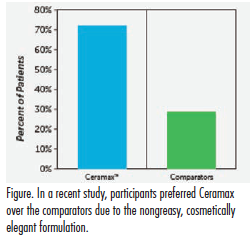
Ceramax has been shown to be clinically effective, providing consistent and significant improvement, with strong patient acceptability. In a clinical study conducted by Fowler and colleagues, 31 patients with chronic hand dermatitis were evaluated.2 Patients received either Ceramax or a comparator (ointment or lotion) that was applied twice per day. Ceramax skin barrier cream proved to be effective in reducing or eliminating chronic hand contact dermatitis caused by occupational exposures. Individuals who received Ceramax exhibited significant improvement in erythema and cracking vs comparator groups and consistent improvement in the areas of scaling, fissuring, and vesicles. Fifty percent of the patients using Ceramax were able to stop or reduce their concomitant use of steroids. Three times more patients stopped their steroids vs the comparators. Additionally, Ceramax was preferred by patients over the comparators due to the nongreasy, cosmetically elegant formulation (Figure).
References
1. Silvander M, Ringstad L, Ghadially R, Sköld T. A new topical formulation concept with lipids that mimics skin composition. Data on file. IntraDerm Pharmaceuticals.
2. Fowler JF, Perryman JH. A comparator study of an adjunctive dermal lipid replacement in the management of refractory hand contact dermatitis. Data on file. IntraDerm Pharmaceuticals.

IntraDerm Pharmaceuticals’ Ceramax skin barrier cream recently received FDA clearance as a topical skincare preparation to relieve and to manage the burning and itching associated with various dermatoses. The cream, which was developed to support hydration, repair, and protection of disrupted skin, is based on a Lipogrid technology that helps control the release and penetration of the ingredients into the skin. The formulation contains 4 key lipids (ceramide III, phosphatidylcholine, cholesterol, and palmitic acid) found in and necessary for healthy skin. The technology allows these physiological lipids to blend in with the natural lipid building blocks and penetrate beyond the stratum corneum, where they also contribute to the synthesis of ceramides, cholesterol, and other free fatty acids, according to IntraDerm Pharmaceuticals. The product also has dimethicone to help to protect the skin and glycerin to help with hydration. A study was conducted to determine the degree of penetration of lipids 2 hours after application using fluorescent microscopy that validated penetration.1
Ceramax has been shown to be clinically effective, providing consistent and significant improvement, with strong patient acceptability. In a clinical study conducted by Fowler and colleagues, 31 patients with chronic hand dermatitis were evaluated.2 Patients received either Ceramax or a comparator (ointment or lotion) that was applied twice per day. Ceramax skin barrier cream proved to be effective in reducing or eliminating chronic hand contact dermatitis caused by occupational exposures. Individuals who received Ceramax exhibited significant improvement in erythema and cracking vs comparator groups and consistent improvement in the areas of scaling, fissuring, and vesicles. Fifty percent of the patients using Ceramax were able to stop or reduce their concomitant use of steroids. Three times more patients stopped their steroids vs the comparators. Additionally, Ceramax was preferred by patients over the comparators due to the nongreasy, cosmetically elegant formulation (Figure).
References
1. Silvander M, Ringstad L, Ghadially R, Sköld T. A new topical formulation concept with lipids that mimics skin composition. Data on file. IntraDerm Pharmaceuticals.
2. Fowler JF, Perryman JH. A comparator study of an adjunctive dermal lipid replacement in the management of refractory hand contact dermatitis. Data on file. IntraDerm Pharmaceuticals.
IntraDerm Pharmaceuticals’ Ceramax skin barrier cream recently received FDA clearance as a topical skincare preparation to relieve and to manage the burning and itching associated with various dermatoses. The cream, which was developed to support hydration, repair, and protection of disrupted skin, is based on a Lipogrid technology that helps control the release and penetration of the ingredients into the skin. The formulation contains 4 key lipids (ceramide III, phosphatidylcholine, cholesterol, and palmitic acid) found in and necessary for healthy skin. The technology allows these physiological lipids to blend in with the natural lipid building blocks and penetrate beyond the stratum corneum, where they also contribute to the synthesis of ceramides, cholesterol, and other free fatty acids, according to IntraDerm Pharmaceuticals. The product also has dimethicone to help to protect the skin and glycerin to help with hydration. A study was conducted to determine the degree of penetration of lipids 2 hours after application using fluorescent microscopy that validated penetration.1
Ceramax has been shown to be clinically effective, providing consistent and significant improvement, with strong patient acceptability. In a clinical study conducted by Fowler and colleagues, 31 patients with chronic hand dermatitis were evaluated.2 Patients received either Ceramax or a comparator (ointment or lotion) that was applied twice per day. Ceramax skin barrier cream proved to be effective in reducing or eliminating chronic hand contact dermatitis caused by occupational exposures. Individuals who received Ceramax exhibited significant improvement in erythema and cracking vs comparator groups and consistent improvement in the areas of scaling, fissuring, and vesicles. Fifty percent of the patients using Ceramax were able to stop or reduce their concomitant use of steroids. Three times more patients stopped their steroids vs the comparators. Additionally, Ceramax was preferred by patients over the comparators due to the nongreasy, cosmetically elegant formulation (Figure).
References
1. Silvander M, Ringstad L, Ghadially R, Sköld T. A new topical formulation concept with lipids that mimics skin composition. Data on file. IntraDerm Pharmaceuticals.
2. Fowler JF, Perryman JH. A comparator study of an adjunctive dermal lipid replacement in the management of refractory hand contact dermatitis. Data on file. IntraDerm Pharmaceuticals.