Seborrheic dermatitis is a common skin disorder characterized by erythema and scaling, often at multiple body sites.1,2 Although effective therapies are available, the chronic, recurring nature of this disease causes considerable frustration and distress among patients. This article reviews the clinical presentation and pathogenesis of seborrheic dermatitis and examines the evidence supporting available treatment options to help guide clinicians in their choice of therapy.
Clinical Presentation
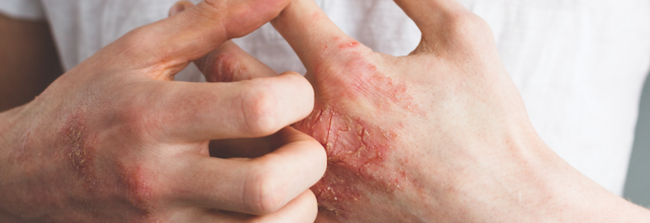
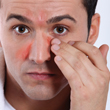
 Seborrheic dermatitis presents as patches of erythematous skin with oily yellow or white scales.2,3 It most often affects areas in which sebum production is high: the scalp, nasolabial folds, eyebrows, glabella, ears and chest.1 Mild disease of the scalp produces small, dry, white scales, while severe disease causes scaly plaques ranging in size from a few centimeters to large areas of the scalp.2 Dandruff not resulting from psoriasis is generally regarded as a mild form of seborrheic dermatitis.1,4,5 On the central chest, upper shoulders and back, seborrheic dermatitis may appear as round, well-delimited, reddish-brown plaques resembling tinea versicolor.2 Some patients may report pruritus or may be affected by secondary bacterial infection, which exacerbates symptoms.6 The prevalence of seborrheic dermatitis may be as high as 11% of the population.3 It affects men more often than women and does not favor any ethnic group.5,7
Outbreaks of seborrheic dermatitis may be triggered by emotional stress, depression, fatigue, exposure to air conditioning or to excessively damp or dry conditions, or use of neuroleptic medications.2,8
The onset of seborrheic dermatitis is usually around the time of puberty, when sebaceous glands become more active.1 It is common among adolescents and young adults, becomes rare during middle age and increases again in prevalence after age 50.1 A transient form of seborrheic dermatitis occurs in infants and resolves before age 6 months, but the adult form is chronic and recurrent.5
Seborrheic dermatitis is the most common skin disorder for individuals with the human immunodeficiency virus (HIV) and worsens as the disease progresses.9,10 It may be severe and extensive in patients with Parkinson’s disease, including neuroleptic-induced Parkinsonism, and improves with levodopa therapy.11
Surveys and clinical trials demonstrate that the disease usually occurs on multiple body sites, particularly the face and scalp. A multicenter epidemiological study of 2,159 patients 16 years of age and older with seborrheic dermatitis found the face was affected in 87.7% of patients, the scalp in 70.3%, the thorax in 26.8% and other areas in 1.3%-5.4%.2 In a clinical trial that randomized patients into 4 treatment groups, seborrheic dermatitis was found on the face of approximately 34% of patients, on the scalp of approximately 61%, and on other areas of the body in 1%-3%.12 In a double blind study, the face was affected in at least 86% of patients and the scalp in 50%.13 Although none of these studies reported how many patients were affected at multiple sites, it can be seen from the substantial overlap in the proportion of involved sites that, in a majority of patients, the condition was present on both the face and scalp.
Pathogenesis
Sebaceous gland secretion, the opportunistic impact of Malassezia furfur and the host immune response all may contribute to the pathogenesis of seborrheic dermatitis.5 Although excess sebaceous gland activity has not been identified in patients with seborrheic dermatitis, the particular composition of the skin surface lipids in these patients may support the growth of lipid-dependent yeasts.14
Malassezia furfur is a commensal species of yeast found primarily around hair follicles on sebum-rich areas of the body.15 It obtains the fatty acids on which it depends by producing lipases that hydrolyze triglycerides.16 These fatty acids may irritate the skin and cause scaling or may contribute to inflammation.17 Malassezia globosa and Malassezia restricta have also been implicated as causes of seborrheic dermatitis.17-19 Numerous studies have demonstrated that reduction of the population of Malassezia with the use of antifungal agents is associated with symptom relief.3,5,17
The role of the host immune response in the pathogenesis of seborrheic dermatitis is uncertain. A host response specific to Malassezia has not been identified, but the high rate of seborrheic dermatitis in HIV-positive individuals suggests a process mediated by the immune system,17 although the response of seborrheic dermatitis to successful antiretroviral therapy is variable.6
Diagnosis
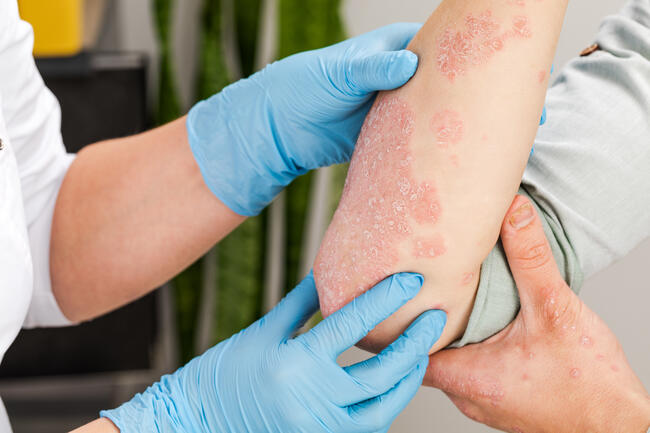
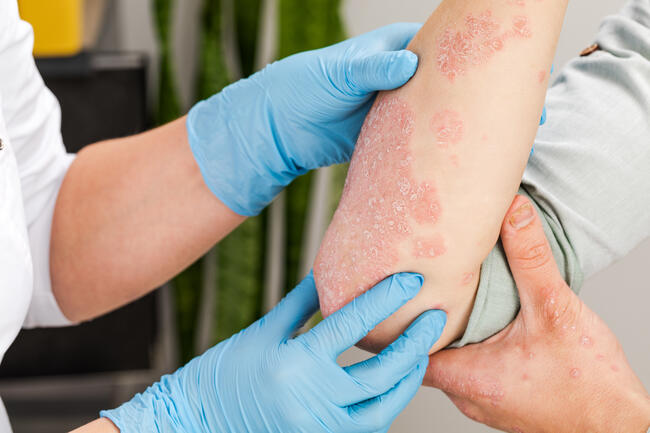
The diagnosis of seborrheic dermatitis is clinical, but care should be taken to distinguish it from psoriasis, which also causes skin scaling.20 Psoriasis often causes lesions on the elbows or knees and nail pitting and usually spares the face.20 The differential diagnosis of seborrheic dermatitis also includes atopic dermatitis, tinea capitis and cutaneous T-cell lymphoma.6
Treatment
The goals of therapy of seborrheic dermatitis are to clear the visible signs of disease, reduce symptoms such as pruritus and maintain disease suppression.5 Patients should be informed that seborrheic dermatitis is incurable and recurring and that, if possible, they should avoid situations that trigger outbreaks.21 Anti-inflammatory agents and antifungal agents are the mainstays of treatment.1,3 Many drugs in each class are available and their effective use varies among patients according to the clinical presentation.
Topical corticosteroids have been used for many years and are available as creams, ointments, gels, solutions and shampoos. Double-blind and open-label clinical trials have found that >90% of patients respond to these agents, with symptom improvement of 75% to 95%.13,22,23 Treatment response often is achieved in as little as a few days, although recurrence soon after cessation of corticosteroid therapy is common.21 Topical corticosteroids are generally well tolerated, although prolonged use should be avoided because of their potential to cause skin atrophy, telangiectasia, folliculitis and tachyphylaxis.4,6,24
The antifungal agent ketoconazole is available in cream, gel, foam and shampoo formulations for the treatment of seborrheic dermatitis. Double-blind trials have shown that ketoconazole 2% reduces the population of yeasts on treated skin and is as effective as corticosteroid therapy for reducing erythema and scaling.13,22 It is effective for the treatment of both scalp and non-scalp disease.12,13,22,25 Ketoconazole is generally well tolerated and its effects are rated favorably by patients.12,13,22,25 Metronidazole 0.75% gel is as effective for facial seborrheic dermatitis as ketoconazole 2% cream with a similar safety profile.26
In randomized, double-blind studies, ciclopirox olamine shampoo was shown to be superior to vehicle and equivalent to ketoconazole shampoo for the treatment of seborrheic dermatitis of the scalp.27,28 Twice-weekly use was somewhat more effective than once-weekly use, and continuing application once weekly or once every 2 weeks reduced the frequency of relapses.27 Adverse events were limited to skin or eye irritation.27,28
Oral itraconazole may be an option for patients who do not respond to topical antifungal agents, although its use may be accompanied by nausea and other adverse gastrointestinal effects. Monitoring of liver function is necessary during prolonged therapy.29,30
In what appears to be a beneficial combination, alternating use of a corticosteroid-containing anti-inflammatory shampoo and an antifungal shampoo may be more effective at relieving scalp seborrheic dermatitis than the use of antifungal shampoo alone.31
The calcineurin inhibitor pimecromilus, formulated as a 1% cream, has been shown in comparative trials to be as effective as hydrocortisone 1% cream or ketoconazole 2% cream in the treatment of seborrheic dermatitis, although this treatment has been associated with more frequent adverse effects, including burning sensation, pruritus, irritation and erythema.32,33 In a single-blind trial, tacrolimus 0.1% ointment reduced symptoms of seborrheic dermatitis as effectively as hydrocortisone 1% cream, with more rapid clearing and higher ratings from patients.23
Promiseb Plus Complete is a product classified as a medical device with antifungal and anti-inflammatory activity, marketed as a non-steroidal cream and a scalp wash in the same package.34,35 Both the cream and the scalp wash contain piroctone olamine, an antifungal agent, whereas the anti-inflammatory effect is derived from glycyrrhetinic acid in the cream and dipotassium glycyrrhizinate in the wash.36,37 In a randomized, single-blind trial, Promiseb Topical Cream was shown to be as effective as desonide 0.05% topical cream for the treatment of facial seborrheic dermatitis, with a lower rate of relapse and a similar safety profile.38 In an open-label trial, all 25 subjects with seborrheic dermatitis of the scalp who used Promiseb Plus Scalp Wash an average of twice weekly for 2 weeks had a positive response.39 Thus, the combination cream and scalp wash product is effective at multiple sites for relief of symptoms and maintenance of symptom improvement and has a low rate of relapse.
Conclusion
Seborrheic dermatitis is a common, chronic, recurrent condition causing erythematous patches of scaly skin, typically affecting patients at multiple body sites where sebum production is high, including the face, scalp, chest, back and shoulders. Although the cause of seborrheic dermatitis is poorly understood, it appears to be related to the presence of Malassezia species on sebum-rich areas of the body. The diagnosis is primarily clinical, but seborrheic dermatitis must be distinguished from psoriasis. The goals of therapy are to reduce disease symptoms and prevent recurrences. Antifungal and anti-inflammatory agents are the mainstays of treatment and both usually result in prompt relief. Alternating use of antifungal agents and anti-inflammatory agents or use of a combination product containing both may be effective. Patient education should emphasize that seborrheic dermatitis is a persistent condition that may require lifelong therapy.
Dr. Kaufmann is Associate Clinical Professor in the Department of Dermatology at Mt. Sinai School of Medicine in New York, NY.
Dr. Bhatia is Associate Clinical Professor of Dermatology at Harbor UCLA Medical Center in Los Angeles, CA.
Disclosure: This manuscript development was supported by Promius Pharma, LLC.
Dr. Kaufmann sits on the Advisory Board for Promius Pharma, LLC and is a member of the Promius Pharma Speaker’s Bureau.
Dr. Bhatia sits on the Advisory Board for Promius Pharma, LLC.
Seborrheic dermatitis is a common skin disorder characterized by erythema and scaling, often at multiple body sites.1,2 Although effective therapies are available, the chronic, recurring nature of this disease causes considerable frustration and distress among patients. This article reviews the clinical presentation and pathogenesis of seborrheic dermatitis and examines the evidence supporting available treatment options to help guide clinicians in their choice of therapy.
Clinical Presentation
 Seborrheic dermatitis presents as patches of erythematous skin with oily yellow or white scales.2,3 It most often affects areas in which sebum production is high: the scalp, nasolabial folds, eyebrows, glabella, ears and chest.1 Mild disease of the scalp produces small, dry, white scales, while severe disease causes scaly plaques ranging in size from a few centimeters to large areas of the scalp.2 Dandruff not resulting from psoriasis is generally regarded as a mild form of seborrheic dermatitis.1,4,5 On the central chest, upper shoulders and back, seborrheic dermatitis may appear as round, well-delimited, reddish-brown plaques resembling tinea versicolor.2 Some patients may report pruritus or may be affected by secondary bacterial infection, which exacerbates symptoms.6 The prevalence of seborrheic dermatitis may be as high as 11% of the population.3 It affects men more often than women and does not favor any ethnic group.5,7
Outbreaks of seborrheic dermatitis may be triggered by emotional stress, depression, fatigue, exposure to air conditioning or to excessively damp or dry conditions, or use of neuroleptic medications.2,8
The onset of seborrheic dermatitis is usually around the time of puberty, when sebaceous glands become more active.1 It is common among adolescents and young adults, becomes rare during middle age and increases again in prevalence after age 50.1 A transient form of seborrheic dermatitis occurs in infants and resolves before age 6 months, but the adult form is chronic and recurrent.5
Seborrheic dermatitis is the most common skin disorder for individuals with the human immunodeficiency virus (HIV) and worsens as the disease progresses.9,10 It may be severe and extensive in patients with Parkinson’s disease, including neuroleptic-induced Parkinsonism, and improves with levodopa therapy.11
Surveys and clinical trials demonstrate that the disease usually occurs on multiple body sites, particularly the face and scalp. A multicenter epidemiological study of 2,159 patients 16 years of age and older with seborrheic dermatitis found the face was affected in 87.7% of patients, the scalp in 70.3%, the thorax in 26.8% and other areas in 1.3%-5.4%.2 In a clinical trial that randomized patients into 4 treatment groups, seborrheic dermatitis was found on the face of approximately 34% of patients, on the scalp of approximately 61%, and on other areas of the body in 1%-3%.12 In a double blind study, the face was affected in at least 86% of patients and the scalp in 50%.13 Although none of these studies reported how many patients were affected at multiple sites, it can be seen from the substantial overlap in the proportion of involved sites that, in a majority of patients, the condition was present on both the face and scalp.
Pathogenesis
Sebaceous gland secretion, the opportunistic impact of Malassezia furfur and the host immune response all may contribute to the pathogenesis of seborrheic dermatitis.5 Although excess sebaceous gland activity has not been identified in patients with seborrheic dermatitis, the particular composition of the skin surface lipids in these patients may support the growth of lipid-dependent yeasts.14
Malassezia furfur is a commensal species of yeast found primarily around hair follicles on sebum-rich areas of the body.15 It obtains the fatty acids on which it depends by producing lipases that hydrolyze triglycerides.16 These fatty acids may irritate the skin and cause scaling or may contribute to inflammation.17 Malassezia globosa and Malassezia restricta have also been implicated as causes of seborrheic dermatitis.17-19 Numerous studies have demonstrated that reduction of the population of Malassezia with the use of antifungal agents is associated with symptom relief.3,5,17
The role of the host immune response in the pathogenesis of seborrheic dermatitis is uncertain. A host response specific to Malassezia has not been identified, but the high rate of seborrheic dermatitis in HIV-positive individuals suggests a process mediated by the immune system,17 although the response of seborrheic dermatitis to successful antiretroviral therapy is variable.6
Diagnosis
The diagnosis of seborrheic dermatitis is clinical, but care should be taken to distinguish it from psoriasis, which also causes skin scaling.20 Psoriasis often causes lesions on the elbows or knees and nail pitting and usually spares the face.20 The differential diagnosis of seborrheic dermatitis also includes atopic dermatitis, tinea capitis and cutaneous T-cell lymphoma.6
Treatment
The goals of therapy of seborrheic dermatitis are to clear the visible signs of disease, reduce symptoms such as pruritus and maintain disease suppression.5 Patients should be informed that seborrheic dermatitis is incurable and recurring and that, if possible, they should avoid situations that trigger outbreaks.21 Anti-inflammatory agents and antifungal agents are the mainstays of treatment.1,3 Many drugs in each class are available and their effective use varies among patients according to the clinical presentation.
Topical corticosteroids have been used for many years and are available as creams, ointments, gels, solutions and shampoos. Double-blind and open-label clinical trials have found that >90% of patients respond to these agents, with symptom improvement of 75% to 95%.13,22,23 Treatment response often is achieved in as little as a few days, although recurrence soon after cessation of corticosteroid therapy is common.21 Topical corticosteroids are generally well tolerated, although prolonged use should be avoided because of their potential to cause skin atrophy, telangiectasia, folliculitis and tachyphylaxis.4,6,24
The antifungal agent ketoconazole is available in cream, gel, foam and shampoo formulations for the treatment of seborrheic dermatitis. Double-blind trials have shown that ketoconazole 2% reduces the population of yeasts on treated skin and is as effective as corticosteroid therapy for reducing erythema and scaling.13,22 It is effective for the treatment of both scalp and non-scalp disease.12,13,22,25 Ketoconazole is generally well tolerated and its effects are rated favorably by patients.12,13,22,25 Metronidazole 0.75% gel is as effective for facial seborrheic dermatitis as ketoconazole 2% cream with a similar safety profile.26
In randomized, double-blind studies, ciclopirox olamine shampoo was shown to be superior to vehicle and equivalent to ketoconazole shampoo for the treatment of seborrheic dermatitis of the scalp.27,28 Twice-weekly use was somewhat more effective than once-weekly use, and continuing application once weekly or once every 2 weeks reduced the frequency of relapses.27 Adverse events were limited to skin or eye irritation.27,28
Oral itraconazole may be an option for patients who do not respond to topical antifungal agents, although its use may be accompanied by nausea and other adverse gastrointestinal effects. Monitoring of liver function is necessary during prolonged therapy.29,30
In what appears to be a beneficial combination, alternating use of a corticosteroid-containing anti-inflammatory shampoo and an antifungal shampoo may be more effective at relieving scalp seborrheic dermatitis than the use of antifungal shampoo alone.31
The calcineurin inhibitor pimecromilus, formulated as a 1% cream, has been shown in comparative trials to be as effective as hydrocortisone 1% cream or ketoconazole 2% cream in the treatment of seborrheic dermatitis, although this treatment has been associated with more frequent adverse effects, including burning sensation, pruritus, irritation and erythema.32,33 In a single-blind trial, tacrolimus 0.1% ointment reduced symptoms of seborrheic dermatitis as effectively as hydrocortisone 1% cream, with more rapid clearing and higher ratings from patients.23
Promiseb Plus Complete is a product classified as a medical device with antifungal and anti-inflammatory activity, marketed as a non-steroidal cream and a scalp wash in the same package.34,35 Both the cream and the scalp wash contain piroctone olamine, an antifungal agent, whereas the anti-inflammatory effect is derived from glycyrrhetinic acid in the cream and dipotassium glycyrrhizinate in the wash.36,37 In a randomized, single-blind trial, Promiseb Topical Cream was shown to be as effective as desonide 0.05% topical cream for the treatment of facial seborrheic dermatitis, with a lower rate of relapse and a similar safety profile.38 In an open-label trial, all 25 subjects with seborrheic dermatitis of the scalp who used Promiseb Plus Scalp Wash an average of twice weekly for 2 weeks had a positive response.39 Thus, the combination cream and scalp wash product is effective at multiple sites for relief of symptoms and maintenance of symptom improvement and has a low rate of relapse.
Conclusion
Seborrheic dermatitis is a common, chronic, recurrent condition causing erythematous patches of scaly skin, typically affecting patients at multiple body sites where sebum production is high, including the face, scalp, chest, back and shoulders. Although the cause of seborrheic dermatitis is poorly understood, it appears to be related to the presence of Malassezia species on sebum-rich areas of the body. The diagnosis is primarily clinical, but seborrheic dermatitis must be distinguished from psoriasis. The goals of therapy are to reduce disease symptoms and prevent recurrences. Antifungal and anti-inflammatory agents are the mainstays of treatment and both usually result in prompt relief. Alternating use of antifungal agents and anti-inflammatory agents or use of a combination product containing both may be effective. Patient education should emphasize that seborrheic dermatitis is a persistent condition that may require lifelong therapy.
Dr. Kaufmann is Associate Clinical Professor in the Department of Dermatology at Mt. Sinai School of Medicine in New York, NY.
Dr. Bhatia is Associate Clinical Professor of Dermatology at Harbor UCLA Medical Center in Los Angeles, CA.
Disclosure: This manuscript development was supported by Promius Pharma, LLC.
Dr. Kaufmann sits on the Advisory Board for Promius Pharma, LLC and is a member of the Promius Pharma Speaker’s Bureau.
Dr. Bhatia sits on the Advisory Board for Promius Pharma, LLC.
Seborrheic dermatitis is a common skin disorder characterized by erythema and scaling, often at multiple body sites.1,2 Although effective therapies are available, the chronic, recurring nature of this disease causes considerable frustration and distress among patients. This article reviews the clinical presentation and pathogenesis of seborrheic dermatitis and examines the evidence supporting available treatment options to help guide clinicians in their choice of therapy.
Clinical Presentation
Seborrheic dermatitis presents as patches of erythematous skin with oily yellow or white scales.2,3 It most often affects areas in which sebum production is high: the scalp, nasolabial folds, eyebrows, glabella, ears and chest.1 Mild disease of the scalp produces small, dry, white scales, while severe disease causes scaly plaques ranging in size from a few centimeters to large areas of the scalp.2 Dandruff not resulting from psoriasis is generally regarded as a mild form of seborrheic dermatitis.1,4,5 On the central chest, upper shoulders and back, seborrheic dermatitis may appear as round, well-delimited, reddish-brown plaques resembling tinea versicolor.2 Some patients may report pruritus or may be affected by secondary bacterial infection, which exacerbates symptoms.6 The prevalence of seborrheic dermatitis may be as high as 11% of the population.3 It affects men more often than women and does not favor any ethnic group.5,7
Outbreaks of seborrheic dermatitis may be triggered by emotional stress, depression, fatigue, exposure to air conditioning or to excessively damp or dry conditions, or use of neuroleptic medications.2,8
The onset of seborrheic dermatitis is usually around the time of puberty, when sebaceous glands become more active.1 It is common among adolescents and young adults, becomes rare during middle age and increases again in prevalence after age 50.1 A transient form of seborrheic dermatitis occurs in infants and resolves before age 6 months, but the adult form is chronic and recurrent.5
Seborrheic dermatitis is the most common skin disorder for individuals with the human immunodeficiency virus (HIV) and worsens as the disease progresses.9,10 It may be severe and extensive in patients with Parkinson’s disease, including neuroleptic-induced Parkinsonism, and improves with levodopa therapy.11
Surveys and clinical trials demonstrate that the disease usually occurs on multiple body sites, particularly the face and scalp. A multicenter epidemiological study of 2,159 patients 16 years of age and older with seborrheic dermatitis found the face was affected in 87.7% of patients, the scalp in 70.3%, the thorax in 26.8% and other areas in 1.3%-5.4%.2 In a clinical trial that randomized patients into 4 treatment groups, seborrheic dermatitis was found on the face of approximately 34% of patients, on the scalp of approximately 61%, and on other areas of the body in 1%-3%.12 In a double blind study, the face was affected in at least 86% of patients and the scalp in 50%.13 Although none of these studies reported how many patients were affected at multiple sites, it can be seen from the substantial overlap in the proportion of involved sites that, in a majority of patients, the condition was present on both the face and scalp.
Pathogenesis
Sebaceous gland secretion, the opportunistic impact of Malassezia furfur and the host immune response all may contribute to the pathogenesis of seborrheic dermatitis.5 Although excess sebaceous gland activity has not been identified in patients with seborrheic dermatitis, the particular composition of the skin surface lipids in these patients may support the growth of lipid-dependent yeasts.14
Malassezia furfur is a commensal species of yeast found primarily around hair follicles on sebum-rich areas of the body.15 It obtains the fatty acids on which it depends by producing lipases that hydrolyze triglycerides.16 These fatty acids may irritate the skin and cause scaling or may contribute to inflammation.17 Malassezia globosa and Malassezia restricta have also been implicated as causes of seborrheic dermatitis.17-19 Numerous studies have demonstrated that reduction of the population of Malassezia with the use of antifungal agents is associated with symptom relief.3,5,17
The role of the host immune response in the pathogenesis of seborrheic dermatitis is uncertain. A host response specific to Malassezia has not been identified, but the high rate of seborrheic dermatitis in HIV-positive individuals suggests a process mediated by the immune system,17 although the response of seborrheic dermatitis to successful antiretroviral therapy is variable.6
Diagnosis
The diagnosis of seborrheic dermatitis is clinical, but care should be taken to distinguish it from psoriasis, which also causes skin scaling.20 Psoriasis often causes lesions on the elbows or knees and nail pitting and usually spares the face.20 The differential diagnosis of seborrheic dermatitis also includes atopic dermatitis, tinea capitis and cutaneous T-cell lymphoma.6
Treatment
The goals of therapy of seborrheic dermatitis are to clear the visible signs of disease, reduce symptoms such as pruritus and maintain disease suppression.5 Patients should be informed that seborrheic dermatitis is incurable and recurring and that, if possible, they should avoid situations that trigger outbreaks.21 Anti-inflammatory agents and antifungal agents are the mainstays of treatment.1,3 Many drugs in each class are available and their effective use varies among patients according to the clinical presentation.
Topical corticosteroids have been used for many years and are available as creams, ointments, gels, solutions and shampoos. Double-blind and open-label clinical trials have found that >90% of patients respond to these agents, with symptom improvement of 75% to 95%.13,22,23 Treatment response often is achieved in as little as a few days, although recurrence soon after cessation of corticosteroid therapy is common.21 Topical corticosteroids are generally well tolerated, although prolonged use should be avoided because of their potential to cause skin atrophy, telangiectasia, folliculitis and tachyphylaxis.4,6,24
The antifungal agent ketoconazole is available in cream, gel, foam and shampoo formulations for the treatment of seborrheic dermatitis. Double-blind trials have shown that ketoconazole 2% reduces the population of yeasts on treated skin and is as effective as corticosteroid therapy for reducing erythema and scaling.13,22 It is effective for the treatment of both scalp and non-scalp disease.12,13,22,25 Ketoconazole is generally well tolerated and its effects are rated favorably by patients.12,13,22,25 Metronidazole 0.75% gel is as effective for facial seborrheic dermatitis as ketoconazole 2% cream with a similar safety profile.26
In randomized, double-blind studies, ciclopirox olamine shampoo was shown to be superior to vehicle and equivalent to ketoconazole shampoo for the treatment of seborrheic dermatitis of the scalp.27,28 Twice-weekly use was somewhat more effective than once-weekly use, and continuing application once weekly or once every 2 weeks reduced the frequency of relapses.27 Adverse events were limited to skin or eye irritation.27,28
Oral itraconazole may be an option for patients who do not respond to topical antifungal agents, although its use may be accompanied by nausea and other adverse gastrointestinal effects. Monitoring of liver function is necessary during prolonged therapy.29,30
In what appears to be a beneficial combination, alternating use of a corticosteroid-containing anti-inflammatory shampoo and an antifungal shampoo may be more effective at relieving scalp seborrheic dermatitis than the use of antifungal shampoo alone.31
The calcineurin inhibitor pimecromilus, formulated as a 1% cream, has been shown in comparative trials to be as effective as hydrocortisone 1% cream or ketoconazole 2% cream in the treatment of seborrheic dermatitis, although this treatment has been associated with more frequent adverse effects, including burning sensation, pruritus, irritation and erythema.32,33 In a single-blind trial, tacrolimus 0.1% ointment reduced symptoms of seborrheic dermatitis as effectively as hydrocortisone 1% cream, with more rapid clearing and higher ratings from patients.23
Promiseb Plus Complete is a product classified as a medical device with antifungal and anti-inflammatory activity, marketed as a non-steroidal cream and a scalp wash in the same package.34,35 Both the cream and the scalp wash contain piroctone olamine, an antifungal agent, whereas the anti-inflammatory effect is derived from glycyrrhetinic acid in the cream and dipotassium glycyrrhizinate in the wash.36,37 In a randomized, single-blind trial, Promiseb Topical Cream was shown to be as effective as desonide 0.05% topical cream for the treatment of facial seborrheic dermatitis, with a lower rate of relapse and a similar safety profile.38 In an open-label trial, all 25 subjects with seborrheic dermatitis of the scalp who used Promiseb Plus Scalp Wash an average of twice weekly for 2 weeks had a positive response.39 Thus, the combination cream and scalp wash product is effective at multiple sites for relief of symptoms and maintenance of symptom improvement and has a low rate of relapse.
Conclusion
Seborrheic dermatitis is a common, chronic, recurrent condition causing erythematous patches of scaly skin, typically affecting patients at multiple body sites where sebum production is high, including the face, scalp, chest, back and shoulders. Although the cause of seborrheic dermatitis is poorly understood, it appears to be related to the presence of Malassezia species on sebum-rich areas of the body. The diagnosis is primarily clinical, but seborrheic dermatitis must be distinguished from psoriasis. The goals of therapy are to reduce disease symptoms and prevent recurrences. Antifungal and anti-inflammatory agents are the mainstays of treatment and both usually result in prompt relief. Alternating use of antifungal agents and anti-inflammatory agents or use of a combination product containing both may be effective. Patient education should emphasize that seborrheic dermatitis is a persistent condition that may require lifelong therapy.
Dr. Kaufmann is Associate Clinical Professor in the Department of Dermatology at Mt. Sinai School of Medicine in New York, NY.
Dr. Bhatia is Associate Clinical Professor of Dermatology at Harbor UCLA Medical Center in Los Angeles, CA.
Disclosure: This manuscript development was supported by Promius Pharma, LLC.
Dr. Kaufmann sits on the Advisory Board for Promius Pharma, LLC and is a member of the Promius Pharma Speaker’s Bureau.
Dr. Bhatia sits on the Advisory Board for Promius Pharma, LLC.











 Seborrheic dermatitis presents as patches of erythematous skin with oily yellow or white scales.2,3 It most often affects areas in which sebum production is high: the scalp, nasolabial folds, eyebrows, glabella, ears and chest.1 Mild disease of the scalp produces small, dry, white scales, while severe disease causes scaly plaques ranging in size from a few centimeters to large areas of the scalp.2 Dandruff not resulting from psoriasis is generally regarded as a mild form of seborrheic dermatitis.1,4,5 On the central chest, upper shoulders and back, seborrheic dermatitis may appear as round, well-delimited, reddish-brown plaques resembling tinea versicolor.2 Some patients may report pruritus or may be affected by secondary bacterial infection, which exacerbates symptoms.6 The prevalence of seborrheic dermatitis may be as high as 11% of the population.3 It affects men more often than women and does not favor any ethnic group.5,7