In dermatology, we are fortunate to have many insightful practitioners and great teachers and mentors. Some are bright stars in our special universe – others unsung heroes. All of these colleagues have much to share, from wisdom to humor to insights into dermatology and life. This column allows us to gain insight from these practitioners and learn more about them.
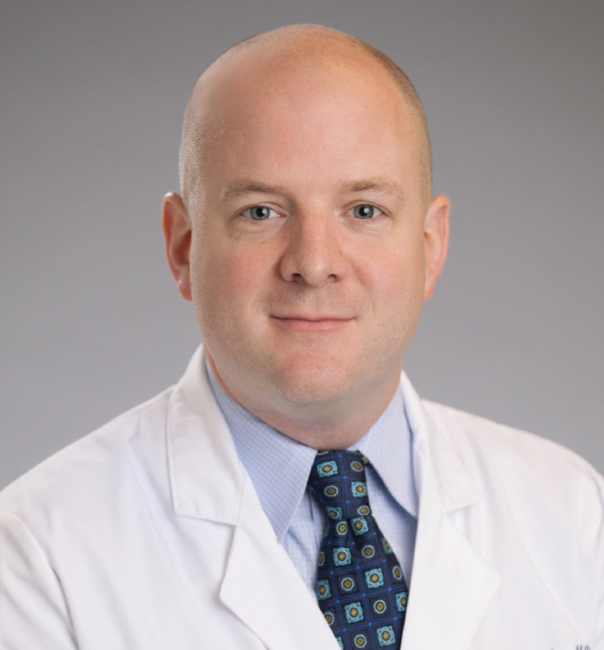
Eric F. Bernstein earned a Bachelor of Science degree from Duke University in 1981 graduating Phi Beta Kappa, summa cum laude with distinction in his major. He then earned his degree in medicine from Yale University School of Medicine in 1986 where he served as Banner Bearer at commencement exercises and class president. Following his internship, he completed a fellowship at the National Cancer Institute at the National Institutes of Health (NIH), working in the area of photodynamic therapy and cytokines for wound healing. After completion of his dermatology residency at Hahnemann University, he accepted a position as associate professor in the department of dermatology and cutaneous biology at Jefferson Medical College. There, Dr. Bernstein directed a photobiology laboratory and was the first director of the newly established laser surgery center. Dr. Bernstein’s research focused on the molecular and cellular effects of various lasers on human skin, and on the molecular causes of skin photoaging. This research resulted in the development of a rapid high-throughput screening molecular model of skin photoaging.
Dr. Bernstein founded DakDak Photoaging Technologies and then received a Small Business Innovation Research Award from the NIH to further develop his company, based on a molecular model of skin photoaging. Following completion of this grant, Dr. Bernstein sold the company to Charles River Laboratories, but recently re-acquired it as DakDak, LLC. DakDak performs in vitro phototoxicology testing for large pharmaceutical companies and pursues discovery of novel anti-aging and pharmaceutical compounds. Dr. Bernstein is also director of the Laser Surgery and Cosmetic Dermatology Centers in Ardmore, Pennsylvania, performing laser skin surgery.
Dr. Bernstein has served on the scientific advisory board of numerous laser companies, and was a director of Candela Corporation, a leading manufacturer of medical laser systems, and now heads their medical advisory board. He is also chairman of the medical advisory board of DEKA, Inc., and serves on the advisory board of Cynosure, Inc., both manufacturers of professional medical laser systems. Dr. Bernstein has also served as a director of Once Again Me, and as a director of Intellectual Light, Inc., and founder, president and CEO of Alethia, LLC, as well as serving as chairman of Freedom-2 Inc. He also cofounded American Medical Media, Inc., a web-based company providing information and business services to aesthetic medical practices worldwide, where he heads the medical advisory board. He has also been a consultant to a number of cosmetic and biotechnology companies, including Estee Lauder, Sirna, Candela Corporation, Coherent Medical Lasers, Inc. and others.
Dr. Bernstein serves as volunteer faculty at the University of Pennsylvania in the department of dermatology as a clinical professor, and founded and runs the Main Line Center for Laser Surgery in Ardmore, Pennsylvania. He has authored over 65 peer-reviewed articles and over 30 review articles or book chapters, and given more than 300 presentations at scientific meetings. He has been issued 12 United States and numerous international patents. Dr. Bernstein also earned an MSE in Management of Technology from the School of Engineering and Applied Science at the University of Pennsylvania, where he teaches a course on medical devices.
Q. What part of your work gives you the most pleasure?
A. In both work and life, what gives me the most pleasure are the people I meet along the way. Friends, family, staff, colleagues and students make my job and my life fun. Becausee my practice is limited solely to laser surgery, I attend a number of meetings that are specific to dermatologic laser treatment. As a result, I and my family spend a great deal of time with other laser surgeons and their kids, and many have become some of our closest friends. In addition, friendships with engineers, sales and marketing folks and others at the large number of companies manufacturing lasers adds to the ‘crew’ I get to hang with at the many professional meetings I attend throughout the year. Combine these great relationships with technology that is moving literally at the speed of light, and you have a career path that is extremely exciting, fun and rewarding. I am continuously amazed by the results I see right before my eyes when using lasers to treat vascular lesions or tattoos — this must mean either that I am relatively slowwitted (having seen the same responses for over 20 years), or that I am in the perfect profession for me, or both. Being able to constantly learn about new technology, and if I am lucky, contribute to small advancements in the field of laser surgery makes the technical part of my work exciting and stimulating. In short, like most things in my life, it’s the people and the learning that make my profession so enjoyable. I feel very lucky and privileged to do what I do.
Q. Are an understanding and appreciation of the humanities important in dermatology and why?
A. An understanding of humanities and humans are key to almost any profession, and is certainly critical for life. People are complex and communicating what you are trying to get across to your patients requires an understanding of the language each person understands. Often it is the hidden clues as to how someone behaves that gives us an idea as to what is really going on with our patients. I think it’s key to try not to just attend to the most demanding patients, but to honor and reward those that are the easiest to deal with as well. I also find that people who we have a hard time pleasing are either: scared, confused or dealing with something in their lives which we are unaware of. Recognizing this possibility often lends understanding to doctor–patient relationships.
Q. Who was your mentor and why?
A. As for mentors, I have so many. I am quite extroverted and as a result get to meet a large number of new people in a given week. I have been extremely lucky to be exposed to a number of fantastic environments where I have been able to meet people who have had a profound effect upon me. I find that mentors can be young and old, in academia, industry or my private life, and of course in my family. I have learned a great deal from my friends, family and colleagues and could not choose just one person who has influenced me the most. The overwhelming theme is age-old, balance between work and life, the old yin and yang. Accomplishing the right balance is extremely tough, but recognizing what is really important, what we should focus on, is the key beginning, and what my mentors reveal to me in different ways. As we move forward in our field, we will have more and more work opportunities, learning when to say no, “I’d love to, but I can’t,” is one of my toughest challenges, and my mentors help me do just that.
Q. Which medical figure in history would you want to have a drink with and why?
A. I would like to meet Hippocrates who founded modern medicine over 400 years bc. He trained numerous students of his day, and had very, very little to work with by today’s standards. Thus, he was forced to focus not on technology, but very strongly on his patients. Our mandate today, obviously, is to do both. I am in a highly technical field, but much of my practice centers around treating conditions brought on by lifestyle choices such as sun exposure and decorative tattoo placement. Hippocrates was a groundbreaking thinker and someone I would have most certainly wanted to have a few beers with.
Q. What is the greatest political danger in the field of dermatology?
A. The greatest danger to medicine in general, and of course this includes dermatology, is not having an honest dialogue about medical care with our politicians, insurance companies, hospital administrators, fellow healthcare workers and the American people. Our system cannot continue as it is going without addressing tough choices, such as choosing which of the myriad healthcare options we can offer, more cost-effective ways of handling healthcare for everyone living in the Unites States (which we already provide to everyone living here anyway) and the true cost of the current tort system in terms of payouts, defensive medicine and stifling free and open dialogue. These issues all seem to be poisonous, politically, so much of the dialogue skirts around these key issues without addressing them. To me, this lack of transparency and honesty is the biggest issue we face in medicine, but there are few rewards for the people who dare say, “The Emperor has no clothes!”, and thus it seems we are destined to continue as we are. You asked what the greatest political danger is, not for a solution. Perhaps, your readers can supply us with some.
In dermatology, we are fortunate to have many insightful practitioners and great teachers and mentors. Some are bright stars in our special universe – others unsung heroes. All of these colleagues have much to share, from wisdom to humor to insights into dermatology and life. This column allows us to gain insight from these practitioners and learn more about them.
Eric F. Bernstein earned a Bachelor of Science degree from Duke University in 1981 graduating Phi Beta Kappa, summa cum laude with distinction in his major. He then earned his degree in medicine from Yale University School of Medicine in 1986 where he served as Banner Bearer at commencement exercises and class president. Following his internship, he completed a fellowship at the National Cancer Institute at the National Institutes of Health (NIH), working in the area of photodynamic therapy and cytokines for wound healing. After completion of his dermatology residency at Hahnemann University, he accepted a position as associate professor in the department of dermatology and cutaneous biology at Jefferson Medical College. There, Dr. Bernstein directed a photobiology laboratory and was the first director of the newly established laser surgery center. Dr. Bernstein’s research focused on the molecular and cellular effects of various lasers on human skin, and on the molecular causes of skin photoaging. This research resulted in the development of a rapid high-throughput screening molecular model of skin photoaging.
Dr. Bernstein founded DakDak Photoaging Technologies and then received a Small Business Innovation Research Award from the NIH to further develop his company, based on a molecular model of skin photoaging. Following completion of this grant, Dr. Bernstein sold the company to Charles River Laboratories, but recently re-acquired it as DakDak, LLC. DakDak performs in vitro phototoxicology testing for large pharmaceutical companies and pursues discovery of novel anti-aging and pharmaceutical compounds. Dr. Bernstein is also director of the Laser Surgery and Cosmetic Dermatology Centers in Ardmore, Pennsylvania, performing laser skin surgery.
Dr. Bernstein has served on the scientific advisory board of numerous laser companies, and was a director of Candela Corporation, a leading manufacturer of medical laser systems, and now heads their medical advisory board. He is also chairman of the medical advisory board of DEKA, Inc., and serves on the advisory board of Cynosure, Inc., both manufacturers of professional medical laser systems. Dr. Bernstein has also served as a director of Once Again Me, and as a director of Intellectual Light, Inc., and founder, president and CEO of Alethia, LLC, as well as serving as chairman of Freedom-2 Inc. He also cofounded American Medical Media, Inc., a web-based company providing information and business services to aesthetic medical practices worldwide, where he heads the medical advisory board. He has also been a consultant to a number of cosmetic and biotechnology companies, including Estee Lauder, Sirna, Candela Corporation, Coherent Medical Lasers, Inc. and others.
Dr. Bernstein serves as volunteer faculty at the University of Pennsylvania in the department of dermatology as a clinical professor, and founded and runs the Main Line Center for Laser Surgery in Ardmore, Pennsylvania. He has authored over 65 peer-reviewed articles and over 30 review articles or book chapters, and given more than 300 presentations at scientific meetings. He has been issued 12 United States and numerous international patents. Dr. Bernstein also earned an MSE in Management of Technology from the School of Engineering and Applied Science at the University of Pennsylvania, where he teaches a course on medical devices.
Q. What part of your work gives you the most pleasure?
A. In both work and life, what gives me the most pleasure are the people I meet along the way. Friends, family, staff, colleagues and students make my job and my life fun. Becausee my practice is limited solely to laser surgery, I attend a number of meetings that are specific to dermatologic laser treatment. As a result, I and my family spend a great deal of time with other laser surgeons and their kids, and many have become some of our closest friends. In addition, friendships with engineers, sales and marketing folks and others at the large number of companies manufacturing lasers adds to the ‘crew’ I get to hang with at the many professional meetings I attend throughout the year. Combine these great relationships with technology that is moving literally at the speed of light, and you have a career path that is extremely exciting, fun and rewarding. I am continuously amazed by the results I see right before my eyes when using lasers to treat vascular lesions or tattoos — this must mean either that I am relatively slowwitted (having seen the same responses for over 20 years), or that I am in the perfect profession for me, or both. Being able to constantly learn about new technology, and if I am lucky, contribute to small advancements in the field of laser surgery makes the technical part of my work exciting and stimulating. In short, like most things in my life, it’s the people and the learning that make my profession so enjoyable. I feel very lucky and privileged to do what I do.
Q. Are an understanding and appreciation of the humanities important in dermatology and why?
A. An understanding of humanities and humans are key to almost any profession, and is certainly critical for life. People are complex and communicating what you are trying to get across to your patients requires an understanding of the language each person understands. Often it is the hidden clues as to how someone behaves that gives us an idea as to what is really going on with our patients. I think it’s key to try not to just attend to the most demanding patients, but to honor and reward those that are the easiest to deal with as well. I also find that people who we have a hard time pleasing are either: scared, confused or dealing with something in their lives which we are unaware of. Recognizing this possibility often lends understanding to doctor–patient relationships.
Q. Who was your mentor and why?
A. As for mentors, I have so many. I am quite extroverted and as a result get to meet a large number of new people in a given week. I have been extremely lucky to be exposed to a number of fantastic environments where I have been able to meet people who have had a profound effect upon me. I find that mentors can be young and old, in academia, industry or my private life, and of course in my family. I have learned a great deal from my friends, family and colleagues and could not choose just one person who has influenced me the most. The overwhelming theme is age-old, balance between work and life, the old yin and yang. Accomplishing the right balance is extremely tough, but recognizing what is really important, what we should focus on, is the key beginning, and what my mentors reveal to me in different ways. As we move forward in our field, we will have more and more work opportunities, learning when to say no, “I’d love to, but I can’t,” is one of my toughest challenges, and my mentors help me do just that.
Q. Which medical figure in history would you want to have a drink with and why?
A. I would like to meet Hippocrates who founded modern medicine over 400 years bc. He trained numerous students of his day, and had very, very little to work with by today’s standards. Thus, he was forced to focus not on technology, but very strongly on his patients. Our mandate today, obviously, is to do both. I am in a highly technical field, but much of my practice centers around treating conditions brought on by lifestyle choices such as sun exposure and decorative tattoo placement. Hippocrates was a groundbreaking thinker and someone I would have most certainly wanted to have a few beers with.
Q. What is the greatest political danger in the field of dermatology?
A. The greatest danger to medicine in general, and of course this includes dermatology, is not having an honest dialogue about medical care with our politicians, insurance companies, hospital administrators, fellow healthcare workers and the American people. Our system cannot continue as it is going without addressing tough choices, such as choosing which of the myriad healthcare options we can offer, more cost-effective ways of handling healthcare for everyone living in the Unites States (which we already provide to everyone living here anyway) and the true cost of the current tort system in terms of payouts, defensive medicine and stifling free and open dialogue. These issues all seem to be poisonous, politically, so much of the dialogue skirts around these key issues without addressing them. To me, this lack of transparency and honesty is the biggest issue we face in medicine, but there are few rewards for the people who dare say, “The Emperor has no clothes!”, and thus it seems we are destined to continue as we are. You asked what the greatest political danger is, not for a solution. Perhaps, your readers can supply us with some.
In dermatology, we are fortunate to have many insightful practitioners and great teachers and mentors. Some are bright stars in our special universe – others unsung heroes. All of these colleagues have much to share, from wisdom to humor to insights into dermatology and life. This column allows us to gain insight from these practitioners and learn more about them.
Eric F. Bernstein earned a Bachelor of Science degree from Duke University in 1981 graduating Phi Beta Kappa, summa cum laude with distinction in his major. He then earned his degree in medicine from Yale University School of Medicine in 1986 where he served as Banner Bearer at commencement exercises and class president. Following his internship, he completed a fellowship at the National Cancer Institute at the National Institutes of Health (NIH), working in the area of photodynamic therapy and cytokines for wound healing. After completion of his dermatology residency at Hahnemann University, he accepted a position as associate professor in the department of dermatology and cutaneous biology at Jefferson Medical College. There, Dr. Bernstein directed a photobiology laboratory and was the first director of the newly established laser surgery center. Dr. Bernstein’s research focused on the molecular and cellular effects of various lasers on human skin, and on the molecular causes of skin photoaging. This research resulted in the development of a rapid high-throughput screening molecular model of skin photoaging.
Dr. Bernstein founded DakDak Photoaging Technologies and then received a Small Business Innovation Research Award from the NIH to further develop his company, based on a molecular model of skin photoaging. Following completion of this grant, Dr. Bernstein sold the company to Charles River Laboratories, but recently re-acquired it as DakDak, LLC. DakDak performs in vitro phototoxicology testing for large pharmaceutical companies and pursues discovery of novel anti-aging and pharmaceutical compounds. Dr. Bernstein is also director of the Laser Surgery and Cosmetic Dermatology Centers in Ardmore, Pennsylvania, performing laser skin surgery.
Dr. Bernstein has served on the scientific advisory board of numerous laser companies, and was a director of Candela Corporation, a leading manufacturer of medical laser systems, and now heads their medical advisory board. He is also chairman of the medical advisory board of DEKA, Inc., and serves on the advisory board of Cynosure, Inc., both manufacturers of professional medical laser systems. Dr. Bernstein has also served as a director of Once Again Me, and as a director of Intellectual Light, Inc., and founder, president and CEO of Alethia, LLC, as well as serving as chairman of Freedom-2 Inc. He also cofounded American Medical Media, Inc., a web-based company providing information and business services to aesthetic medical practices worldwide, where he heads the medical advisory board. He has also been a consultant to a number of cosmetic and biotechnology companies, including Estee Lauder, Sirna, Candela Corporation, Coherent Medical Lasers, Inc. and others.
Dr. Bernstein serves as volunteer faculty at the University of Pennsylvania in the department of dermatology as a clinical professor, and founded and runs the Main Line Center for Laser Surgery in Ardmore, Pennsylvania. He has authored over 65 peer-reviewed articles and over 30 review articles or book chapters, and given more than 300 presentations at scientific meetings. He has been issued 12 United States and numerous international patents. Dr. Bernstein also earned an MSE in Management of Technology from the School of Engineering and Applied Science at the University of Pennsylvania, where he teaches a course on medical devices.
Q. What part of your work gives you the most pleasure?
A. In both work and life, what gives me the most pleasure are the people I meet along the way. Friends, family, staff, colleagues and students make my job and my life fun. Becausee my practice is limited solely to laser surgery, I attend a number of meetings that are specific to dermatologic laser treatment. As a result, I and my family spend a great deal of time with other laser surgeons and their kids, and many have become some of our closest friends. In addition, friendships with engineers, sales and marketing folks and others at the large number of companies manufacturing lasers adds to the ‘crew’ I get to hang with at the many professional meetings I attend throughout the year. Combine these great relationships with technology that is moving literally at the speed of light, and you have a career path that is extremely exciting, fun and rewarding. I am continuously amazed by the results I see right before my eyes when using lasers to treat vascular lesions or tattoos — this must mean either that I am relatively slowwitted (having seen the same responses for over 20 years), or that I am in the perfect profession for me, or both. Being able to constantly learn about new technology, and if I am lucky, contribute to small advancements in the field of laser surgery makes the technical part of my work exciting and stimulating. In short, like most things in my life, it’s the people and the learning that make my profession so enjoyable. I feel very lucky and privileged to do what I do.
Q. Are an understanding and appreciation of the humanities important in dermatology and why?
A. An understanding of humanities and humans are key to almost any profession, and is certainly critical for life. People are complex and communicating what you are trying to get across to your patients requires an understanding of the language each person understands. Often it is the hidden clues as to how someone behaves that gives us an idea as to what is really going on with our patients. I think it’s key to try not to just attend to the most demanding patients, but to honor and reward those that are the easiest to deal with as well. I also find that people who we have a hard time pleasing are either: scared, confused or dealing with something in their lives which we are unaware of. Recognizing this possibility often lends understanding to doctor–patient relationships.
Q. Who was your mentor and why?
A. As for mentors, I have so many. I am quite extroverted and as a result get to meet a large number of new people in a given week. I have been extremely lucky to be exposed to a number of fantastic environments where I have been able to meet people who have had a profound effect upon me. I find that mentors can be young and old, in academia, industry or my private life, and of course in my family. I have learned a great deal from my friends, family and colleagues and could not choose just one person who has influenced me the most. The overwhelming theme is age-old, balance between work and life, the old yin and yang. Accomplishing the right balance is extremely tough, but recognizing what is really important, what we should focus on, is the key beginning, and what my mentors reveal to me in different ways. As we move forward in our field, we will have more and more work opportunities, learning when to say no, “I’d love to, but I can’t,” is one of my toughest challenges, and my mentors help me do just that.
Q. Which medical figure in history would you want to have a drink with and why?
A. I would like to meet Hippocrates who founded modern medicine over 400 years bc. He trained numerous students of his day, and had very, very little to work with by today’s standards. Thus, he was forced to focus not on technology, but very strongly on his patients. Our mandate today, obviously, is to do both. I am in a highly technical field, but much of my practice centers around treating conditions brought on by lifestyle choices such as sun exposure and decorative tattoo placement. Hippocrates was a groundbreaking thinker and someone I would have most certainly wanted to have a few beers with.
Q. What is the greatest political danger in the field of dermatology?
A. The greatest danger to medicine in general, and of course this includes dermatology, is not having an honest dialogue about medical care with our politicians, insurance companies, hospital administrators, fellow healthcare workers and the American people. Our system cannot continue as it is going without addressing tough choices, such as choosing which of the myriad healthcare options we can offer, more cost-effective ways of handling healthcare for everyone living in the Unites States (which we already provide to everyone living here anyway) and the true cost of the current tort system in terms of payouts, defensive medicine and stifling free and open dialogue. These issues all seem to be poisonous, politically, so much of the dialogue skirts around these key issues without addressing them. To me, this lack of transparency and honesty is the biggest issue we face in medicine, but there are few rewards for the people who dare say, “The Emperor has no clothes!”, and thus it seems we are destined to continue as we are. You asked what the greatest political danger is, not for a solution. Perhaps, your readers can supply us with some.