In dermatology, we are fortunate to have many insightful practitioners and great teachers and mentors. Some are bright stars in our special universe–others unsung heroes. All of these colleagues have much to share, from wisdom to humor to insights into dermatology and life. This column allows us to gain insight from these practitioners and learn more about them.
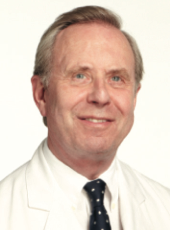
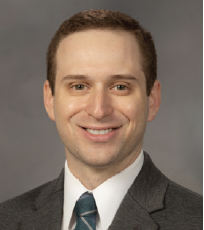
Dr Lowe is a consultant dermatologist in London, England, and clinical professor at UCLA School of Medicine. He graduated from the University of Liverpool medical school where he met his wife Pam. She has been his most valuable support and guide during all his different academic and clinic positions.
He began his dermatology training at the University of Southampton with the late John White, MD, whose research interest centered on methotrexate for psoriasis. This led to Dr Lowe’s clinical and research interests in psoriasis.
At the University of Liverpool, he established the phototherapy and photo-chemotherapy treatment center for psoriasis and cutaneous lymphomas. He then went to work as research fellow to Richard Stoughton, MD, professor and chair of dermatology at Scripps Clinic and Research Foundation in La Jolla and University of California at San Diego. There he studied control of epidermal proliferation and differentiation plus cellular mechanisms of retinoids and antiproliferative agents. This time at Scripps launched his US career and his family’s love for the country, particularly California. They are now all proud to be US citizens.
As assistant professor at the University of Wisconsin in Madison, he continued research at the McArdle Cancer Institute into retinoid modulation of skin carcinogenesis. This led to a research MD (equivalent of a PhD in the United States). He moved to UCLA as associate professor after 2 Wisconsin winters. At UCLA, he continued with his lab research and built a successful clinical research unit, as well as a growing private practice. In 1989, he started his private clinic and research foundation in Santa Monica with Pam’s business and organizational support. He continued to teach at UCLA as a clinical professor. He continued to develop his interest in aesthetic procedures conducting early research on botulinum toxins, fillers, and lasers.
When his daughter Philippa was accepted at medical school in the United Kingdom (UK), he started a part-time private clinic in London, so he could work while visiting her. His wife, Pam, organized it again and the clinic expanded rapidly. He was soon spending 4 weeks in his Santa Monica clinic followed by 4 weeks in his London clinic. He was also teaching at one of London’s leading hospitals.
After 18 years of this slightly excessive travelling and several million frequent flier miles (which you never seem to be able to use when you want), he decided, at least for now, to focus on his busy clinic in London. He returns to California regularly to recharge his batteries and enthusiasm, as well as to enjoy the climate.
Q. What part of your work gives you the most pleasure?
A. The great diversity of dermatology keeps my interest, and I derive great pleasure in helping patients with their varied and sometimes challenging skin problems. Both my US and UK clinics have had internationally varied patients, from small children to the elderly, from medical skin diseases, skin cancers to aesthetic dermatology. I try stay up-to-date in all of our specialty and feel those offering aesthetic procedures should remain proficient at other aspects of dermatology.
I have always taken pleasure sharing my knowledge with colleagues with lectures and writing. Over the years, I have published over 450 scientific papers and chapters as well as editing 19 books. I have become more selective in attending meetings. Unfortunately, many meetings are now repetitive and overly commercial.
Q. Are an understanding and appreciation of the humanities important in dermatology and if so, why?
A. We have a holistic approach to our patients that involves taking into account their dermatology, medical problems, nutrition, stress triggers, lifestyle choices, and when necessary we provide referral to other specialists.
I believe that patient education is key for their understanding about their diseases but also for good treatment compliance. I have written patient-orientated books to help their understanding of skin diseases, one on psoriasis won the award for best public education from the British Medical Association. I am just finishing another book, co-authored with my daughter Philippa, for patients.
Q. What is your greatest regret?
A. I do not have any major professional regrets. I suppose my greatest personal regret would be working too much when I was first married. I was in my late 20s when we married and had our children Nichola and Philippa. I was focused on developing a career that would support my family. Pam and I came from relatively poor backgrounds and that insecurity made us both determined to create as much security as possible for our children and grandchildren. One of the consequences was I saw too little of my daughters when they were growing up. I now try to make sure that I see them and our grandchildren regularly.
Pam has been a great mother and sometimes a tolerant spouse. I am so proud of both of my daughters. Nichola is now professor of international economic development at the University of North Carolina at Chapel Hill and has Oskar aged 7. Philippa is a specialist physician in the skin as well as having a law degree. She has 3 children, Annie, Charlie, and Tom. She helps me immensely in our London clinic and has been involved in clinical research projects and papers over the last decade or more.
Q. Who is your hero/mentor?
A. My hero and mentor is Dr Stoughton. He was the ultimate scholar and a gentleman. He was wise, kind, thoughtful, and constructively critical. I would talk to him about what I thought were great research ideas, he would sensibly send me to read and research more thoroughly before proceeding. He would warn about possible side effects of novel treatments—one that he correctly predicted was skin cancer risk from psoralen–UV-A treatment. The best piece of advice I received came from Dr Stoughton: It was not to accept research results at their face value, but to thoroughly consider them before being convinced.
Q. Which patient had the most effect on your work?
A. I think one of the first patients who I treated in the 1980s with one of the early pulsed dye lasers in the United States. She had a disfiguring proliferative port wine hemangioma on her forehead and upper eyelid. She had severe ptosis and visual impairment as a result. The laser gave her 90% improvement of her hemangioma and allowed her to, effectively, camouflage residual erythema completely and solved her visual field loss. This patient had a profound effect on my future interests in the efficacy of selected lasers. I have her photographs in my clinic today.
Q. What medical figure in history would you want to have a drink with and why?
A. Sir Jonathan Hutchinson, the 19th century English dermatologist, ophthalmologist, surgeon, pathologist, and venereologist. He is a historical example of how to be involved, effectively in a wide variety of medicine and surgery. He must have had great skills for multitasking that I would love to hear about.
Q. What is the greatest political danger in the field of dermatology?
A. There are political dangers for dermatology in both the United States and the UK. In the United States, I think the greatest political danger is the risk of nonphysician clinical decision-making. These nonmedical decision makers include politicians bringing ill thought regulations to our specialty and medical insurers trying to control optimum treatment programs for the patient. Sadly, the escalating cost of medicines is a hardship for many patients in the United States and inevitably influences dermatology care. It is difficult to understand how an antibiotic used for decades to treat acne can increase in price astronomically.
The problems in the UK are those of government meddling and involves them controlling the numbers of dermatologists (and other specialists) that are being trained. The UK has approximately one-tenth per capita the number of dermatologists of the United States, France, Germany, Italy, or Spain. In a population of about 62 million people, the UK has only approximately 450 to 500 trained consultant dermatologists—there should be at least 4000. Many of the National Health Service consultant dermatology positions are vacant or are being filled by physicians from overseas with far less intense training than UK dermatologists. For several reasons, I now only see private patients in our London clinic. It is difficult to see a resolution as long as the UK has a government funded and controlled university and medical training system without the flexibility of the United States to obtain private funding. This insurmountable problem in the UK should act as a warning to the United States to avoid any single-party control of medicine and medical education.
 Dr Barankin is a dermatologist in Toronto, Ontario, Canada. He is author-editor of 7 books in dermatology and is widely published in the dermatology and humanities literature.
In dermatology, we are fortunate to have many insightful practitioners and great teachers and mentors. Some are bright stars in our special universe–others unsung heroes. All of these colleagues have much to share, from wisdom to humor to insights into dermatology and life. This column allows us to gain insight from these practitioners and learn more about them.

Dr Lowe is a consultant dermatologist in London, England, and clinical professor at UCLA School of Medicine. He graduated from the University of Liverpool medical school where he met his wife Pam. She has been his most valuable support and guide during all his different academic and clinic positions.
He began his dermatology training at the University of Southampton with the late John White, MD, whose research interest centered on methotrexate for psoriasis. This led to Dr Lowe’s clinical and research interests in psoriasis.
At the University of Liverpool, he established the phototherapy and photo-chemotherapy treatment center for psoriasis and cutaneous lymphomas. He then went to work as research fellow to Richard Stoughton, MD, professor and chair of dermatology at Scripps Clinic and Research Foundation in La Jolla and University of California at San Diego. There he studied control of epidermal proliferation and differentiation plus cellular mechanisms of retinoids and antiproliferative agents. This time at Scripps launched his US career and his family’s love for the country, particularly California. They are now all proud to be US citizens.
As assistant professor at the University of Wisconsin in Madison, he continued research at the McArdle Cancer Institute into retinoid modulation of skin carcinogenesis. This led to a research MD (equivalent of a PhD in the United States). He moved to UCLA as associate professor after 2 Wisconsin winters. At UCLA, he continued with his lab research and built a successful clinical research unit, as well as a growing private practice. In 1989, he started his private clinic and research foundation in Santa Monica with Pam’s business and organizational support. He continued to teach at UCLA as a clinical professor. He continued to develop his interest in aesthetic procedures conducting early research on botulinum toxins, fillers, and lasers.
When his daughter Philippa was accepted at medical school in the United Kingdom (UK), he started a part-time private clinic in London, so he could work while visiting her. His wife, Pam, organized it again and the clinic expanded rapidly. He was soon spending 4 weeks in his Santa Monica clinic followed by 4 weeks in his London clinic. He was also teaching at one of London’s leading hospitals.
After 18 years of this slightly excessive travelling and several million frequent flier miles (which you never seem to be able to use when you want), he decided, at least for now, to focus on his busy clinic in London. He returns to California regularly to recharge his batteries and enthusiasm, as well as to enjoy the climate.
Q. What part of your work gives you the most pleasure?
A. The great diversity of dermatology keeps my interest, and I derive great pleasure in helping patients with their varied and sometimes challenging skin problems. Both my US and UK clinics have had internationally varied patients, from small children to the elderly, from medical skin diseases, skin cancers to aesthetic dermatology. I try stay up-to-date in all of our specialty and feel those offering aesthetic procedures should remain proficient at other aspects of dermatology.
I have always taken pleasure sharing my knowledge with colleagues with lectures and writing. Over the years, I have published over 450 scientific papers and chapters as well as editing 19 books. I have become more selective in attending meetings. Unfortunately, many meetings are now repetitive and overly commercial.
Q. Are an understanding and appreciation of the humanities important in dermatology and if so, why?
A. We have a holistic approach to our patients that involves taking into account their dermatology, medical problems, nutrition, stress triggers, lifestyle choices, and when necessary we provide referral to other specialists.
I believe that patient education is key for their understanding about their diseases but also for good treatment compliance. I have written patient-orientated books to help their understanding of skin diseases, one on psoriasis won the award for best public education from the British Medical Association. I am just finishing another book, co-authored with my daughter Philippa, for patients.
Q. What is your greatest regret?
A. I do not have any major professional regrets. I suppose my greatest personal regret would be working too much when I was first married. I was in my late 20s when we married and had our children Nichola and Philippa. I was focused on developing a career that would support my family. Pam and I came from relatively poor backgrounds and that insecurity made us both determined to create as much security as possible for our children and grandchildren. One of the consequences was I saw too little of my daughters when they were growing up. I now try to make sure that I see them and our grandchildren regularly.
Pam has been a great mother and sometimes a tolerant spouse. I am so proud of both of my daughters. Nichola is now professor of international economic development at the University of North Carolina at Chapel Hill and has Oskar aged 7. Philippa is a specialist physician in the skin as well as having a law degree. She has 3 children, Annie, Charlie, and Tom. She helps me immensely in our London clinic and has been involved in clinical research projects and papers over the last decade or more.
Q. Who is your hero/mentor?
A. My hero and mentor is Dr Stoughton. He was the ultimate scholar and a gentleman. He was wise, kind, thoughtful, and constructively critical. I would talk to him about what I thought were great research ideas, he would sensibly send me to read and research more thoroughly before proceeding. He would warn about possible side effects of novel treatments—one that he correctly predicted was skin cancer risk from psoralen–UV-A treatment. The best piece of advice I received came from Dr Stoughton: It was not to accept research results at their face value, but to thoroughly consider them before being convinced.
Q. Which patient had the most effect on your work?
A. I think one of the first patients who I treated in the 1980s with one of the early pulsed dye lasers in the United States. She had a disfiguring proliferative port wine hemangioma on her forehead and upper eyelid. She had severe ptosis and visual impairment as a result. The laser gave her 90% improvement of her hemangioma and allowed her to, effectively, camouflage residual erythema completely and solved her visual field loss. This patient had a profound effect on my future interests in the efficacy of selected lasers. I have her photographs in my clinic today.
Q. What medical figure in history would you want to have a drink with and why?
A. Sir Jonathan Hutchinson, the 19th century English dermatologist, ophthalmologist, surgeon, pathologist, and venereologist. He is a historical example of how to be involved, effectively in a wide variety of medicine and surgery. He must have had great skills for multitasking that I would love to hear about.
Q. What is the greatest political danger in the field of dermatology?
A. There are political dangers for dermatology in both the United States and the UK. In the United States, I think the greatest political danger is the risk of nonphysician clinical decision-making. These nonmedical decision makers include politicians bringing ill thought regulations to our specialty and medical insurers trying to control optimum treatment programs for the patient. Sadly, the escalating cost of medicines is a hardship for many patients in the United States and inevitably influences dermatology care. It is difficult to understand how an antibiotic used for decades to treat acne can increase in price astronomically.
The problems in the UK are those of government meddling and involves them controlling the numbers of dermatologists (and other specialists) that are being trained. The UK has approximately one-tenth per capita the number of dermatologists of the United States, France, Germany, Italy, or Spain. In a population of about 62 million people, the UK has only approximately 450 to 500 trained consultant dermatologists—there should be at least 4000. Many of the National Health Service consultant dermatology positions are vacant or are being filled by physicians from overseas with far less intense training than UK dermatologists. For several reasons, I now only see private patients in our London clinic. It is difficult to see a resolution as long as the UK has a government funded and controlled university and medical training system without the flexibility of the United States to obtain private funding. This insurmountable problem in the UK should act as a warning to the United States to avoid any single-party control of medicine and medical education.
Dr Barankin is a dermatologist in Toronto, Ontario, Canada. He is author-editor of 7 books in dermatology and is widely published in the dermatology and humanities literature.
In dermatology, we are fortunate to have many insightful practitioners and great teachers and mentors. Some are bright stars in our special universe–others unsung heroes. All of these colleagues have much to share, from wisdom to humor to insights into dermatology and life. This column allows us to gain insight from these practitioners and learn more about them.
Dr Lowe is a consultant dermatologist in London, England, and clinical professor at UCLA School of Medicine. He graduated from the University of Liverpool medical school where he met his wife Pam. She has been his most valuable support and guide during all his different academic and clinic positions.
He began his dermatology training at the University of Southampton with the late John White, MD, whose research interest centered on methotrexate for psoriasis. This led to Dr Lowe’s clinical and research interests in psoriasis.
At the University of Liverpool, he established the phototherapy and photo-chemotherapy treatment center for psoriasis and cutaneous lymphomas. He then went to work as research fellow to Richard Stoughton, MD, professor and chair of dermatology at Scripps Clinic and Research Foundation in La Jolla and University of California at San Diego. There he studied control of epidermal proliferation and differentiation plus cellular mechanisms of retinoids and antiproliferative agents. This time at Scripps launched his US career and his family’s love for the country, particularly California. They are now all proud to be US citizens.
As assistant professor at the University of Wisconsin in Madison, he continued research at the McArdle Cancer Institute into retinoid modulation of skin carcinogenesis. This led to a research MD (equivalent of a PhD in the United States). He moved to UCLA as associate professor after 2 Wisconsin winters. At UCLA, he continued with his lab research and built a successful clinical research unit, as well as a growing private practice. In 1989, he started his private clinic and research foundation in Santa Monica with Pam’s business and organizational support. He continued to teach at UCLA as a clinical professor. He continued to develop his interest in aesthetic procedures conducting early research on botulinum toxins, fillers, and lasers.
When his daughter Philippa was accepted at medical school in the United Kingdom (UK), he started a part-time private clinic in London, so he could work while visiting her. His wife, Pam, organized it again and the clinic expanded rapidly. He was soon spending 4 weeks in his Santa Monica clinic followed by 4 weeks in his London clinic. He was also teaching at one of London’s leading hospitals.
After 18 years of this slightly excessive travelling and several million frequent flier miles (which you never seem to be able to use when you want), he decided, at least for now, to focus on his busy clinic in London. He returns to California regularly to recharge his batteries and enthusiasm, as well as to enjoy the climate.
Q. What part of your work gives you the most pleasure?
A. The great diversity of dermatology keeps my interest, and I derive great pleasure in helping patients with their varied and sometimes challenging skin problems. Both my US and UK clinics have had internationally varied patients, from small children to the elderly, from medical skin diseases, skin cancers to aesthetic dermatology. I try stay up-to-date in all of our specialty and feel those offering aesthetic procedures should remain proficient at other aspects of dermatology.
I have always taken pleasure sharing my knowledge with colleagues with lectures and writing. Over the years, I have published over 450 scientific papers and chapters as well as editing 19 books. I have become more selective in attending meetings. Unfortunately, many meetings are now repetitive and overly commercial.
Q. Are an understanding and appreciation of the humanities important in dermatology and if so, why?
A. We have a holistic approach to our patients that involves taking into account their dermatology, medical problems, nutrition, stress triggers, lifestyle choices, and when necessary we provide referral to other specialists.
I believe that patient education is key for their understanding about their diseases but also for good treatment compliance. I have written patient-orientated books to help their understanding of skin diseases, one on psoriasis won the award for best public education from the British Medical Association. I am just finishing another book, co-authored with my daughter Philippa, for patients.
Q. What is your greatest regret?
A. I do not have any major professional regrets. I suppose my greatest personal regret would be working too much when I was first married. I was in my late 20s when we married and had our children Nichola and Philippa. I was focused on developing a career that would support my family. Pam and I came from relatively poor backgrounds and that insecurity made us both determined to create as much security as possible for our children and grandchildren. One of the consequences was I saw too little of my daughters when they were growing up. I now try to make sure that I see them and our grandchildren regularly.
Pam has been a great mother and sometimes a tolerant spouse. I am so proud of both of my daughters. Nichola is now professor of international economic development at the University of North Carolina at Chapel Hill and has Oskar aged 7. Philippa is a specialist physician in the skin as well as having a law degree. She has 3 children, Annie, Charlie, and Tom. She helps me immensely in our London clinic and has been involved in clinical research projects and papers over the last decade or more.
Q. Who is your hero/mentor?
A. My hero and mentor is Dr Stoughton. He was the ultimate scholar and a gentleman. He was wise, kind, thoughtful, and constructively critical. I would talk to him about what I thought were great research ideas, he would sensibly send me to read and research more thoroughly before proceeding. He would warn about possible side effects of novel treatments—one that he correctly predicted was skin cancer risk from psoralen–UV-A treatment. The best piece of advice I received came from Dr Stoughton: It was not to accept research results at their face value, but to thoroughly consider them before being convinced.
Q. Which patient had the most effect on your work?
A. I think one of the first patients who I treated in the 1980s with one of the early pulsed dye lasers in the United States. She had a disfiguring proliferative port wine hemangioma on her forehead and upper eyelid. She had severe ptosis and visual impairment as a result. The laser gave her 90% improvement of her hemangioma and allowed her to, effectively, camouflage residual erythema completely and solved her visual field loss. This patient had a profound effect on my future interests in the efficacy of selected lasers. I have her photographs in my clinic today.
Q. What medical figure in history would you want to have a drink with and why?
A. Sir Jonathan Hutchinson, the 19th century English dermatologist, ophthalmologist, surgeon, pathologist, and venereologist. He is a historical example of how to be involved, effectively in a wide variety of medicine and surgery. He must have had great skills for multitasking that I would love to hear about.
Q. What is the greatest political danger in the field of dermatology?
A. There are political dangers for dermatology in both the United States and the UK. In the United States, I think the greatest political danger is the risk of nonphysician clinical decision-making. These nonmedical decision makers include politicians bringing ill thought regulations to our specialty and medical insurers trying to control optimum treatment programs for the patient. Sadly, the escalating cost of medicines is a hardship for many patients in the United States and inevitably influences dermatology care. It is difficult to understand how an antibiotic used for decades to treat acne can increase in price astronomically.
The problems in the UK are those of government meddling and involves them controlling the numbers of dermatologists (and other specialists) that are being trained. The UK has approximately one-tenth per capita the number of dermatologists of the United States, France, Germany, Italy, or Spain. In a population of about 62 million people, the UK has only approximately 450 to 500 trained consultant dermatologists—there should be at least 4000. Many of the National Health Service consultant dermatology positions are vacant or are being filled by physicians from overseas with far less intense training than UK dermatologists. For several reasons, I now only see private patients in our London clinic. It is difficult to see a resolution as long as the UK has a government funded and controlled university and medical training system without the flexibility of the United States to obtain private funding. This insurmountable problem in the UK should act as a warning to the United States to avoid any single-party control of medicine and medical education.
Dr Barankin is a dermatologist in Toronto, Ontario, Canada. He is author-editor of 7 books in dermatology and is widely published in the dermatology and humanities literature.