 In dermatology, we are fortunate to have many insightful practitioners and great teachers and mentors. Some are bright stars in our special universe–others unsung heroes. All of these colleagues have much to share, from wisdom to humor to insights into dermatology and life. This column allows us to gain insight from these practitioners and learn more about them.
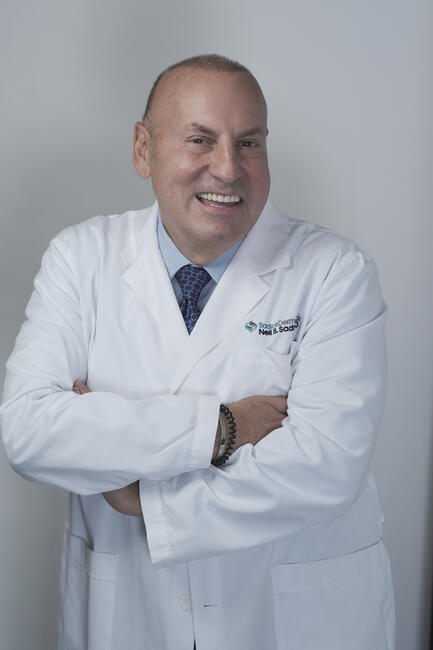
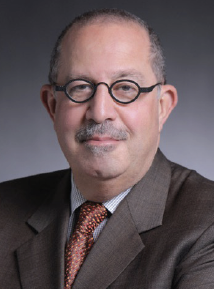
A native of Brooklyn, NY, Seth Orlow, MD, PhD, received his AB magna cum laude in biochemical sciences from Harvard. He then completed the medical scientist-training program at Albert Einstein College of Medicine, earning a PhD in molecular pharmacology in addition to his MD.
Following an internship in pediatrics at Mount Sinai, he was a resident and fellow in dermatology at Yale. In 1990, he joined the faculty at New York University (NYU) School of Medicine where he served as director of pediatric dermatology and is currently chairman of the Ronald O. Perelman Department of Dermatology, Samuel Weinberg Professor of Pediatric Dermatology, and Professor of Cell Biology and of Pediatrics.
When not involved in patient care, research, or his administrative duties at NYU, Dr Orlow is also active in the worlds of business/finance. He was affiliated with Easton Capital, a venture capital firm in New York, where he rose from advisor to partner, and now serves as a strategic advisor to various drug, device, consumer product, and health care services companies via his affiliation with Pharus Advisors. Along with a number of like-minded colleagues, he is a cofounder of the annual Dermatology Summit and Dermatology Innovation Forum.
Q. What part of your work gives you the most pleasure?
A. The variety of activities in which I am involved give me pleasure. I am the sort of person who thrives when involved in a number of very different types of activities and projects simul-taneously.
Q. What is your greatest regret?
A. I certainly spend a lot of time worrying about the decisions I have to make as chairman as well as a physician, a scientist, and a strategic advisor (and a parent), but as John Fogerty of Creedence Clearwater Revival sang, it’s best not to lose “one minute of sleeping, worrying ‘bout the way things might have been.”
Q. Who was your mentor and why?
A. Jean Bolognia, MD, started as a faculty member at Yale about the time when I started as a resident. Her intellectual rigor and clinical expertise combined with a naughty sense of humor remain an inspiration. Subsequently, I learned a great deal from my predecessor at NYU, Irwin Freedberg, MD, about how academic medicine works, although maybe I didn’t recognize it as much at the time.
Q. What is the best piece of advice you have received and from whom?
A. Argiris Efstratiadis, MD, PhD, was then a molecular biologist in the Harvard Bio Labs and I was a college student in a seminar course he taught. He told me that he wouldn’t write a recommendation for me for medical school unless it was for an MD-PhD program—until he said that, I didn’t even know such a thing existed.
Q. Which medical figure in history would you want to have a drink with and why?
A. Marion Sulzberger, MD, who was not only a giant in the field of American clinical and investigative dermatology—he was a founder of the American Academy of Dermatology and the Society for Investigative Dermatology, probably the first physician to use topical cortisones to treat skin disease, etc.—but also lived an amazing and adventurous life as a young man (and a pretty impressive one later, too). Plus, he was chairman of the same department as I am now. I think he’d have great tales to tell and great advice. The Oak Room at the Plaza Hotel in New York would have been just the right venue but since that’s not there anymore, maybe Bemelmans Bar at the Carlyle Hotel.
Q. What is the greatest political danger in the field of dermatology?
A. We have allowed our specialty to become marginalized in the “house of medicine” in the United States, at least, as well as trivialized in the eyes of the public and the media, who increasingly do not associate “dermatologist” with “highly skilled expert in the treatment of diseases involving the skin, hair, and nails.” This is not only extraordinarily sad in an era where we can do so much for so many suffering from even severe skin diseases like psoriasis and pemphigus, as well as carry out effective surveillance for deadly skin cancers, but puts us in an increasingly tenuous position to ensure the recognition of a critical need for dermatologic services and appropriate payment for their provision, whether in a fee-for-service model or as part of an accountable care organization. n
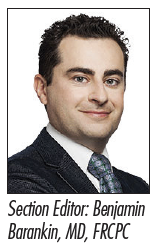 Dr Barankin is a dermatologist in Toronto, Ontario, Canada. He is author-editor of 7 books in dermatology and is widely published in the dermatology and humanities literature.
 In dermatology, we are fortunate to have many insightful practitioners and great teachers and mentors. Some are bright stars in our special universe–others unsung heroes. All of these colleagues have much to share, from wisdom to humor to insights into dermatology and life. This column allows us to gain insight from these practitioners and learn more about them.
A native of Brooklyn, NY, Seth Orlow, MD, PhD, received his AB magna cum laude in biochemical sciences from Harvard. He then completed the medical scientist-training program at Albert Einstein College of Medicine, earning a PhD in molecular pharmacology in addition to his MD.
Following an internship in pediatrics at Mount Sinai, he was a resident and fellow in dermatology at Yale. In 1990, he joined the faculty at New York University (NYU) School of Medicine where he served as director of pediatric dermatology and is currently chairman of the Ronald O. Perelman Department of Dermatology, Samuel Weinberg Professor of Pediatric Dermatology, and Professor of Cell Biology and of Pediatrics.
When not involved in patient care, research, or his administrative duties at NYU, Dr Orlow is also active in the worlds of business/finance. He was affiliated with Easton Capital, a venture capital firm in New York, where he rose from advisor to partner, and now serves as a strategic advisor to various drug, device, consumer product, and health care services companies via his affiliation with Pharus Advisors. Along with a number of like-minded colleagues, he is a cofounder of the annual Dermatology Summit and Dermatology Innovation Forum.
Q. What part of your work gives you the most pleasure?
A. The variety of activities in which I am involved give me pleasure. I am the sort of person who thrives when involved in a number of very different types of activities and projects simul-taneously.
Q. What is your greatest regret?
A. I certainly spend a lot of time worrying about the decisions I have to make as chairman as well as a physician, a scientist, and a strategic advisor (and a parent), but as John Fogerty of Creedence Clearwater Revival sang, it’s best not to lose “one minute of sleeping, worrying ‘bout the way things might have been.”
Q. Who was your mentor and why?
A. Jean Bolognia, MD, started as a faculty member at Yale about the time when I started as a resident. Her intellectual rigor and clinical expertise combined with a naughty sense of humor remain an inspiration. Subsequently, I learned a great deal from my predecessor at NYU, Irwin Freedberg, MD, about how academic medicine works, although maybe I didn’t recognize it as much at the time.
Q. What is the best piece of advice you have received and from whom?
A. Argiris Efstratiadis, MD, PhD, was then a molecular biologist in the Harvard Bio Labs and I was a college student in a seminar course he taught. He told me that he wouldn’t write a recommendation for me for medical school unless it was for an MD-PhD program—until he said that, I didn’t even know such a thing existed.
Q. Which medical figure in history would you want to have a drink with and why?
A. Marion Sulzberger, MD, who was not only a giant in the field of American clinical and investigative dermatology—he was a founder of the American Academy of Dermatology and the Society for Investigative Dermatology, probably the first physician to use topical cortisones to treat skin disease, etc.—but also lived an amazing and adventurous life as a young man (and a pretty impressive one later, too). Plus, he was chairman of the same department as I am now. I think he’d have great tales to tell and great advice. The Oak Room at the Plaza Hotel in New York would have been just the right venue but since that’s not there anymore, maybe Bemelmans Bar at the Carlyle Hotel.
Q. What is the greatest political danger in the field of dermatology?
A. We have allowed our specialty to become marginalized in the “house of medicine” in the United States, at least, as well as trivialized in the eyes of the public and the media, who increasingly do not associate “dermatologist” with “highly skilled expert in the treatment of diseases involving the skin, hair, and nails.” This is not only extraordinarily sad in an era where we can do so much for so many suffering from even severe skin diseases like psoriasis and pemphigus, as well as carry out effective surveillance for deadly skin cancers, but puts us in an increasingly tenuous position to ensure the recognition of a critical need for dermatologic services and appropriate payment for their provision, whether in a fee-for-service model or as part of an accountable care organization. n
 Dr Barankin is a dermatologist in Toronto, Ontario, Canada. He is author-editor of 7 books in dermatology and is widely published in the dermatology and humanities literature.
In dermatology, we are fortunate to have many insightful practitioners and great teachers and mentors. Some are bright stars in our special universe–others unsung heroes. All of these colleagues have much to share, from wisdom to humor to insights into dermatology and life. This column allows us to gain insight from these practitioners and learn more about them.
A native of Brooklyn, NY, Seth Orlow, MD, PhD, received his AB magna cum laude in biochemical sciences from Harvard. He then completed the medical scientist-training program at Albert Einstein College of Medicine, earning a PhD in molecular pharmacology in addition to his MD.
Following an internship in pediatrics at Mount Sinai, he was a resident and fellow in dermatology at Yale. In 1990, he joined the faculty at New York University (NYU) School of Medicine where he served as director of pediatric dermatology and is currently chairman of the Ronald O. Perelman Department of Dermatology, Samuel Weinberg Professor of Pediatric Dermatology, and Professor of Cell Biology and of Pediatrics.
When not involved in patient care, research, or his administrative duties at NYU, Dr Orlow is also active in the worlds of business/finance. He was affiliated with Easton Capital, a venture capital firm in New York, where he rose from advisor to partner, and now serves as a strategic advisor to various drug, device, consumer product, and health care services companies via his affiliation with Pharus Advisors. Along with a number of like-minded colleagues, he is a cofounder of the annual Dermatology Summit and Dermatology Innovation Forum.
Q. What part of your work gives you the most pleasure?
A. The variety of activities in which I am involved give me pleasure. I am the sort of person who thrives when involved in a number of very different types of activities and projects simul-taneously.
Q. What is your greatest regret?
A. I certainly spend a lot of time worrying about the decisions I have to make as chairman as well as a physician, a scientist, and a strategic advisor (and a parent), but as John Fogerty of Creedence Clearwater Revival sang, it’s best not to lose “one minute of sleeping, worrying ‘bout the way things might have been.”
Q. Who was your mentor and why?
A. Jean Bolognia, MD, started as a faculty member at Yale about the time when I started as a resident. Her intellectual rigor and clinical expertise combined with a naughty sense of humor remain an inspiration. Subsequently, I learned a great deal from my predecessor at NYU, Irwin Freedberg, MD, about how academic medicine works, although maybe I didn’t recognize it as much at the time.
Q. What is the best piece of advice you have received and from whom?
A. Argiris Efstratiadis, MD, PhD, was then a molecular biologist in the Harvard Bio Labs and I was a college student in a seminar course he taught. He told me that he wouldn’t write a recommendation for me for medical school unless it was for an MD-PhD program—until he said that, I didn’t even know such a thing existed.
Q. Which medical figure in history would you want to have a drink with and why?
A. Marion Sulzberger, MD, who was not only a giant in the field of American clinical and investigative dermatology—he was a founder of the American Academy of Dermatology and the Society for Investigative Dermatology, probably the first physician to use topical cortisones to treat skin disease, etc.—but also lived an amazing and adventurous life as a young man (and a pretty impressive one later, too). Plus, he was chairman of the same department as I am now. I think he’d have great tales to tell and great advice. The Oak Room at the Plaza Hotel in New York would have been just the right venue but since that’s not there anymore, maybe Bemelmans Bar at the Carlyle Hotel.
Q. What is the greatest political danger in the field of dermatology?
A. We have allowed our specialty to become marginalized in the “house of medicine” in the United States, at least, as well as trivialized in the eyes of the public and the media, who increasingly do not associate “dermatologist” with “highly skilled expert in the treatment of diseases involving the skin, hair, and nails.” This is not only extraordinarily sad in an era where we can do so much for so many suffering from even severe skin diseases like psoriasis and pemphigus, as well as carry out effective surveillance for deadly skin cancers, but puts us in an increasingly tenuous position to ensure the recognition of a critical need for dermatologic services and appropriate payment for their provision, whether in a fee-for-service model or as part of an accountable care organization. n
Dr Barankin is a dermatologist in Toronto, Ontario, Canada. He is author-editor of 7 books in dermatology and is widely published in the dermatology and humanities literature.