 Approximately one in five children with eczema, or atopic dermatitis, will be bullied at school due to their skin condition, according to recent results from a survey of eczema parents and caregivers, conducted by the National Eczema Association (NEA).
Eczema, which affects 9 million children in the US, has been shown to negatively impact a child’s self-esteem, mood, self-confidence and ability to establish and maintain relationships. According to the survey results, more than 75% of parents of children with eczema who were bullied report that their child had lowered self-esteem as a result.
“Medically treating and managing eczema is important—but so are understanding and addressing the psychosocial challenges of this disease,” said Amy Paller, MD, director of the Northwestern University Skin Disease Research Center. “The recent NEA survey correlates with research I've co-authored in the past, showing a link between bullying related to chronic eczema and a decrease in self-esteem and self-confidence. This can have a tremendous long-term impact on their lives.”
Research has also shown that children with eczema often must cope with a lack of understanding and fear from their classmates. Teasing, taunting or bullying related to their appearance can often lead to isolation. Managing eczema in school is difficult due to many possible triggers, including, carpets, outdoor activities, and standard soaps. School stress may also play a role as a less visible eczema trigger.
NEA has released resource materials for both parents and educators to understand the impacts eczema has in a classroom. NEA’s resource material, Eczema: Tools for School guide, includes strategies for raising disease awareness in a classroom, recommendations for building an eczema school care kit, and a list of books and movies to help raise self-esteem of students.
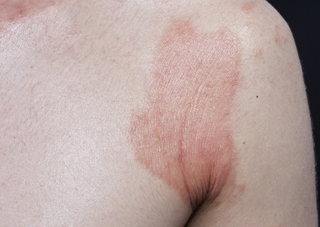
“At an age when peers are learning basic skills of social interaction, children with eczema are often singled out and even bullied because of symptoms like visibly dry, red, inflamed skin or scratching. Yet our survey showed that nearly 60% of parents believe that their child’s teacher does not understand eczema,” said NEA President and CEO, Julie Block. “We encourage parents and caregivers to share our ‘Tools for School’ guide with their child’s teachers, so that together, educators, parents and students are aware of what the chronic condition, eczema, really is and the psychosocial impact it may have on a child’s self-esteem.”
The Tools for School guide is available for free download at, www.nationaleczema.org/tools-for-school.
 Approximately one in five children with eczema, or atopic dermatitis, will be bullied at school due to their skin condition, according to recent results from a survey of eczema parents and caregivers, conducted by the National Eczema Association (NEA).
Eczema, which affects 9 million children in the US, has been shown to negatively impact a child’s self-esteem, mood, self-confidence and ability to establish and maintain relationships. According to the survey results, more than 75% of parents of children with eczema who were bullied report that their child had lowered self-esteem as a result.
“Medically treating and managing eczema is important—but so are understanding and addressing the psychosocial challenges of this disease,” said Amy Paller, MD, director of the Northwestern University Skin Disease Research Center. “The recent NEA survey correlates with research I've co-authored in the past, showing a link between bullying related to chronic eczema and a decrease in self-esteem and self-confidence. This can have a tremendous long-term impact on their lives.”
Research has also shown that children with eczema often must cope with a lack of understanding and fear from their classmates. Teasing, taunting or bullying related to their appearance can often lead to isolation. Managing eczema in school is difficult due to many possible triggers, including, carpets, outdoor activities, and standard soaps. School stress may also play a role as a less visible eczema trigger.
NEA has released resource materials for both parents and educators to understand the impacts eczema has in a classroom. NEA’s resource material, Eczema: Tools for School guide, includes strategies for raising disease awareness in a classroom, recommendations for building an eczema school care kit, and a list of books and movies to help raise self-esteem of students.
“At an age when peers are learning basic skills of social interaction, children with eczema are often singled out and even bullied because of symptoms like visibly dry, red, inflamed skin or scratching. Yet our survey showed that nearly 60% of parents believe that their child’s teacher does not understand eczema,” said NEA President and CEO, Julie Block. “We encourage parents and caregivers to share our ‘Tools for School’ guide with their child’s teachers, so that together, educators, parents and students are aware of what the chronic condition, eczema, really is and the psychosocial impact it may have on a child’s self-esteem.”
The Tools for School guide is available for free download at, www.nationaleczema.org/tools-for-school.
Approximately one in five children with eczema, or atopic dermatitis, will be bullied at school due to their skin condition, according to recent results from a survey of eczema parents and caregivers, conducted by the National Eczema Association (NEA).
Eczema, which affects 9 million children in the US, has been shown to negatively impact a child’s self-esteem, mood, self-confidence and ability to establish and maintain relationships. According to the survey results, more than 75% of parents of children with eczema who were bullied report that their child had lowered self-esteem as a result.
“Medically treating and managing eczema is important—but so are understanding and addressing the psychosocial challenges of this disease,” said Amy Paller, MD, director of the Northwestern University Skin Disease Research Center. “The recent NEA survey correlates with research I've co-authored in the past, showing a link between bullying related to chronic eczema and a decrease in self-esteem and self-confidence. This can have a tremendous long-term impact on their lives.”
Research has also shown that children with eczema often must cope with a lack of understanding and fear from their classmates. Teasing, taunting or bullying related to their appearance can often lead to isolation. Managing eczema in school is difficult due to many possible triggers, including, carpets, outdoor activities, and standard soaps. School stress may also play a role as a less visible eczema trigger.
NEA has released resource materials for both parents and educators to understand the impacts eczema has in a classroom. NEA’s resource material, Eczema: Tools for School guide, includes strategies for raising disease awareness in a classroom, recommendations for building an eczema school care kit, and a list of books and movies to help raise self-esteem of students.
“At an age when peers are learning basic skills of social interaction, children with eczema are often singled out and even bullied because of symptoms like visibly dry, red, inflamed skin or scratching. Yet our survey showed that nearly 60% of parents believe that their child’s teacher does not understand eczema,” said NEA President and CEO, Julie Block. “We encourage parents and caregivers to share our ‘Tools for School’ guide with their child’s teachers, so that together, educators, parents and students are aware of what the chronic condition, eczema, really is and the psychosocial impact it may have on a child’s self-esteem.”
The Tools for School guide is available for free download at, www.nationaleczema.org/tools-for-school.