










High-Risk CSCC After Surgery and Radiation: Why Local Control May Not Be Enough
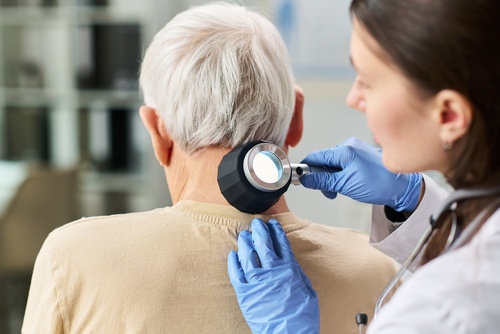 For patients with high-risk cutaneous squamous cell carcinoma (CSCC), successful local surgery doesn’t always mean lasting control. High-risk features increase the likelihood of recurrence and metastasis, and ongoing surveillance and multidisciplinary management play an important role in patient care.
Surgery is the cornerstone of cutaneous squamous cell carcinoma (CSCC) management and achieves high rates of local control in most patients.1 However, local control does not always equate to cure; a subset of patients remains at high risk for recurrence and disease progression even after complete resection and, in some cases, adjuvant radiation.2-3 Certain clinical features of tumors are associated with increased risk of recurrence or metastasis; these tumors are classified as high-risk CSCC.4 High-risk CSCC is not simply a more aggressive low-risk disease; it is a distinct clinical entity in which risk of recurrence is impacted by clinical, histological, and patient-related factors.4 For patients with high-risk CSCC, initial local control achieved by surgery may not be curative, even with histologically clear surgical margins.3,5 Therefore, patient care in high-risk CSCC should extend beyond a focus on local control.
Features of High-Risk CSCC
There are several frameworks used to classify CSCC, most commonly the Brigham and Women’s Hospital (BWH) and the American Joint Committee on Cancer 8th edition (AJCC-8), with clinicians often using one or a combination to define high-risk disease.4,6-9 Although these systems differ in structure and scope, they identify similar or overlapping clinical and pathologic features associated with increased risk of recurrence and metastasis.
Common Features of High-Risk CSCC7-10
| Tumor-specific features | Additional information |
| Anatomical location | Head, neck, hands, feet, pretibial, and anogenital areas |
| Tumor diameter | ≥2 cm |
| Depth of invasion | ≥2 mm or beyond subcutaneous fat |
| Perineural invasion | ≥0.1 mm |
| Poor differentiation | |
| Recurrent disease | |
| Patient-related factors | |
| Immunosuppression |
These features identify patients at meaningful risk for disease progression beyond the primary tumor site. As a result, accurate risk stratification at diagnosis is critical to informing prognosis, guiding follow-up intensity, and determining the need for multidisciplinary management.10
Progression of High-Risk CSCC
There are three main pathways for progression: local recurrence, regional nodal metastasis, or distant metastasis.11 Although the risk of progression is relatively low for low-risk CSCC, it increases meaningfully for patients with high-risk CSCC. In a retrospective study of 680 head and neck CSCC tumors, few of the 559 low-category tumors (defined as T1-T2 by AJCC-8) exhibited local recurrence, nodal metastases, and disease-specific death (2.1%, 1.3%, and 0.4%, respectively). However, of the 121 high-category tumors (defined as T3-T4b by AJCC-8), several exhibited local recurrence, nodal metastasis, and disease-specific death (18.2%, 14.0%, and 9.1%, respectively).12 CSCC has a predictable pattern of metastasis, in which approximately 80% of metastases spread to regional lymph nodes first.13 Of patients with CSCC involving nodal disease, more than two-thirds show involvement in the parotid gland and/or cervical nodes.14 Regional nodal metastasis is associated with poor prognosis and has a 5-year survival rate of approximately 30%, compared to a 5-year survival rate of 90% for local disease.4 Distant metastatic disease is rare, with an estimated 0.4% in all cases of CSCC.15 Of note, locoregional recurrence, distant spread, and death can occur even when the primary site appears initially controlled.2,3
The Staging and Surveillance Gap in High-Risk CSCC
There is a lack of standardized, evidence-based risk stratification and surveillance guidelines for high-risk CSCC.4,16 The staging system used, physician judgment, and patient-related factors can all affect whether a patient is diagnosed with high-risk CSCC.4 This variability can result in underestimation of metastatic risk and missed or delayed detection of nodal disease.17,18 More accurate staging and risk stratification can lead to more thorough and thoughtful follow-up. For example, a study comparing BWH and AJCC staging systems for head and neck CSCC found that BWH had higher specificity and positive predictive value for identifying cases at risk for nodal metastasis or death.19
After surgery, patients with high-risk CSCC should undergo regular follow-up to monitor for recurrence or spread. Imaging modalities such as computed tomography (CT) or positron emission tomography (PET)/CT may be a valuable tool for surveillance of nodal or distant metastases.16 However, radiological imaging can have high false negative rates and a limited ability to detect lesions <5 mm.17 Given that CSCC has a predictable pattern of metastases first to regional lymph nodes,13 nodal surveillance becomes even more important in patients with high-risk cases, and further research into nodal monitoring is warranted.
Effective care for patients with high-risk or metastatic CSCC requires multidisciplinary coordination.9,13,16 Health care specialties that may be involved include but are not limited to dermatologists, Mohs surgeons, surgical oncologists, head and neck surgeons, radiation oncologists, and medical oncologists.13 Although multidisciplinary care is widely endorsed, real-world implementation can be hindered by logistical barriers such as geographic or scheduling constraints.13
Redefining Treatment Goals and Clinical Responsibility
For patients with high-risk CSCC, treatment goals extend beyond local tumor control to prioritize disease-free survival and prevention of regional or distant progression. Although high-risk CSCC cases represent a relatively small subset of CSCC, they account for a disproportionate share of local recurrence, nodal metastases, and disease-specific deaths.12
Early identification of high-risk features is critical, as it directly influences decisions around follow-up intensity, nodal assessment, and the need for multidisciplinary evaluation. Dermatologists and Mohs surgeons play a central role in this process, not only in treating the primary tumor but also in recognizing patients who may benefit from broader care coordination. The risk of recurrence is highest within the first 2 years following treatment, underscoring the importance of proactive surveillance strategies that extend beyond the primary site.15 In this context, multidisciplinary collaboration is not simply recommended but often necessary to ensure appropriate monitoring and management.
The treatment landscape is also evolving, with systemic treatment approaches being considered for patients with high-risk CSCC.20 As these strategies develop, integrating risk stratification, surveillance, and multidisciplinary care will be essential to improving outcomes in this population.
References
- Catorze MGB, Filipe P. Innovations in cutaneous oncology and dermatologic surgery: from margin control to integrated precision oncology. Cancers. 2026;18(4):670. doi:10.3390/cancers18040670
- Porceddu SV, Bressel M, Poulsen MG, et al. Postoperative concurrent chemoradiotherapy versus postoperative radiotherapy in high-risk cutaneous squamous cell carcinoma of the head and neck: The randomized phase III TROG 05.01 trial. J Clin Oncol. 2018;36(13):1275-1283. doi:10.1200/JCO.2017.77.0941
- Zhang J, Wang Y, Wijaya WA, Liang Z, Chen J. Efficacy and prognostic factors of adjuvant radiotherapy for cutaneous squamous cell carcinoma: A systematic review and meta-analysis. J Eur Acad Dermatol Venereol. 2021;35(9):1777-1787. doi:10.1111/jdv.17330
- Beach SC, Cusick AS, Farberg AS, Trotter SC. A comprehensive narrative review of the challenges surrounding cutaneous SCC. Dermatol Ther (Heidelb). 2025;15(8):2015-2029. doi:10.1007/s13555-025-01470-7
- Jennings L, Schmults CD. Management of high-risk cutaneous squamous cell carcinoma. J Clin Aesthet Dermatol. 2010;3(4):39-48.
- Patel VA, McCullum C, Sparks AD, et al. Cutaneous squamous cell carcinoma staging may influence management in users: A survey study. Cancer Med. 2022;11(1):94-103. doi:10.1002/cam4.4426
- Karia PS, Jambusaria-Pahlajani A, Harrington DP, Murphy GF, Qureshi AA, Schmults CD. Evaluation of American Joint Committee on Cancer, International Union Against Cancer, and Brigham and Women’s Hospital tumor staging for cutaneous squamous cell carcinoma. J Clin Oncol. 2014;32(4):327-334. doi:10.1200/JCO.2012.48.5326
- Amin MB, Edge SB, Greene FL, et al, eds. AJCC Cancer Staging Manual. 8th ed. New York, NY: Springer International Publishing; 2017.
- Trager MH, Gordon ER, Breneman A, et al. Management of cutaneous squamous cell carcinoma: a literature review and update. J Am Acad Dermatol. 2026;94(3):914-923. doi:10.1016/j.jaad.2025.11.043
- Paradela-de la Morena S, Neri-Morales C, Martin-Loureiro I, Tejera-Vaquerizo A, Fonseca-Capdevila E. Management of cutaneous squamous cell carcinoma: review based on guidelines. Part 1: diagnosis, staging, and clinical management. Actas Dermosifiliogr. 2026;117(6):104611. doi:10.1016/j.ad.2026.104611Paradela-de la Morena S, Neri-Morales C, Martin-Loureiro I, Tejera-Vaquerizo A, Fonseca-Capdevila E. Management of cutaneous squamous cell carcinoma: review based on guidelines. Part 1: diagnosis, staging, and clinical management. Actas Dermosifiliogr. 2026;117(6):104611. doi:10.1016/j.ad.2026.104611
- Maubec E. Update on the management of cutaneous squamous-cell carcinoma. Acta Derm Venereol. 2020;100(11):adv00143. doi:10.2340/00015555-3498
- Karia PS, Morgan FC, Califano JA, Schmults CD. Comparison of tumor classifications for cutaneous squamous cell carcinoma of the head and neck in the 7th vs 8th edition of the AJCC Cancer Staging Manual. JAMA Dermatol. 2018;154(2):175-181. doi:10.1001/jamadermatol.2017.3960
- Claveau J, Archambault J, Ernst DS, et al. Multidisciplinary management of locally advanced and metastatic cutaneous squamous cell carcinoma. Curr Oncol. 2020;27(4):e399-e407. doi:10.3747/co.27.6015
- Venables ZC, Autier P, Nijsten T, et al. Nationwide incidence of metastatic cutaneous squamous cell carcinoma in England. JAMA Dermatol. 2019;155(3):298-306. doi:10.1001/jamadermatol.2018.4219
- Schmults CD, Karia PS, Carter JB, Han J, Qureshi AA. Factors predictive of recurrence and death from cutaneous squamous cell carcinoma: a 10-year, single-institution cohort study. JAMA Dermatol. 2013;149(5):541-547. doi:10.1001/jamadermatol.2013.2139
- Alam M, Armstrong A, Baum C, et al. Guidelines of care for the management of cutaneous squamous cell carcinoma. J Am Acad Dermatol. 2018;78(3):560-578. doi:10.1016/j.jaad.2017.10.007
- Fox M, Brown M, Golda N, et al. Nodal staging of high risk cutaneous squamous cell carcinoma. J Am Acad Dermatol. 2019;81(2):548-557. doi:10.1016/j.jaad.2018.09.006
- Elaldi R, Chamorey E, Schiappa R, et al. Comparative performance of four staging classifications to select <<high-risk>> head and next cutaneous squamous cell carcinomas. J Clin Med. 2023;12(12):3929. doi:10.3390/jcm12123929
- Ruiz ES, Karia PS, Besaw R, Schmults CD. Performance of the American Joint Committee on Cancer staging manual, 8th edition vs the Brigham and Women’s Hospital tumor classification system for cutaneous squamous cell carcinoma. JAMA Dermatol. 2019;155(7):819-825. doi:10.1001/jamadermatol.2019.0032
- Rischin D, Porceddu S, Day F, et al. Adjuvant cemiplimab or placebo in high-risk cutaneous squamous-cell carcinoma. N Engl J Med. 2025;393(8):774-785. doi:10.1056/NEJMoa2502449
© 2026 HMP Global. All Rights Reserved.




