Advancing Limb Salvage Through Frontline Thrombectomy and Multidisciplinary Care
Powers Health, Munster, Indiana
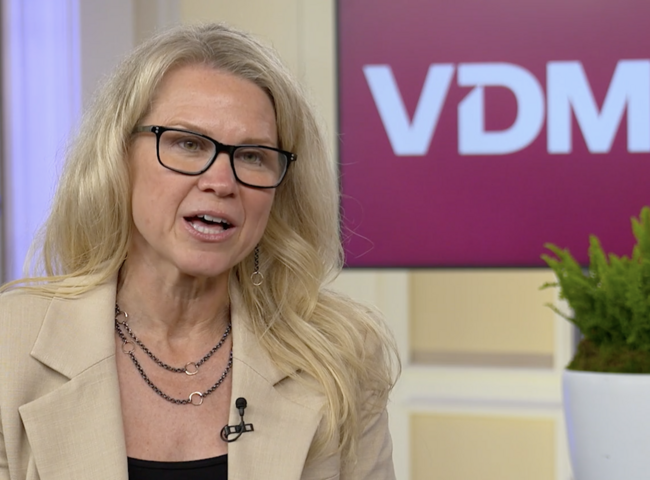
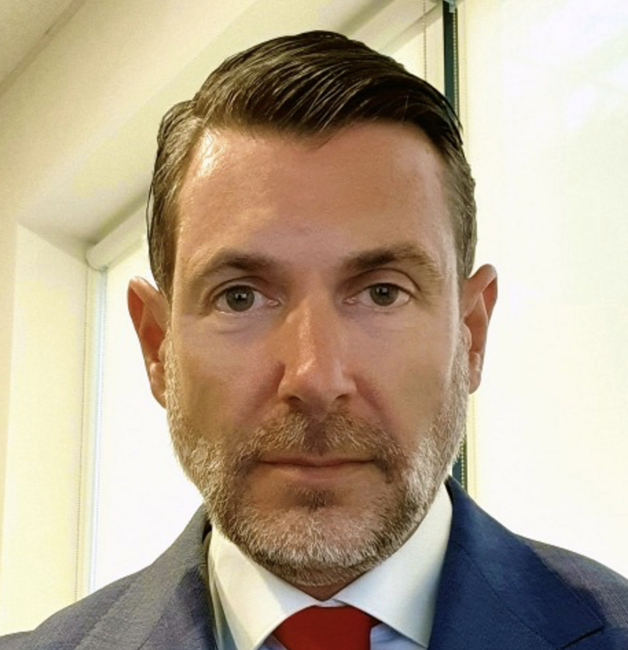
As peripheral artery disease (PAD) and chronic limb-threatening ischemia (CLTI) continue to drive high rates of morbidity and amputation, physicians are rethinking how thrombotic disease is treated in complex endovascular cases. In this interview, interventional cardiologist Shadi Halabi, MD, of Powers Health in Munster, Indiana, discusses his evolving approach to chronic total occlusions (CTOs) and acute limb ischemia (ALI), including the growing role of frontline thrombectomy, advanced aspiration technologies, and radial-first intervention strategies. He also shares how Powers Health built a multidisciplinary limb salvage program that has significantly reduced major amputations through rapid access, coordinated care, and aggressive revascularization standards.
What is your approach when managing thrombotic components in CTO cases?
In long CTOs, you must ask, what’s the pathology? In an important study conducted by Dr Narula where they examined the pathology of legs that had already been amputated, they found that over 70% of stenotic arteries had a thrombotic component.i
So, knowing that this is the pathology that we’re dealing with, you have to ask yourself as an operator, how do I address the actual pathology of the disease I’m treating?
In my practice, when I treat a long CTO —especially when the guidewire traverses the occlusion quickly or intravascular ultrasound reveals a thrombotic component— I often choose thrombectomy as a frontline strategy followed by addressing the residual disease.
What are the benefits of frontline thrombus removal vs salvage thrombectomy? How does removing clot better visualize and help allow for treatment of the underlying lesions?
Excellent question.
I was recently reading a CTO book that made a simple but important point: a shortcut may end up prolonging the procedure.
As operators, especially in a busy environment, we naturally want to treat patients as efficiently as possible. However, sometimes the fastest-looking approach is not actually the fastest.
For those of us who do vascular work, we know that when you go in and see what looks like a long CTO, removing the thrombus may reveal that you are actually dealing with a very short underlying lesion, thus reducing the treatment zone for balloon, stent, or atherectomy. That is a very different procedure from trying to treat a long, thrombotic CTO and using a therapy that pushes or embolizes clot distally. You can quickly turn what should have been a short procedure into a long one, where you are chasing distal thrombus and potentially compromising the outflow.
Ultimately, I think that you have to pause before taking that shortcut; addressing the actual pathology may help achieve a more efficient procedure with better results.
Can you talk about the multidisciplinary limb salvage program at Powers? What made Powers decide that this program is necessary and what has the impact been like?
This is really a passion of mine.
We recognized that CLTI carries an extraordinarily high risk of amputation, morbidity, and mortality, and we wanted to address that systematically as an institution. That is what led us to build our multidisciplinary limb salvage program.
There are 3 main components to our limb salvage team. The first one is quick access to care—when somebody has an ulceration or starts having rest pain, we don’t wait. This is not a patient who is going to wait for my next 3-month appointment. This is a patient who, when we get alerted, is seen usually within 7 days at our limb salvage clinic.
The second important component is that we take a truly multidisciplinary approach. This is a team sport, not a one-person show. We are very quick to involve all our colleagues. We have a huge multidisciplinary team that includes our surgical podiatry colleagues, vascular surgeons, endocrinologists, nephrologists, and internists. Each of them has a specific role. We talk with our surgical colleagues to decide the best approach to treating the patient. Our endocrinologists know that a patient with uncontrolled A1C is usually not going to heal well. Our nephrologists are on board, making sure that they monitor the kidneys. They help us with hydration and follow-up on those patients. With our podiatry colleagues, we always have an ongoing conversation on amputation: when to do it, when not to do it, and the role of sufficient blood flow. Our wound care nurses are also amazing. They are following the patients, who probably see our wound care nurses more than anybody else, so that is an important part of our team.
The third component is that we hold our team to a high standard for revascularization. We expect angiosome-directed blood flow so it’s not just opening an inflow vessel. You have to truly put a lot of effort into getting blood flow straight into your patient’s wound, and after that, there’s a close follow-up. Wound care sees patients sometimes on weekly basis, physicians on monthly basis depending on which specialty that’s needed. There is very close follow-up until we get healing, and then the patients go into our surveillance program.
Our institutional data have shown a significant reduction in major amputations, which is a great success for the entire team.
How has the Lightning Bolt® technology impacted your practice? How are you deciding which catheter to use in patients?
Penumbra is at the forefront of innovation. The Lightning Bolt technology is an FDA-cleared platform that uses an algorithm to modulate aspiration, which has made our aspiration become much more efficient and effective; that’s been a great help.
In terms of selecting a catheter, it is a choice between Lightning Bolt 12, 7, 6X with TraX™, or their rapid exchange CAT™ RX, but essentially we look at 3 factors: first, the thrombus burden. Imaging is a cornerstone of all our procedures and helps us define pathology and thrombus burden.
The second is the vessel size and location of the thrombus. Number three is the access site and sheath size, which is an important practical part of the decision-making process.
Ultimately, I think of the different catheter sizes as a spectrum. The choice depends on the anatomy, thrombus burden, thrombus location, and the access strategy for that case.
The Lightning Bolt 6X with TraX has been an excellent addition to our armamentarium because it has improved our ability to track the catheter into more distal vessels. When you are dealing with a diseased vessel that also has a thrombotic component, you want to advance as close to the thrombus as possible and aspirate it directly. The TraX dilator has enabled us to do that.
How have improvements in percutaneous thrombectomy devices impacted the efficacy and safety of endovascular procedures for conditions like ALI? And how do you foresee the future of ALI care involving these endovascular devices and techniques continuing to advance?
The ALI world is changing. Historically, open surgical embolectomy was often the mainstay, and catheter-directed thrombolysis later expanded our treatment options. Now, with improvements in endovascular technology, we can often consider thrombectomy as an upfront strategy.
I want to highlight how my practice has changed in the ALI world. We had a recent paper published in JACC Interventions where we showed an ALI patient with embolization down to his foot. We know that the foot is the end organ, so if you can’t get blood down to the foot, you are going to get necrosis and gangrene. We were able to use Penumbra’s CAT™ RX device to retrogradely go in and suction the clot out, with amazing results. We got complete flow to the pedal loop and the patient’s foot was saved.
Another exciting movement in the ALI world is that when I get a case of ALI, my first question, in addition to considering surgery or thrombolysis, is, am I able to safely and effectively thrombectomize that clot? If I am able to do so, I’m going to go ahead and do that. We have had great success with this approach.
Another exciting approach that we pioneered at Powers Health was what we believe to be the first published case of managing ALI entirely through radial access.
It’s pretty remarkable to see the evolution of the endovascular space.
It was a shorter patient, so we went in from the wrist and were able to reach the clot and aspirate it out. This was enabled by having the Lightning Bolt 6X with TraX, which has a 150-cm shaft. We used different radial to peripheral technologies, such as the new long wires and a long shaft drug-coated balloon.
We did the whole thing through the wrist. The patient couldn’t believe it, she said she was told by the ER attending that she may lose her foot or even her leg. And now the whole thing is done through the wrist. She went home the next day and was very happy with the results. n
iNarula N, Dannenberg AJ, Olin JW, et al . Pathology of peripheral artery disease in patients with critical limb ischemia. J Am Coll Cardiol. 2018;72(18):2152-2163. doi: 10.1016/j.jacc.2018.08.002
Interview sponsored by Penumbra, Inc.
Procedural and operative techniques and considerations are illustrative examples from physician experience. Physicians’ treatment and technique decisions will vary based on their medical judgment. The clinical results presented herein are for informational purposes only and may not be predictive for all patients. Individual results may vary depending on patient-specific attributes and other factors.
Caution: Federal (USA) law restrictions these devices to sale by or on the order of a physician. Prior to use, please refer to the Instructions for Use for complete product indications, contraindications, warnings, precautions, potential adverse events, and detailed instructions for use. Please visit https://www.penumbrainc.com/pdf/brief-summaries-risk-statement/ for the complete IFU Summary Statements. Please contact your local Penumbra representative for more information.
Related Content