Sirolimus-Eluting Bioresorbable Scaffolds for Femoropopliteal Disease: Early Findings From EFEMORAL I
© 2026 HMP Global. All Rights Reserved.
Any views and opinions expressed are those of the author(s) and/or participants and do not necessarily reflect the views, policy, or position of Vascular Disease Management or HMP Global, their employees, and affiliates.
VASCULAR DISEASE MANAGEMENT. 2026;23(9):E138-E139

The Prince of Wales Hospital and University of New South Wales, Randwick, Australia
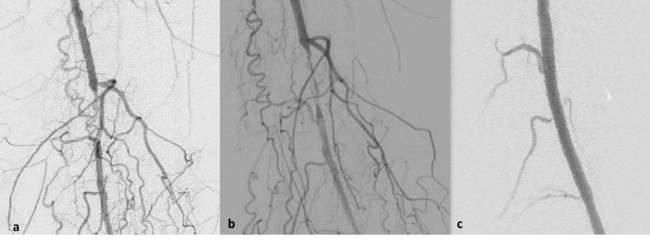
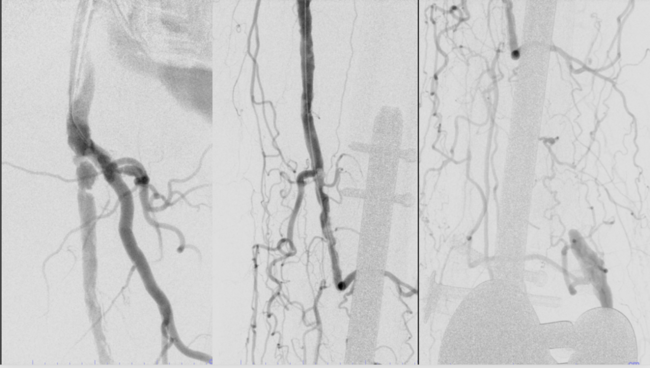
In this interview from the 2026 Amputation Prevention Symposium (AMP), Ramon Varcoe, MBBS, MS, FRACS, PhD, MMed (ClinEpi), from The Prince of Wales Hospital and University of New South Wales in Randwick, Australia, discusses early experience with the investigational Efemoral Vascular Scaffold System (Efemoral Medical). Designed for the femoropopliteal artery, the device combines multiple short, sirolimus-eluting bioresorbable scaffolds to provide temporary vessel support while allowing arterial movement. Dr Varcoe reviews findings from the first 40 patients enrolled in the single-arm EFEMORAL I study, including marked angiographic improvement and reported 3-year rates of 97% for both primary patency and freedom from clinically driven target lesion revascularization (TLR). He also considers how this approach could support a future “leave nothing behind” strategy for treating peripheral arterial disease (PAD).
Let’s talk about one of the presentations you are giving at AMP, “Sirolimus-Eluting Bioresorbable Scaffolds Improve Angiographic Results and Extend Patency in Complex Peripheral Arterial Disease.”
This is a really interesting topic. Over the last 5 to 10 years there has been a lot of buzz about bioresorbable scaffolds, which were mostly being applied below the knee (BTK). For tibial arteries, a couple of years ago Abbott got approval for their Esprit BTK System based on a lot of work we have done over the subsequent decade or so; it's now commercially available and is being used in patients with chronic limb-threatening ischemia (CLTI). But what we haven’t seen is a device come along in the above-the-knee (ATK) segment, in the femoropopliteal segment, until now. This new device, which is called the Efemoral Vascular Scaffold System, is an ATK device for the femoropopliteal segment.
The reason we haven’t seen this before is because these structures are made of a polymer, and the polymers are balloon-expandable, which means they are prone to crush. In the superficial femoral artery (SFA), as opposed to the tibial artery, the forces are so aggressive with flexion, extension, torsion, and compression that anything you put in there that is balloon-expandable has a tendency to crush. Therefore, no one had developed a new device that can handle that crush force—until now. The difference between the previous polymers and this one is that it is actually the scaffold design itself that’s the difference, so instead of one long scaffold to treat, say, a long femoral lesion, it has a series of very short scaffolds mounted on the balloon. It can be from between 5 and 8 scaffolds on the balloon. When you inflate them, there is a little space between them, which means as the blood vessel moves, those spaces allow for the scaffolds individually to move without being crushed. It is made of a specific proprietary copolymer. It's a closed cell design, which gives it a lot of radial strength, more than even a metal stent. And it's coated in sirolimus, which is a well-known antiproliferative drug, which stops restenosis.
This device is being trialed now in a first-in-human study called EFEMORAL-1, which is designed to enroll 100 patients across 8 Australia and New Zealand sites. We have been following these patients and are going to follow them out to 3 years. It is going to be a sub-study at 6 months for 3 different types of imaging. One is computed tomography, one is magnetic resonance imaging, and one is doing a repeat angiogram using optical coherence tomography. The rest of the cohort will be assessed using duplex ultrasound, looking at things like primary patency and freedom from clinically driven TLR.
The information I’m presenting at AMP is from the first 40 patients in the cohort. As you would expect, these patients have a high proportion of diabetes and other risk factors associated with PAD. They are about half claudicants, about half patients with CLTI. They had moderate degrees of calcification, mostly in the SFA itself—a few in the popliteal, but mostly in the SFA. And what we found was primary patency at 3 years of 97%, which is pretty remarkable. The lesions were quite short, 5.5 cm was the mean length, so you would expect fairly good results, but these are extraordinary results. Also, we saw a freedom from clinically driven TLR rate of 97%, very high indicators of efficacy so far. We also saw clinical improvements after 3 years, high rates of ankle-brachial index improvement and walking improvement on the quality scales we use. All in all, we’ve had very impressive results in a space that hasn't really seen any bioresorbable drug-eluting scaffolds up until this point.
How has the Efemoral device changed your practice?
It’s only a trial right now, so we are using it only in specific cases that fulfill the inclusion and not the exclusion criteria. It hasn't really affected my practice so much at the moment, but what I can foresee in the future is, proven in large-scale trials to be effective, it could really change my practice because the paradigm now in the SFA is to leave nothing behind where possible, so we are going down the drug-eluting balloon (DCB) path, but DCBs aren't perfect—they leave behind the section recoil, and this gives you a stent-like result to the end of it with the delivery of a drug, which is what we want, and then within 2 years it's gone, so it gives you all the benefits of a drug-coated balloon but with the scaffolding of a stent that disappears. Ultimately, I think it could really change practice.
What's the one takeaway that you want attendees to get from your presentation?
I would like them to appreciate that there is this new device on the horizon that has a great deal of potential so far in early trials. It has shown results that are as good as anything we've seen so far. It is certainly worth watching the space, getting involved in the trials as they progress to the longer lesions, to maybe a randomized controlled trial. And be aware that while stents have got a bit of a bad name in the SFA and we've gone away from them a little bit, there may be a future where we start to go back to stents, albeit biodegradable stents. n