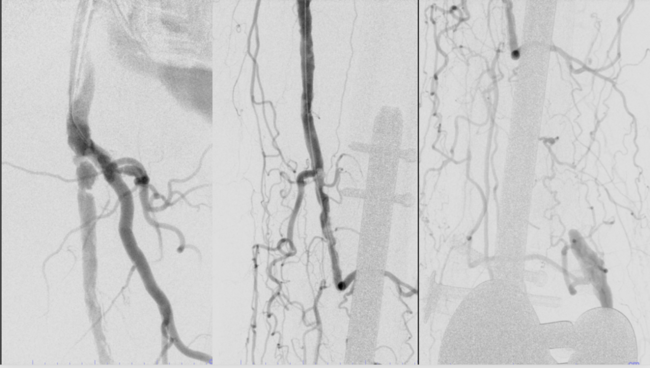
Beyond Balloon Angioplasty Below the Knee: Matching Mechanisms to Modes of Failure
© 2026 HMP Global. All Rights Reserved.
Any views and opinions expressed are those of the author(s) and/or participants and do not necessarily reflect the views, policy, or position of Vascular Disease Management or HMP Global, their employees, and affiliates.
VASCULAR DISEASE MANAGEMENT. 2026;23(9):E132-E134
Existing evidence on endovascular treatment of below-the-knee (BTK) arterial disease underscores the persistent challenge of achieving durable luminal patency. Despite technical advances, early mechanical and late biological failure after balloon angioplasty continue to limit long-term outcomes.
The recently published DEEPER OUS vessel recoil substudy reported by Zeller et al1 and our own recent review on recoil, dissection, and restenosis following standard balloon angioplasty in BTK arteries2 highlight an important limitation of infrapopliteal intervention: an angiographically satisfactory result immediately after balloon deflation does not necessarily represent a mechanically stable or durable result.
In our review, we describe 3 interrelated modes of failure after plain old balloon angioplasty (POBA): recoil, dissection, and restenosis.2 This distinction provides a useful framework for evaluating emerging lesion-preparation technologies. Recoil represents the early loss of luminal gain due to elastic and viscoelastic vessel behavior. Dissection reflects structural arterial injury that may compromise flow or require bailout treatment. Restenosis is a later biological process driven by vascular injury, inflammation, negative remodeling, and neointimal proliferation. Although these mechanisms interact, they are not interchangeable and should not be expected to respond equally to a single intervention.
The importance of early mechanical failure was demonstrated by Baumann et al, who observed recoil in 29 of 30 patients within 15 minutes after tibial balloon angioplasty, resulting in a mean loss of 29% of the minimal lumen diameter gained during angioplasty.3 As discussed in our review, dissections are also likely to be underdiagnosed when procedural assessment relies exclusively on angiography.2 Intravascular imaging may reveal arterial injury that is not apparent on routine angiographic projections. Consequently, the apparent success of POBA may overestimate the effective lumen available for blood flow and subsequent drug delivery.
The DEEPER OUS substudy adds valuable prospective evidence to this discussion. Zeller et al reported recoil of at least 10% in 42.5% of lesions following treatment with the Bare Temporary Spur Stent System (Reflow Medical).1 This rate appears substantially lower than the 97% incidence reported after conventional balloon angioplasty by Baumann et al.3 These findings support the concept that temporary radial support may reduce the immediate loss of lumen after tibial angioplasty. However, the comparison remains historical rather than randomized. Differences in patient selection, lesion morphology, procedural technique, balloon sizing, vasodilator administration, imaging protocols, and core-laboratory methodology prevent a definitive estimate of comparative efficacy.
The timing and definition of recoil also require standardization. Measurements obtained immediately after device retrieval describe a different mechanical state from those acquired 5, 15, or 30 minutes later. A binary threshold of at least 10% may additionally obscure clinically relevant differences in the absolute amount of lumen lost. Future studies should report recoil as both a continuous change in minimal lumen diameter and a categorical endpoint at predefined intervals. Consistent angiographic projections, independent core-laboratory assessment, vasodilator administration, and documentation of residual stenosis and dissection severity should be required.
The framework we proposed also demonstrates why “vessel preparation” should not be treated as a homogeneous device class.2 The Spur system combines radial spikes with a self-expanding retrievable scaffold. Its proposed functions include altering vessel compliance, temporarily opposing recoil, and creating pathways intended to facilitate drug transfer during subsequent drug-coated balloon treatment. Serration angioplasty applies a different mechanism. The Serranator balloon (Cagent Vascular) concentrates force through longitudinal metallic serration strips during low-pressure inflation, aiming to produce controlled plaque modification without prolonged scaffolding or a permanent implant. In the prospective PRELUDE-BTK study, mean residual stenosis was 21.8%, device success was 91.7%, and 1 lesion required bailout stenting for a grade D dissection.4 A subsequent nonrandomized analysis suggested less recoil with serration angioplasty than with POBA.5
A third investigational strategy combines scoring with a longer period of flow-preserving temporary support. The TempuStent concept (Tempora Vascular) uses slowly expanding scoring elements followed by several minutes of scaffold dwell time before retrieval. The proposed rationale is to maintain lumen gain while permitting viscoelastic remodeling and apposition of dissection flaps without leaving a permanent implant. Within the framework of our review, such an approach is potentially relevant because it attempts to address both recoil and dissection before restenosis cascade becomes dominant.2 Nevertheless, this remains a mechanistic hypothesis. Peer-reviewed, product-specific clinical outcome data are not yet available, and clinical equivalence with established devices must not be inferred.
These technologies therefore apply different forces for different durations and may address different components of post-angioplasty failure. Serration primarily seeks controlled plaque fracture; the Spur system combines penetration with temporary radial support; and the investigational TempuStent concept combines scoring with extended flow-preserving support. Their effects may depend on lesion phenotype, including vessel diameter, lesion length, chronic total occlusion, calcium distribution, and dissection morphology.
Future trials should consequently move beyond broad comparisons of “vessel preparation” vs balloon angioplasty. Device-specific randomized studies should stratify lesions by relevant morphological characteristics and evaluate residual stenosis, recoil at predefined intervals, dissection grade, flow limitation, bailout stenting, and acute luminal gain. Longer-term assessment should connect these mechanical endpoints with patency, clinically driven target lesion revascularization, wound healing, limb salvage, and patient-centered functional outcomes. When drug-coated therapy follows lesion preparation, the independent contributions of mechanical stabilization and drug delivery must also be distinguished.
Our review provides a framework for understanding why standard balloon angioplasty may fail, while Zeller et al demonstrate the value of measuring whether luminal gain persists after device removal.1,2 The next step is not to assume a class effect for lesion-preparation devices but to determine which mechanism addresses which mode of failure in which lesion. Mechanism-specific, standardized, and randomized evaluation is required before promising acute results can be translated into durable treatment recommendations. n
Affiliations and Disclosures
Michael K.W. Lichtenberg, MD, is from the Arnsberg Vascular Center, Alexianer Klinikum Hochsauerland, Arnsberg, Germany; Charles J. Bailey, MD, is from the Division of Vascular Surgery & Endovascular Therapy, Emory University School of Medicine, Atlanta, Georgia, United States.
Manuscript accepted August 24, 2026.
Corresponding author: Michael Lichtenberg, MD, Arnsberg Vascular Center, Stolte Ley 5, 59759 Arnsberg-Hüsten, Germany. Email: klichte@gmx.net
References
1. Zeller T, Zhang Z, Parise H, et al. Early tibial vessel recoil following treatment with the Bare Temporary Spur Stent System: results from the DEEPER OUS vessel recoil substudy. J Endovasc Ther. 2026;33(2):834-843. doi:10.1177/15266028241280685
2. Lichtenberg M, Patrone L, Rammos C, et al. Recoil, dissection, and restenosis in below-the-knee (BTK) arteries following standard balloon angioplasty. Vasa. 2026;55(4):259-268. doi:10.1024/0301-1526/a001254
3. Baumann F, Fust J, Engelberger RP, et al. Early recoil after balloon angioplasty of tibial artery obstructions in patients with critical limb ischemia. J Endovasc Ther. 2014;21(1):44-51. doi:10.1583/13-4486MR.1
4. Holden A, Lichtenberg M, Nowakowski P, Wissgott C, Hertting K, Brodmann M. Prospective study of serration angioplasty in the infrapopliteal arteries using the Serranator device: PRELUDE BTK study. J Endovasc Ther. 2022;29(4):586-593. doi:10.1177/15266028211059917
5. Fereydooni A, Chandra V, Schneider PA, Giasolli R, Lichtenberg M, Stahlhoff S. Serration angioplasty is associated with less recoil in infrapopliteal arteries compared with plain balloon angioplasty. J Endovasc Ther. 2025;32(5):1600-1606. doi:10.1177/15266028231215284