Negative Pressure Wound Therapy With All-in-One Dressing: Best Practice Recommendations
© 2026 HMP Global. All Rights Reserved.
Any views and opinions expressed are those of the author(s) and/or participants and do not necessarily reflect the views, policy, or position of Wounds or HMP Global, their employees, and affiliates.
Abstract
Background. A new dressing configuration combining reticulated open cell foam dressing, perforated nonadherent contact layer, and acrylic-silicone hybrid drape has recently become available for use with negative pressure wound therapy (NPWT). Objective. To develop best practice recommendations for all-in-one dressing with NPWT. Methods. An in-person meeting was held on September 3, 2025, in Las Vegas, Nevada. Panelists included 1 certified wound care nurse, 3 nurse practitioners, 2 podiatrists, 1 plastic and reconstructive surgeon, and 1 internal medicine physician. Results. Panelists recommended the all-in-one dressing with NPWT for chronic wounds, acute wounds, dehisced wounds, partial-thickness burns, ulcers, flaps, grafts, and donor sites. Therapy was recommended for use in acute care hospitals, skilled nursing facilities, outpatient clinics, office visits, and home health settings. Panel members recommended use of −125 mm Hg, with higher pressures up to −150 mm Hg for larger wounds and higher levels of exudate. Dressing changes every 5 to 7 days were recommended, with more frequent dressing changes for highly exudative wounds. Therapy was not recommended for patients unable to adhere to the treatment plan, for wounds with untreated osteomyelitis, when hemostasis has not been attained, for unexplored fistulas, or in areas where off-loading cannot be achieved. Panel members recommended pressing the dressing into place, avoiding stretching the drape during application, using hydrocolloid dressings or rings around toes, and offsetting the NPWT sensor pad to minimize the potential for tissue deformation. Conclusion. These recommendations provide initial use guidance that can be adjusted as more clinical evidence becomes available.
Negative pressure wound therapy (NPWT) has been used in the management of a variety of wounds, including acute wounds, chronic wounds, traumatic wounds, and ulcers.1-7 Other studies have reported granulation tissue development and reduced wound size and volume with NPWT use.1-9 Traditionally, NPWT has used a reticulated open cell foam (ROCF) dressing placed into the wound bed with an acrylic adhesive drape overlapping the dressing and the periwound skin. In patients with pain upon application and/or removal, wounds with exposed delicate structures (ie, tendon or bone), or excessive tissue ingrowth or adherence, wound bed protection is achieved with a nonadherent contact layer placed over the wound bed before the ROCF dressing.
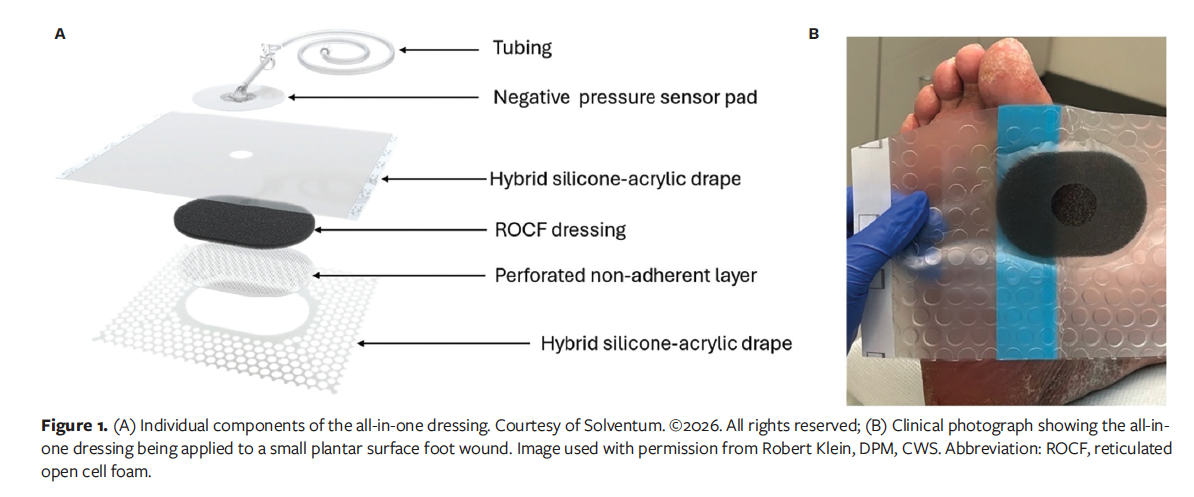
An all-in-one dressing configuration (V.A.C. Peel and Place Dressing; Solventum Corporation) that combines an ROCF dressing, a perforated nonadherent contact layer, and an acrylic-silicone hybrid drape has recently become available for use with NPWT. Because limited clinical evidence exists for this new NPWT configuration, a panel meeting was held with wound care experts to develop best practice recommendations. These recommendations serve as the initial guidance for NPWT with all-in-one dressing use until more clinical evidence becomes available.
Methods
Panel Selection and Meeting
Panel members were recruited for participation according to the following criteria: (1) documented experience with wound management using NPWT; (2) history of peer-reviewed publications or oral presentations focusing on the use of NPWT; and (3) experience using NPWT with the all-in-one dressing for wound management. Industry personnel from the manufacturer of the dressing generated the panel member selection criteria. All panelists are consultants for the manufacturer of the all-in-one dressing.
Panelists included a certified wound care nurse, 3 nurse practitioners, 2 podiatrists, a plastic and reconstructive surgeon, and an internal medicine physician. Panelists had an average of 33 years of wound care experience, including 27.3 years of experience with NPWT and 21.4 peer-reviewed publications or presentations. Additionally, all panel members have 18 months of experience and an average of 63.6 applications of NPWT with the all-in-one dressing. An in-person meeting with these 8 experts was held on September 3, 2025, in Las Vegas, Nevada.
The meeting agenda consisted of determining the optimal candidate for NPWT with all-in-one dressing, categorizing wound characteristics for use, identifying appropriate care settings, classifying therapy use settings, discussing application techniques, and developing best practice recommendations. No formal consensus method was used to develop the recommendations. Open-ended discussions and feedback during the in-person meeting were used for each recommendation. Disagreements were resolved with open discussion and mediation by the corresponding author (M.N.D.).
NPWT With All-in-One Dressing
The all-in-one dressing is approved for use in wounds up to 6 cm deep with no more than 2 cm of undermining and no tunneling (Figure 1). The dressing is designed to cover the wound bed and surrounding periwound skin. When used for open wounds, NPWT with all-in-one dressing is intended to create an environment that promotes wound healing by secondary or tertiary (delayed primary) intention.
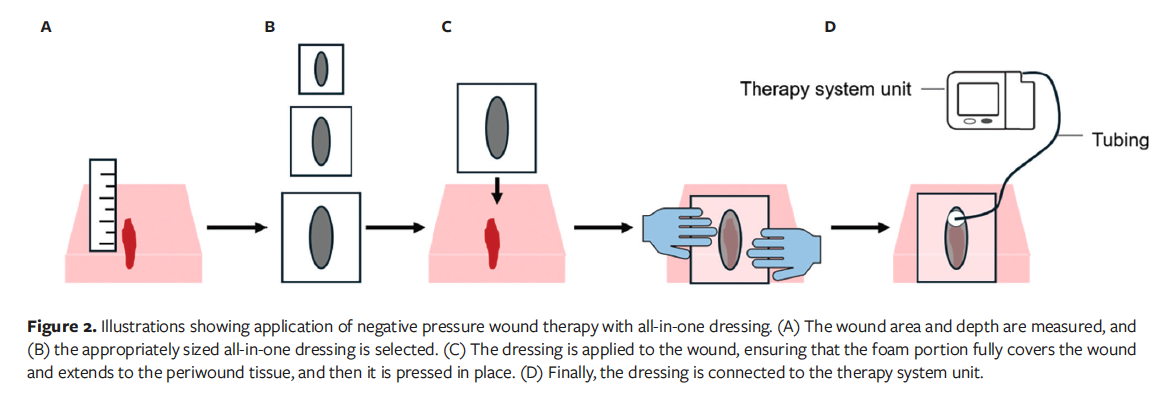
The all-in-one dressing is applied over the wound and surrounding periwound skin (Figure 2). The dressing can be repositioned for up to 20 minutes during the first placement. The tubing is then connected to the dressing and the therapy unit (ActiV.A.C. Therapy Unit, Prevena Plus 125 Therapy Unit, V.A.C. Ulta Therapy Unit, V.A.C. Rx4 Therapy Unit, or V.A.C. Simplicity Therapy Unit; Solventum Corporation). Next, the therapy unit is turned on to deliver continuous negative pressure therapy to the wound. The all-in-one dressing can be left in place for up to 7 days. NPWT with all-in-one dressing promotes perfusion and development of granulation tissue, removes exudate and infectious material, reduces edema, and helps prepare the wound for closure. Preliminary data suggest that tissue microstrain and macrostrain occur during NPWT with all-in-one dressing use, and that all-in-one dressing–treated tissue exhibits more homogenous tissue strains and deeper propagation of tensile strains compared with traditional polyurethane foam dressings.10
Results and Discussion
Recommended Patient Characteristics for NPWT With All-in-One Dressing Use
As noted previously, NPWT with all-in-one dressing can be left in place for up to 7 days without a dressing change. Due to the extended length of time between dressing changes, panel members recommended using this therapy configuration when the therapy goal is to bridge to closure and for patients in the inpatient setting for a short time, patients transitioning to outpatient care, patients who report pain with traditional NPWT dressing changes, and patients who adhere to the recommended treatment plan. Additionally, acute care hospitals, skilled nursing facilities, short-term rehabilitation facilities, outpatient clinics, clinician offices, and home health were recommended settings for NPWT with all-in-one-dressing use in patients receiving wound care.
A previous panel meeting of 9 wound care experts recommended use of traditional NPWT in both inpatient and outpatient settings when the wound care goals include removal of infectious material, management of exudate, promotion of granulation tissue formation, and creation of a moist wound healing environment.11 Applewhite et al11 recommended inpatient and outpatient use of NPWT for a variety of wound types, including diabetic foot ulcers (DFUs), venous leg ulcers (VLUs), pressure injuries, traumatic wounds, surgical wounds, skin tears, and skin graft donor sites. Similarly, updated guidance on NPWT use by the European Wound Management Association noted that use of NPWT in the outpatient setting could be cost-effective and well tolerated by patients, provided that increased collaboration between the inpatient and outpatient care settings occurs along with patient and caregiver education about NPWT use and the patient’s individual wound care plan.12 A 2018 study of 66 patients with DFUs noted that traditional NPWT use in the outpatient setting resulted in wound area reduction for that patient population.13 The panel members who met in September 2025 noted anecdotally that use of NPWT with all-in-one dressing in the outpatient setting has resulted in improved wound outcomes; these data are limited, however, and formal studies are currently underway.
As noted previously, the all-in-one dressing is configured with a hybrid silicone-acrylic adhesive drape (Figure 1). Small case series focusing on traditional NPWT with the hybrid silicone-acrylic adhesive drape reported that the hybrid drape was well tolerated, maintained a negative pressure seal even when used in difficult anatomic areas, helped mitigate further periwound skin irritation, allowed for periwound skin healing, and reduced patient-reported pain at dressing changes.14-16 Thus, panel members recommended the use of NPWT with all-in-one dressing for patients with periwound skin irritation and pain with the traditional NPWT drape.
Recommended Wound Characteristics for NPWT With All-in-One Dressing Use
NPWT with all-in-one dressing can be used for wounds with a depth of up to 6 cm that would benefit from continued NPWT. The all-in-one dressing should extend beyond the wound edges so that it overlaps onto the periwound skin. Panel members recommended selecting the next larger dressing size to ensure that the all-in-one dressing will sufficiently extend over the periwound skin. Panel members recommended NPWT with all-in-one dressing use for chronic wounds, acute wounds, traumatic wounds, subacute and dehisced wounds, open surgical wounds, partial-thickness burns, ulcers (ie, DFUs, VLUs), pressure injuries, donor site wounds, and as a bolster over flaps and grafts. Panelists noted that NPWT with all-in-one dressing can be used in wounds with exudate. However, if thick and fibrinous or excessive amounts of exudate are observed, then the wound may benefit from wound cleansing or NPWT with instillation and dwell (Veraflo Therapy; Solventum Corporation) prior to NPWT with all-in-one dressing use.
NPWT with traditional ROCF dressing has been associated with shorter hospital stays, fewer debridements, reduced wound size, increased granulation tissue formation, and higher rates of wound healing across various wound types.3,6,9,17-24 When used as a bolster over flaps and grafts, traditional NPWT has been reported to reduce tissue edema and increase perfusion and flap or graft take.25-29 Due to the recent introduction of NPWT with all-in-one dressing to the commercial market, there is a lack of available clinical evidence. However, the shared mechanisms and similarities between all-in-one and traditional ROCF dressings suggest comparable outcomes may be expected.
Recommended NPWT With All-In-One
Dressing Therapy Settings
Early research into traditional negative pressure and wound healing in porcine models reported a 4-fold increase in blood flow and granulation tissue development with −125 mm Hg of applied negative pressure.30 However, more recent studies have reported that the optimal negative pressure for wound management varies depending on the wound type and that the negative pressure used should be based on therapy goals.31-33 Thus, panel members recommended a continuous negative pressure setting of −125 mm Hg, with higher pressures up to −150 mm Hg for larger wounds and/or higher levels of exudate, at the clinician’s discretion, for NPWT with the all-in-one dressing.
Traditional NPWT dressing changes occur every 2 to 3 days, because a porcine model of wound healing noted tissue ingrowth into the ROCF dressing for some wounds.30 Similarly, NPWT use in 300 wounds at 1 institution noted excessive tissue ingrowth in some patients’ wounds when the ROCF dressing was left in place for longer than 48 hours.34 The all-in-one dressing, in contrast, is configured to include a nonadherent contact layer between the wound bed and the foam dressing to help guard against potential tissue ingrowth into the foam dressing (Figure 1). This configuration allows for an extended dressing wear time of up to 7 days. Panel members recommended dressing changes every 5 to 7 days, with more frequent dressing changes, such as every 3 to 4 days, for highly exudative wounds.
Contraindications to NPWT With
All-in-One Dressing Use
Use of NPWT with all-in-one dressing is contraindicated in the setting of abscess, untreated osteomyelitis, untreated malignancy, inadequate hemostasis, non-enteric and unexplored fistulas, and necrotic tissue with eschar (Table 1). When NPWT is used under these circumstances, there is an increased risk for the spread of infection, unwanted tissue growth, and blood loss.35 However, panelists noted that after the abscess, osteomyelitis, or malignancy has been treated and hemostasis has been achieved, NPWT with all-in-one dressing can be used with caution. In the presence of a non-enteric and/or unexplored fistula, there is a potential for fistula eruption or negative pressure in the body cavity, which can damage vessels and/or organs. Necrotic tissue and eschar are nonviable tissues that can inhibit the development of healthy granulation tissue, can prevent negative pressure from reaching all areas of the wound bed, and may increase the risk of infection. Panel members recommended against the use of NPWT with all-in-one dressing when necrotic tissue and/or eschar are present.
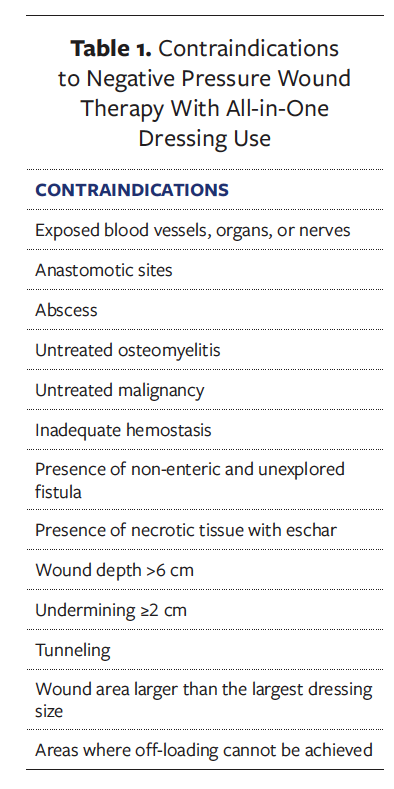
The all-in-one dressing configuration does not allow for full wound bed area and depth coverage when used in a wound with a depth greater than 6 cm, with 2 cm or more of undermining, or with tunneling (Table 1). Use in these wounds is contraindicated because the negative pressure cannot reach all parts of the wound, resulting in inadequate therapy. For these wounds, panel members recommended use of traditional NPWT modalities. Additionally, if wound depth and undermining are within the manufacturer’s specifications, but the largest size all-in-one dressing does not fully extend onto the periwound skin around the wound, panel members recommended the use of traditional NPWT dressings.
Panel members also recommended that NPWT with all-in-one dressing not be used in areas where off-loading cannot be achieved or for patients who are unable to adhere to the treatment plan.
Recommended Application Techniques
The all-in-one dressing configuration lends itself to fast and easy application. However, panel members developed recommended application techniques based on their own experience with the all-in-one dressing (Table 2). Panel members recommended pressing the dressing into place and avoiding stretching the drape during dressing application. This allows for full wound coverage and mitigates the potential for patient discomfort and blister development after negative pressure has been initiated. Use of NPWT around toes can be difficult because these anatomic areas can develop negative pressure seal leaks, greatly reducing the effectiveness of the therapy. Thus, panel members recommended the use of hydrocolloid dressings or rings around toes to help maintain a negative pressure seal. Panel members also recommended using a larger all-in-one dressing to allow for bridging, if bridging is required.
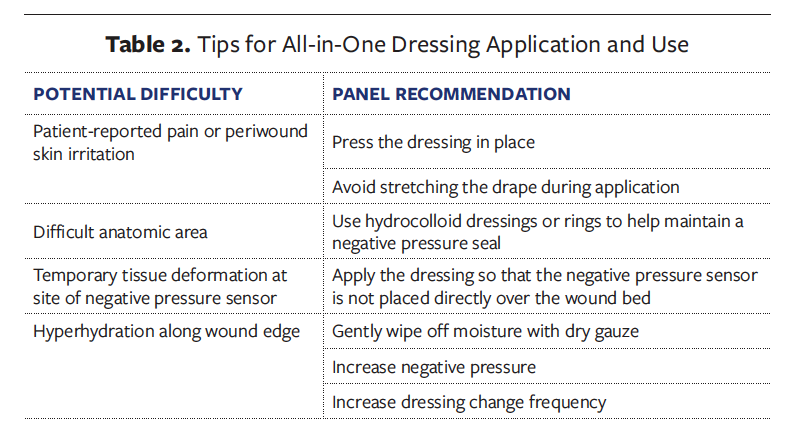
In some patients, the negative pressure sensor and delivery pad can cause temporary tissue deformation if placed directly over the wound bed or onto intact skin. To help minimize the potential for tissue deformation, panel members recommended moving the location of the negative pressure sensor pad during dressing changes so that it is not placed directly over the wound bed and using a thin hydrocolloid dressing under the areas where the sensor pad is over intact skin.
Additionally, some panel members have noted the presence of hyperhydration along the wound edge during dressing changes in a subset of patients with highly exudative wounds within their own clinical practices. Hyperhydration, the transient overhydration of skin that resolves over time with air exposure, may not be detrimental to wound healing.36,37 Panel members recommended gently wiping off the excess moisture with dry gauze, increasing the negative pressure, and more frequent dressing changes. These changes can help reduce hyperhydration and help mitigate the potential for periwound skin maceration.
Limitations
Limitations for this work include the small number of panel members, the potential for peer-to-peer influence, and the lack of clinical evidence. Eight panelists with extensive experience utilizing NPWT modalities, including NPWT with all-in-one dressing, were selected for the in-person meeting. Despite this small number of panelists, they were representative of wound management across several medical specialties and settings. To minimize the potential for peer-to-peer influence at the in-person meeting, open discussion and free expression of opinions were encouraged during the development of the best practice recommendations. All authors disclosed consultancy relationships with the manufacturer of the all-in-one dressing discussed in these best practice recommendations. These disclosures are provided in the interest of transparency and to enable readers to evaluate the recommendations within the context of the authors' relevant professional relationships and expertise. It should be noted that the panel was composed of experienced clinicians and subject matter experts who were among the first clinicians to utilize the dressing. Although the recommendations were based on the evidence and consensus process described above, the uniformity of these industry relationships and the absence of panel members without relevant financial relationships may represent a potential source of bias and should be considered when interpreting the recommendations. Because NPWT with all-in-one dressing has only recently become available for use, there is a lack of published clinical evidence, leaving panel members to rely on their experience with NPWT and all-in-one dressing to develop the best practice recommendations. When possible, these recommendations were supported by peer-reviewed clinical evidence for NPWT with traditional dressings due to the similarities between mechanisms of action. These recommendations serve as initial use guidance that should be adjusted as more clinical evidence becomes available.
Conclusion
NPWT with all-in-one dressing has recently become available for use, and published guidance on its use is lacking. A panel of 8 experts met in person to develop best practice recommendations for its use. Panel members recommended NPWT with all-in-one dressing for chronic wounds, acute wounds, dehisced wounds, partial-thickness burns, ulcers, flaps, grafts, and donor sites. They also recommended continuous negative pressure of −125 mm Hg with dressing changes every 5 to 7 days. The therapy was not recommended for patients unable to adhere to the treatment plan, for wounds with untreated osteomyelitis, for inadequate hemostasis, for fistulas, or in areas where off-loading cannot be achieved. Additionally, panel members recommended pressing the dressing into place to avoid stretching the drape during application, using hydrocolloid dressings or rings around toes to help maintain a negative pressure seal, and offsetting the NPWT sensor pad to minimize the potential for tissue deformation. These recommendations serve as initial guidance to be adjusted as more clinical evidence becomes available.
Author and Public Information
Authors: Michael N. Desvigne, MD, CWS1; Misael C. Alonso, MD, CWSP2; Kara Couch, MS, CRNP, CWCN-AP3; Emily Greenstein, APRN, CNP, CWON4; Robert Klein, DPM, CWS5,6; Catherine Milne, APRN, MSN, ANP, CWOCN-AP7; Ralph J. Napolitano, Jr, DPM, CWSP8,9; and
Dot Weir, RN, CWON, CWS10
Affiliations: 1Abrazo Arrowhead Hospital and Wound Clinic, Glendale, AZ; 2MCA Medical, Inc, Surprise, AZ; 3George Washington University Hospital, Washington, DC; 4Wound Care, Essentia Health, Fargo, ND; 5University of South Carolina School of Medicine Greenville, Greenville, SC; 6Prisma Health, Greenville, SC; 7Connecticut Clinical Nursing Associates, LLC, Bristol, CT; 8OrthoNeuro, Columbus, OH; 9Ohio University Heritage College of Osteopathic Medicine, Athens, OH; 10Wound Healing and Hyperbaric Medicine, Holland Hospital, Holland, MI
Acknowledgment: The authors thank Julie M. Robertson, Julissa Ramos, and Ricardo Martinez (Solventum) for assistance with manuscript preparation and editing.
Disclosure: All authors are consultants for Solventum.
Ethics Statement: Ethical approval was not required because this is a consensus manuscript.
Correspondence: Michael N. Desvigne, MD, CWS; Abrazo Arrowhead Hospital and Wound Clinic, 18700 N 64th Dr Ste 31, Glendale, AZ 85308; mndesvigne@yahoo.com
Manuscript Accepted: July 22, 2026.
References
1. Suissa D, Danino A, Nikolis A. Negative-pressure therapy versus standard wound care: a meta-analysis of randomized trials. Plast Reconstr Surg. 2011;128(5):498e-503e. doi:10.1097/PRS.0b013e31822b675c
2. Biter LU, Beck GM, Mannaerts GH, Stok MM, van der Ham AC, Grotenhuis BA. The use of negative-pressure wound therapy in pilonidal sinus disease: a randomized controlled trial comparing negative-pressure wound therapy versus standard open wound care after surgical excision. Dis Colon Rectum. 2014;57(12):1406-1411. doi:10.1097/DCR.0000000000000240
3. Vuerstaek JD, Vainas T, Wuite J, Nelemans P, Neumann MH, Veraart JC. State-of-the-art treatment of chronic leg ulcers: a randomized controlled trial comparing vacuum-assisted closure (V.A.C.) with modern wound dressings. J Vasc Surg. 2006;44(5):1029-37; discussion 1038. doi:10.1016/j.jvs.2006.07.030
4. Dalmedico MM, do Rocio Fedalto A, Martins WA, de Carvalho CKL, Fernandes BL, Ioshii SO. Effectiveness of negative pressure wound therapy in treating diabetic foot ulcers: a systematic review and meta-analysis of randomized controlled trials. Wounds. 2024;36(8):281-289. doi:10.25270/wnds/23140
5. Qian H, Lei T, Hu Y. Negative pressure wound therapy versus gauze dressings in managing open fracture wound of lower limbs: a meta-analysis of randomized controlled trials. Foot Ankle Surg. 2022;28(7):1120-1128. doi:10.1016/j.fas.2022.03.012
6. Şahin E, Rizalar S, Özker E. Effectiveness of negative-pressure wound therapy compared to wet-dry dressing in pressure injuries. J Tissue Viability. 2022;31(1):164-172. doi:10.1016/j.jtv.2021.12.007
7. Shehata MS, Bahbah E, El-Ayman Y, et al. Effectiveness of negative pressure wound therapy in patients with challenging wounds: a systematic review and meta-analysis. Wounds. 2022;334(12):E126-E134. doi:10.25270/wnds/21061
8. Chen L, Zhang S, Da J, et al. A systematic review and meta-analysis of efficacy and safety of negative pressure wound therapy in the treatment of diabetic foot ulcer. Ann Palliat Med. 2021;10(10):10830-10839. doi:10.21037/apm-21-2476
9. Wu Y, Shen G, Hao C. Negative pressure wound therapy (NPWT) is superior to conventional moist dressings in wound bed preparation for diabetic foot ulcers: a randomized controlled trial. Saudi Med J. 2023;44(10):1020-1029. doi:10.15537/smj.2023.44.20230386
10. Mann SA, Allen D, Haridas B, Schmidt M, Marchand B, Kieswetter K. Novel peel and place negative pressure wound therapy dressing preclinical evaluation: finite element modeling of wound bed tissue strains expands upon biomarker outcomes. Poster (P30) presented at: Symposium on Advanced Wound Care Spring | Wound Healing Society Meeting; May 14-17, 2024; Orlando, FL. doi: 10.1111/wrr.13166
11. Applewhite A, Chowdhry SA, Desvigne M, et al. Inpatient and outpatient wound treatment recommendations: assessing use of negative pressure wound therapy systems or oxidized regenerated cellulose (ORC)/ collagen/silver-ORC dressings. Wounds. 2018;30(8 Suppl):S19-S35.
12. Apelqvist J, Fagerdahl A, Téot L, Willy C. Negative Pressure Wound Therapy: An Update for Clinicians and Outpatient Care Givers. J Wound Management, 2024;25(2 Sup1): S1-S56. doi: 10.35279/jowm2024.25.02.sup01
13. Tamir E, Finestone AS, Wiser I, Anekstein Y, Agar G. Outpatient negative-pressure wound therapy following surgical debridement: results and complications. Adv Skin Wound Care. 2018;31(8):365-369. doi:10.1097/01.ASW.0000531352.93490.24
14. Fernández LG, Matthews MR, Benton C, et al. Use of a novel silicone-acrylic drape with negative pressure wound therapy in anatomically challenging wounds. Int Wound J. 2020;17(6):1829-1834. doi:10.1111/iwj.13471
15. Matthews MR, Fernandez LG. Applications of a new silicone-acrylic hybrid semiocclusive drape with negative pressure wound therapies in a burn center. Wounds. 2022;34(5):141-145. doi:10.25270/wnds/082421.02
16. Greenstein E, Moore N. Use of a novel silicone-acrylic drape with negative pressure wound therapy in four patients with periwound skin breakdown. Wounds. 2021;33(11):304-307.
17. Kolsawala H, Gohil V, Saiyed A, Dhameliya A. A randomized comparative study of vacuum assisted dressing V/S conventional dressing in management of chronic wounds in diabetic patients. Eur J Mol Clin Med. 2022;9(4):834-842. Accessed August 20, 2026. https://www.ejmcm.com/archives/volume-9/issue-4/6656
18. Langer V, Bhandari PS, Rajagopalan S, Mukherjee MK. Negative pressure wound therapy as an adjunct in healing of chronic wounds. Int Wound J. 2015;12(4):436-442. doi:10.1111/iwj.12132
19. Kumaar A, Shanthappa AH, Ethiraj P. A comparative study on efficacy of negative pressure wound therapy versus standard wound therapy for patients with compound fractures in a tertiary care hospital. Cureus. 2022;14(4):e23727. doi:10.7759/cureus.23727
20. Sukur E, Akar A, Uyar AC, et al. Vacuum-assisted closure versus moist dressings in the treatment of diabetic wound ulcers after partial foot amputation: a retrospective analysis in 65 patients. J Orthop Surg (Hong Kong). 2018;26(3):2309499018799769. doi:10.1177/2309499018799769
21. Teng SC. Use of negative pressure wound therapy in burn patients. Int Wound J. 2016;13(Suppl 3):15-18. doi:10.1111/iwj.12641
22. Angulo AR, Caballero-Alvarado J, Sarmiento-Falen J, Zavaleta-Corvera C. Comparative assessment of negative pressure wound therapy versus standard treatment in diabetic foot ulcers: a systematic review and meta-analysis. J Wound Ostomy Continence Nurs. 2025;52(3):227-238. doi:10.1097/WON.0000000000001164
23. Maranna H, Lal P, Mishra A, et al. Negative pressure wound therapy in grade 1 and 2 diabetic foot ulcers: a randomized controlled study. Diabetes Metab Syndr. 2021;15(1):365-371. doi:10.1016/j.dsx.2021.01.014
24. Lorée S, Dompmartin A, Penven K, Harel D, Leroy D. Is vacuum assisted closure a valid technique for debriding chronic leg ulcers? J Wound Care. 2004;13(6):249-252. doi:10.12968/jowc.2004.13.6.26629
25. Dornseifer U, Pfeiler PP, Kargl L, Moog P, Schilling AF, Ninkovic M. Negative pressure wound therapy in free muscle flaps - risk or benefit? J Reconstr Microsurg. 2024;40(3):197-204. doi:10.1055/a-2110-0421
26. Sapino G, Lanz L, Roesti A, et al. One-stage coverage of leg region defects with STSG combined with VAC dressing improves early patient mobilisation and graft take: a comparative study. J Clin Med. 2022;11(12):3305. doi:10.3390/jcm11123305
27. Moris V, Cristofari S, See LA, Guillier D, Zwetyenga N, Pluvy I. Randomized comparative study of negative pressure wound therapy versus compression dressing on split-thickness skin grafts of the lower limbs in an elderly population. Expert Rev Med Devices. 2024 May 7:1-8. doi:10.1080/17434440.2024.2350494
28. Baek S, Park JH. Negative pressure wound therapy (NPWT) after hybrid reconstruction of occipital pressure sore using local flap and skin graft. Medicina (Kaunas). 2023;59(7):1342. doi:10.3390/medicina59071342
29. Joo HS, Lee SJ, Lee SY, Sung KY. The efficacy of negative pressure wound therapy for split-thickness skin grafts for wounds on the trunk or the neck: a randomized controlled trial. Wounds. 2020;32(12):334-338.
30. Morykwas MJ, Argenta LC, Shelton-Brown EI, McGuirt W. Vacuum-assisted closure: a new method for wound control and treatment: animal studies and basic foundation. Ann Plast Surg. 1997;38(6):553-562. doi:10.1097/00000637-199706000-00001
31. Agarwal P, Kukrele R, Sharma D. Vacuum assisted closure (VAC)/negative pressure wound therapy (NPWT) for difficult wounds: a review. J Clin Orthop Trauma. 2019;10(5):845-848. doi:10.1016/j.jcot.2019.06.015
32. Lavery LA, La Fontaine J, Thakral G, Kim PJ, Bhavan K, Davis KE. Randomized clinical trial to compare negative-pressure wound therapy approaches with low and high pressure, silicone-coated dressing, and polyurethane foam dressing. Plast Reconstr Surg. 2014;133(3):722-726. doi:10.1097/01.prs.0000438046.83515.6a
33. Quacinella MA, Yong TM, Obremskey WT, Stinner DJ. Negative pressure wound therapy: where are we in 2022? OTA Int. 2023;6(4 Suppl):e247. doi:10.1097/OI9.0000000000000247
34. Argenta LC, Morykwas MJ. Vacuum-assisted closure: a new method for wound control and treatment: clinical experience. Ann Plast Surg. 1997;38(6):563-576, discussion 577.
35. Novak A, Khan WS, Palmer J. The evidence-based principles of negative pressure wound therapy in trauma and orthopedics. Open Orthop J. 2014;8:168-177. doi:10.2174/1874325001408010168
36. Rippon MG, Ousey K, Cutting KF. Wound healing and hyper-hydration: a counterintuitive model. J Wound Care. 2016;25(2):68, 70-75. doi:10.12968/jowc.2016.25.2.68
37. Ousey K, Cutting KF, Rogers AA, Rippon MG. The importance of hydration in wound healing: reinvigorating the clinical perspective. J Wound Care. 2016;25(3):122, 124-30. doi:10.12968/jowc.2016.25.3.122