Four Anaphylaxis Triggers You've (Probably) Never Heard Of
The Case
It’s a beautiful, sunny morning, and you’re responding to a camp for teens. The stated complaint is “full-body rash, 14-year-old boy.” A panicked-looking man in a bright orange shirt and khakis frantically waves the ambulance down. This piques your interest as the fear in his eyes seems like a disproportionate reaction to a camper with a rash.
Your patient is wheezing in a tripod position and barely manages to look up at you when you walk in. You ask your partner, whom you’ve never worked with before, to put a nonrebreather on his face. Your partner does so and turns the oxygen as high as it will go.
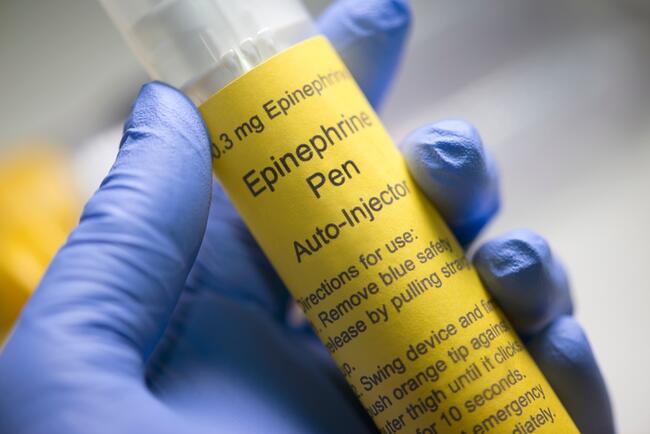
“Does he have any allergies?” you ask the spooked staff member while you draw up epinephrine.
“His paperwork said he didn’t,” he replies with some hesitation.
You ask the patient whether he has any history of drug allergies or food allergies or whether this has even happened before. You ask whether he’s on a new medication or has been stung or bitten by some kind of insect. He shakes his head repeatedly. You learn the patient hasn’t eaten yet today.
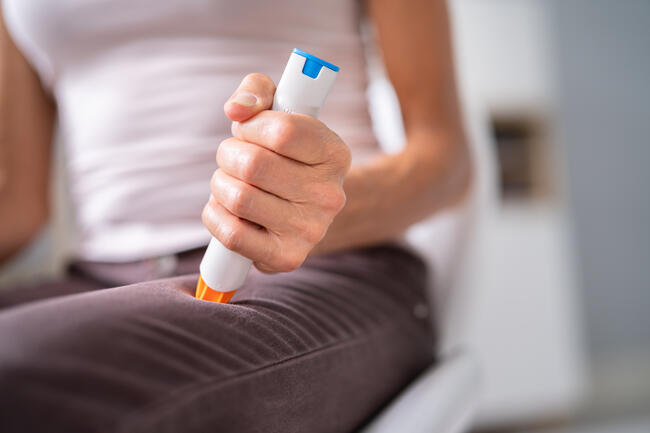
You explain that he’ll have to get an injection now, and your partner touches your wrist. “We don’t know what the trigger is."
You agree that you don’t even have an educated guess.
“So, we can’t be sure it’s anaphylaxis. We can’t treat without at least a suspected trigger.”
Is he right? Are you about to make a mistake?
When The Trigger Isn’t Immediately Apparent
When presented with a patient who is clearly anaphylactic, a known trigger is a great thing to have. It’s as reassuring as a comforter that’s just come out of the dryer, or hearing “Cancel all incoming units” over the radio. It makes the right track obvious.
We’re all familiar with the most common anaphylaxis triggers. They include tree nuts, milk, eggs, stings from bees, wasps, or fire ants, and medications, particularly antibiotics or over-the-counter pain relief.1 However, data suggest that about 21.6% of anaphylaxis cases are caused by an unknown trigger. Even in the most ideal circumstances, one in five patients will never have their anaphylaxis trigger determined.
Furthermore, anaphylaxis without an obvious trigger will be overrepresented in 9-1-1 calls. If the patient knew this could happen, had a history of this kind of complaint, and were aware of the triggers for it, they’d be a lot less likely to involve emergency services. In my personal experience, as much as half of the time I haven’t been able to determine on scene what the trigger for my clearly anaphylactic patient was. I’m not sure how many of these cases had their allergic trigger specified later in a definitive care setting.
It’s also possible that your patient’s anaphylaxis trigger is so strange and unpredictable that it never would have occurred to you, the patient, or even most allergists.
Rare But Confirmed Anaphylaxis Triggers
1. Cold
There are genuinely patients who exist whose anaphylaxis trigger is the cold.2 These patients can be in mortal danger from either submerging themselves in a cold body of water or just walking outside into cold air without enough layers. The metabolic pathway is different from that of standard anaphylaxis, but at a prehospital level it doesn’t matter: It kills like anaphylaxis and responds to the same treatments. Typically, these patients will have a history of “cold urticaria,” a rash that develops on skin in response to colder temperatures, but not always.
2. Raw Potato
Raw potato can cause mild allergy symptoms in adults, but children are more likely to have severe reactions, including anaphylaxis.3,4 These reactions can occur from touching, ingesting, or even inhaling raw potato. The potato doesn't need to present in sufficient amounts to be seen or even smelled; some patients may experience a reaction in a room where a potato has been chopped or peeled but is no longer visible.
3. Exercising After Eating Cabbage
There is a case study of a patient who has an allergy that was presumably discovered by a truly gifted Sherlock of an allergist: this individual goes into anaphylaxis if they consume cabbage and then exercise vigorously in the hour that follows.3 Only this specific combination of factors leads to the allergic reaction. If this patient eats cabbage, they’ll have a healthy, colorful and crunchy snack. If they only exercise, then it’s great for cardiac health, muscle growth, joint development and mental health. If this patient goes for a run, rests for a couple of minutes, then snacks on cabbage, that’s just a wholesome morning. However, if he eats a serving of cabbage and then goes to Zumba he will go into total cardiopulmonary collapse.
4. Semen
Patients can also have an anaphylactic reaction following exposure to semen.5 This can happen via any route: ingestion, contact with mucous membrane, or exposure through intact skin. This can include a situation in which a patient has a known serious allergy, for example to pistachios, and their partner consumes enough that either their semen or mouth has a trace amounts sufficient to cause the reaction. For other patients, it’s a reaction to proteins in the semen itself, completely independent of the habits of the body it was created in. Therefore, recent sexual activity could be an anaphylaxis trigger.
It often feels awkward to ask a patient such personal questions. However, if your tone and body language convey that this is a typical interview question, many people will simply answer it without discomfort. Failing that, explain to the patient that you do genuinely need to know the last time they were exposed to semen in the event that’s what’s causing their complaint.
You Don’t Need to Know The Trigger
A trigger for anaphylaxis is a nice-to-have; something that would make the diagnosis a lay-up. However, anaphylaxis is a clinical diagnosis, which means it’s diagnosed based on provider interview, assessment, and judgement rather than lab values.6 This also means that prehospital providers are as capable of diagnosing this life-threatening and highly treatable condition as our in-hospital colleagues.
If your patient is clearly anaphylactic, you don’t need to know the source, name, or nature of the substance placing them in mortal peril. It’s entirely possible that the truth is something that will only emerge after hours or days of intensive history-taking and detective work—or even never at all. In a world in which your patient could be responding to a bike ride after having a healthy snack, or a substance that they’ve never eaten and haven’t even been exposed to in hours, never withhold epinephrine due to an inability to immediately name the trigger.
Back to the Case
“Thanks for helping me take care of him,” you tell your partner with genuine sincerity. “Our protocol allows for treating anaphylaxis without an obvious trigger.”
Knowing that any delay in epinephrine administration in the presence of anaphylaxis worsens outcomes, you continue.7 “I’m going to give the injection now, but I won’t be offended if you want to double-check with medical control that we’re on the right path here.”
Your unfamiliar partner nods agreeably, responding to your calm and unthreatened demeanor. “Sure. You got everything covered here while I make that call?”
You tell him you do, administer the epi, confirm that the oxygen tank still has enough pressure, and take another complete set of vitals. The patient starts speaking in sentences and sitting up straight. He feels well enough to try and argue that he shouldn’t go to the hospital. The staff member explains that they were supposed to start welding classes this morning.
Your partner comes back, nodding in approval at the much-improved appearance of your patient. “Doc says don’t forget the IV steroids.”
References
- Anaphylaxis statistics. Allergy & Asthma Network. (2025b, March 6). https://allergyasthmanetwork.org/anaphylaxis/anaphylaxis-statistics/
- Bizjak, M., Rutkowski, K. & Asero, R. Risk of Anaphylaxis Associated with Cold Urticaria. Curr Treat Options Allergy 11, 167–175 (2024). https://doi.org/10.1007/s40521-024-00366-9
- Melethil, S., & Yousef, E. (2024). Rare causes of pediatric anaphylaxis due to obscure allergens. Frontiers in allergy, 5, 1456100. https://doi.org/10.3389/falgy.2024.1456100.
- Seppälä, U., Alenius, H., Turjanmaa, K., Reunala, T., Palosuo, T., & Kalkkinen, N. (1999). Identification of patatin as a novel allergen for children with positive skin prick test responses to raw potato. Journal of Allergy and Clinical Immunology, 103(1). https://doi.org/10.1016/S0091-6749(99)70541-5
- Semen allergy: Causes, symptoms, diagnosis & treatment. Cleveland Clinic. (2025, June 2). https://my.clevelandclinic.org/health/diseases/25024-semen-allergy
- McLendon, K. (2023, January 26). Anaphylaxis. StatPearls [Internet]. https://www.ncbi.nlm.nih.gov/books/NBK482124/
- Sicherer, S. H., Simons, F. E., Mahr, T. A., Abramson, S. L., Dinakar, C., Fleisher, T. A., Irani, A.-M., Kim, J. S., & Matsui, E. C. (2017a). Epinephrine for first-aid management of anaphylaxis. Pediatrics, 139(3). https://doi.org/10.1542/peds.2016-4006