









Deciding Which Digit To Remove In Patients With Polydactyly
Co-authored by Adrienne O'Neill, DPM
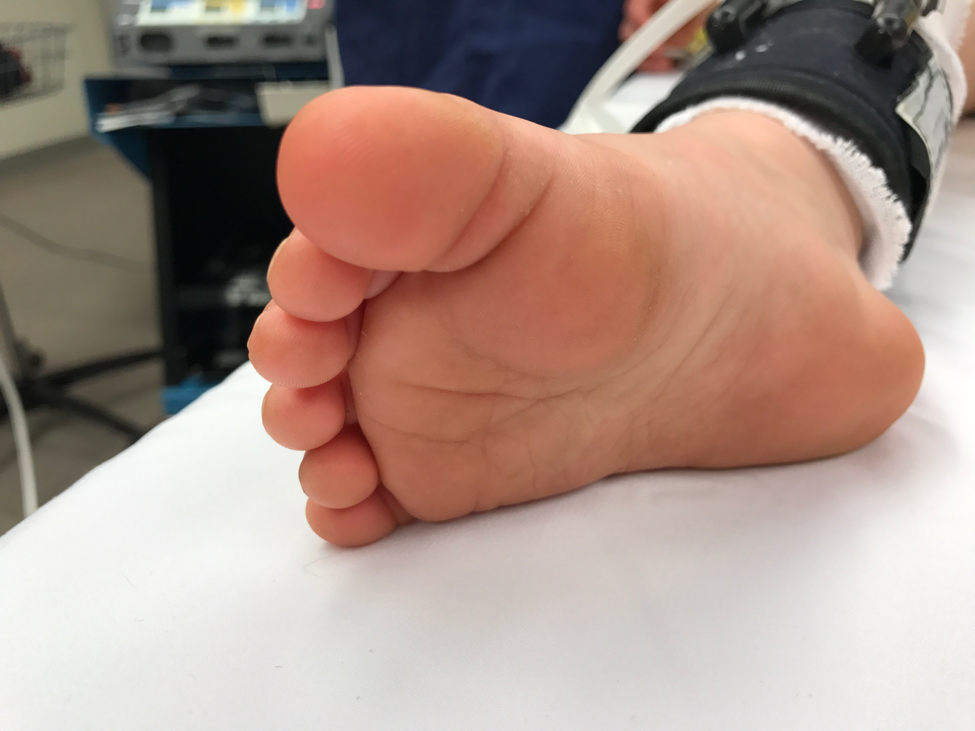 Polydactyly is characterized by the presentation of one or more supernumerary digits on the hands and/or feet. These supernumerary digits may be accompanied by extra metatarsal or metacarpal bones.1 The abnormality of polydactyly can vary in severity from a rudimentary skin tag to a completely replicated digit and metatarsal.2,3
Polydactyly as an isolated trait occurs in 1 to 1.7 of 1,000 live births and about twice more frequently in the hands than the feet.1,4 The condition occurs throughout the world with the highest incidence among Asian people.2 Researchers have not identified a gender predilection with males and females affected equally.2
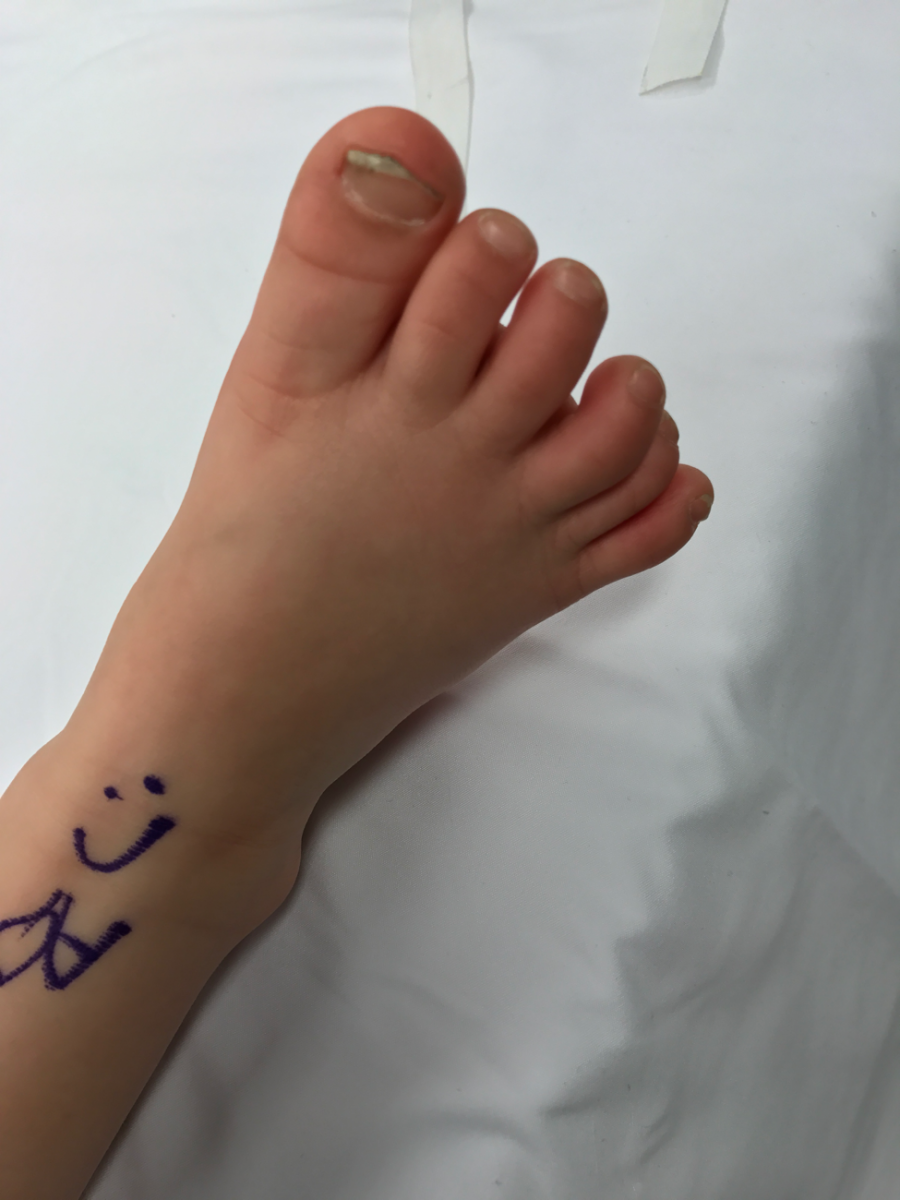 The inheritance pattern and etiology of polydactyly are not completely understood. As an isolated deformity, it is inherited in an autosomal dominant pattern with varied penetrance.1 Researchers have also identified an autosomal recessive inheritance pattern and the condition is often associated with other syndromes, including Laurence–Moon–Bardet–Biedl syndrome, Ellis–van Creveld syndrome, Pallister–Hall syndrome, trisomy 12, cleft lip or tongue, and clubfoot.1,2
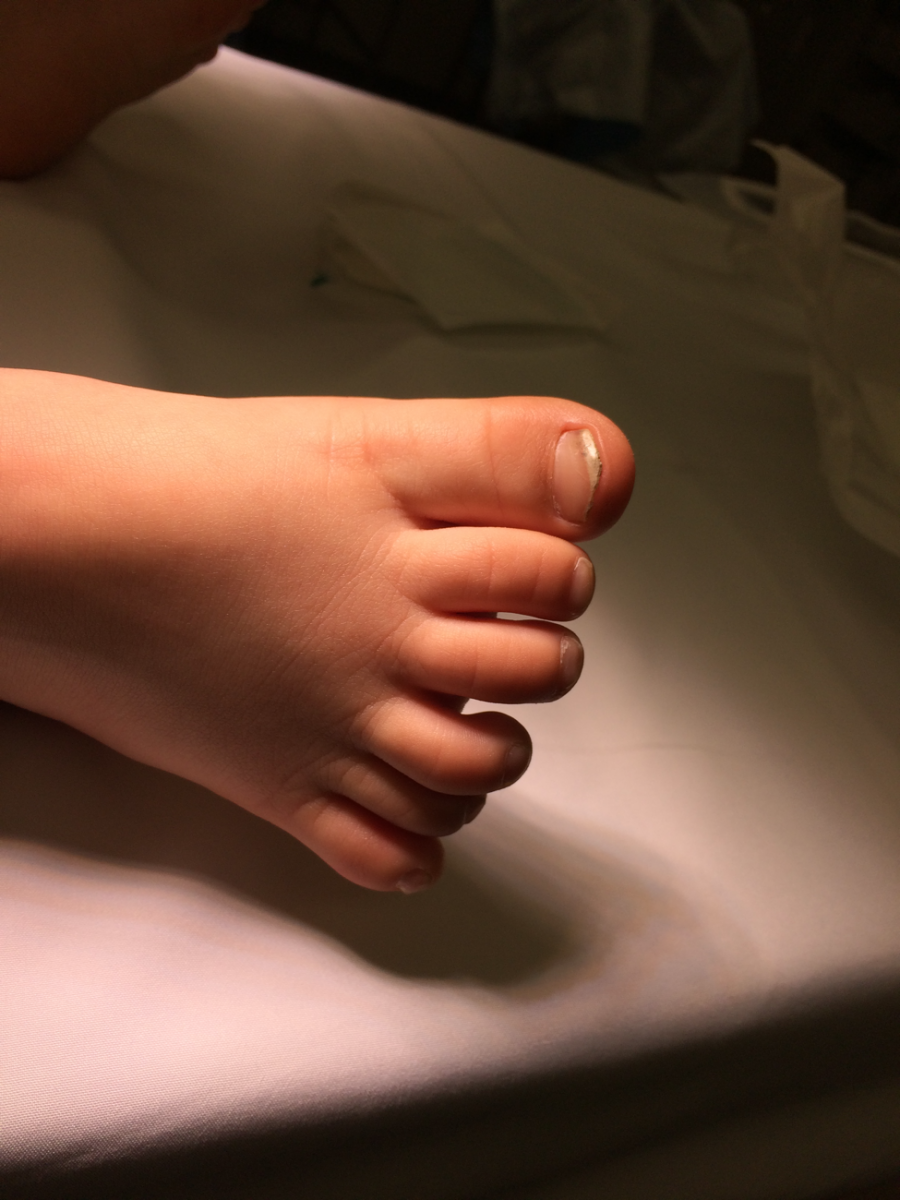 Researchers have proposed a plethora of classification systems. The Temtamy and McKusick classification is easy to utilize.5 It is based on the location of the accessory digit. Duplication of a digit on the tibial side of the foot is preaxial polydactyly. Conversely, duplication of a digit on the fibular side of the foot is postaxial polydactyly. The classification further divides postaxial polydactyly into Type A, a fully developed digit including osseous structures, and Type B, a rudimentary digit. Duplication of any of the remaining central digits is known as central polydactyly.1-2,5 Postaxial polydactyly is the most common of these three, accounting for 80 percent of polydactyly in the foot.3
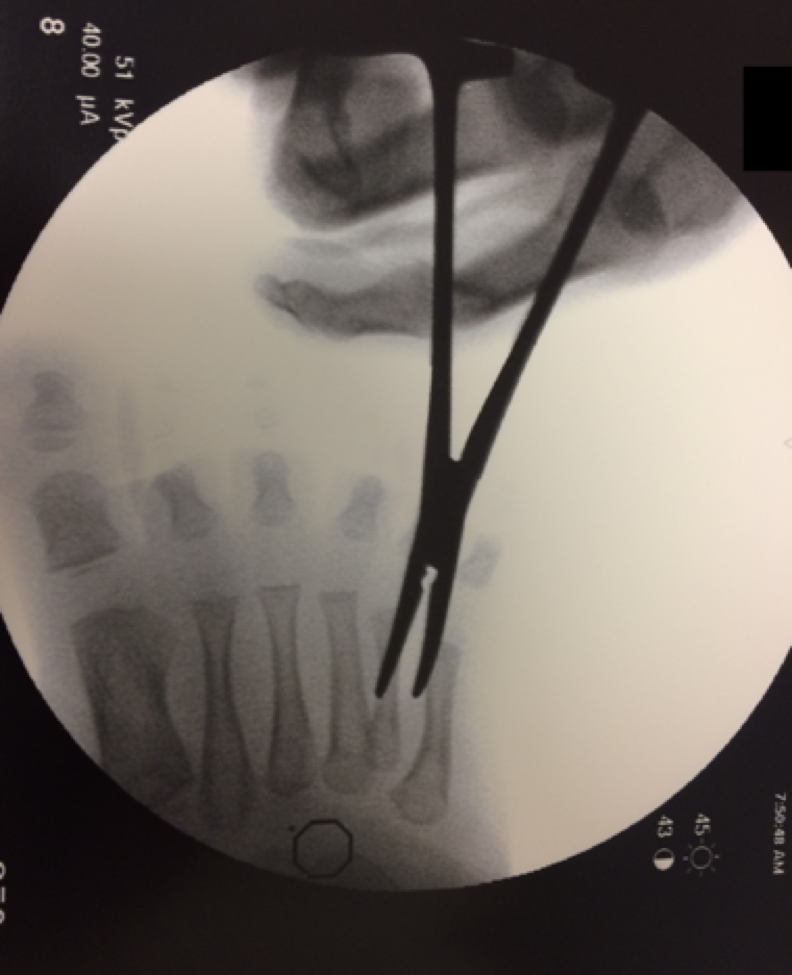 Venn-Watson proposed another classification system based on the morphologic features of the metatarsal that is frequently in use in surgical planning.6 The classification divides morphologic patterns into first metatarsal and lesser metatarsal types.2,6-7 First metatarsal patterns demonstrate a short block metatarsal and/or wide metatarsal head. Lesser metatarsal types are Y-shaped, T-shaped, normal with a wide head or complete ray duplication.2
Patients seeking treatment for polydactyly commonly present with cosmetic complaints. However, some may relate a history of pain with ambulation and the inability to find shoes to accommodate the deformity. Treatment should begin conservatively with shoe gear modifications and custom-molded inserts.7
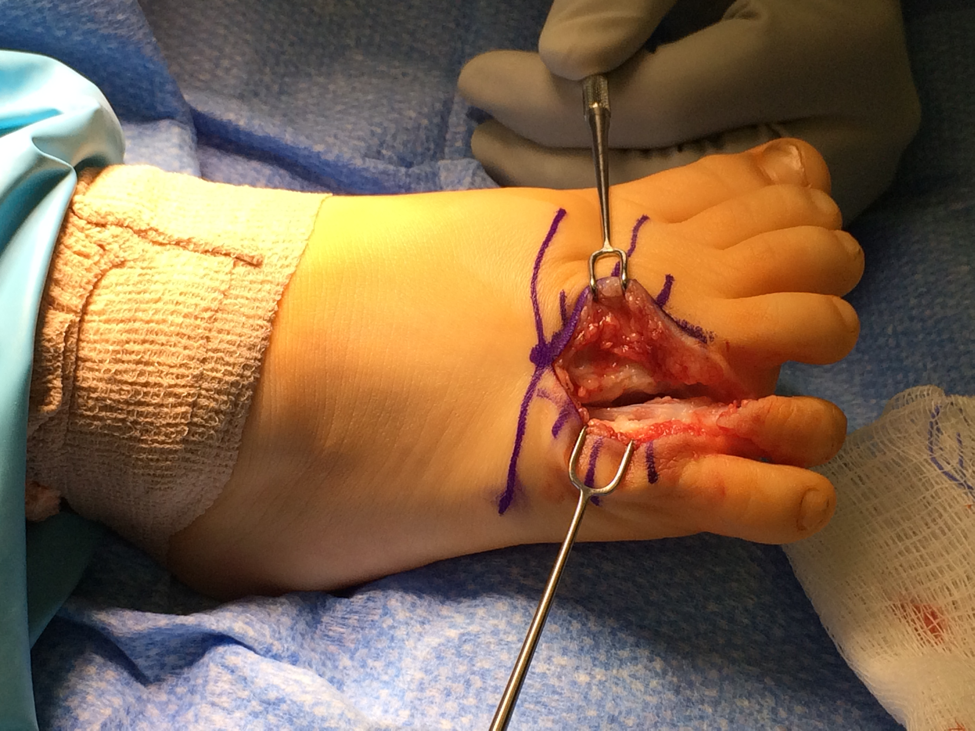 When conservative treatment fails, surgical intervention may be warranted. A thorough history and physical are important to perform prior to surgery, especially in the pediatric population, in order to identify associated conditions and congenital abnormalities. One should tailor the surgery to the patient as the possible deformities of polydactyly are numerous and unique to each patient.
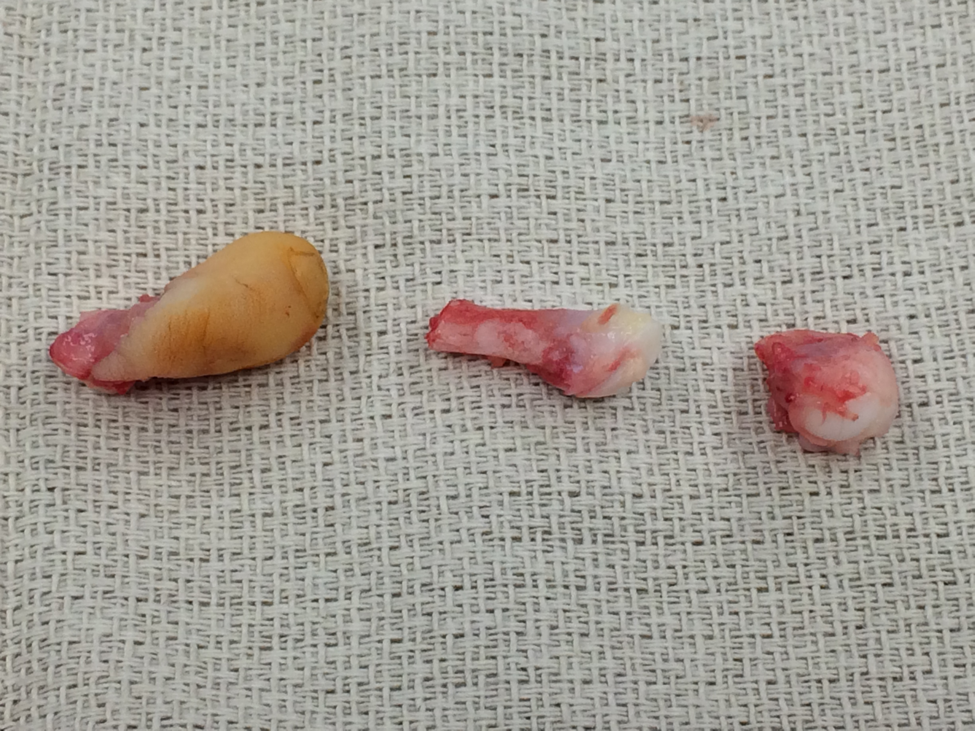 The first step in surgical correction is deciding which digit to remove. One should preserve digits or metatarsals that are the most developed, the most cosmetically pleasing, and/or with the most normal metatarsophalangeal joint articulation.7
Case Study: Amputating An Extra Fifth Digit In A Three-Year-Old Boy
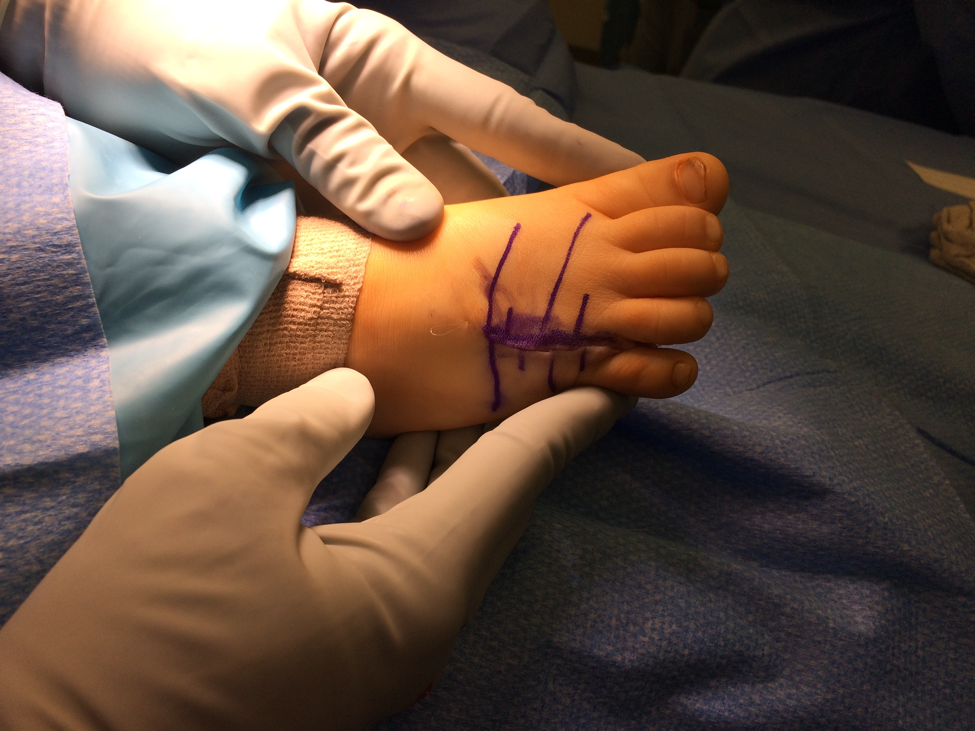
 A 3-year-old boy presented to the clinic with his parents for evaluation of polydactyly. His parents related a history of difficulty wearing shoes due to the width of the child’s foot. To their knowledge, they did not believe the deformity was causing the child pain. The patient’s parents stated that the patient was an otherwise healthy child born full-term with no congenital or developmental abnormalities.
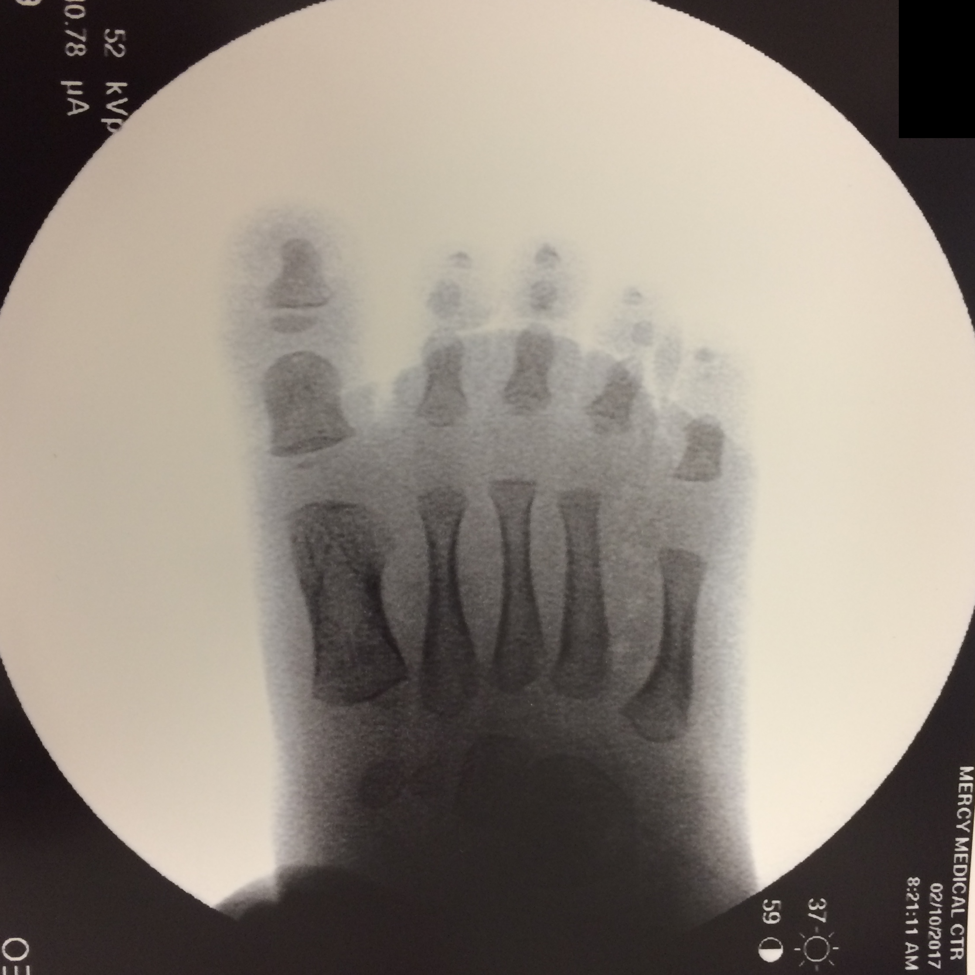
 Prior to surgery, radiographic evaluation demonstrated a supernumerary digit and metatarsal. According to the aforementioned classification systems, we believe this to be a central polydactyly deformity with complete fourth ray duplication. The fifth metatarsal appeared to be smaller and less developed in comparison to the fourth and sixth metatarsals. Accordingly, I decided to excise the fifth metatarsal and digit.
I placed 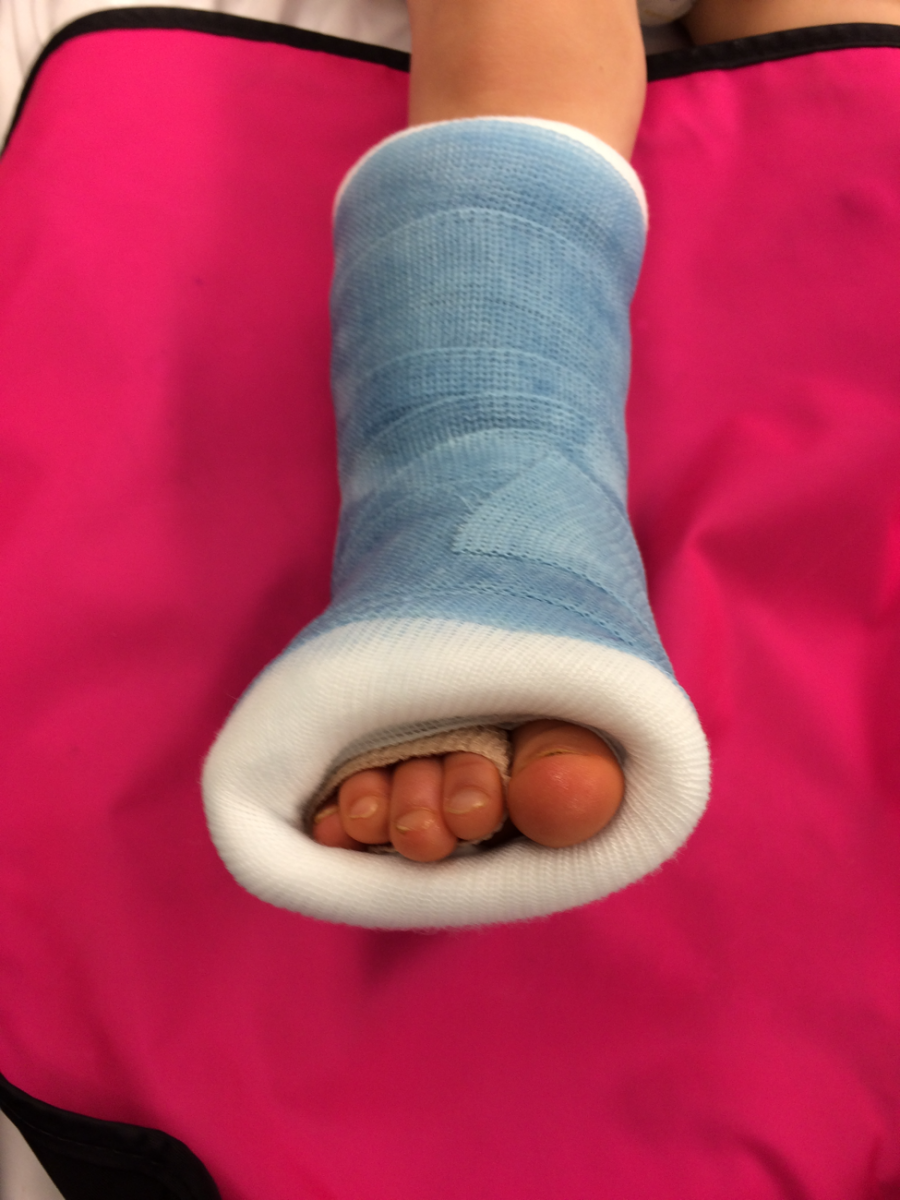 a linear skin incision above the fifth metatarsal to be removed, carrying careful dissection down to the level of bone. After identifying the metatarsal, I amputated the extra digit. This allowed better access to the remaining metatarsal. Due to the small size and delicacy of the metatarsal, I resected it in two parts, starting with the head and shaft, and subsequently resecting the base.
I performed layered skin closure of the wound. The patient’s foot demonstrated a normal appearance following resection of the extra metatarsal and digit. I placed a soft splint around the digits to stabilize them and applied a lower leg fiberglass cast to allow wound healing.
Dr. O'Neill is an attending surgeon in the Alliance Community Hospital Residency Program in Alliance, Ohio, and is in private practice in North Canton, Ohio.
References
- McCarthy GJ, Lindaman L, Stefan M. Pedal polydactyly: an overview with case report. J Foot Ankle Surg. 1995; 34(6):577-582.
- Kleanthous JK, Kleanthous EM, Hahn Jr. PJ. Polydactyly of the foot. Overview with case presentations. J Am Podiatr Med Assoc. 1998; 88(10):493-499.
- Hwang K, Kim ET, Lee SI. Foot polydactyly and polysyndactyly: genetic implications in two families. J Foot Ankle Surg. 2005; 44(6):473-477.
- Farrell DJ, Adamitis J, Skokan SJ. Polydactyly in the pre-adolescent foot: An unusual case presentation with impending pathologic fracture. J Foot Ankle Surg. 1996; 35(1):54-58.
- Temtamy SA, Mckusick VA. Synopsis of hand malformations with particular emphasis on genetic factors. In Temtamy SA, Mckusick VA (eds.). Birth Defects, Volume 3, Alan R. Liss, New York, 1969, p. 125.
- Venn-Watson EA. Problems in polydactyly of the foot. Orthop Clin North Am. 1976; 7(4):909–27.
- Shaheed N, Nealy JA, Bituin BV. A rare occurrence of polydactyly. J Am Podiatr Med Assoc. 2000; 90(8):425-429.





