









Social Determinants of Health Screening Reveals Virtual Care and Social Isolation as Leading Barriers for Podiatry Patients
Routine screening for social determinants of health identified virtual care challenges and social isolation as the most common unmet needs among patients receiving podiatric care at a large academic medical center.
Key Takeaways
- Virtual care access and social isolation were prevalent in reported social needs. Nearly 1 in 5 patients reported barriers related to virtual care (19.3%), while 17.8% identified social isolation as a significant challenge, highlighting opportunities for interventions beyond traditional clinical care.
- Many patients with identified needs did not seek assistance. Although 38.9% of patients reported at least 1 social need, only 8.2% requested help, suggesting that stigma, limited awareness of available resources, or other barriers may prevent patients from accepting support.
- Targeted referral programs can help address SDOH in podiatry practice. The authors describe institutional strategies—including automated social work referrals, community resource navigation, transportation assistance, and telehealth support—that may help reduce barriers to care and improve patient engagement.
The Centers for Disease Control (CDC) defines social determinants of health (SDOH) as the nonmedical factors that influence health outcomes, including conditions in which people are born, grow, live, work and age.1 Reports reveal that social and environmental conditions account for 80% of health outcomes while only 20% are a result of care delivery.2 Understanding how social and physical environments impact health is critical in clinical medicine.
Virtual care is a social determinant of health that is often a barrier to the elderly population who may struggle to evolve with technological advancements. In 2021, Gonzalez and colleagues indicated that the biggest obstacles for the elderly are audio-visual complications and adapting to a telemedicine portal. Other vulnerable populations include individuals with cognitive and comprehension barriers (Alzheimer’s disease or dementia), patients with low health literacy, patients with physical impairments or challenges with transportation, and those with decreased access to services due to living in rural areas.3
The literature provides suggestions to help address such virtual care challenges. One approach, described by Gillie and team in 2022, involved using a Telehealth Literacy Screening Tool (TLST) to identify patients in need of interventions for successful connection to telehealth services. The developers organized the tool into 3 parts, the first being a biopsychosocial background assessment. This consisted of 8 questions primarily completed by chart review.3 The second section was technological literacy, which assessed access to technology. The third section was screening for eHealth literacy, which evaluated knowledge and degree of comfort.3 The second and third sections had four questions each with quantifiable answers. The study authors performed the TLST over the phone or in person, which proved beneficial, as a “real person” served as the interviewer.3 While the screening tool helped to understand the unique challenges of telehealth, further research is necessary to determine its degree of validity, as well as how reliable these scores are in predicting success with telehealth.
For the elderly population, Gonzalez and colleagues suggested patient education on how to utilize telehealth can improve use of the platform. For example, a family member or caregiver serving as a “technical liaison” 1-2 days prior to the visit or being physically present during the televisit can prove beneficial in the encounter.4 Other suggestions include addressing minor nuances such as ensuring speaker functionality, adequate hearing aid power, and limiting background noise.4
Social isolation is another determinant to explore. Kawachi and colleagues, in 2000, defined social cohesion as the extent of connectedness and solidarity among groups in a community, including emotional support and companionship.5 They discussed 3 pathways in which social capital affects individual health. These include:5
- influencing health related behaviors;
- influencing access to services and amenities; and
- affecting psychosocial processes.
Having close knit communities increases the likelihood that patients will embrace healthy behaviors, and discourages health risk behavior.5 Lastly, communities with strong social structures also spread health information more rapidly.5
More specifically, there is strong evidence highlighting the impact of social isolation on diabetes. A study by Gebreab and team in 2017 showed that higher social cohesion associated with a 22% lower incidence of type 2 diabetes.6 Ciechanowski and colleagues in 2010 illustrated increased social support as associated with better glycemic control and improved quality of life, while lack of social support aligned with increased mortality and diabetes-related complications.7
Furthermore, a study by Sarkar and coworkers in 2009 found that approaches towards cohesion can vary based on ethnicity. For example, compared with White adults with diabetes, Hispanics with diabetes prefer telephone-based and group support, while African Americans were more open to internet support.8 Additionally, minority populations rely more heavily on support from family and community, as opposed to White individuals who rely more on medical and health care professionals.8 This example highlights the complexity of addressing social isolation.
Lastly, it is important to distinguish between physical and emotional isolation, as each requires a different approach. In 2020, Holt-Lunstad and colleagues provided examples to address physical isolation such as implementation of safe, reliable and affordable transportation as an avenue for individuals to connect socially and access community resources, including ride sharing programs.9
The primary objective of this study was to identify which specific social determinants of health predominantly affect individuals seeking podiatric care at a large academic tertiary center. Our study highlights key social determinants of health and explores potential solutions and resources to mitigate the barriers and challenges patients encounter.
Patients and Methods
We determined that this study was exempt from the Institutional Review Board (HUM00247410). At the authors’ institution, specific SDOH coordinators initiate annual SDOH questionnaires. This first began in primary care sites before expanding to specialty and ambulatory clinics. The questionnaire administration for this study took place through the patient portal for podiatry patients at a large academic teaching hospital from December 31, 2022, to December 31, 2023. Individuals without access to the internet received a paper version of the questionnaire at their podiatry appointment, and clinic staff manually entered answers in these instances.
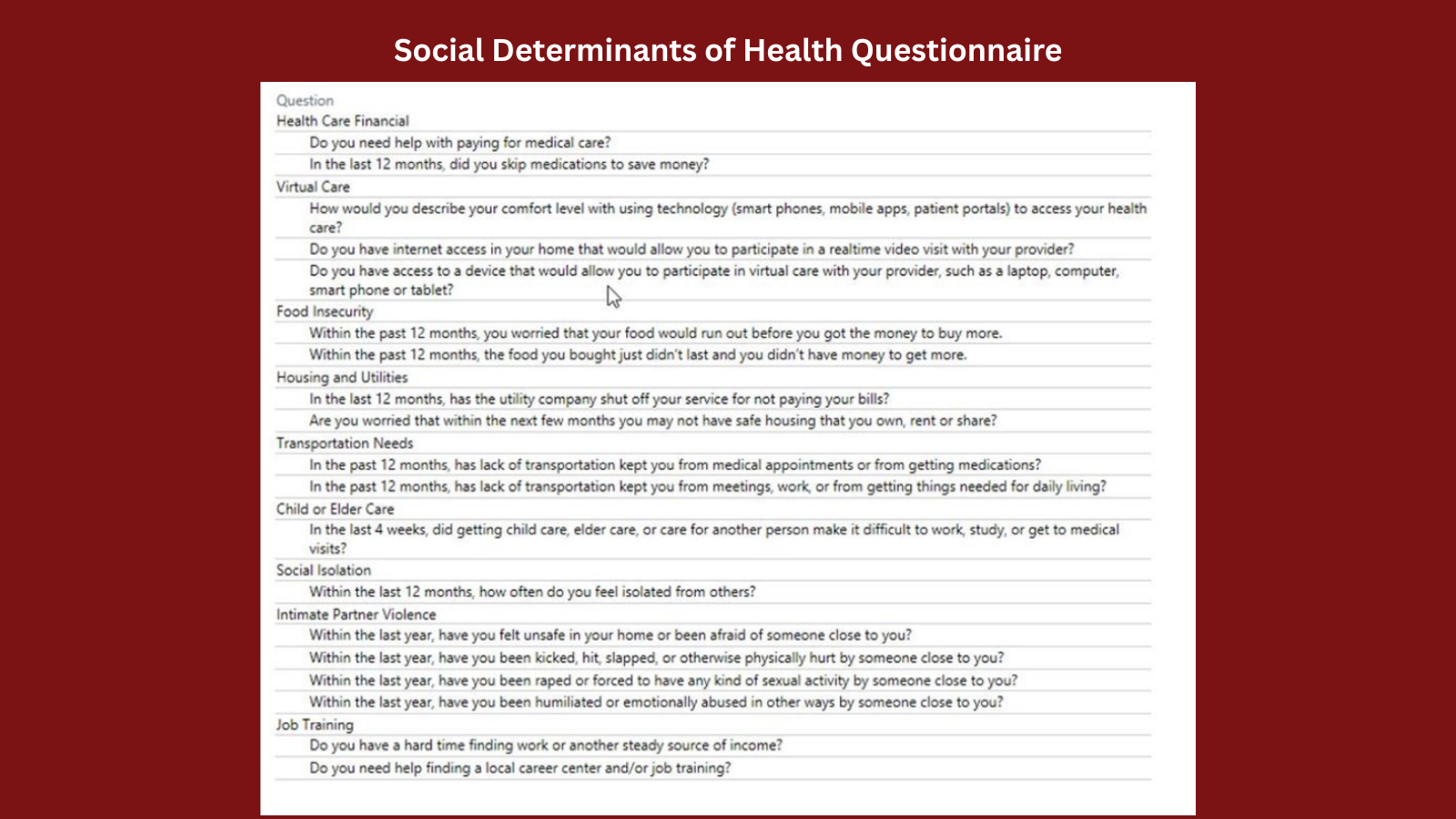
The questionnaire covered 10 different domains including financial medical care, financial medication, virtual care challenges, food insecurity, housing and utilities, transportation needs, child or elder care, social isolation, intimate partner violence and job training (Table 1). Health care financial questions inquired if patients needed help with paying for medical care or if they skipped medications to save money over the last 12 months. Regarding virtual care challenges, patients were asked about their comfort level with using technology, if they had internet access at home, and if they had a device that would allow them to participate in virtual care such as a laptop or smartphone.
To assess food insecurity, questions asked if an individual worried over the last 12 months that food would run out before having the money to buy more, or if the food they bought did not last long enough before they could buy more. Housing insecurity evaluation took place by inquiring whether a utility company had shut off services for not paying bills, or if one worried that in the next few months, they would not have housing that they own, rent or share. Patients were able to indicate if lack of transportation kept them from medical appointments, getting medications, attending meetings, work, or getting things needed for daily living. Respondents indicated that childcare, elder care, or care for another person kept them from meetings, work, or getting things needed for daily living.
Questions asked how often they felt socially isolated from others. Regarding intimate partner violence, patients indicated if they ever felt unsafe in their home, had been afraid of someone close to them, or if they had ever been kicked, hit, slapped, or forced to engage in any kind of sexual activity. Job security questions asked about a patient’s ability to find work or a steady source of income. They were also asked if they needed help finding a local career center or job training. If a patient indicated experiencing issues in any domain, they could subsequently indicate if they desired resources to assist with their concerns.
Results
We received 709 responses to the questionnaire. The Quality Analytics department collected and analyzed these responses, obtaining the results through the ambulatory and population health dashboard. Demographic information was based on patients with at least 1 question completed. Forty-eight percent of respondents were female and 52% were male. Nine percent of respondents were between the ages of 18 and 35, 13% between 36 and 50, 33% between 51 and 65, 36% between the ages of 66 and 80, and 9% over the age of 81. Participants self-reported race using the categories provided in the institutional questionnaire. Seventy-six percent of patients identified themselves as Caucasian, 13% African American, 3% “other,” 2% “multi,” 1% Asian, 1% Chinese, 1% unknown, 1% “other Asian,” and 1% chose not to disclose.
Derivations showed 3 categories of respondents:
- patients with at least 1 question completed;
- patients with 1 or more needs identified; and
- patients with 1 or more needs identified that wanted help and received referral (Table 4).
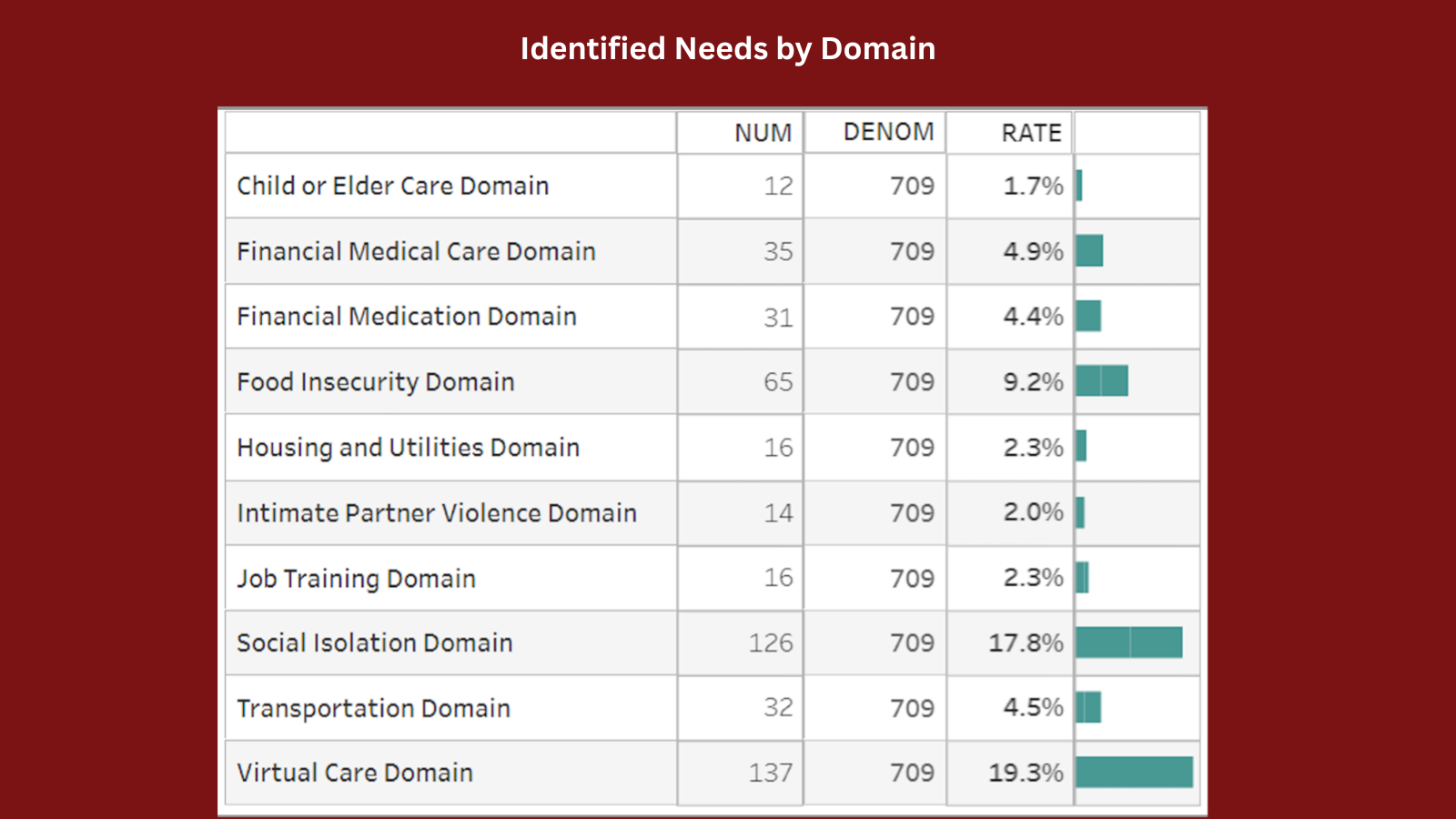
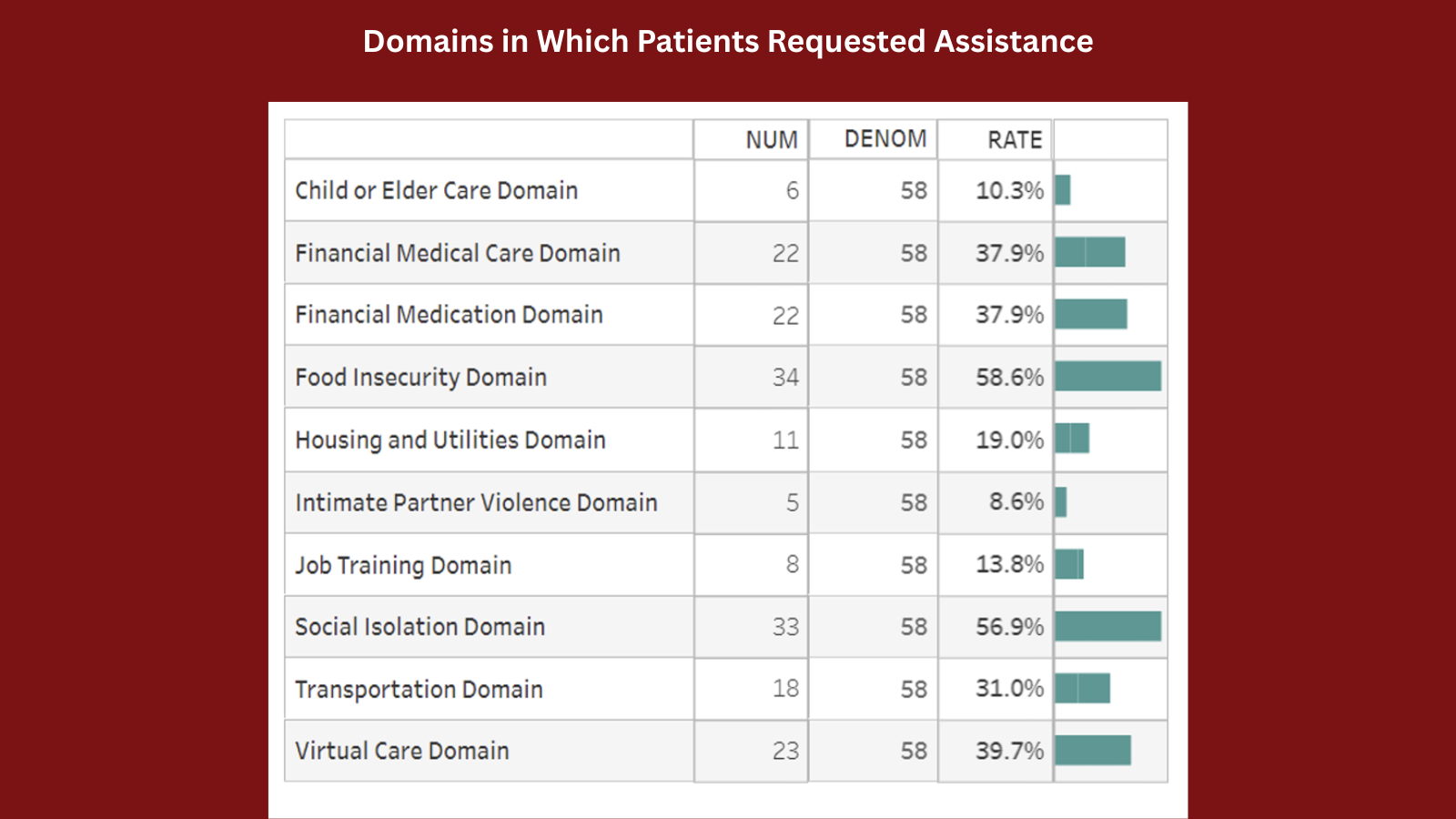
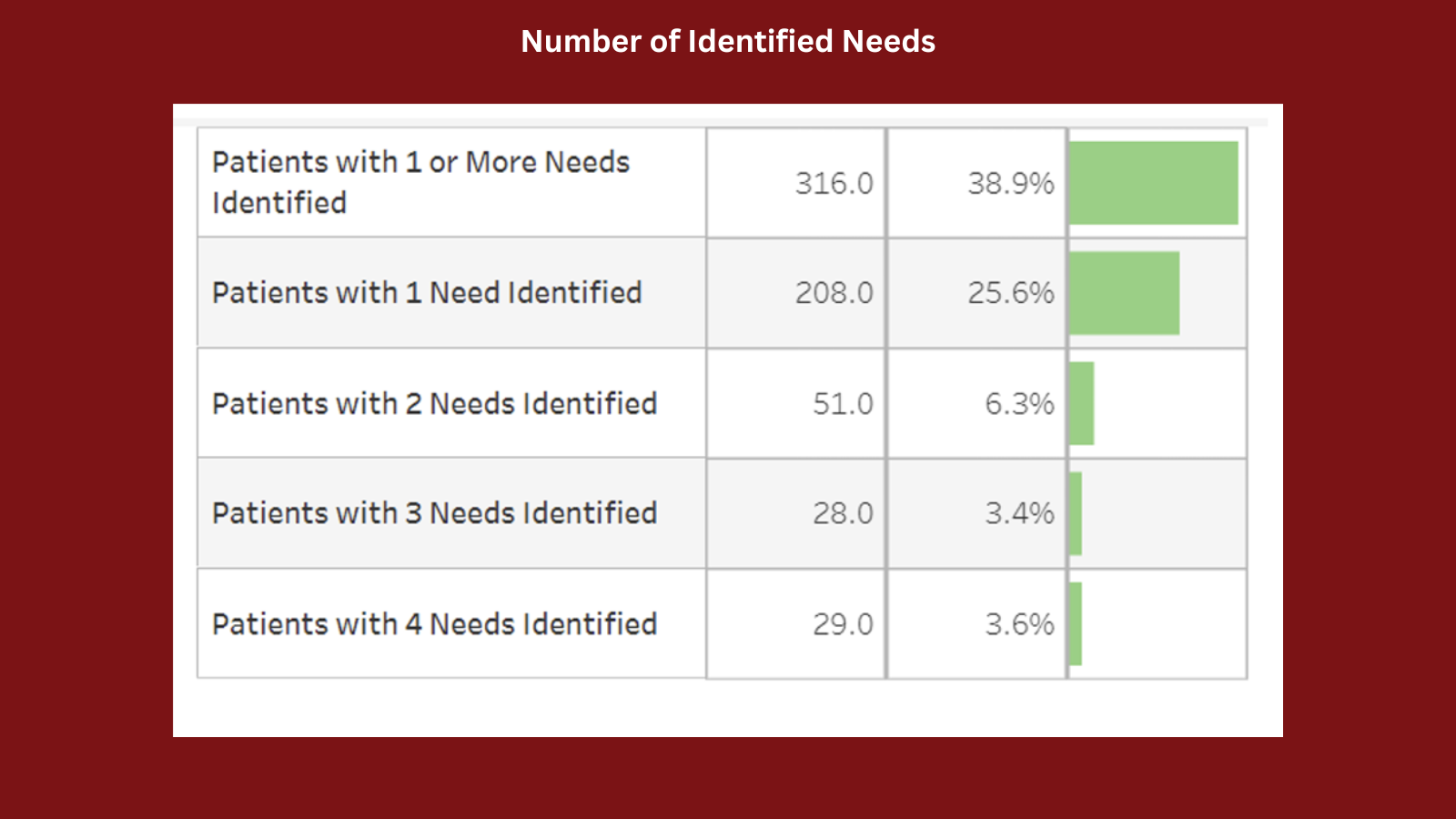
The social determinant identified as most needed among the 709 podiatry patients was virtual care challenges, selected by 137 patients (19.3%) (Table 2). The second highest domain was social isolation (17.8%), followed by food insecurity (9.2%), financial—medical care (4.9%), transportation (4.5%), financial—medication (4.4%), housing and utilities (2.3%), job training (2.3%), intimate partner violence (2.0%), and lastly child or elder care (1.7%). Food insecurity, however, was the social determinant for which the highest number of patients (58.6%) requested assistance (Table 3), followed by social isolation (56.9%), virtual care challenges, (39.7%), financial—medication (37.9%), financial—medical care (37.9%), housing and utilities (19.0%), job training (13.8%), child or elder care (10.3%), and intimate partner violence (8.6%). Three hundred and sixteen patients (38.9%) had 1 or more needs identified. Two hundred and eight patients (25.6%) had 1 need identified, 51 (6.3%) had 2 needs identified, 28 (3.4%) had 3 needs identified, and 29 (3.6%) had 4 needs identified. However, only 58 of the 709 patients (8.18%) requested help.
Discussion
Our study found that only 58 out of 709 patients (8.18%) requested assistance. This low rate of help-seeking aligns with existing literature in this area. A study by Rickwood and colleagues in 2005 suggests that seeking help can be difficult, as it requires individuals to be vulnerable and articulate their concerns to others. This can be influenced by several factors, including emotional competence, positive past experiences, mental health literacy, and supportive social influences.10 The study also highlights gender differences: women are more likely to seek help from friends, while men tend to turn to family. However, both genders showed similarly low rates of seeking professional help.10 Negative attitudes and beliefs about professional help can also act as barriers, often stemming from past negative experiences, whereas positive past experiences can encourage help-seeking.10 Additionally, fear of stigma, especially among young people, is a significant deterrent.4 Supportive figures in the community, such as teachers, counselors, and physicians play a crucial role in helping distressed individuals access appropriate professional support services.10
Furthermore, our study revealed a disparity in referrals for additional resources, with White patients receiving twice as many referrals (60%) as Black or African American patients (30%). Although the reasons for this difference were not evaluated in the present study, prior research has documented persistent racial disparities in access to care and chronic disease outcomes. Hill-Briggs and colleagues reported that Black individuals have lower odds of achieving diabetes quality measures than White individuals.11 Similarly, Heisler and colleagues found that Black patients with diabetes had reduced access to health care and were more likely to receive care at lower-performing facilities.12 These findings provide important context for interpreting the disparities observed in our study but do not explain the underlying causes.
Providing Needed Resources
The author’s institution has established practices which may serve as a guide for other organizations and healthcare centers to adopt similar processes. For example, the patients of this study have access through their patient portal to a resource called “FindHelp.org.” Patients simply input their zip code to learn about a variety of resources related to food, housing, goods, transit, health, money, care, education, work and legal support in their area. Resources for food insecurity include information about community gardens, emergency food, food delivery, food pantry, food payments, meals, and nutrition education. There are resources to help find housing, including house payments, housing advice, maintenance and repairs, residential housing, and temporary shelter. Resources for goods include baby supplies, clothing, home goods, medical supplies, personal safety, toys, and gifts. There is also help offered to pay for transit and transportation.
Medical resources include those for addiction and recovery, dental care, end-of-life care, health education, mental health care, sexual and reproductive health, and vision care. Financial resources include assistance with education, government benefits, insurance, loans, and tax preparation. Care resources include counseling, help hotlines, home visiting, in-home support, mentoring, one-on-one support, peer recovery coaching, peer support, spiritual support, support groups, 12-step programs, bereavement resources, parenting education, and virtual support. Other options include resources related to adoption and foster care, animal welfare, community support services, daytime care, physical safety, resident care, and support networks. There is help available to find and pay for schools, as well as help with skills training, finding work, paying for work expenses, and fighting for workplace rights. There is information on legal aid, mediation, notary services, and help with translation and interpretation.
The University’s Guest Assistance Program (GAP), part of the Department of Social Work, provides patients with connections to a wide range of resources (based on eligibility) to support social needs related to their medical care. GAP assists both adult and pediatric patients with a focus on removing barriers that may hinder access to treatment or appointments critical to their health. Examples include pharmacy assistance for prescriptions, costs for medications, supplies and equipment, lodging assistance, meal assistance, durable medical equipment/supplies, parking, food insecurity, and wigs/head coverings.
As supported by Holt-Lunstad and colleagues, the University has implemented a program to aid with transportation services, particularly for the disabled and elderly to help address physical isolation. However, these services may include additional fees and require advanced booking. Furthermore, Holt-Lunstad describes housing design and workplace modifications to encourage socialization and promote interaction.9
If emotional isolation is a need identified from their questionnaire, the University places an automatic referral to social work (unless the patient is actively involved with psychiatry) to help connect patients to various resources. These resources include platforms like Meetup.com, virtual peer support programs, a friendship line for seniors, and a crisis line. Additionally, patients have the option to independently find a therapist through the Psychology Today platform.
Concluding Thoughts
It is important to acknowledge limitations of our study. Notably, the patients were drawn from a single outpatient clinic within a large institution, which can limit the generalizability of the findings. Additionally, SDOH can vary significantly by the specific region in which patients live, which may not be accurately captured in this single study. Furthermore, it is important to account for the possibility of human error as clinic staff manually entered patient responses for those unable to complete the questionnaire online using the patient portal.
This study highlights virtual care challenges and social isolation as prevalent social determinants of health affecting podiatry patients at our institution. Enhancing virtual care literacy and implementing social support structures can help address these barriers. Automatic referrals and navigation tools are a few examples of how patients can be better connected to essential resources and services. It is critical for all healthcare institutions to recognize, and take action to support, the role SDOH plays in improving patient outcomes.
Dr. Rothenberg is a Clinical Associate Professor of Internal Medicine and Vascular Surgery at the University of Michigan and Fellowship Director of Limb Preservation Research. He is the President of the American College of Podiatric Medicine. He discloses that he is the Medical Director for Podimetrics.
Dr. Kochhar is a former Fellow at the University of Michigan and is currently in private practice.
Dr. Tronstein is an Assistant Professor of Internal Medicine and Vascular Surgery at the University of Michigan.
The authors have no non-financial or commercial, proprietary, or financial interest in the products or companies described in the manuscript. The author(s) did not receive grants or a consultant honorarium to conduct the study, write the manuscript or otherwise assist in the development of the above-mentioned manuscript.
References
1. Centers for Disease Control and Prevention. Social determinants of health (SDOH). Published January 17, 2024. Accessed June 30, 2026. https://www.cdc.gov/about/priorities/why-is-addressing-sdoh-important.html
2. Magnan S. Social Determinants of Health 101 for Health Care: Five Plus Five. National Academy of Medicine. Published October 9, 2017. Accessed June 30, 2026. https://nam.edu/social-determinants-of-health-101-for-health-care-five-plus-five/
3. Gillie M, Ali D, Vadlamuri D, Carstarphen KJ. Telehealth literacy as a social determinant of health: a novel screening tool to support vulnerable patient equity. J Alzheimers Dis Rep. 2022;6(1):67-72. doi:10.3233/ADR-210024
4. Gonzalez S, Bhatt AB, Pagliaro JA. Optimizing telehealth for special populations and closing the digital divide: addressing social determinants of health in virtual care. In: Bhatt AB, ed. Healthcare Information Technology for Cardiovascular Medicine. Health Informatics. Springer; 2021. doi:10.1007/978-3-030-81030-6_8
5. Kawachi I. Social cohesion, social capital, and health. In: Berkman LF, Kawachi I, eds. Social Epidemiology. Oxford University Press; 2000:174.
6. Gebreab SY, Diez Roux AV, Hickson DA, et al. Neighborhood social and physical environments and type 2 diabetes mellitus in African Americans: the Jackson Heart Study. Health Place. 2017;43:128-137.
7. Ciechanowski PS, Katon WJ, Russo JE, et al. Relationship styles and mortality in patients with diabetes. Diabetes Care. 2010;33(3):539-544. doi:10.2337/dc09-1298
8. Sarkar U, Piette JD, Gonzales R, Lessler D, Chew LD, Reilly B, Johnson J, Brunt M, Huang J, Regenstein M, Schillinger D. Preferences for self-management support: findings from a survey of diabetes patients in safety-net health systems. Patient Educ Couns. 2008;70(1):102-110. doi:10.1016/j.pec.2007.09.008
9. Holt-Lunstad J. Social isolation and health. Health Affairs. Published June 22, 2020. Accessed June 30, 2026. https://www.healthaffairs.org/content/briefs/social-isolation-and-health
10. Rickwood D, Deane FP, Wilson CJ, Ciarrochi J. Young people's help-seeking for mental health problems. Aust e-J Adv Ment Health. 2005;4(3):218-251. doi:10.5172/jamh.4.3.218
11. Hill-Briggs F, Adler NE, Berkowitz SA, et al. Social determinants of health and diabetes: a scientific review. Diabetes Care. 2021;44(1):258-279. doi:10.2337/dci20-0053
12. Heisler M, Smith DM, Hayward RA, Krein SL, Kerr EA. Racial disparities in diabetes care processes, outcomes, and treatment intensity. Med Care. 2003;41(11):1221-1232.
© 2026 HMP Global. All Rights Reserved.
Any views and opinions expressed are those of the author(s) and/or participants and do not necessarily reflect the views, policy, or position of Podiatry Today or HMP Global, their employees, and affiliates.





