Emerging Therapies Target Mast Cell Pathways in Chronic Spontaneous Urticaria
Chronic spontaneous urticaria (CSU) remains a persistent and often refractory condition, with more than half of patients continuing to experience symptoms despite standard antihistamine therapy, according to Christina Feser, DO, FAOCD, FAAD, during her Music City SCALE 2026 session, “Chronic Spontaneous Urticaria: What’s New?” Advances in understanding mast cell–driven disease mechanisms are now informing a new generation of targeted therapies.
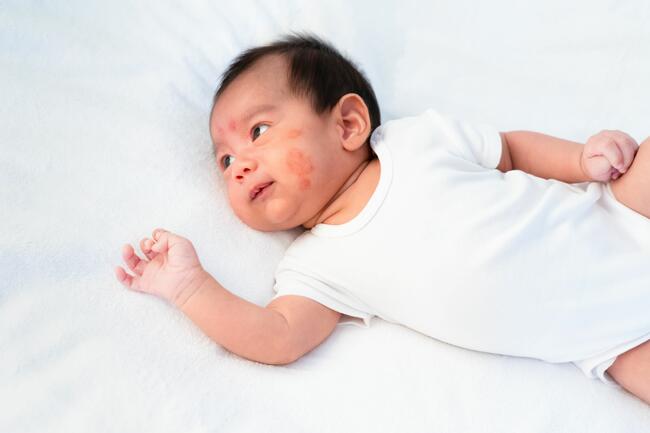
CSU is defined by the presence of hives, angioedema, or both. Hives present as “sharply circumscribed, superficial central swelling surrounded by reflex erythema” and are typically associated with itching or burning. Angioedema involves deeper swelling with sensations of tightness, numbness, or pain. While 57% of patients experience hives alone and 6% angioedema alone, more than one-third present with both.
The condition affects approximately 0.2% to 0.8% of individuals in the United States, with a higher prevalence in women and a typical onset between ages 20 and 40 years. Disease duration is variable, with spontaneous remission occurring in some patients, although many remain symptomatic for years.
Current treatment approaches rely heavily on H1 antihistamines, yet “more than 50% of patients remain symptomatic after first-line therapy,” highlighting a need for more effective options.
Novel therapies are increasingly focused on mast cell signaling pathways. Remibrutinib, an oral Bruton’s tyrosine kinase (BTK) inhibitor, represents one such approach. By acting within mast cells, it blocks the signaling cascade responsible for histamine release. Dr Feser noted that remibrutinib “acts inside mast cells to block the signaling pathway that leads to histamine release,” directly targeting the underlying mechanism of CSU.
Clinical trials, including REMIX-1 and REMIX-2, have demonstrated rapid and meaningful improvements, with many patients achieving symptom resolution within weeks. This suggests potential for earlier and more complete disease control compared with traditional therapies.
Additional investigational agents are also targeting mast cell biology. Barzolvolimab, a monoclonal antibody directed at the KIT receptor, and EVO756, an oral MRGPRX2 antagonist, aim to modulate mast cell activation and sensory nerve signaling.
Dr Feser emphasized that the current therapeutic landscape reflects a “robust pipeline,” with multiple agents in early development.
For more meeting coverage, visit the Music City SCALE newsroom.
Reference
Feser C. Chronic spontaneous urticaria: what’s new? Presented at: Music City SCALE Symposium; May 13–17, 2026; Nashville, TN.